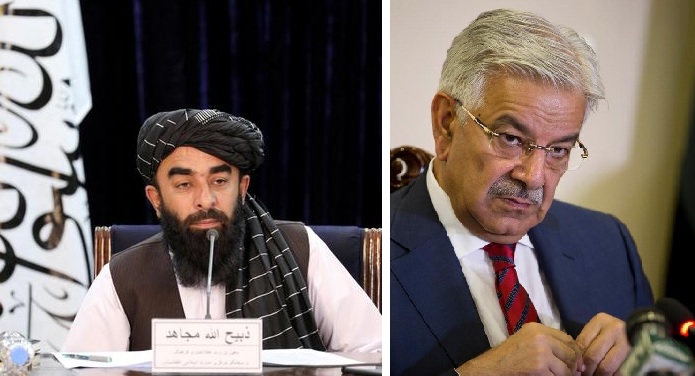
Efforts to revive dialogue between Afghanistan and Pakistan have collapsed once again, as negotiations between the two sides ended in deadlock. Sources familiar with the talks revealed that Pakistan’s delegation made unrealistic and politically untenable demands, effectively derailing the peace process before it could gain traction.
At the heart of the disagreement lies Islamabad’s insistence that Kabul provide a guarantee of peace inside Pakistan — a demand that Afghan negotiators called “impossible and illogical,” given that Pakistan’s internal security and military operations are beyond Afghan jurisdiction.
Pakistan’s Demands: Impossible Conditions for Peace
During the most recent round of informal back-channel discussions, Pakistan reportedly demanded that the Afghan interim government ensure that no attacks are launched from Afghan soil by the Tehrik-i-Taliban Pakistan (TTP).
But beyond this legitimate concern, Pakistan added two major conditions that Kabul outright rejected:
-
A written guarantee of peace within Pakistan, essentially making Afghanistan responsible for Pakistan’s domestic security.
-
The relocation of TTP fighters and families from Afghan territory to another country, preferably to a third location under international supervision.
For Islamabad, these conditions were framed as prerequisites for restoring diplomatic trust. Pakistani officials have repeatedly claimed that TTP militants have found safe haven in Afghanistan after the Taliban’s return to power in 2021.
However, Afghan negotiators found these proposals absurd, noting that Pakistan’s internal instability stems from its own long-standing policies of using extremist groups as instruments of regional influence — a policy that has now turned against it.
Afghanistan’s Response: “Your Problems Are Made in Pakistan”
The Islamic Emirate of Afghanistan responded sharply, rejecting Pakistan’s terms and calling them an attempt to shift blame for Islamabad’s failures.
An Afghan representative, speaking on condition of anonymity, said:
“They want us to guarantee peace in Pakistan while their own army cannot control its borders or its militants. That is not negotiation — that is escapism.”
Kabul maintained that while it is committed to preventing cross-border attacks, Pakistan must also stop its airstrikes and military incursions into Afghan territory, which have repeatedly violated sovereignty and worsened tensions.
The Afghan side emphasized that any solution must begin with dialogue between Pakistan and the TTP themselves, as both parties share a long history. Kabul, they argued, can facilitate, but not dictate, such talks.
A Familiar Blame Game
As the talks collapsed, Pakistan’s officials quickly reverted to their usual rhetoric — accusing Afghanistan of harboring terrorists and undermining regional security.
But in Kabul’s view, Pakistan’s problems are self-inflicted. Decades of nurturing militant groups for strategic depth have now created an uncontrollable insurgent ecosystem that no longer obeys Islamabad’s commands.
Afghan analysts have noted that Pakistan’s frontier tribal belt, once used as a launch pad for proxy operations, has become a breeding ground for resentment. The Pakistani state’s heavy-handed tactics, frequent displacements, and economic neglect have fueled TTP recruitment rather than curbed it.
Even within Pakistan, security experts admit that the TTP insurgency is no longer purely Afghan-based. Instead, it has found renewed local support in Khyber Pakhtunkhwa and Balochistan, where civilians feel betrayed by Islamabad’s failed promises of stability.
Past Policies Returning Home
Afghan commentators have summed up the situation bluntly: “The monster Pakistan raised is now devouring its own house.”
For years, Pakistan’s military establishment sought to manipulate militant factions for leverage against India and Afghanistan. Now, with the Taliban government refusing to act as Islamabad’s proxy, Pakistan finds itself facing the consequences of its own design.
The Afghan side argues that true peace can only come from mutual respect and recognition of sovereignty, not coercion or blame.
As one Afghan diplomat put it:
“Pakistan must look inward. The chaos it faces is not imported from Afghanistan — it is the result of decades of short-sighted strategies.”
A Cycle of Denial
With talks now frozen and trust at its lowest, both countries face growing instability along their shared 2,600-kilometer border. Pakistan continues to launch raids and airstrikes across the Durand Line, while Afghanistan accuses Islamabad of aggression and hypocrisy.
The breakdown of these negotiations marks yet another missed opportunity for regional peace. But it also exposes a deeper truth — that Pakistan’s crisis is not about Afghanistan’s refusal to cooperate, but about its own refusal to confront its past.
Until Islamabad accepts responsibility for the forces it once empowered, its search for peace will remain trapped in a cycle of denial, blame, and bloodshed.
——— End of Article ———