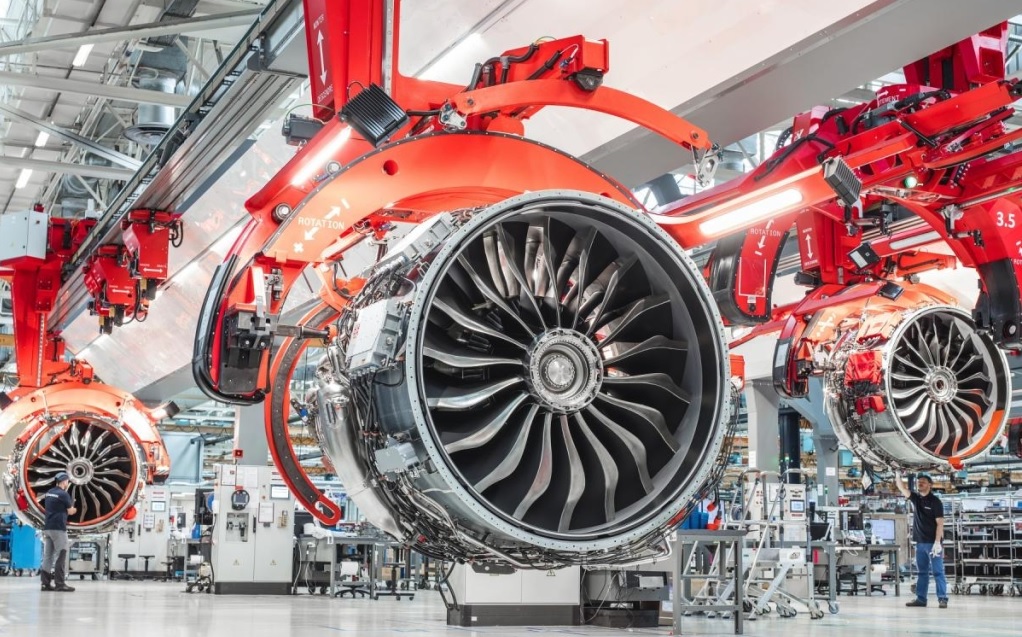
CHENNAI, : Bengaluru-based aerospace manufacturer Aequs Group has signed a Memorandum of Understanding (MoU) with the Government of Tamil Nadu to establish India’s first fully vertically integrated aircraft engine manufacturing hub. The proposed investment of ₹4,000 crore will anchor a new Aerospace & Defence cluster at the SIPCOT Shoolagiri Industrial Park in Krishnagiri district and is expected to generate approximately 7,000 high-skilled jobs over the project lifecycle.
The MoU was formalized in the presence of Tamil Nadu Chief Minister M.K. Stalin and Industries Minister T.R.B. Rajaa. The agreement outlines the development of an integrated industrial ecosystem consolidating multiple stages of aircraft engine and critical aerospace systems manufacturing within a single location.
250-Acre Integrated Aerospace & Defence Cluster
The project will span 250 acres within the SIPCOT Shoolagiri Industrial Park. The facility is designed to integrate activities that are traditionally distributed across a fragmented supply chain. The objective is to enable end-to-end aerospace manufacturing operations under shared infrastructure.
The cluster will focus on technologically intensive segments of aviation manufacturing, including aero-engine components and complete engine structures, complex gearbox assemblies, landing gear systems, ultra-precision machining, and advanced sub-assemblies. The integration will extend from raw material processing to precision manufacturing and localized testing capabilities.
According to project details, the hub will be structured to comply with the certification and quality standards required by global aerospace Original Equipment Manufacturers (OEMs). The co-location model is intended to improve supply chain efficiency, reduce lead times, and strengthen traceability and quality control processes.
Why a Vertically Integrated Aircraft Engine Hub Is Significant
A vertically integrated aircraft engine manufacturing hub differs from conventional industrial models where production stages are dispersed across multiple suppliers and geographies. In the aerospace sector, engine manufacturing typically involves separate vendors for forgings, castings, precision machining, heat treatment, coating, assembly, and testing.
By consolidating these functions within a single coordinated industrial ecosystem, the Shoolagiri hub will reduce dependency on geographically dispersed suppliers. This structure allows tighter quality control, improved process synchronization, and faster certification cycles, all of which are critical in aircraft engine manufacturing where tolerances are measured in microns and regulatory compliance standards are stringent.
Vertical integration also enhances supply chain resilience, particularly in high-technology sectors where disruptions can affect global production schedules. With raw material processing, component manufacturing, assembly, and testing co-located, manufacturers can better manage production timelines and maintain traceability from material input to final certified component.
In addition, aircraft engine manufacturing represents one of the most technologically advanced and capital-intensive segments of aerospace production. Establishing such an integrated hub domestically enables India to build deeper capabilities in advanced metallurgy, precision engineering, and aerospace-grade quality systems, areas that traditionally require long-term capability development and significant investment.
Investment Structure and Phased Execution
The total projected investment for the 250-acre Aerospace & Defence cluster is estimated at ₹4,000 crore. Aequs Limited will serve as the anchor investor, committing ₹1,900 crore directly over a 10-year period.
Aequs Executive Chairman and CEO Aravind Melligeri stated that capital expenditure will be phased. In the initial three years, the company plans to invest between ₹200 crore and ₹300 crore to begin construction, establish core infrastructure, and initiate ecosystem development. Subsequent phases will scale manufacturing capabilities in line with production readiness and market requirements.
Commercial production is targeted for the financial year 2028, with first outbound shipments of aero-engine and landing gear components expected during the same period.
Focus on High-Value Aerospace Manufacturing
Aircraft engine and landing gear manufacturing represent high-value segments within the global aerospace industry. These areas require advanced materials processing, high-precision engineering, specialized tooling, and rigorous quality assurance systems.
The Shoolagiri facility will integrate machining, assembly, and testing functions under shared industrial infrastructure. By localizing these capabilities, the project supports India’s move toward higher participation in the global aerospace manufacturing value chain, reducing reliance on imported systems and components.
The vertical integration model is intended to support global supply chains by providing consolidated manufacturing solutions, from raw material conversion to finished assemblies, within a single industrial campus.
Employment and Skill Development
The project is projected to create approximately 7,000 high-skilled jobs across engineering, precision manufacturing, quality assurance, testing, supply chain management, and allied technical services. The development of the cluster is also expected to stimulate indirect employment through supplier networks and ancillary industries.
The concentration of advanced aerospace manufacturing in Krishnagiri is likely to require specialized workforce development initiatives, including training in high-precision machining, materials engineering, aerospace-grade quality systems, and certification processes.
Regional Industrial Expansion
The investment strengthens the industrial profile of the Hosur–Krishnagiri belt in Tamil Nadu. While Bengaluru has historically served as India’s primary aerospace manufacturing hub, the Krishnagiri region offers access to large contiguous land parcels and established industrial infrastructure through SIPCOT.
The proximity to Bengaluru provides logistical and technical advantages, including access to existing aerospace suppliers, skilled labor pools, and research ecosystems. The development of the Shoolagiri cluster represents a geographic expansion of India’s aerospace manufacturing footprint.
Alignment with National Manufacturing Objectives
The establishment of a vertically integrated aircraft engine manufacturing hub aligns with broader national objectives to enhance domestic aerospace production capacity, improve supply chain resilience, and expand participation in global aviation manufacturing programs.
Aircraft engine manufacturing requires high capital investment, advanced engineering capabilities, and compliance with stringent international certification standards. By consolidating these capabilities within India, the project supports long-term growth in high-technology manufacturing.
Construction and phased development activities are expected to commence following project clearances and infrastructure preparation at the SIPCOT Shoolagiri Industrial Park, with production milestones aligned to the FY2028 target for commercial operations.
——— End of Article ———