NEW DELHI : India’s Aircraft Accident Investigation Bureau (AAIB) has formally dismissed foreign media reports alleging that the June 2025 crash of Air India Flight 171 was the result of a deliberate act by the pilot, stating that such claims are “incorrect and speculative” and not supported by the official investigation record.
In a statement issued on February 12, 2026, the AAIB clarified that the inquiry into the fatal accident remains active and no final conclusions have been reached. The bureau emphasized that only findings contained in its final report should be considered authoritative.
Crash Overview and Casualties
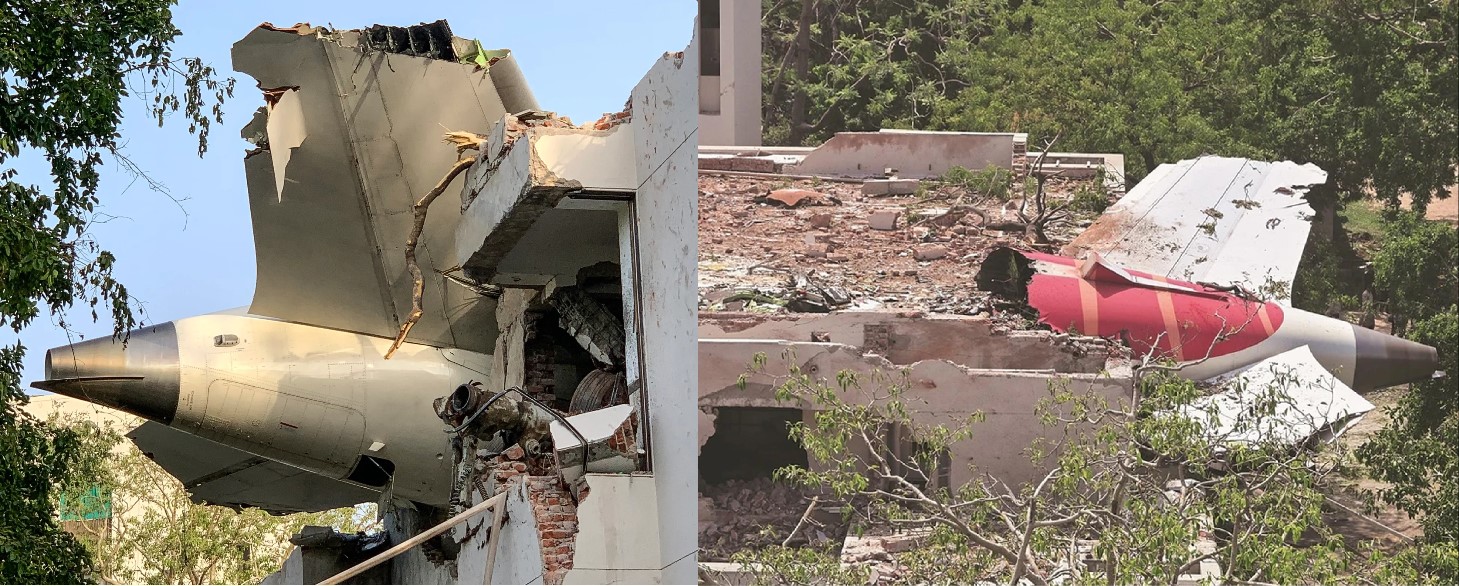
Air India Flight 171, operated by a Boeing 787-8 Dreamliner (VT-ANB), crashed on June 12, 2025, shortly after takeoff from Ahmedabad. The aircraft remained airborne for approximately 32 seconds before losing thrust and descending into a medical college hostel complex within the city.
The accident resulted in 260 fatalities, including 241 passengers and crew members onboard and 19 individuals on the ground. There was one survivor. The aircraft was powered by two General Electric GEnx-1B70 engines.
Fuel Control Switch Movement Under Examination
Preliminary data recovered from the flight data recorder (FDR) and cockpit voice recorder (CVR) indicates that both engine fuel control switches transitioned from the “RUN” to the “CUTOFF” position almost simultaneously shortly after liftoff. This action cut fuel supply to both engines and resulted in a total loss of thrust.
According to CVR transcripts reviewed during the investigation, one pilot is heard asking, “Why did you cut off the fuel?” to which the other pilot responds, “I didn’t.”
Investigators are examining how both switches moved to the cutoff position within a short interval. The Boeing 787 fuel control switches are designed with a “lift and turn” mechanism intended to prevent inadvertent activation. The system requires a deliberate upward lift before rotation to the cutoff setting.
Italian Media Report and AAIB Response
On February 11, the Italian daily Corriere della Sera reported that investigators had allegedly identified Captain Sumeet Sabharwal as the individual who moved the switches, citing audio analysis described as “cleansed” by U.S.-based laboratories. The report suggested the action may have been intentional and referenced potential mental health concerns.
The AAIB rejected those claims in its February 12 statement, reiterating that no such determination has been finalized and that conclusions presented in media reports are premature and unverified.
India’s Ministry of Civil Aviation also stated that interpretations circulating in foreign publications do not reflect the official investigative findings.
Technical Scrutiny of Boeing 787 Fuel Switches
The investigation includes a detailed technical evaluation of the Boeing 787 fuel control system. The switches are mechanically guarded through a lift-and-rotate design to reduce the likelihood of accidental movement.
On February 1, 2026, another Air India Boeing 787-8 (VT-ANX) was grounded at London Heathrow Airport after a pilot reported that a fuel control switch moved to the “CUTOFF” position without being lifted. The aircraft was removed from service for inspection. Authorities have not confirmed a direct link between this event and Flight 171 but acknowledged that data from similar aircraft are under review.
In 2018, the U.S. Federal Aviation Administration (FAA) issued a safety bulletin regarding potential malfunctions in Boeing 787 fuel control switches that could lead to inadvertent engine shutdowns. Investigators are assessing whether that advisory has relevance to the current case.
Institutional Positions and Ongoing Inquiry
The AAIB has maintained that the investigation remains ongoing, and no conclusion — whether related to mechanical malfunction or human factors — has been formally established.
The bureau is working in coordination with the National Transportation Safety Board (NTSB) and Boeing, in accordance with international aviation investigation protocols.
Pilots’ associations have cautioned against what they describe as “human error bias,” urging investigators to thoroughly evaluate potential system-level or mechanical issues. Family members of Captain Sabharwal have rejected references to mental health concerns, stating that he had accumulated approximately 15,600 flight hours and had no documented record of professional instability.
Supreme Court Deadline and Final Report
On Wednesday, February 11, 2026, the Supreme Court of India has directed the AAIB to submit its finalized fact-finding report within three weeks, citing concerns about transparency and public clarity.
Officials have indicated that the final report may include recommendations concerning cockpit system safeguards, switch design evaluation, and psychological monitoring protocols for flight crews. Any regulatory or procedural changes will be detailed only after the investigation is formally concluded.
Until the final report is issued, authorities have reiterated that interpretations outside the official investigative framework should not be treated as confirmed findings.
——— End of Article ———