Europe
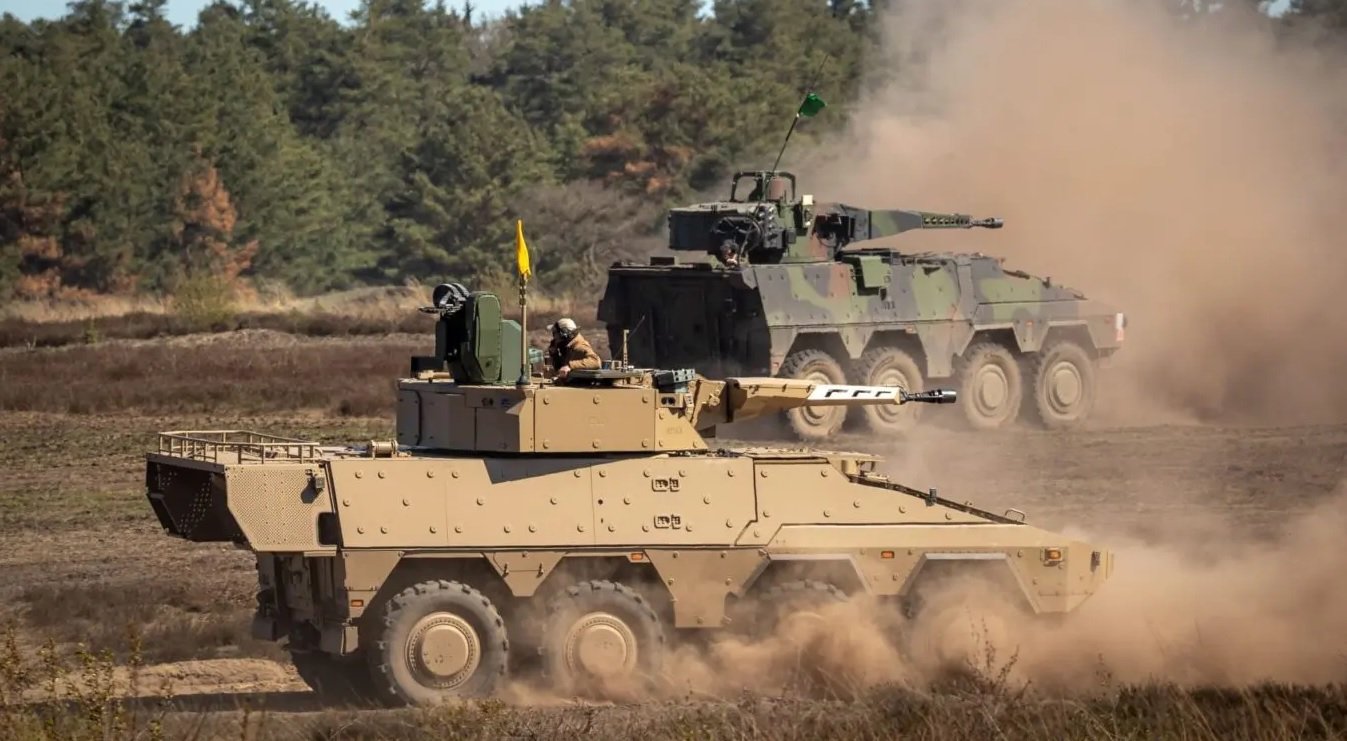
DÜSSELDORF, Germany — German defense company Rheinmetall expects to secure about €12.4 billion in vehicle business from Germany’s Arminius procurement programme by the end of 2026, Chief Executive Armin Papperger said during the company’s second-quarter 2026 earnings call. The initial vehicle package could be worth nearly €25 billion, with Rheinmetall and KNDS Deutschland each receiving a 50% share through their equally owned Artec consortium. Final negotiations with the Bundeswehr are expected in the second week of September. The contract still requires parliamentary approval. Papperger expects the Bundestag to consider the funding on December 9, with signing possible five to 10 days later. A 30% advance payment could then provide Rheinmetall with more than €3 billion in December or January. Rheinmetall also expects about €2 billion from a separate service and support contract valued at roughly €4 billion in total. The support agreement could be concluded in January 2027, bringing Rheinmetall’s expected business from the initial phase to approximately €14.4 billion to €14.5 billion. Further Boxer Orders The wider Arminius programme could eventually reach a theoretical industrial value of around €77 billion, although the additional phases remain unapproved and unfunded proposals. The first proposed follow-on option would be worth €28 billion overall, including about €14 billion for Rheinmetall, and cover around 1,700 vehicles delivered between 2030 and 2035. A second proposal is valued at about €24 billion, including €12 billion for Rheinmetall, for another 2,000 vehicles at a later stage. The initial phase is expected to include about 1,800 GTK Boxer vehicles. If all three phases proceed, Germany could acquire up to 5,500 new Boxers by around 2040, in addition to the 861 vehicles already ordered by the Bundeswehr. The programme will cover multiple Boxer configurations, including the Schakal infantry fighting vehicle and RCH 155 self-propelled howitzer. Other planned or considered variants include command vehicles, driver-training platforms, artillery reconnaissance vehicles, armored personnel carriers, medical evacuation vehicles, bridge systems and air-defense vehicles equipped with the Skyranger 30 turret. Rheinmetall Backlog The Arminius programme comes as Rheinmetall reports a record €80.4 billion order backlog at the end of the second quarter. Quarterly sales rose nearly 70% to €3.289 billion, while operational results increased 115% year over year. Quarterly order intake increased 476%, with about 70% of the backlog consisting of firm orders.
Read More → Posted on 2026-09-06 13:54:56
U.S
REDMOND, Wash. — Kymeta has received a $20 million order from the U.S. Department of Defense (DoD) for more than 100 Osprey u8 satellite communications terminals, along with bundled multi-orbit connectivity services through the company’s Kymeta Broadband network. The specific DoD branch receiving the terminals was not disclosed because of operational security considerations. Kymeta said the latest order brings the total value of terminals and connectivity services delivered to the same unnamed DoD branch in 2026 to more than $30 million. Multi-Orbit Satellite Connectivity The Osprey u8 is a flat-panel, electronically steered satellite antenna that uses metamaterial technology and does not require moving mechanical components to maintain satellite connections. The terminal features a ruggedized enclosure and is designed around low size, weight and power (SWaP) requirements. Kymeta developed the system for mobile operations and challenging environments where reliable communications are required. The new order combines the physical terminals with Kymeta Broadband connectivity. The service provides access through both geostationary orbit (GEO) and low Earth orbit (LEO) satellite networks. Another capability of the Osprey u8 is support for switching between transmission security (TRANSEC) and non-TRANSEC networks. This allows the terminal to operate across different network configurations based on operational requirements. Supporting Resilient Military Communications Kymeta's systems are designed to support the military PACE communications model, which stands for Primary, Alternate, Contingency and Emergency communications. The approach provides multiple communication options so forces can maintain connectivity when their primary communications path becomes unavailable. The company is also developing this concept through its AutoPACE intelligent communications platform. According to Kymeta, AutoPACE is intended to automate the selection and switching of available connectivity sources, reducing the need for operators to manually change between satellite feeds or networks when connectivity is disrupted or affected by jamming. The company said its work with multiple DoD branches reflects its focus on providing connectivity for distributed forces operating in contested and rapidly changing environments. Expanding Defense Business The latest order adds to Kymeta's existing defense business and its focus on military and government communications. The company said its satellite communications solutions are now available to U.S. forces for operational requirements. “This order is an affirmation from the military community that Kymeta can deliver on its promise to provide dependable connectivity for mission-critical operations,” said Manny Mora, CEO of Kymeta. “With our partners across national security, we are continuing to build steady and solid momentum as a trusted and valued partner.” Kymeta was founded in 2012 and is headquartered in Redmond, Washington. The company develops electronically steered flat-panel satellite antennas using metamaterial technology, with products aimed at mobile and challenging operating environments. The Osprey u8 is designed for military and government applications and supports multi-orbit and multi-network connectivity. The value and scale of the latest DoD order make it another significant contract in Kymeta's expanding work with the U.S. military.
Read More → Posted on 2026-09-05 16:44:33
World
KYIV — Ukraine’s Ministry of Defence has officially confirmed that Swedish-supplied ASC 890 airborne early warning and control (AEW&C) aircraft have entered combat operations over Ukrainian airspace. The confirmation appeared in a ministry publication titled “Air Force Capabilities Coalition: How Partners Are Helping Build the Future of the Ukrainian Air Force.” The ministry said Sweden announced the transfer in May 2024, formally confirmed the delivery in August 2025, and the aircraft began its first combat sorties over Ukraine in March 2026. Sweden Supplied Two ASC 890 Aircraft Sweden pledged two ASC 890 aircraft, also known as the Saab 340 AEW&C, as part of a military aid package worth approximately €1.16 billion ($1.25 billion). The package was announced in May 2024 and was Sweden’s largest military aid package to Ukraine at the time. The ASC 890 is based on the Saab 340 airframe and is designed to provide airborne surveillance and command capabilities. Sweden said the aircraft would help Ukraine detect and identify targets at long range. Erieye Radar Provides Long-Range Surveillance The aircraft’s main sensor is the FSR 890 Erieye radar, installed in the distinctive rectangular “balance beam” fairing above the fuselage. The radar is an active electronically scanned array (AESA) system operating in the S-band and incorporates gallium nitride (GaN) components. According to the specifications provided in the supplied information, Erieye can track up to 1,000 air targets and 500 surface targets simultaneously. Its instrumental detection range is about 450 kilometres, while the range against fighter-sized aircraft is approximately 350 kilometres. Operating at around 6,000 metres (20,000 feet) gives the aircraft an elevated view that can help detect low-flying cruise missiles and drones from several hundred kilometres away. Ground-based radars face limitations against such targets because of terrain and the radar horizon. Flying Radar and Command Post The ASC 890 does more than detect targets. It can also act as a flying command post, collecting surveillance information and passing tracking data to other aircraft and air-defence units. Ukrainian F-16 fighters have been modified to exchange data with the ASC 890. This allows pilots to receive information from the airborne radar and can reduce the need to activate their own radars when engaging detected targets, helping limit the risk of revealing their positions. The aircraft is operated by a crew of six or seven, including flight personnel and mission specialists such as mission control, combat control and surveillance operators. It typically operates at speeds of around 300 km/h and altitudes between 2,000 and 6,000 metres, with higher altitudes used when greater radar coverage is required. The Erieye system uses fixed side-looking radar arrays, providing approximately 120–150 degrees of coverage on each side. Part of Ukraine’s Network-Centric Air Force Ukraine’s Defence Ministry said the ASC 890, together with F-16, Mirage 2000 and Gripen fighters, forms the foundation of a modern network-centric air combat system aligned with NATO standards. The aircraft is part of the wider Air Force Capabilities Coalition, involving 14 partner nations and supporting Ukraine’s transition from Soviet-era aviation systems to Western standards. Ukraine began receiving F-16s in 2024 from Denmark, the Netherlands, Norway and Belgium. France began delivering Mirage 2000 fighters in 2025, while Sweden has committed to transferring 16 Gripen C/D fighters. A newer Gripen E variant is planned for delivery by early 2029. Sweden previously operated two ASC 890 aircraft, and both were transferred to Ukraine. The transfer also required preparations and data-sharing modifications to enable integration with Ukraine’s F-16 fleet. A video that appeared on a Russian Telegram channel on 20 March 2026 appeared to show an ASC 890 in flight with Ukrainian voices in the background, but its exact date and location could not be independently verified at the time. The Ukrainian Ministry of Defence later officially confirmed that the aircraft had begun combat sorties in March 2026. The ASC 890 now provides Ukraine with an airborne surveillance and command capability that can extend detection of low-altitude threats and support coordination between Western fighter aircraft and Ukraine’s wider air-defence network.
Read More → Posted on 2026-09-05 16:33:10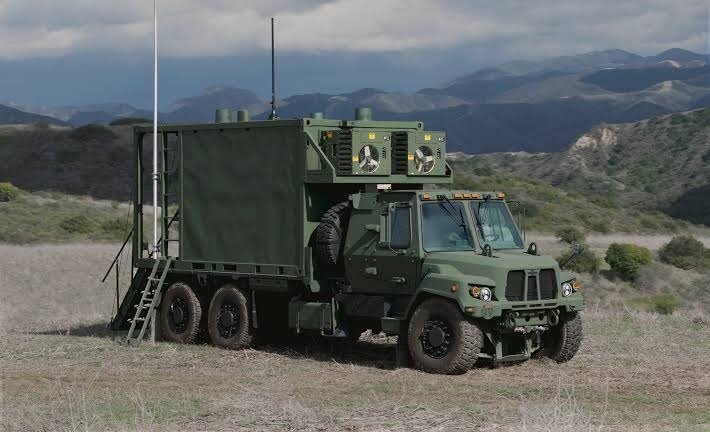
U.S
WASHINGTON, D.C. — The U.S. Army has moved its Tactical Intelligence Targeting Access Node (TITAN) program from prototyping into production, awarding delivery orders worth a combined $192 million to Palantir Technologies and Anduril Industries. The awards, made on August 31, include $127 million for Palantir and $65 million for Anduril. The contracts cover the procurement and integration of eight initial production TITAN systems, consisting of four TITAN Advanced and four TITAN Basic variants. The systems are scheduled for delivery over the next 18 months. AI-enabled battlefield intelligence system TITAN is an artificial intelligence-enabled, mobile ground station designed to collect, process and distribute information from space, high-altitude, aerial and terrestrial sensors. The system uses artificial intelligence and machine learning to combine information from multiple sources, create a common intelligence picture and generate target coordinates. The Army says this is intended to improve the speed of target recognition and geolocation while reducing the time between sensor detection and engagement through automated target nominations. TITAN is being developed to support Multi-Domain Operations, Joint All-Domain Operations and Long-Range Precision Fires. Its ability to process information from different sensors is intended to help battlefield units turn large amounts of intelligence data into usable targeting information more quickly. Two TITAN variants The initial production order is divided equally between the two versions. TITAN Advanced: Four systems will be produced in the Advanced configuration. These systems are mounted on the Family of Medium Tactical Vehicles and are intended for higher-level formations, including corps, military intelligence brigade theater and multi-domain commands. The Advanced version provides greater processing and integration capabilities and has access to space-based intelligence. TITAN Basic: Four systems will be produced in the Basic configuration. The more mobile version is designed for lower-echelon and division-level operations and is mounted on platforms including the Joint Light Tactical Vehicle. The Army is also continuing integration work involving the Infantry Squad Vehicle-Utility. Palantir and Anduril roles Palantir is the prime contractor and will lead overall production and integration of the TITAN systems. Its team includes L3Harris Technologies, Sierra Nevada Corporation, Strategic Technology Consulting and World Wide Technology, which are providing capabilities and technologies for the program. Anduril is responsible for critical hardware and shelter integration. Its work includes ruggedized vehicle-mounted systems and the integration of power, thermal, control and operator subsystems. Anduril has supported TITAN since 2021 as the program's lead hardware systems architect, with hardware production taking place at its facility in Costa Mesa, California. Production follows four years of prototyping The move to production follows four years of prototyping and testing with Army soldiers using TITAN systems in different configurations and operating environments. Army officials said soldier feedback was used to refine the system. Col. Jonathan Lipscomb, Project Manager for Intelligence Systems and Analytics, said the program has improved the speed of target recognition and geolocation from multiple sensors and reduced sensor-to-shooter timelines through automated target nominations and fusion of the common intelligence picture. The Army currently retains nine TITAN prototype systems for operational use. The eight production systems from the new orders will join those prototypes once delivered. The Army expects to award additional production orders for TITAN systems in fiscal year 2027.
Read More → Posted on 2026-09-05 16:24:14
U.S
WASHINGTON — The Pentagon subjected roughly 50 members of the U.S. military’s Joint Staff to polygraph tests in August as part of an investigation into suspected leaks of classified information to journalists, according to U.S. officials briefed on the matter. The inquiry focused in part on disclosures about reduced U.S. munitions inventories during the war with Iran. Military officers and civilian employees were questioned about whether they had provided classified information to members of the media, including information concerning the depletion of key U.S. weapons stocks. The tests followed several reports about reduced inventories of long-range missiles and air-defense interceptors, including Patriot and THAAD systems. The Joint Staff has between 1,500 and 2,000 military and civilian personnel and is responsible for helping coordinate military operations, policy and war planning with the U.S. combatant commands. The polygraph testing did not cover all senior officials. Gen. Dan Caine, chairman of the Joint Chiefs of Staff, was not among those tested, according to a senior Pentagon official. Some personnel from U.S. Central Command and other combatant commands were also included in the broader testing effort. The scale of the testing has been described as highly unusual. Retired Rear Adm. Donald J. Guter, a former Navy judge advocate general, said he had not seen polygraph testing used this broadly or at this level of seniority. The tests were conducted by military investigators, rather than the FBI. Two sources said none of the personnel tested failed questions specifically aimed at determining whether they had leaked information to the media. Investigation focuses on munitions disclosures The leak investigation followed reports about the rapid use of U.S. air-defense and other advanced munitions during the conflict with Iran. CNN reported in August, citing sources familiar with inventory data, that the U.S. military had used close to 80 percent of its THAAD interceptors and about half of its Patriot interceptors compared with pre-war levels. A separate analysis by the Center for Strategic and International Studies estimated that Patriot interceptor inventories had fallen from about 2,330 before the war to between 759 and 827 by late July 2026. Its estimate for THAAD interceptors was a decline from about 452 before the war to between 234 and 278. CSIS said Patriot inventories were below 1,000 and THAAD inventories were around 250 in its July assessment. CSIS has also assessed that rebuilding some depleted missile inventories could take years because of production rates and the time required for new weapons to reach the military. U.S. officials have disputed descriptions that the military lacks sufficient weapons and have emphasized efforts to increase production and replenish inventories. President Donald Trump has also said that some types of munitions were in tighter supply than before the war while maintaining that the United States had substantial ammunition available. Concern over access to classified information The investigation also examined how information about the munitions inventories reached the media. According to one source, investigators were concerned because access to the specific stockpile information was limited, raising questions about whether a foreign intelligence asset could potentially have been involved. The broader investigation is intended to identify the source of unauthorized disclosures and prevent additional classified information from reaching the media. Pentagon spokesman Sean Parnell declined to discuss the internal investigation. In a statement, he said the department does not comment on internal personnel or investigative matters but takes leaks of classified national security information seriously and investigates them. He added that protecting classified information is critical to the security of the United States and U.S. troops deployed around the world. The polygraph testing comes as the Pentagon continues efforts to address concerns over U.S. munitions inventories following the expenditure of large numbers of weapons during operations involving Iran. Sourec : CBS
Read More → Posted on 2026-09-05 16:19:16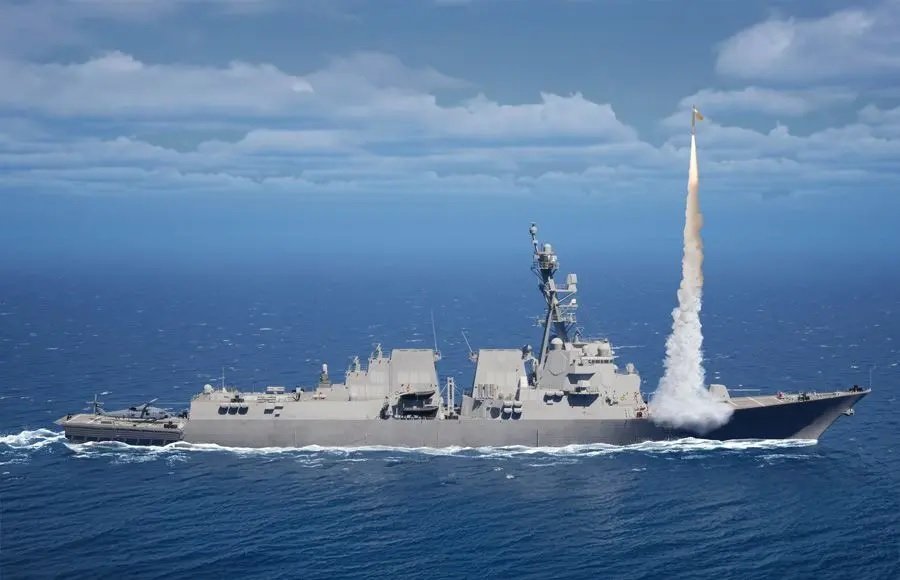
U.S
WASHINGTON — The U.S. Navy is moving forward with plans to integrate Lockheed Martin’s Patriot Advanced Capability-3 Missile Segment Enhancement (PAC-3 MSE) interceptor with the Aegis Combat System on guided-missile destroyers. The Navy is targeting initial operational capability (IOC) in 2028, according to an August 27 Congressional Research Service (CRS) report. PAC-3 MSE Integration The PAC-3 MSE is currently used with land-based Patriot air and missile defense systems and the U.S. Terminal High Altitude Area Defense (THAAD) system. The Navy plans to launch the interceptor from the Mk 41 Vertical Launching System (VLS) installed on its destroyers. Lockheed Martin plans to conduct an initial land-based test in early 2027. The integration will require software modifications to both the Aegis combat system and the PAC-3 MSE. The CRS report does not specify the number or class of destroyers that will receive the capability. It also does not provide the planned shipboard missile inventory, procurement cost or a timetable for at-sea testing. Navy Contract and Missile Procurement In April 2026, Lockheed Martin received a Navy contract to develop, integrate and test PAC-3 MSE within the Aegis architecture and Mk 41 launcher. The initial phase was reported at about $93 million, while the broader development, integration and testing effort could be worth up to about $200 million. Lockheed Martin had previously invested its own resources in Mk 41 compatibility. The Navy's fiscal year 2027 budget request includes 405 PAC-3 MSE interceptors. The Navy had ordered 12 missiles the previous year to support integration activities. How the PAC-3 MSE Works PAC-3 MSE is the current generation of the PAC-3 family and belongs to the MIM-104F branch of the Patriot system. It uses hit-to-kill technology, destroying targets through direct impact rather than a conventional explosive warhead. The interceptor is designed to engage tactical ballistic missiles, cruise missiles, unmanned aerial systems and other air-breathing threats. The missile has an onboard active millimeter-wave seeker for terminal guidance. Under the planned Aegis integration, the ship's AN/SPY-1 or AN/SPY-6 radar can provide midcourse updates before the missile's own seeker takes over during the terminal phase. This differs from earlier Patriot interceptors. PAC-2 and PAC-2 Guidance Enhanced Missiles use blast-fragmentation warheads and were designed mainly to engage aircraft and cruise missiles, with a more limited role against tactical ballistic missiles. Production and Supply Pressure The PAC-3 MSE integration is taking place as demand for Patriot interceptors increases. The CRS report said Congress is examining Patriot costs, availability, production capacity and supply-chain issues, with demand affected by the conflicts in Iran and Ukraine. Concerns include access to critical materials, supply-chain bottlenecks and whether production rates can meet U.S. and international requirements. Lockheed Martin is expanding production under multiyear agreements, with annual output planned to increase from roughly 600 interceptors to more than 2,000 over seven years. Army and International Demand The U.S. Army currently operates 15 active-component Patriot battalions and plans to add three more between fiscal years 2029 and 2031. A four-battery Patriot battalion equipped with the Integrated Battle Command System (IBCS) and Lower Tier Air and Missile Defense Sensor (LTAMDS) has an estimated procurement cost of $1.792 billion. International demand is also putting pressure on delivery schedules. According to the CRS, Denmark abandoned a planned Patriot purchase in favor of the Franco-Italian SAMP/T system, partly because of shorter delivery times. Switzerland has also considered European alternatives amid potential Patriot delivery delays of four to five years. 2028 Operational Target The CRS report does not determine whether production and supply-chain pressures will affect the Navy's Aegis integration schedule or its 2028 operational target. It also does not confirm whether the Navy has established formal requirements for the shipboard PAC-3 MSE capability. Beyond the planned early-2027 land-based test, the report does not identify additional development milestones before the 2028 IOC target. If the current schedule is maintained, PAC-3 MSE will add another interceptor option to Aegis-equipped Navy destroyers for defense against a range of missile and aerial threats.
Read More → Posted on 2026-09-05 16:02:15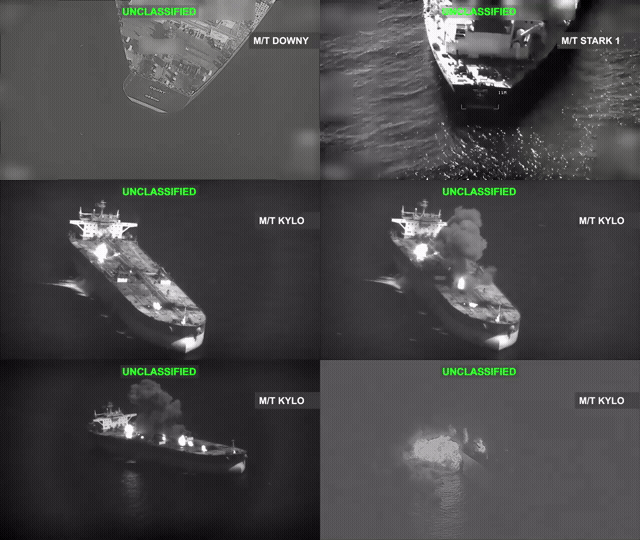
World
Washington, — U.S. Central Command (CENTCOM) said Saturday that American forces struck three Iranian crude oil tankers after Iran’s Islamic Revolutionary Guard Corps (IRGC) launched ballistic missiles toward two U.S. Navy warships operating in the region. According to CENTCOM, the two U.S. warships, identified as an aircraft carrier and a guided-missile destroyer, successfully evaded the incoming missiles. No U.S. personnel were injured, and CENTCOM did not publicly identify the ships involved. In response, U.S. forces permanently disabled two Iranian crude oil carriers and completely destroyed a third. The vessels identified by CENTCOM were: M/T Downy (IMO 9218480) — struck off the coast of Kharg Island and permanently disabled. M/T Stark 1 (IMO 9171450) — struck near Jask and permanently disabled. M/T Kylo (IMO 9189146), also known as Noxen — completely destroyed in the Gulf of Oman. CENTCOM said the three tankers were part of what it described as a multibillion-dollar shadow network that generates revenue for the IRGC and its regional proxy groups. The command said the Kylo was unladen when it was targeted. Its crew was directed to abandon the vessel before U.S. forces struck multiple critical locations on the ship, according to the CENTCOM account. The action was intended to render the tanker inoperable. Adm. Brad Cooper, commander of CENTCOM, said the United States would continue to defend its forces and could target Iran's oil fleet when necessary. The strikes followed the latest confrontation between U.S. and Iranian forces in waters around the Gulf region. CENTCOM has previously reported U.S. operations against Iranian military and maritime capabilities as part of Operation Epic Fury, which began on February 28, 2026. Earlier this week, CENTCOM said U.S. forces had completed another wave of strikes against IRGC targets in Iran, including air-defense positions, radar systems, maritime assets, mine-laying capabilities and communications sites. The command said those strikes followed attempted Iranian attacks against commercial shipping in the Strait of Hormuz and U.S. personnel. The latest tanker strikes add another maritime dimension to the ongoing U.S.-Iran confrontation. CENTCOM has not yet provided further details on the condition of the tanker crews or reported any Iranian casualties from the latest operation. Iran had not issued an immediate official response to the U.S. announcement at the time of reporting. Reports from the region said a tanker near Kharg Island had been hit, while accounts also emerged of U.S. military radio warnings being issued to a tanker before it was struck.
Read More → Posted on 2026-09-05 14:52:46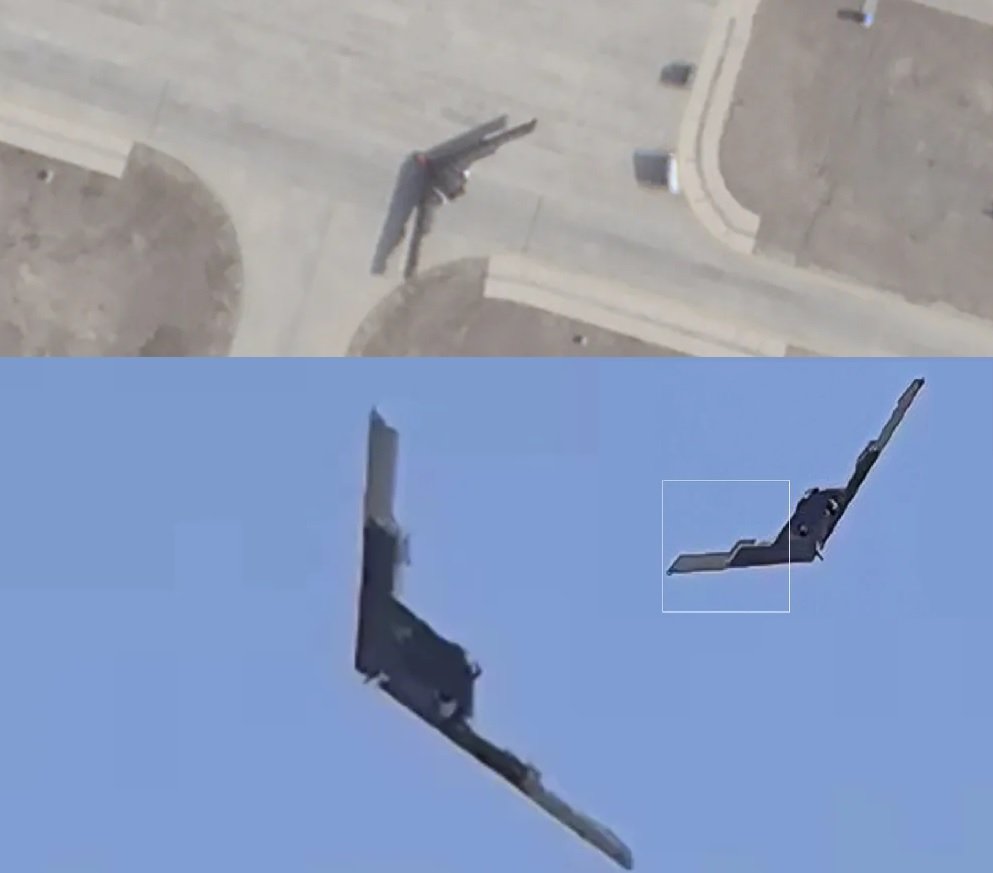
World
Malan, Xinjiang, China — New photographs and satellite imagery have provided the clearest public view yet of a large Chinese flying-wing drone unofficially known as the WZ-X. The latest images confirm that the aircraft has an unusual stepped-wing configuration that was difficult to identify in earlier satellite imagery. The aircraft was first identified in commercial satellite imagery taken on May 14, 2025, at the People’s Liberation Army Air Force (PLAAF) test facility near Malan in China’s Xinjiang region. At the time, it was unclear whether the apparent breaks in the wing outline were actual design features or artifacts caused by the imagery. New ground-level photographs and a recent satellite image now show that the changes in wing shape are part of the aircraft’s design. Unusual stepped-wing configuration The WZ-X has a broad-chord inner wing that transitions abruptly into a much narrower outer section. Instead of continuously tapering from the center fuselage toward the wingtips, the outer sections become significantly longer and thinner. This creates a distinctive stepped-wing appearance and produces a shallow, semi-sawtooth trailing edge. The aircraft also has a diamond-like central fuselage with long outer wing sections. The configuration is different from the continuous flying-wing layouts seen on aircraft such as the U.S. B-2 Spirit. The reason for the unusual wing arrangement has not been officially explained. The long outer wings give the aircraft a high aspect ratio, a configuration generally associated with efficient flight and reduced induced drag. However, the effect of the specific stepped geometry on the aircraft's radar signature remains uncertain. Large aircraft with a roughly 173-foot wingspan The WZ-X is the largest Chinese flying-wing aircraft identified to date. Recent imagery supports an estimated wingspan of approximately 170 to 173 feet (52 to 53 meters), making it roughly comparable in span to the 172-foot B-2 Spirit. Aviation specialist Andreas Rupprecht estimates the aircraft's length at approximately 46 feet (14 meters). The central fuselage appears relatively spacious compared with the aircraft's overall thickness and could provide room for fuel, sensors and communications equipment, although the exact internal configuration has not been confirmed. Images from the rear also show large landing-gear doors and split rudders positioned toward the outer wing areas. Slot-like openings at the rear of the center section have led analysts to assess that the aircraft is likely powered by two engines. A dorsal antenna visible on the aircraft has also been assessed as being associated with satellite communications. Possible high-altitude, long-endurance role The WZ-X's size and aerodynamic configuration have led analysts to associate it with high-altitude, long-endurance (HALE) missions. Its large central body and inner wing sections provide considerable space for fuel and mission equipment, while the unusually long outer wings could support efficient cruise flight. The aircraft has therefore been assessed as potentially suited to long-range surveillance and communications or networking missions. However, its exact mission has not been officially confirmed. Some analyst estimates place its normal cruising altitude between 59,000 and 66,000 feet and its range at more than 12,000 miles (about 20,000 kilometers). Reported estimates also put its cruise speed in the Mach 0.5–0.65 range. These performance figures remain unconfirmed by official Chinese sources. A strike role has also been discussed by analysts, but there is currently no publicly confirmed information establishing the WZ-X as a strike aircraft. Malan has become an important Chinese UAV test location The aircraft is being tested at the Malan facility in Xinjiang, which has become an important location for China's unmanned-aircraft development. Satellite imagery has shown extensive activity and infrastructure at the site, including multiple large aircraft and hangars. In March 2026, satellite imagery captured the WZ-X and another large flying-wing aircraft outside their hangars at the same time. The second aircraft, unofficially referred to as the GJ-X, has a different cranked-kite wing configuration and an estimated wingspan of about 137 feet (42 meters). It was subsequently observed in flight, although its official designation and mission also remain unclear. The presence of several large tailless and flying-wing aircraft at Malan indicates that China is testing multiple uncrewed aircraft configurations rather than relying on a single design. Official designation remains unknown Despite the growing amount of imagery available, the aircraft's official designation, manufacturer, propulsion details, confirmed performance and primary mission have not been publicly confirmed. The name WZ-X is an unofficial designation used by observers to identify the aircraft. The latest imagery, however, provides considerably more information about its physical configuration, particularly the distinctive stepped outer wings and shallow serrated trailing edge. The aircraft's approximately 170–173-foot wingspan also establishes it as one of the largest known Chinese uncrewed flying-wing platforms and places the WZ-X among the largest stealth-oriented UAV designs currently identified through publicly available imagery. Source : TWZ
Read More → Posted on 2026-09-05 14:46:46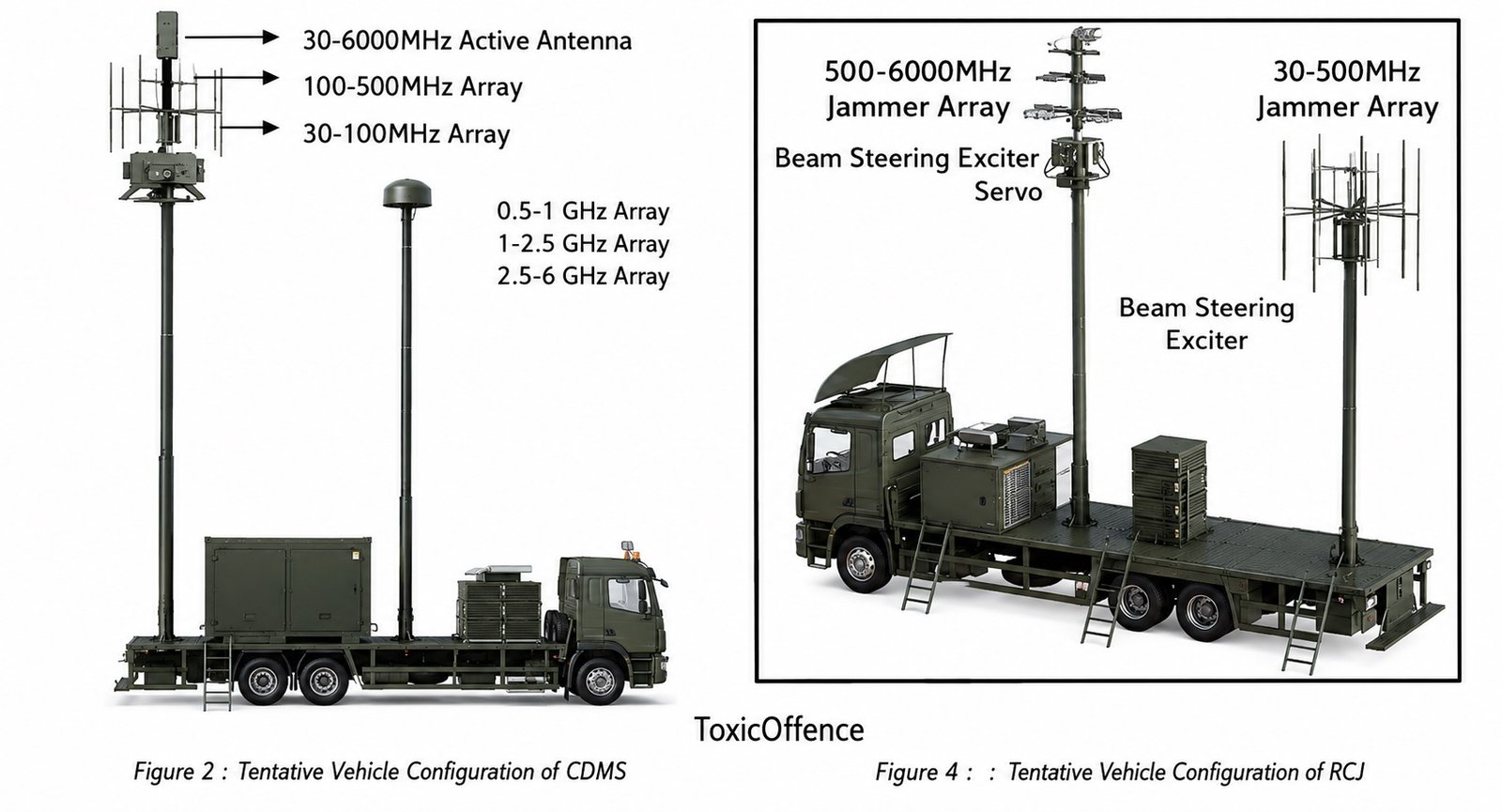
India
HYDERABAD — The Defence Research and Development Organisation’s (DRDO) Defence Electronics Research Laboratory (DLRL) is developing a vehicle-mounted jammer designed to counter cognitive radio-based military communication systems. Three units of the new system are currently under development. According to the project details, each jammer will provide 360-degree detection and jamming coverage across a frequency range of 30 MHz to 6 GHz. The system is designed to operate at ranges of up to 20 km. A key feature of the jammer is its response time of less than 5 microseconds. This capability is intended to allow the system to track and jam radios that rapidly change their operating frequencies, including systems capable of frequency hopping at up to 2,000 times per second. The jammer is being developed as a mobile electronic warfare system. The complete system can be deployed from its vehicle in less than one hour, allowing it to be used for tactical operations and relocated when required. Delivery and testing of the three units are scheduled to be completed within 21 months. Following completion, the units will be evaluated for their ability to detect and disrupt cognitive radio threats within the specified frequency band and operational range. DLRL’s Role in Electronic Warfare DLRL, based in Hyderabad, is one of DRDO’s laboratories working on electronic warfare technologies for the Indian armed forces. Its work covers areas including communications intelligence (COMINT), electronic support measures (ESM), electronic countermeasures (ECM), digital receivers and jamming systems. DRDO’s technology roadmap specifically lists smart jamming against software-defined radios (SDRs) and cognitive radio-based military communication radios as an electronic warfare development area assigned to DLRL. Cognitive radios can adapt their transmission characteristics according to the surrounding electromagnetic environment. This can include changing operating frequencies, making them more difficult to counter with conventional jamming approaches. The new system is therefore focused on responding to rapidly changing communication signals. DRDO describes electronic warfare as the use of electromagnetic energy to determine, exploit, reduce or prevent hostile use of the electromagnetic spectrum. Electronic countermeasures include jamming and deception intended to prevent or reduce an adversary’s effective use of the spectrum. The development of the vehicle-mounted jammer adds to DLRL’s existing work in mobile electronic warfare systems and digital signal-processing technologies. DRDO has also established dedicated system integration and evaluation facilities at DLRL for testing communication and non-communication electronic warfare systems. The three systems under development will provide an opportunity to evaluate the jammer against cognitive radio-based communication threats and assess its performance across the specified frequency band and range.
Read More → Posted on 2026-09-05 14:30:00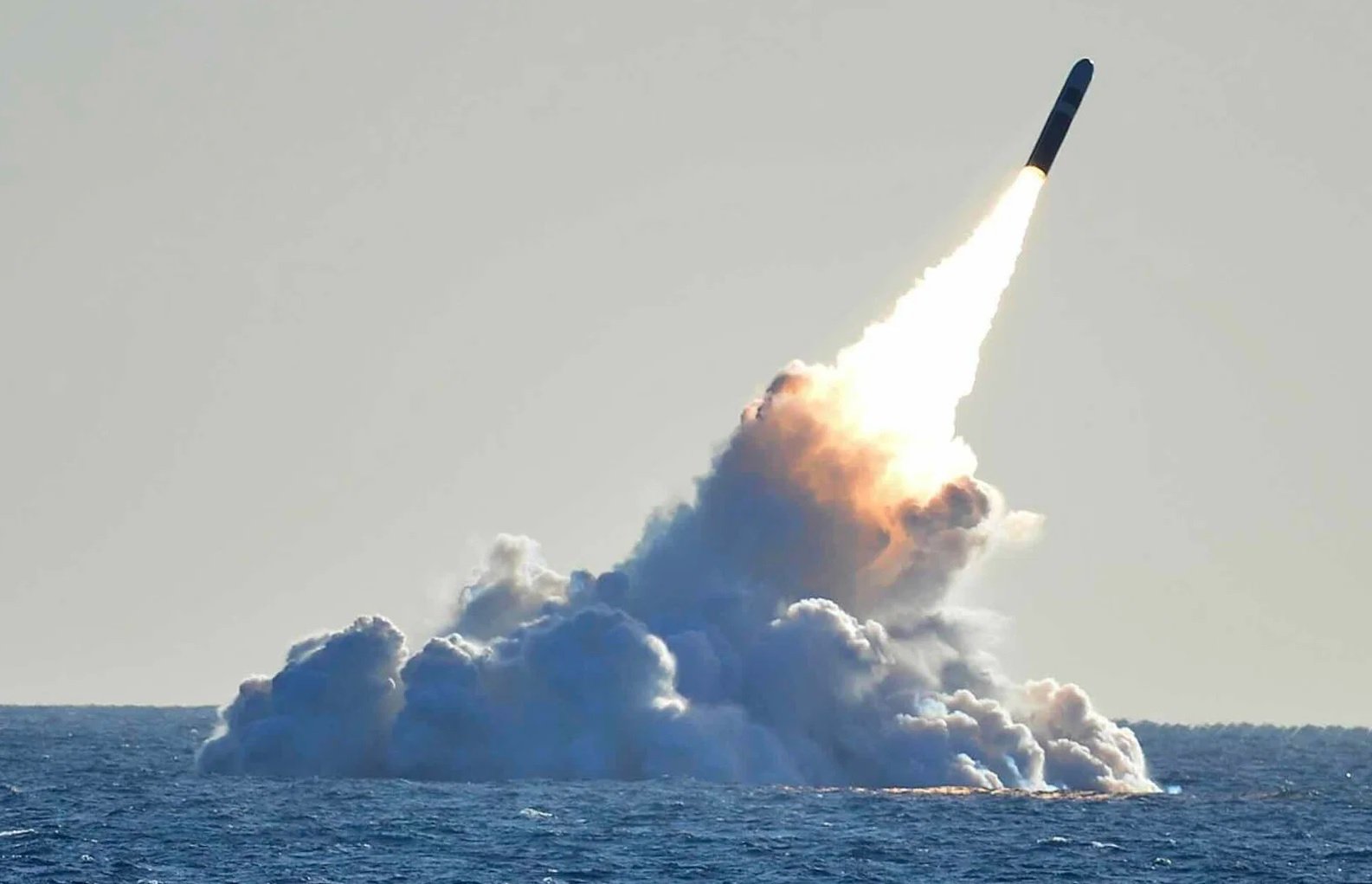
U.S
WASHINGTON — The U.S. Navy has awarded Lockheed Martin Space a $90.2 million contract modification to continue design and development work for the Trident II D5 Life Extension 2 (D5LE2) program. The cost-plus-fixed-fee modification covers what the Navy calls “SSP Alteration Advanced Design and Development.” The work is being managed by the Navy’s Strategic Systems Programs (SSP) office and is part of the second life extension of the Trident II D5 submarine-launched ballistic missile. The Trident II D5 provides the sea-based leg of the United States’ nuclear triad. The Navy’s ongoing D5LE2 program is intended to modernize the missile and support its continued operation as the service transitions from the Ohio-class ballistic missile submarines to the Columbia class. Work to continue through 2030 Under the new contract modification, about 68% of the work will be performed at Naval Submarine Base Kings Bay, Georgia. Another 25% will take place at Cape Canaveral, Florida, while the remaining work will be divided between facilities in Bangor, Washington, and Denver, Colorado. The contract is scheduled to run through September 30, 2030. The Navy is obligating the full $90.2 million from fiscal year 2026 weapons procurement funds at the time of the award. The funds will not expire at the end of the current fiscal year. The contract was awarded on a sole-source basis, with the Navy determining that Lockheed Martin had the unique capabilities required to meet the program's requirements. Trident II D5 modernization The Trident II D5 entered service in 1990 and is carried by U.S. Ohio-class and U.K. Vanguard-class ballistic missile submarines. An earlier D5 life extension program was completed in 2017. The missile weighs approximately 130,000 pounds (58,967 kilograms) and has a stated range of about 4,000 nautical miles (7,408 kilometers). Its reported speed exceeds Mach 20. According to Lockheed Martin, submarine-launched ballistic missiles account for roughly 70% of the United States' strategic deterrent capability. The Navy has described D5LE2 as the next-generation version of the Trident II D5. Official Navy testimony says the program is intended to maintain the Trident system's required performance and provide flexibility for future requirements. D5LE2 program receives earlier major contracts The latest $90.2 million award follows earlier funding for the D5LE2 program. In January 2025, the Navy awarded Lockheed Martin a $383 million contract modification to begin development of the upgraded missile. Lockheed Martin said the D5LE2 is being developed for deployment aboard Columbia-class ballistic missile submarines and is intended to remain credible through 2084. In April 2026, the Department of War announced an additional $850 million modification for continued D5LE2 design and development. Lockheed Martin publicly disclosed the award in July 2026. The D5LE2 will eventually support the transition to the U.S. Navy's Columbia-class submarines and the U.K.'s planned Dreadnought-class boats, replacing the Ohio- and Vanguard-class submarines. New production facility in Florida Lockheed Martin is also expanding its production infrastructure for the program. The company is constructing an approximately 225,000-square-foot (20,903-square-meter) facility at its Titusville, Florida, campus to produce D5LE2 components. The facility is expected to be ready in 2027 and is expected to create approximately 300 new jobs. Lockheed Martin said the facility is being developed alongside the D5LE2 program to support future production requirements. The Navy also conducted four test flights of unarmed Trident II D5LE missiles from an Ohio-class submarine off Florida's east coast in September 2025, supporting continued testing of the existing life-extended missile system. The latest contract modification continues the development work required to move the Trident II D5 system into its second major life-extension phase while preparing the missile system for the transition to the Columbia-class submarine fleet. Source : defence-blog
Read More → Posted on 2026-09-05 14:19:22
World
KYIV, — Ukraine has ordered its military units to observe a temporary halt in fighting along the line of contact from 00:00 on September 5 until 23:59 on September 8, according to sources cited by Ukrainska Pravda. The reported four-day pause is a Ukrainian proposal, and no formal ceasefire agreement with Russia had been reached. The report cited sources in several Ukrainian brigades operating in different sectors of the front, along with a senior security official. However, Ukraine's General Staff later said combat operations were continuing because Russia had not agreed to a mutual ceasefire. It said a unilateral ceasefire could put Ukrainian troops at risk. US Envoys Begin Moscow-Kyiv Mission The reported pause coincides with a diplomatic mission by U.S. special envoys Steve Witkoff and Jared Kushner. The two envoys arrived in Moscow on September 5 and were met at Vnukovo Airport by Russian presidential envoy Kirill Dmitriev. They are expected to meet Russian officials before traveling to Kyiv on September 6. U.S. President Donald Trump confirmed that Witkoff and Kushner were sent with a proposal aimed at ending the war. Trump said he wanted the envoys to determine whether an agreement could be reached. The details of the proposal have not been publicly released. Ukraine Pledges to Avoid Airstrikes Ukrainian President Volodymyr Zelenskyy confirmed the envoys' planned visit to Kyiv and said Ukraine would not conduct aerial strikes against Russian territory during their diplomatic mission. Zelenskyy called on Russia to take the same step, saying the measure was intended to protect the U.S. negotiators and allow the talks to proceed safely. Russian Attacks Continue The reported Ukrainian pause began while Russian attacks were still being reported. Air raid sirens sounded in Kyiv, and Ukraine's Air Force warned of incoming jet-powered drones. Russian forces also launched ballistic missiles and drone attacks against other Ukrainian areas, including a strike on an industrial facility in Kamianske that killed several people. Ukraine's military said the absence of a mutual agreement meant its defensive operations continued. Russia Announces Limited Kyiv Pause Later on September 5, Kremlin spokesman Dmitry Peskov said Russian President Vladimir Putin had ordered a three-day halt to strikes on Kyiv beginning at midnight. The Russian measure was linked to the U.S. envoys' visit but applied specifically to Kyiv. It did not establish a broader ceasefire along the front line or cover other Ukrainian cities. The temporary measures come as Washington attempts to restart negotiations after earlier talks stalled. The four-day Ukrainian proposal and Russia's limited pause around Kyiv have not resulted in a comprehensive Russia-Ukraine ceasefire or peace agreement.
Read More → Posted on 2026-09-05 14:01:14
U.S
SYRACUSE, N.Y. — SRC, Inc., a not-for-profit defense research and development company based in North Syracuse, New York, has received a U.S. patent for a software-based method designed to help radar systems distinguish real reflective targets from electronic interference. The U.S. Patent and Trademark Office issued the patent on June 23, 2026, as U.S. Patent No. 12,663,529. The patent is titled “Radar Apparatus and Methods for Determining the Presence of a Reflective Target Using a Multiple Response Comparison.” SRC engineers John C. Dougherty and David L. Weldum are listed as the inventors. Addressing interference in crowded radio-frequency environments Modern radar systems can operate in environments containing signals from other radars, radio transmitters, cell phone towers and similar sources. These signals can sometimes be stronger than the relatively weak echoes returned by physical objects. Such interference can cause radar systems to register or track signals that do not correspond to actual objects. SRC's patented method is designed to identify these false detections before they are presented to radar operators or entered into tracking. How the patented method works The technique is designed for scanning radars that use multiple overlapping beam patterns. When a radar detects a signal at a particular angle in one beam pattern, the software checks the corresponding location in an overlapping beam. It then compares the measured response with the response expected from a genuine reflective target. If the signal matches the expected pattern within a predetermined error threshold, the system can identify it as a valid target. If the response falls outside the expected range, the system identifies it as interference and filters it out before the detection is displayed to an operator or used for tracking. According to SRC, this approach can reduce false detections while also conserving radar processing resources. The method is software-based and was developed for integration with a range of scanning radar systems rather than a single specific platform. SRC engineers developed and tested the technique using recorded radar data to evaluate its performance in complex radio-frequency environments. Inventors John C. Dougherty, SRC's chief systems engineer, has about 25 years of experience with the company and five years of previous industry experience. He earned a bachelor's degree in electrical engineering from the State University of New York at Buffalo, followed by a master's degree in electrical engineering and an MBA from Syracuse University. The patent is his seventh. David L. Weldum, a senior principal systems engineer at SRC, has 23 years of experience with the company and 14 years of previous industry experience. He holds a bachelor's degree from Michigan Technological University and a master's degree from Syracuse University. The patent is his second with SRC and third overall. SRC's radar technology work SRC President and CEO Kevin Hair said innovation has been central to the company for nearly 70 years and that the patent reflects its work on challenges faced by radar operators. The new patent adds to SRC's existing portfolio of radar-related technologies. The company said the technology is intended to help operators reduce false reports caused by interference and focus on relevant radar information. Founded in 1957, SRC is headquartered in North Syracuse, New York, and focuses on research and development in defense, environment and intelligence. The company is chartered as an independent not-for-profit organization by the state of New York and employs more than 1,400 people.
Read More → Posted on 2026-09-05 13:46:45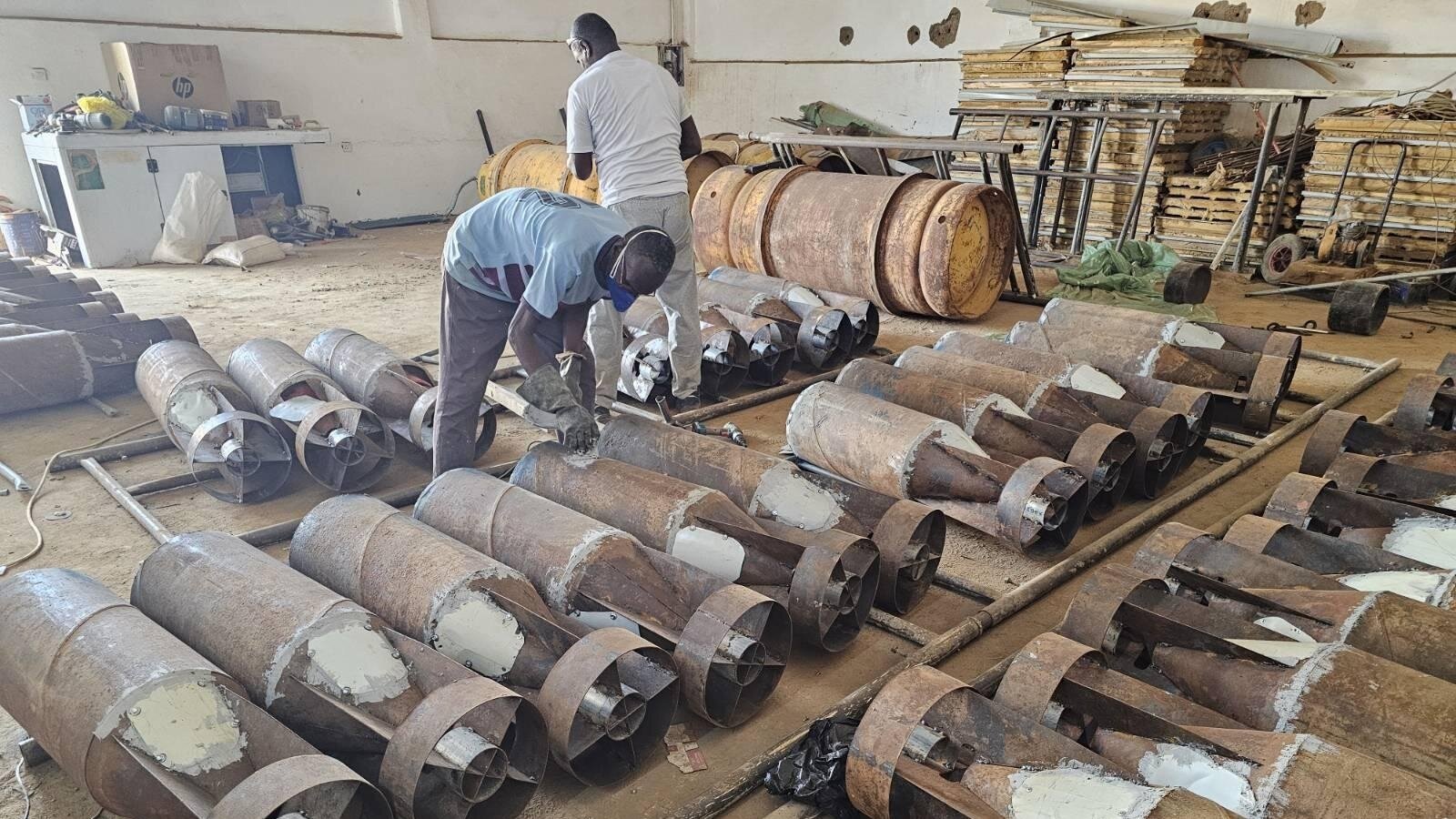
World
Khartoum, Sudan — A newly revealed intelligence dossier has provided additional evidence to allegations that the Sudanese Armed Forces (SAF) developed, produced and used chlorine-based chemical munitions during the civil war against the Rapid Support Forces (RSF). The dossier, shared with The New York Times by a Middle Eastern intelligence agency, contains documents, photographs, videos and intercepted communications detailing a secret program that operated for about six months in 2024. Chemical weapons program The documents include bomb blueprints, desert test records and references to munitions filled with chlorine and described in some files as “dual-effect” weapons carrying “choking gas.” Videos show tests producing green-yellow vapor clouds, which experts associate with chlorine. One photograph set from a production site showed dead scorpions on the factory floor, consistent with exposure to the gas. According to material reviewed by The New York Times and The Washington Post, Sudanese Army Colonel Tariq Madani directed much of the program. Messages and voice notes attributed to him discuss the assembly, testing and storage of the weapons. The bombs were designed to carry about 15 kilograms of chlorine, and one test was recorded as successful in July 2024. Production and storage By October 2024, internal messages indicated that approximately 290 to 300 chemical munitions had been manufactured. Most were reportedly stored at Merowe Airport, also known as Merowe Air Base, a major Sudanese Air Force installation. Messages from late 2024 reported that 106 of the bombs had been used against RSF positions. The dossier says chlorine was obtained from several sources. Twenty large cylinders were imported through an Egyptian border crossing and were described as sufficient for about 1,100 bombs. Additional chlorine was reportedly taken from the Al-Manara water treatment station in Omdurman, where the chemical was used for civilian water purification. Some supplies at the facility had been provided through international aid channels. Earlier evidence of chlorine attacks The dossier adds to previous investigations into alleged chlorine attacks in Sudan. A France 24 investigation supported by C4ADS documented two incidents in September 2024 near the Garri military base and Al-Jaili oil refinery north of Khartoum. Videos and photographs from the sites showed damaged industrial chlorine cylinders and yellow-green clouds. Five independent experts assessed the imagery as consistent with aerial drops of chlorine containers. The reported deliveries were attributed to the SAF's aircraft capability. Trade records also linked some chlorine cylinders to Indian exporter Chemtrade International Corporation, which said the shipments were intended solely for water treatment. U.S. determination and alleged cover-up The United States formally determined in April 2025 that the Government of Sudan had used chemical weapons in 2024, violating the Chemical Weapons Convention. The determination triggered sanctions, including restrictions on U.S. exports and access to U.S. government credit lines. U.S. officials had earlier said Sudanese forces appeared to have used chemical weapons, apparently involving chlorine, on at least two occasions against RSF fighters in remote areas. The new dossier indicates that SAF chief Gen. Abdel Fattah al-Burhan was informed about the chemical-weapons program. After the U.S. sanctions, communications attributed to senior officers reportedly contained instructions to remove evidence and traces of the program from storage sites. A September 2025 message attributed to Madani said a base had been “emptied of traces and residue.” Sudan denies allegations The Sudanese military has consistently denied using chemical weapons. Sudanese officials have said there is no evidence supporting the allegations and pointed to an internal national committee that found no contamination at the sites it examined. Sudan also said a U.S. team visited and collected samples without publicly producing evidence of chemical-weapons use. Sudan has called for the issue to be handled through the Organisation for the Prohibition of Chemical Weapons (OPCW). International law The conflict between the SAF and RSF began in April 2023 and has caused large-scale displacement, famine conditions and extensive civilian harm. Chlorine is widely used for water treatment, but its use as a weapon is prohibited under the Chemical Weapons Convention and constitutes a war crime under the Rome Statute. The newly revealed dossier adds specific details about the alleged production, testing, storage and deployment of chlorine munitions, as well as information about the military command structure, building on earlier U.S. findings and open-source investigations.
Read More → Posted on 2026-09-05 13:38:34
U.S
WASHINGTON, — The U.S. Department of the Air Force has posted a notice for a new multi-year purchasing arrangement called the DAF Battle Network “Megatron” Multiple Award Contract (MAC) IDIQ). The notice was published on the government’s public contracting portal on September 4, 2026. The contract will allow the U.S. Air Force and Space Force to purchase command-and-control technologies from multiple companies over time, reducing the need to negotiate separate contracts for individual requirements. Part of the DAF Battle Network The Megatron contract is managed by the Portfolio Acquisition Executive for Command, Control, Communications and Battle Management (PAE C3BM). It supports the broader DAF Battle Network, which evolved from the Advanced Battle Management System (ABMS). The effort focuses on connecting sensors, data systems and decision-making tools across the Air Force and Space Force so commanders can receive and act on information more quickly. Six Technology Areas Companies selected under the contract could provide technologies in six main areas: Digital architecture: Architecture, modeling, simulation and data-management tools. Sensor integration: Hardware and software for integrating sensors and sharing their data. Secure processing: Technologies for secure data processing and cloud-based data repositories. Connectivity: Network technologies designed to maintain communications in contested environments. Applications: Software interfaces for distributed decision-makers. Synthetic environments: Computer-simulated environments for training and testing. Two Contract Pools The Air Force plans to divide contract awards into two pools. One will be reserved for small businesses, while the other will be unrestricted and open to companies of any size. After the vendors are selected, Department of the Air Force program offices will be able to place orders directly through the decentralized contracting vehicle. Industry Review and Timeline The Air Force approved the Megatron acquisition strategy in August 2026. A draft version of the contract requirements was released on September 4 for industry review and comments. The draft document is restricted. Companies interested in reviewing it must formally request access and pass a review of their business registration. Written feedback must be submitted to contracting officer Julianne Payne by September 30, 2026. The planned procurement schedule is: Draft RFP: Late Fiscal Year 2026 Final RFP: First quarter of Fiscal Year 2027 Contract awards: Third quarter of Fiscal Year 2027 Virtual Industry Day The Air Force will hold a virtual Industry Day on October 7, 2026, from 8 a.m. to noon Eastern time. Program manager Jeffery “Ryan” Compton and contracting officer Julianne Payne will brief companies on the planned bidding process. Because of the expected number of participants, officials will not conduct individual one-on-one meetings. Questions submitted during the event will be compiled and made public afterward. Earlier industry briefings indicated that Megatron is intended to support the rapid exploration and maturation of technologies associated with ABMS and to supplement or potentially succeed existing ordering vehicles covering architecture, integration and related work. The final contract ceiling and number of awards have not yet been finalized in the current government notice. A potential ceiling of $4.5 billion or more has been discussed in industry reporting, but that figure is not confirmed in the latest notice.
Read More → Posted on 2026-09-05 13:29:44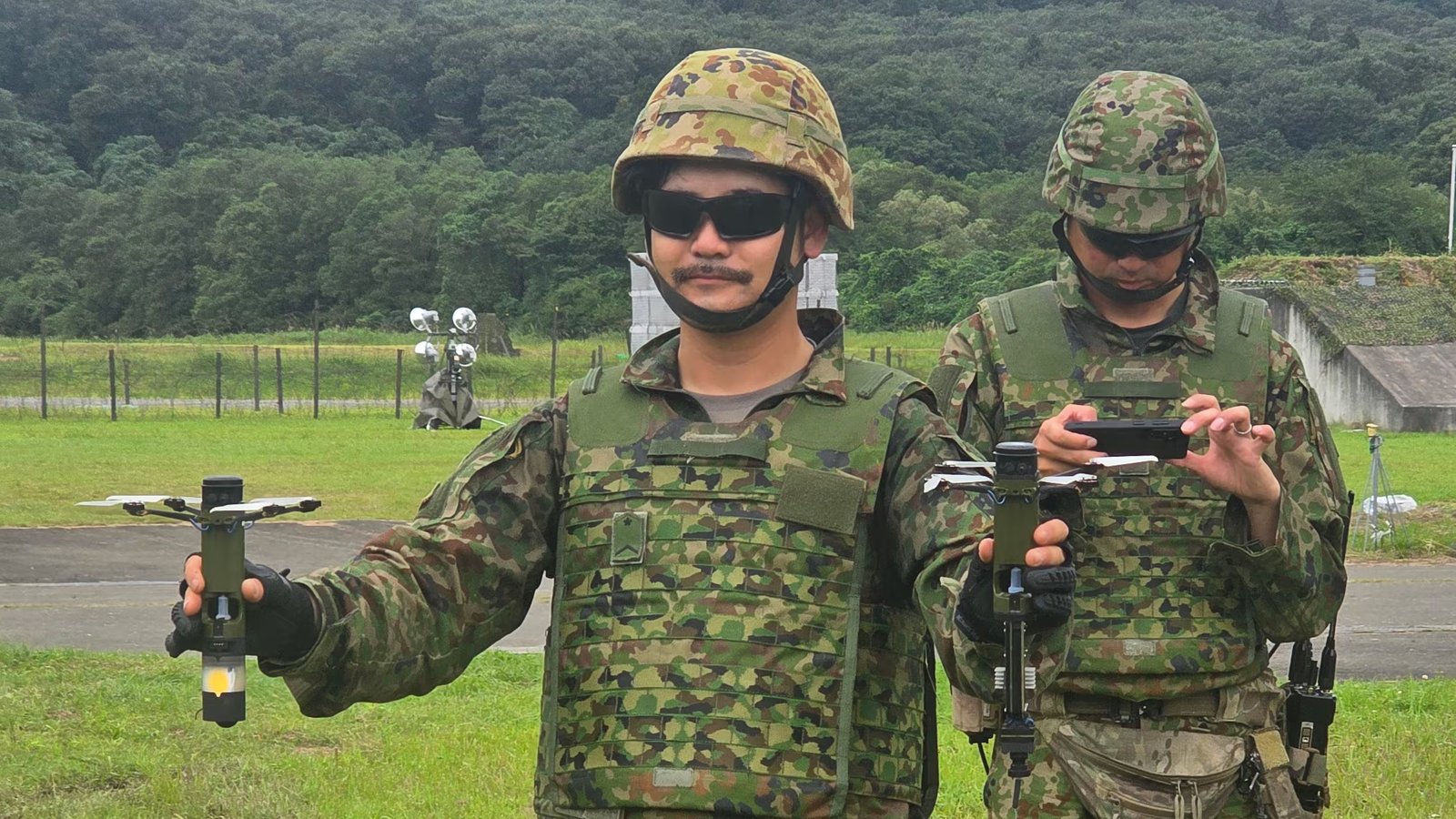
World
MIYAGI, Japan — Japan’s Ground Self-Defense Force (JGSDF) has publicly displayed a compact attack drone during a joint exercise with the French Army at the Ojojihara Training Area in Miyagi Prefecture, showing its planned use for close-range reconnaissance and strikes against ground targets. The drone was presented during Brunet-Takamori 26, held from late August to early September 2026. About 120 Japanese personnel from the 20th Infantry Regiment and around 40 French troops from the New Caledonia Marine Infantry Regiment participated. The training focused on counter-guerrilla and urban operations. Drone Demonstration The planned scenario involved two soldiers operating the system. One soldier was to launch a reconnaissance drone by hand, while another controlled a second drone carrying simulated ammunition using a portable tablet or smartphone. A malfunction prevented the planned flight during the main exercise. A separate demonstration was conducted afterward. In that demonstration, one drone located the target using its camera, while a second drone approached at low altitude and used an equipped lamp to simulate neutralizing the target. Drone40 System The aircraft is the Drone40, developed by Australian company DefendTex. Japan’s Ministry of Defense has selected it as the Small Attack UAV Type I, with Japanese trading company Marubeni Aerospace holding the contract. Japan has not officially disclosed the specific system’s weight, range, endurance, payload capacity, propulsion or guidance specifications. According to company specifications, the Drone40 is about 13 cm long, has a maximum take-off weight of around 400 grams, an endurance of up to one hour and a reported range of up to 35 km. It can be launched by hand or from a 40 mm grenade launcher. Its modular design allows it to carry electro-optical or infrared sensors for reconnaissance, or strike payloads including fragmentation and explosively formed penetrator warheads. It uses a GPS-based autopilot, encrypted radio data link and portable ground-control station, while multiple units can operate together. Part of Japan’s SHIELD Program The Type I drone is one of three attack-drone types being developed for different ranges. Type I is intended for short-range strikes against vehicles, personnel and landing forces near friendly units or critical facilities. Type II covers medium-range missions against boats and lightly armored vehicles, while Type III is a longer-range, vehicle-transported system. The systems form part of Japan’s SHIELD (Synchronized, Hybrid, Integrated and Enhanced Littoral Defense) coastal defense program. SHIELD is planned to combine more than 10 types of unmanned aerial, surface and underwater systems for surveillance, strike and protection missions. Japan’s FY2026 defense budget provides significant funding toward establishing the SHIELD system by fiscal year 2027. The program is intended to strengthen Japan’s coastal and island defense capabilities. Delivery and Deployment Deliveries of the Small Attack UAV Type I are expected by late May 2027, with sequential deployment to ordinary JGSDF infantry units planned to begin in fiscal year 2027. The Ojojihara presentation marked the first public showing of the attack drone during a joint exercise with a foreign military.
Read More → Posted on 2026-09-05 13:20:14
U.S
WASHINGTON, — The U.S. Army has selected Westinghouse Government Services’ eVinci microreactor for the next phase of the Janus Program, pairing the system with Fort Drum, New York. The Army announced the selection on August 26, 2026, advancing the eVinci heat-pipe reactor toward potential deployment at a U.S. military installation. Janus Program The Janus Program is the Army’s next-generation nuclear power initiative, supported by the Department of War Innovation Unit (DIU). It aims to move microreactor technology from designs and experiments toward reliable commercial hardware that can provide secure, resilient and reliable energy for defense installations. The Army considers reliable on-site power important for mission assurance, operational readiness and national security. Five nuclear energy vendors and five initial Army locations have been selected: Company Initial location Antares Nuclear, Inc. Fort Bragg, North Carolina BWXT Advanced Technologies, LLC Fort Campbell, Kentucky General Atomics Electromagnetic Systems Fort Hood, Texas Radiant Industries, Inc. Fort Benning, Georgia Westinghouse Government Services Fort Drum, New York The companies were selected after their technical, financial and organizational capabilities were assessed by a panel of dozens of experts from across the country. The Army is awarding up to a combined $2.2 billion through milestone-based agreements covering fiscal years 2027–2031. The vendors will own, construct and operate the microreactors. With expected private-sector funding, the Army anticipates that more than 20 microreactors could eventually be built and operated across Department of War installations. eVinci Microreactor Westinghouse says the eVinci microreactor is designed to provide electricity 24 hours a day, seven days a week for eight years without refueling. The system uses a heat-pipe reactor design and TRISO fuel, with passive heat removal. It can produce around 5 megawatts of electricity from a 15-megawatt thermal core. The reactor has a small footprint and is designed for transport by road, rail or barge. It requires no water for cooling and is intended for above-ground installation. Westinghouse completed zero-power criticality testing of the eVinci design on August 24, 2026, at the National Criticality Experiments Research Center. Fort Drum Selection Fort Drum, home of the 10th Mountain Division, was selected based on factors including mission requirements, power demand, grid conditions, and safety and environmental considerations. The Army’s earlier selection process considered nine military installations. The planned Janus microreactors will each generate less than 20 megawatts of electricity and occupy less than five acres. They are intended to provide localized resilience for critical mission infrastructure and can integrate with existing commercial power grids. 2028 Target The Janus Program aims to have at least one Army-regulated nuclear reactor capable of producing usable electricity operating at a domestic military installation by September 30, 2028, consistent with Executive Order 14299, signed in May 2025. “Reliable energy is fundamental to mission assurance, operational readiness and national security,” said Rich Rademacher, President of Westinghouse Government Services. He said the eVinci selection highlights the role advanced nuclear technology can play in providing resilient, long-duration power for military missions. Dr. Jeff Waksman, Principal Deputy Assistant Secretary of the Army for Installations, Energy and Environment, said the Janus Program is focused on transitioning from designs and experiments to reliable commercial hardware and securing energy independence. The Janus Program was launched in October 2025. The Army expects additional sites and potential expansion to other military services to be announced as the program progresses.
Read More → Posted on 2026-09-05 12:28:46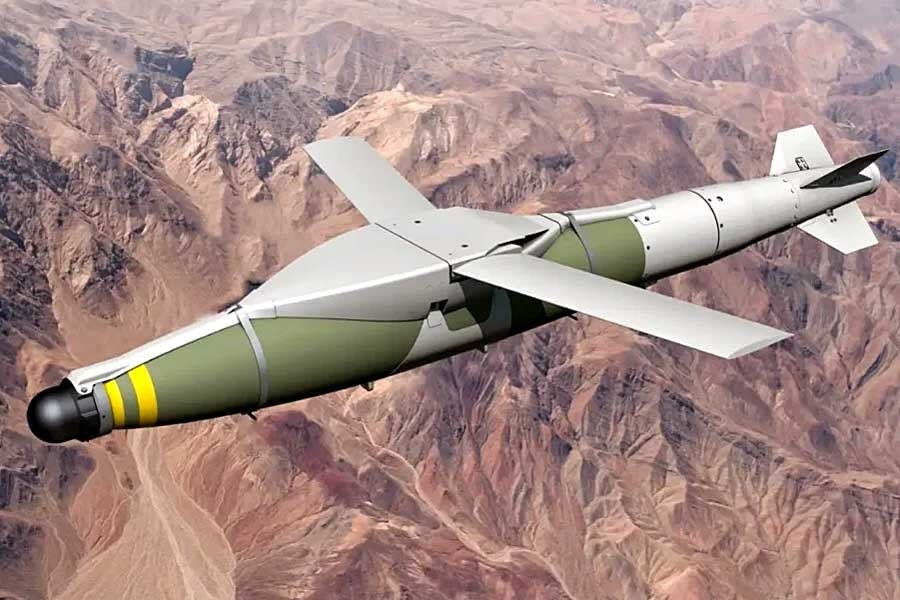
U.S
WASHINGTON, — The United States has approved two potential Foreign Military Sales to Saudi Arabia with a combined estimated value of $5.75 billion, covering Joint Direct Attack Munition-Extended Range (JDAM-ER) systems, general-purpose bombs and AGT-1500 tank engines. The U.S. State Department notified Congress of the proposed sales on September 4. The notifications begin the congressional review process, meaning the approvals do not represent final contracts. The final agreements will depend on subsequent negotiations between the United States, Saudi Arabia and the contractors. $5 Billion JDAM-ER Package The larger package is valued at an estimated $5 billion and covers JDAM-ER systems, bombs and associated equipment. Saudi Arabia has requested: 5,004 KMU-572 JDAM guidance kits 5,000 KMU-556 JDAM guidance kits 5,004 BLU-111 500-pound general-purpose bombs 5,000 BLU-117 2,000-pound general-purpose bombs The package also includes FMU-139 fuze systems, DSU-38 and DSU-40 target detectors, containers, support equipment, spare parts, consumables, accessories and repair-and-return support. U.S. government and contractor engineering, technical and logistics support services are also included. JDAM-ER is an extended-range version of the JDAM concept that uses an aerodynamic wing kit to increase the glide distance of a bomb after release. The extended-range system does not require an onboard propulsion system. Boeing has been identified as the principal contractor for the JDAM-ER package. $750 Million Abrams Tank Engine Package The second proposed sale is valued at $750 million and covers 60 AGT-1500 gas turbine engines for Saudi Arabia's M1 Abrams tank fleet. The package includes engine containers, spare parts, consumables, accessories, contractor logistics support, and U.S. government and contractor engineering, technical and logistics support services. Honeywell is the principal contractor, with work associated with Anniston Army Depot in Alabama. The AGT-1500 is the gas turbine engine used in the M1 Abrams tank family. Saudi Arabia has operated M1 Abrams tanks since acquiring an initial batch of 315 vehicles in 1989 and has continued to maintain and upgrade the fleet. U.S. Stated Objectives The State Department said the proposed sales support U.S. foreign policy and national security objectives by improving the security of Saudi Arabia as a Major non-NATO Ally. For the JDAM-ER package, the department said the equipment would strengthen Saudi Arabia's airborne defense capability, support homeland defense and improve interoperability with U.S. forces and other Gulf partners. For the tank engines, the department said the proposed sale would support Saudi military readiness and operational requirements while improving interoperability for bilateral contingency plans. The U.S. government also determined that Saudi Arabia would have no difficulty absorbing the equipment and services into its armed forces. The proposed sales are not expected to alter the military balance in the region or adversely affect U.S. defense readiness. Sales Still Require Final Agreements The $5.75 billion figure is an estimated value for the proposed Foreign Military Sales cases, rather than the value of completed contracts. The quantities, requirements and final cost can change during negotiations. Congress will have a review period following the notifications. If the deals proceed through the FMS process, Saudi Arabia and the U.S. government will then complete the required agreements and contracting arrangements. The two Saudi Arabian notifications were part of a broader group of proposed U.S. military sales to Middle Eastern countries announced on the same day. The combined value of the Saudi, Oman and Iraq notifications was reported at approximately $6.1 billion.
Read More → Posted on 2026-09-05 12:13:23
India
HYDERABAD, — The Defence Research and Development Organisation (DRDO) and the University of Hyderabad (UoH) have secured an Indian patent for BAM-H24, a boron-, hydrogen- and nitrogen-rich energetic compound developed for advanced solid rocket propulsion. The Indian Patent Office granted Patent No. 599900 to the Chairman of DRDO and the Advanced Centre of Research in High Energy Materials (ACRHEM) at the University of Hyderabad, which is now known as the Defence Innovation and Advanced Technology Centre (DIA-CoE). The patent was filed on December 21, 2022, and was granted on August 20, 2026. The invention is formally titled “N1,N1,N1,N4,N4,N4-hexaethylbut-2-yne-1,4-diaminiumdodecaborane: The Next Generation Solid Rocket Propellant Fuel.” The compound, designated BAM-H24, covers its synthesis, structural elucidation and energetic properties. BAM-H24 designed for solid rocket propulsion According to the University of Hyderabad, BAM-H24 is intended to have multiple roles in advanced high-energy material formulations. It can function as a solid rocket propellant fuel, fuel additive or burn-rate accelerator. The compound is expected to provide high specific impulse and reduced ignition delay, properties that can improve energy efficiency and performance in solid rocket propulsion systems. Its potential applications include missile systems and space launch vehicles. However, the patent itself represents protection of the underlying compound and research; its grant does not by itself establish that BAM-H24 has already been integrated into an operational missile or launch vehicle. Safety and storage properties BAM-H24 also has reported characteristics aimed at improving the handling and storage of energetic materials. The research team reported strong chemical and thermal stability and high insensitivity to impact and friction, reducing the risk associated with accidental ignition during handling. Another reported property is its non-hygroscopic nature, meaning the material does not readily absorb water. This can help preserve its integrity in humid storage conditions. DRDO-UoH research collaboration The invention was developed through collaboration between DRDO and ACRHEM at the University of Hyderabad. The research was led by Dr. Muddamarri Hanumantha Rao of ACRHEM and Professor Muralidharan Krishnamurthi of ACRHEM and the UoH School of Chemistry. The patent provides intellectual-property protection for an indigenous high-energy compound with potential applications in both defence propulsion and space launch systems. It also represents continued collaboration between DRDO and academic researchers in the development of advanced energetic materials. Further research and development would be required to determine the performance of BAM-H24 in specific propulsion systems and its suitability for practical deployment.
Read More → Posted on 2026-09-03 17:31:45
World
Iran — New footage circulating online appears to show an Iranian missile launch, while separate footage showing the aftermath of damage at a residential location has raised questions about what caused the destruction. The footage has emerged amid renewed fighting between Iran and the United States and growing accusations from Tehran that U.S. strikes have caused civilian casualties. The visible damage at the residential site appears limited compared with the destruction documented after some direct strikes involving larger U.S. munitions elsewhere in the conflict. This has led to questions over whether the damage could have resulted from a smaller weapon, falling debris, an air-defense interceptor or a malfunctioning projectile. However, the available footage does not establish which weapon caused the damage or provide a complete sequence of events. Determining the cause would require independent analysis of the impact site, munition fragments, timing and other available evidence. 🚨 The Islamic Republic is rushing to blame the United States for the deadly wedding tragedy, but serious questions remain over what actually struck the house.The reported U.S. target was a telecommunications tower roughly 130 meters from the wedding, placing military or… pic.twitter.com/Rp9Hf5HppZ — The Iran Watcher (@TheIranWatcher) September 2, 2026 Iran: Iranian Missile Launch Footage The emergence of the launch footage is significant because there have been previous reports and videos of Iranian missiles failing shortly after launch and falling back onto Iranian territory. Debris from air-defense interceptions has also been reported in populated areas. Some online speculation has suggested that a smaller system, including a Shahed-type drone, could explain limited damage at the site. That remains unconfirmed, and the footage alone cannot establish that a drone was involved. Iranian authorities have described the incident as an American “war crime” and attributed the civilian incident to the United States. The exact munition and sequence of events, however, remain matters requiring independent verification. The new footage therefore raises questions about the basis for assigning responsibility before all available evidence has been examined. Minab, Hormozgan Province: Earlier School Strike The latest dispute has also revived debate over the February 28 strike near the Shajareh Tayyebeh elementary school in Minab, Hormozgan province. Iranian authorities reported that approximately 156–175 people were killed, mostly schoolchildren and staff, with about 95 injured. The school was located next to an IRGC naval compound that was also struck. Multiple investigations have examined the incident using videos and satellite imagery. The Washington Post reported that footage appeared to show a U.S. Tomahawk missile striking near the school and the adjacent IRGC facility. Bellingcat also geolocated footage showing a Tomahawk striking the IRGC compound. Later analysis by Bellingcat identified two waves of strikes in the area and concluded that the school was impacted during the first wave. Bellingcat also identified munition remnants presented as being from the school as Tomahawk remnants, although it said it could not independently verify where the remnants were originally recovered. The Washington Post separately reported that the school appeared on a U.S. target list and may have been mistakenly identified as a military site. These findings make the Minab case different from the latest footage in one important respect: there is substantially more publicly available visual and forensic evidence linking the February strike to U.S. weapons. Kuhestak, Sirik County: Questions Over Wedding Strike A second incident under scrutiny occurred on September 1 in Kuhestak, Sirik County, where a wedding was taking place at a private residence. Iranian officials and state media reported that the strike killed civilians and injured dozens. The Associated Press reported that four people were initially reported killed and more than 60 injured, while later reporting put the death toll at five. Images and videos from the location show damage to the residential building and nearby structures. A telecommunications tower in the area was also struck. Weapons experts who examined fragments reported by the media identified components that could be associated with U.S.-manufactured guided weapons, with possible identification including JSOW or SLAM-ER. The U.S. military has said it does not target civilians and has been reviewing reports concerning the incident. Evidence Remains Important The competing claims surrounding these incidents show why the identification of the munition and reconstruction of the sequence of events are important. Iran has accused the United States of deliberately attacking civilians, while U.S. officials have said their operations are directed against military targets and have disputed deliberate targeting of civilians. At the same time, the presence of Iranian military facilities near civilian locations, reports of failed Iranian launches and falling interceptor debris, and evidence from individual strike sites all need to be considered separately rather than treated as proof of responsibility for every incident. The latest missile-launch footage does not, by itself, prove that an Iranian weapon caused the reported residential damage. Likewise, an accusation by either side cannot independently establish responsibility. For the newest incident, further examination of high-resolution imagery, physical fragments, video geolocation, launch trajectories and timing would be needed to establish what weapon struck the location and how the incident occurred.
Read More → Posted on 2026-09-03 17:27:41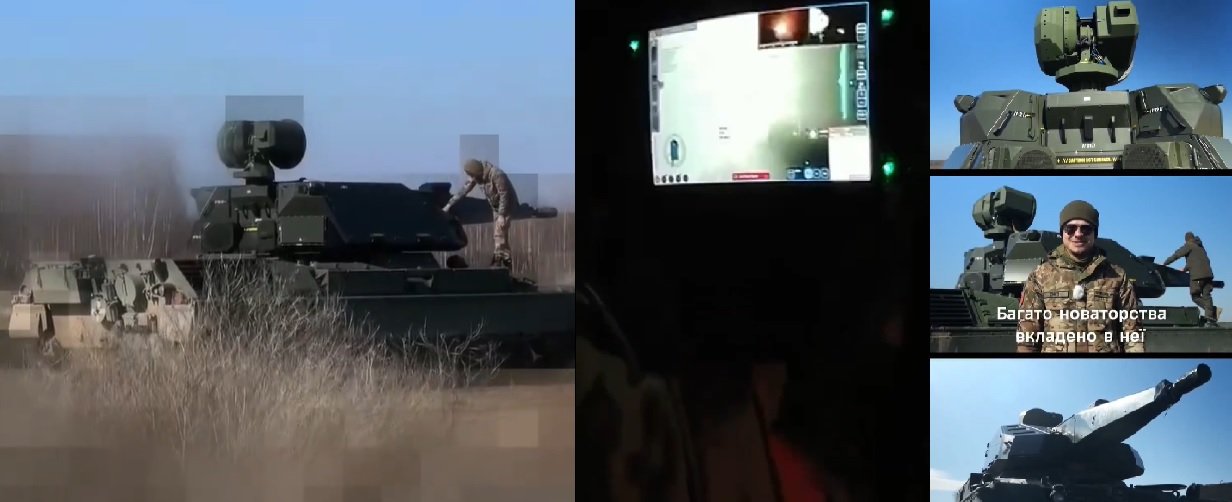
World
KYIV, Ukraine — Ukraine’s Armed Forces have released footage showing what appears to be one of the first Rheinmetall Skyranger 35 short-range air defense systems mounted on a Leopard 1 tank chassis to reach Ukrainian units. The footage was highlighted by GAU, an open-source account that tracks German military assistance to Ukraine. GAU identified the unit operating the system as Ukraine’s 1020th Anti-Aircraft Missile Regiment. Recent Ukrainian reporting has also identified the regiment as operating the Skyranger 35 and released footage showing the system engaging an aerial target. It seems that Ukraine's 1020th Anti-Aircraft Missile Regiment which belongs to the Ground Forces has taken delivery of the first Skyranger 35 SPAAGs mounted on a Leopard 1 chassis made by @RheinmetallAG.A contract for the delivery of the Skyranger 35 SPAAGs was signed in H2 of… pic.twitter.com/VRWhGx1LCa — GAU (@deaidua) September 3, 2026 Contract Financed by Frozen Russian Assets Rheinmetall announced the Leopard 1-based Skyranger 35 contract in October 2025. The company said the order was worth a three-digit million-euro amount and was financed by an unnamed European Union country using proceeds from frozen Russian assets. Production and final integration of the systems were assigned to Rheinmetall Italia at its headquarters in Rome. Ukraine had already received Skyranger 35 systems on wheeled truck platforms. The Leopard 1 version is a separate tracked configuration, combining the Skyranger turret with the Leopard 1 chassis. 35mm Cannon for Short-Range Air Defense The Skyranger 35 is equipped with the KDG 35/1000 revolver cannon, which uses 35×228mm ammunition. Rheinmetall states that the cannon has a firing rate of up to 1,000 rounds per minute and an effective range of up to 4,000 metres. The system uses AHEAD airburst technology. The ammunition is programmed to burst near the target and release tungsten sub-projectiles, allowing the weapon to engage aerial targets without requiring a direct impact from a single projectile. This configuration is intended for short-range air defense, including the engagement of small aerial threats. The Skyranger 35 turret has a high degree of commonality with the Oerlikon Revolver Gun Mk 3. Rheinmetall has also stated that guided missiles could be integrated onto the system in the future. Leopard 1 Chassis The Leopard 1-based Skyranger 35 was publicly demonstrated by Rheinmetall in September 2024 at the Erprobungszentrum Ochsenboden test site in Switzerland. The demonstrator used a Leopard 1A5BE chassis and an unmanned Skyranger turret. The tracked configuration gives the air-defense system the mobility and protection of an armored vehicle rather than a truck-based platform. Rheinmetall specifically describes the combination as providing the mobility and protection of a tracked vehicle together with the Skyranger 35’s cannon-based air-defense capability. The Leopard 1 chassis also uses a platform already operated by Ukraine. Ukraine has received Leopard 1 tanks from Western partners since 2023. Open-source tracking by Oryx documents numerous Ukrainian Leopard 1 losses, although such visual-loss databases do not represent the complete number of vehicles delivered or lost. Ukraine Receives System Ahead of Wider European Fielding The Ukrainian appearance comes as several European countries are expanding their interest in the Skyranger family. Germany has ordered Skyranger systems, while Romania ordered 24 Skyranger 35 systems in 2026 as part of a larger defense package. Rheinmetall has also been increasing production capacity for the Skyranger family. The appearance of the Leopard 1-based system in Ukrainian service confirms that the configuration announced by Rheinmetall in 2025 has moved from production into operational use in Ukraine.
Read More → Posted on 2026-09-03 17:12:56Search
Top Trending in 24 Hours
-
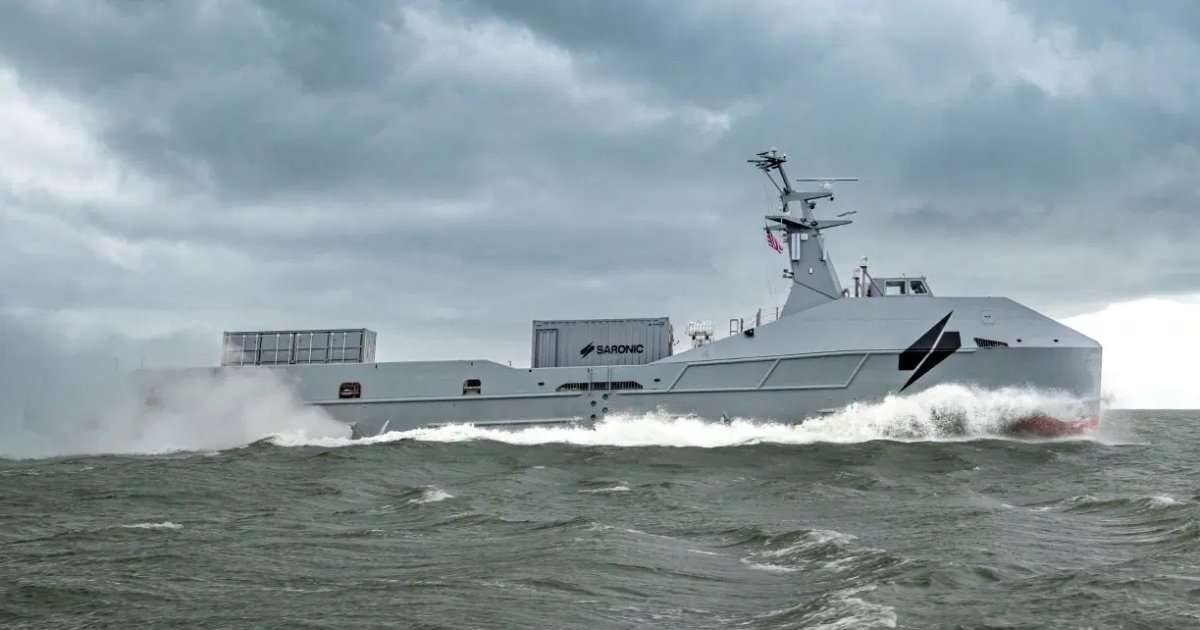 U.S. Navy Awards Production Agreements for 30 Medium Unmanned Surface Vessels, Including 10 Saronic Marauders
-
 Boeing Wins $20 Billion U.S. Navy Contract for F/A-XX Sixth-Generation Fighter
-
 Flydubai Flight to Israel Diverted to Saudi Arabia After Possible Attempted Terror Attack in Cockpit
-
 NASA Adds Blue Origin’s Upgraded New Glenn 9×4 to Launch Services Contract
-
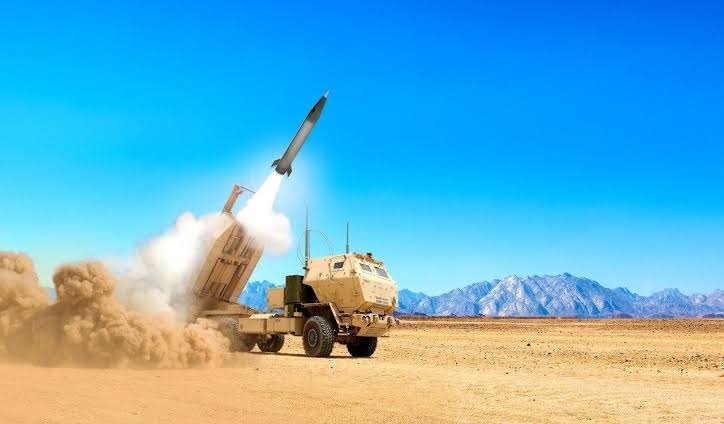 U.S. Army Selects Five Companies to Develop 1,000-Km Precision Strike Missile Prototypes
-
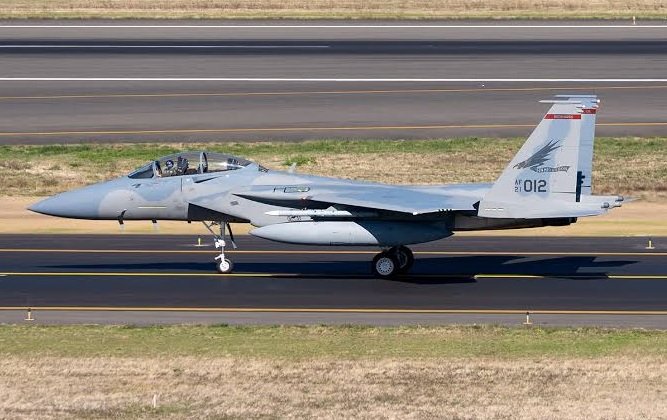 U.S. Air Force Awards Boeing $2.38 Billion Contract for 22 F-15EX Fighter Jets
-
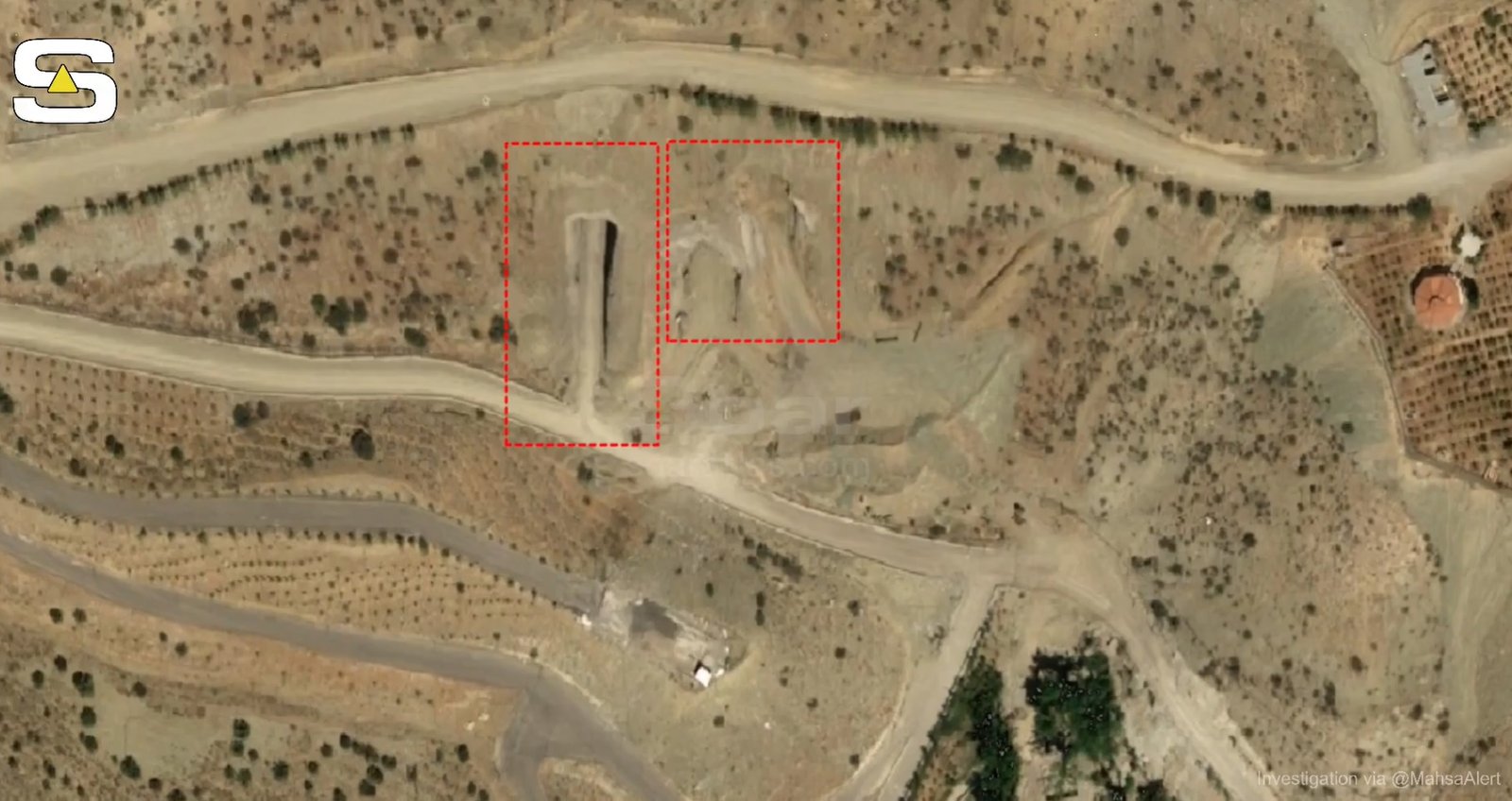 Satellite Imagery Shows Construction Changes at Hillside Site Linked to Iran’s Supreme National Security Council
-
 U.S. Army Awards Heaviside Industries $99 Million Contract for MOTH RF Spectrum Analyzers
Top Trending in 4 Days
-
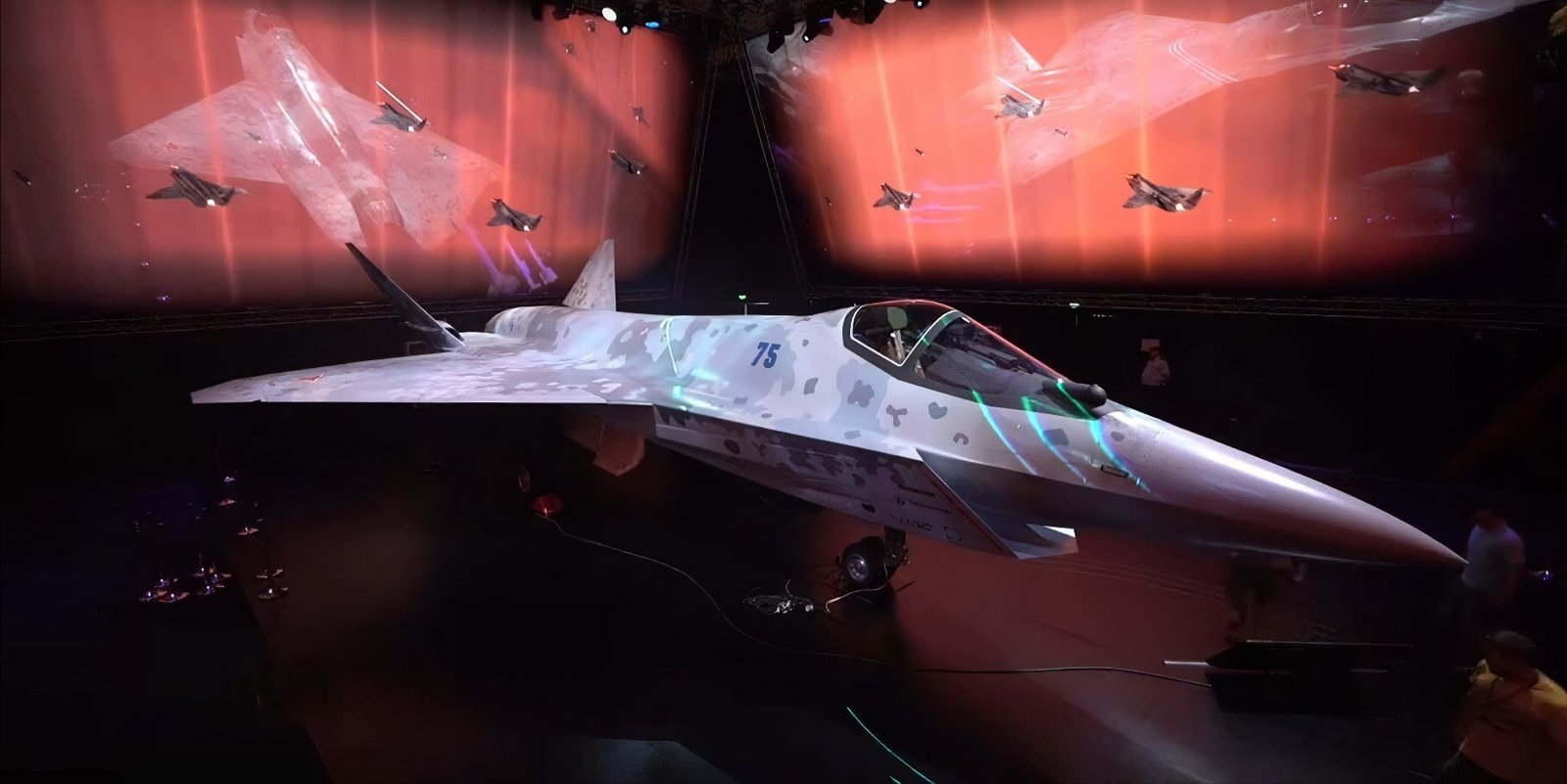 Russia Says Su-75 Checkmate Could Cost Just $25–30 Million, Flight-Hour Costs 6 Times Lower Than F-35
-
 China Reports First High-Orbit Refueling of BeiDou Satellite, but Tracking Data Raise Questions
-
 Eight U.S. Marines Injured in Iranian Missile Strike on U.S Vessel in Strait of Hormuz
-
 U.S. and Russia Remove Human-Review Rules From Draft UN AI Weapons Framework
-
 UK Offers Nuclear Deterrence for Its Northern European Defence Partners
-
 U.S. Navy Begins Flight Testing Blackbeard Hypersonic Missile on F/A-18 Super Hornet
-
 Rheinmetall Develops Automated Reloader for Austrian Skyranger Air Defense System
-
 HII Expands Massachusetts Unmanned Systems Facility by 25 Percent to Support U.S. Navy Lionfish Production
