Europe
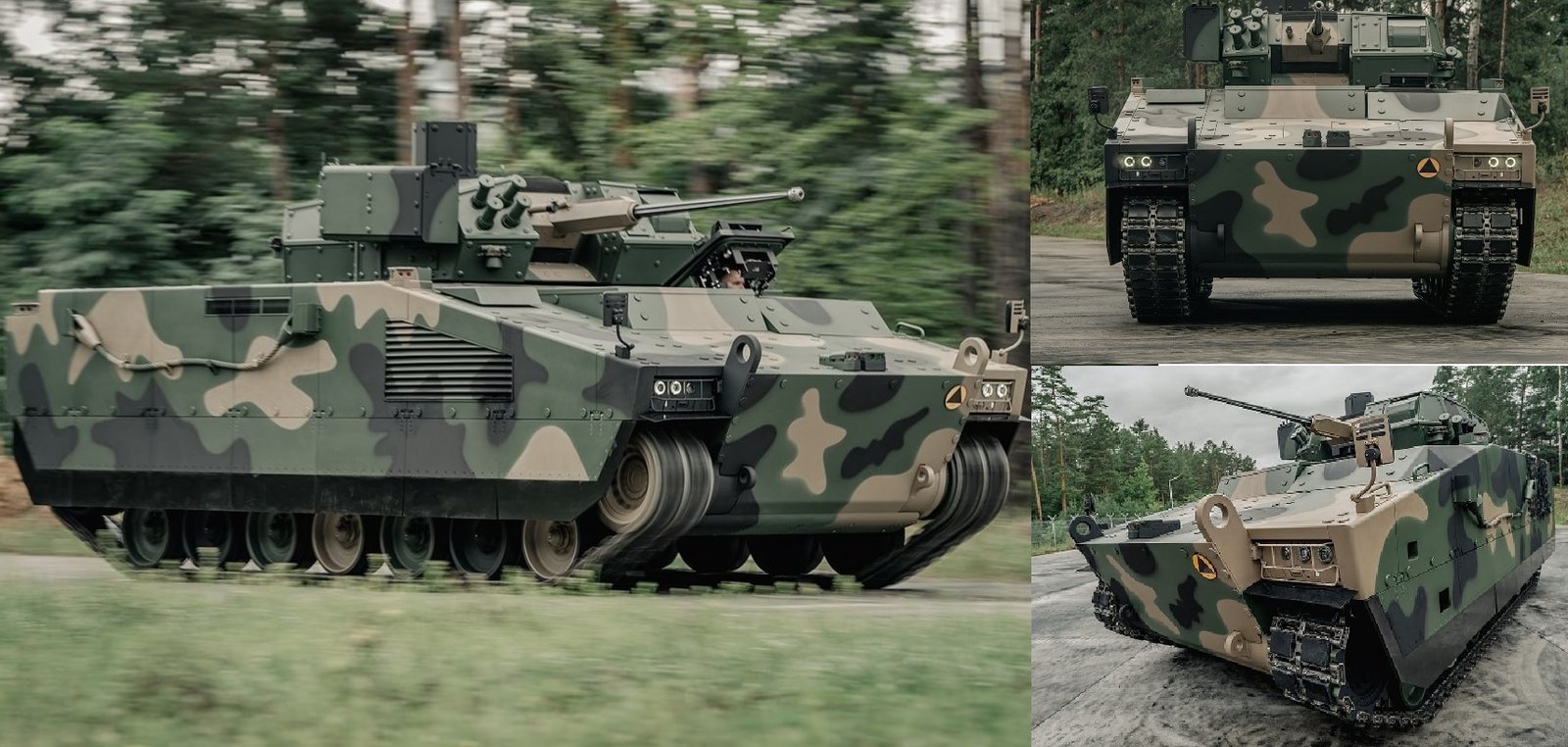
KIELCE, Poland — Poland’s state-owned defense conglomerate Polska Grupa Zbrojeniowa (PGZ) has unveiled a full-scale, mobile technology demonstrator of its new Heavy Infantry Fighting Vehicle (CBWP) at the MSPO 2026 defense exhibition in Kielce. The vehicle, designated CBWP (Ciężki Bojowy Wóz Piechoty) and previously shown under the name Ratel, was developed by Huta Stalowa Wola (HSW), a PGZ subsidiary. A 1:4-scale model was displayed at MSPO 2025, while partial images of the vehicle had been released on social media before this year's exhibition. The CBWP is designed to transport and protect mechanized infantry while providing direct fire support. It has a three-person crew and can carry up to eight soldiers. Its intended targets include armored and unarmored vehicles, exposed weapons positions and field fortifications. Heavy Protection The vehicle weighs approximately 40 tons, around 12 tons more than the amphibious Borsuk IFV. Unlike the Borsuk, the CBWP is not designed to swim, allowing greater emphasis on ballistic and mine protection. Its tracked chassis incorporates design elements from the Krab self-propelled howitzer. The vehicle uses an MTU diesel engine producing 800 kW, paired with an American transmission. It has a reported top speed of up to 65 km/h and a range of about 500 km. The frontal armor is designed to withstand 30×173 mm armor-piercing rounds fired from 500 meters, corresponding to STANAG 4569 Level 6 protection. The hull can accommodate explosive reactive armor, including Poland's modular Pangolin system. Other protection systems include the Obra-3 laser warning system, smoke grenade launchers, an NBC protection and filtration system, and provisions for a future active protection system (APS). ZSSW-30 Turret The demonstrator is equipped with the ZSSW-30 remote-controlled turret, already used on Poland's Rosomak and Borsuk. Developed by HSW and WB Group, it carries a 30 mm Mk 44/S Bushmaster II cannon, a coaxial 7.62 mm machine gun and twin launchers for Spike-LR anti-tank guided missiles. The cannon can fire programmable ABM ammunition for engaging ground and aerial targets. The turret's hunter-killer system allows the commander to search for new threats with day and night sensors while the gunner engages another target. Several components, including the auxiliary power unit, filtration system, heating, periscopes and lighting, are shared with the Borsuk to simplify logistics and reduce costs. Procurement and Development PGZ, HSW and Poland's Armament Agency signed a framework agreement in August 2023 covering several hundred CBWPs in different configurations, together with logistics and training packages. Earlier project information outlined a requirement for approximately 700 vehicles. The vehicles are primarily intended for heavy mechanized formations, including units in eastern Poland and formations equipped with Abrams tanks. The current demonstrator has completed a substantial portion of testing, including ballistic resistance trials, and is expected to begin factory trials. Two fully functional prototypes are planned for 2027, followed by qualification, ballistic and mine-resistance testing and formal military assessment. Subject to successful testing and final configuration agreements with the Polish Armed Forces, series production is targeted for 2029. The modular design also allows potential alternative configurations, including a 40 mm cannon or a fire-support variant armed with a 105 mm gun.
Read More → Posted on 2026-09-08 16:00:22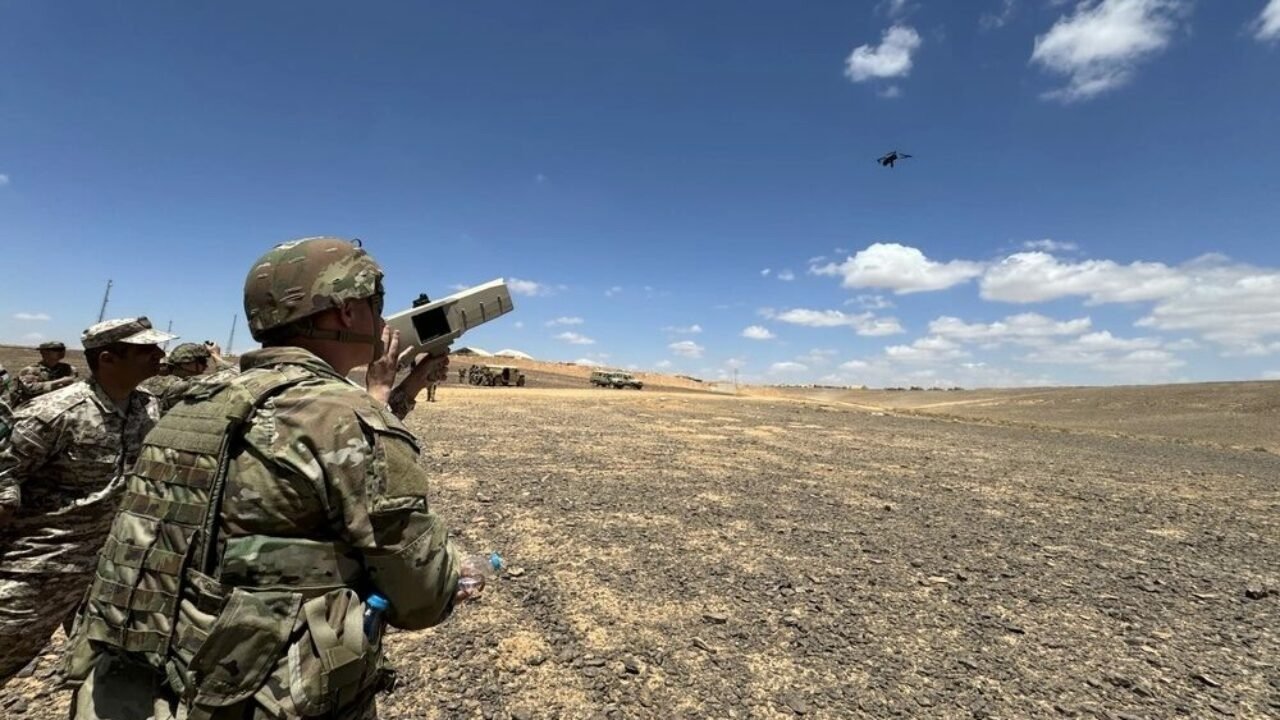
World
OKINAWA, Japan — The U.S. Air Force’s Pacific Air Forces (PACAF) is seeking to acquire 60 DroneBuster 5 handheld counter-drone systems equipped with Position, Navigation and Timing (PNT) capability to strengthen protection against small unmanned aircraft systems across its Indo-Pacific area of responsibility. The requirement was issued by the Air Force’s 18th Contracting Squadron at Kadena Air Base under solicitation FA527026QA051. The systems are intended to increase PACAF’s counter-small unmanned aircraft systems (C-sUAS) capabilities. The latest amendment to the solicitation specifies the U.S. 433 MHz variant, with the required part number listed as FIGDB5_433_PNT_KIT. It also corrects an earlier reference to the DroneBuster IV, clarifying that the Air Force requirement is specifically for DroneBuster 5 systems. Funding has not yet been allocated The Air Force has stated that funds are not currently available for the purchase. The government therefore has no legal obligation to make payment until appropriated funds become available and the contracting officer provides written confirmation of their availability. The solicitation initially had an earlier response deadline, but an amendment issued September 8 extended the deadline to September 11, 2026, at 11 a.m. Japan Standard Time. The solicitation calls for delivery within 90 days of contract award if the procurement proceeds. DroneBuster 5 counter-drone capability The DroneBuster is a handheld radio-frequency counter-drone system originally developed by Flex Force Enterprises. It is designed to disrupt the radio link between a small drone and its operator and can also interfere with navigation signals. The PNT capability requested by PACAF provides an additional electronic-attack function. According to manufacturer information, the capability can address GPS-guided drones operating on pre-programmed routes, including situations in which there is no active operator control link to disrupt. The manufacturer has stated that this capability can operate at ranges of approximately 800 to 1,400 meters (2,600 to 4,600 feet). Manufacturer information for standard DroneBuster systems lists a weight of less than 5 pounds (2.3 kilograms), with approximately three hours of continuous jamming or up to 10 hours of passive drone detection on a battery charge. The company has also said basic operation can be learned by new users in less than five minutes. DroneBuster's military background The system has already been used by U.S. military services and international customers. The Pentagon’s Joint Counter-UAS Office has designated DroneBuster as a handheld electronic-attack system approved for defeating small drones. The manufacturer has previously reported deliveries of more than 1,700 systems to the U.S. Army, Air Force, Navy and Marine Corps, as well as international military and police organizations. The system has also been associated with Australia's LAND 156 counter-drone program. Later company statements have cited higher fielding totals of more than 2,500 to over 3,000 systems across more than 50 countries, although those figures represent later company-reported totals. Corporate ownership Flex Force Enterprises became part of DZYNE Technologies through private-equity transactions completed in 2024. In July 2026, Ondas Inc. acquired DZYNE Technologies in a transaction valued at approximately $875.8 million. DZYNE was subsequently incorporated into Ondas' Sentinel defense business. The acquisition expanded Ondas' portfolio to include counter-UAS technologies alongside autonomous aircraft and other defense systems. The PACAF procurement remains dependent on funding. The solicitation does not provide a total contract value, and the Air Force has not yet indicated that the purchase has been funded or awarded.
Read More → Posted on 2026-09-08 14:32:52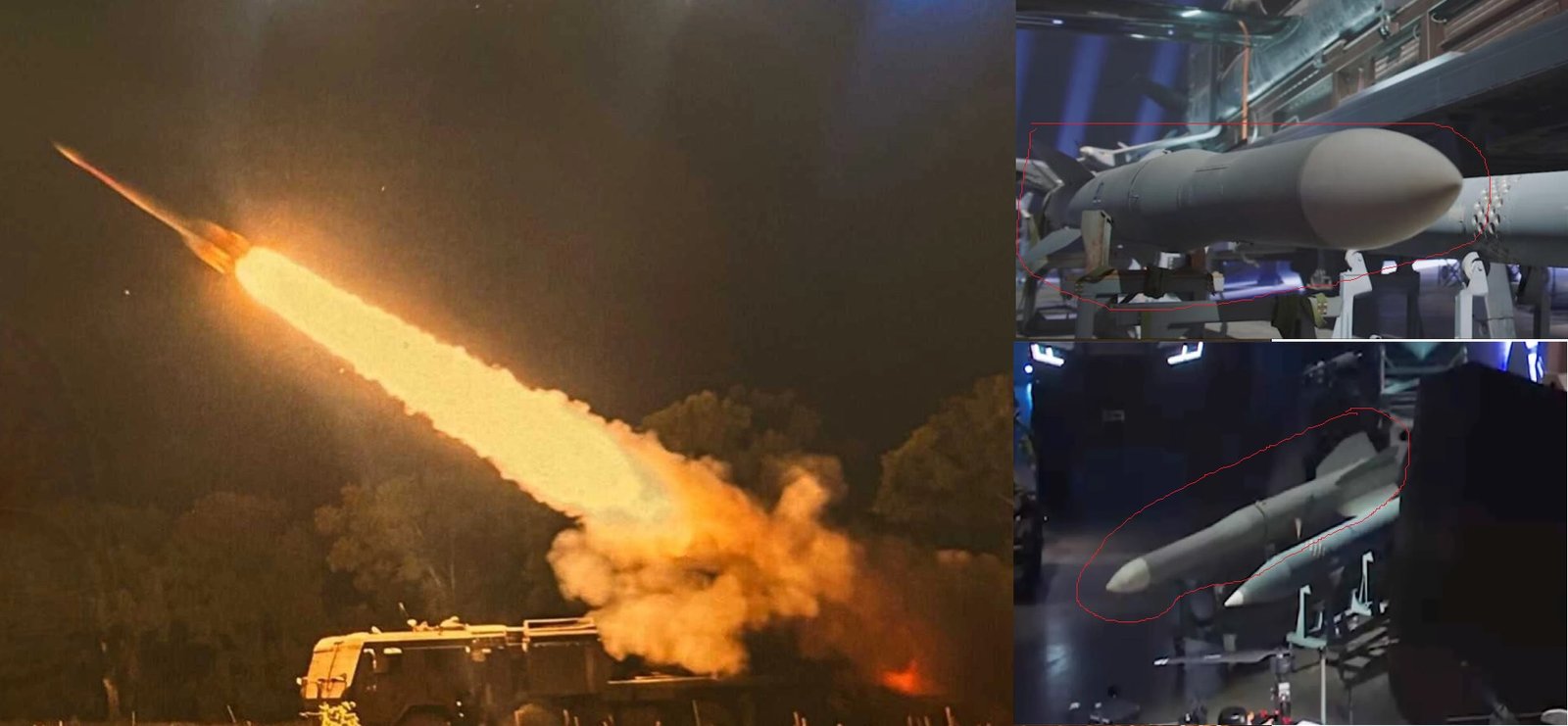
Europe
KIELCE, Poland — Ukraine has publicly unveiled the self-propelled launcher for its indigenous Koral surface-to-air missile system at the MSPO 2026 international defense exhibition in Kielce, Poland. The system is being developed by Ukraine’s State Kyiv Design Bureau Luch and is part of the country’s ongoing effort to develop a domestically produced air defense capability. An image released by Ukraine’s state defense conglomerate Ukroboronprom shows a Koral missile launching from a self-propelled launcher mounted on a Czech Tatra heavy-duty truck chassis. The truck-based configuration provides the system with the mobility required for deployment and repositioning. Designed for Air and Ballistic Targets The Koral missile is designed primarily to intercept aerial and ballistic targets as part of a broader air defense network. In this context, its ballistic-target role refers to short-range or tactical ballistic missiles, rather than long-range ballistic missile threats. According to the developers, the missile also retains a secondary capability to engage ground or surface radar-contrast targets in exceptional circumstances. The updated Koral interceptor has a total mass of 450 kilograms, including a 36-kilogram warhead. Its guidance system combines inertial navigation, radio correction and an active radar homing head. The missile has a length of 4.8 meters. Its stated diameter is 230/300 millimeters, while the wingspan is 835 millimeters and the control-fin span is 685 millimeters. For comparison, the PAC-3 interceptor used by the U.S. Patriot system weighs 316 kilograms and carries a 24-kilogram warhead. The maximum engagement range of the updated Koral missile has not been publicly disclosed. Nearly a Decade of Development Development of the Koral project began in 2016. Early project documents identified the missile as part of a proposed ship-based surface-to-air missile system. The project was presented to the public more clearly in 2021, when the Luch Design Bureau displayed a full-scale Koral missile mockup at the Arms and Security exhibition in Ukraine. At that stage, the missile was described as having a mass of approximately 300 kilograms, a projected range of up to 30 kilometers and a maximum altitude of 10 kilometers. The earlier version was listed with a 25-kilogram warhead, a length of 4.33 meters and a diameter of 230/260 millimeters. Luch chief designer Oleh Korostelov estimated the overall readiness of the system at around 70 percent in 2021. At the time, the company was also considering a family of Ukrainian air defense systems covering different ranges, with Koral intended for the middle tier. The specifications have changed during the development process. The missile displayed in 2026 is heavier and longer than the version presented in 2021 and carries a larger warhead. Developers have previously stated that the final characteristics of the system could be adjusted according to the operational requirements of the armed forces. First Public Display of the Self-Propelled Launcher The presentation at MSPO 2026 marks the first public display of the complete self-propelled Koral launcher configuration. The appearance of the launcher provides a look at the latest configuration of a Ukrainian air defense project that has been under development since 2016. The system's current configuration combines the 450-kilogram interceptor, its inertial and radio-correction navigation systems, active radar homing and a mobile launcher mounted on a Tatra truck chassis. While the updated missile's current range and other final performance parameters have not been publicly disclosed, the MSPO presentation shows the latest publicly displayed configuration of Ukraine's Koral air defense system.
Read More → Posted on 2026-09-08 14:22:30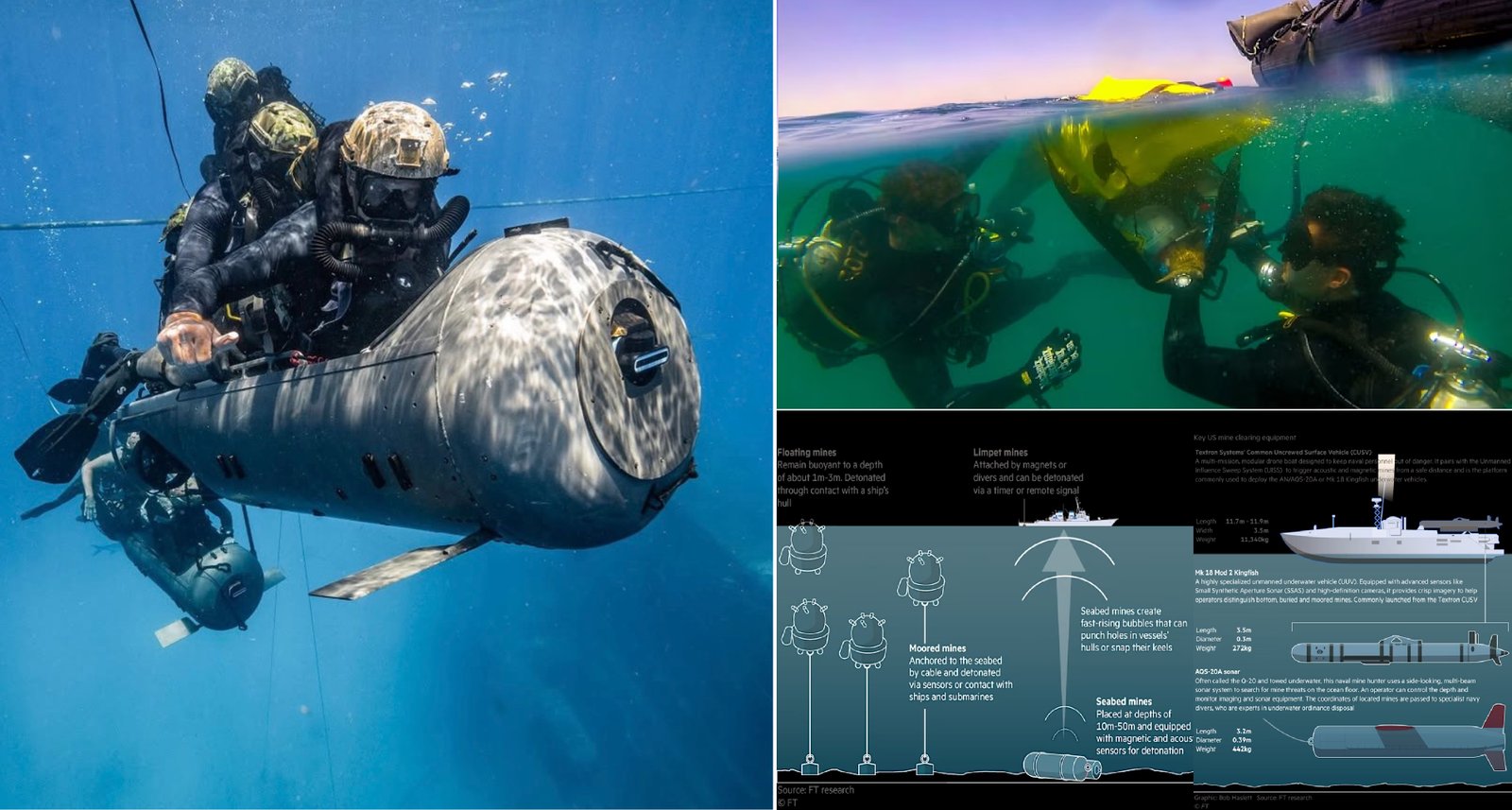
U.S
WASHINGTON — U.S. Navy SEAL divers spent about four months carrying out a covert operation to locate and destroy suspected Iranian naval mines in the Strait of Hormuz, using small boats, unmanned vessels and underwater systems to clear key international shipping lanes, according to a Financial Times report. The operation was conducted largely at night and began after Iran said it had placed mines in international and Omani waters following the start of U.S. and Israeli strikes in February. The mines contributed to a major disruption of commercial shipping through the Strait of Hormuz, one of the world's most important maritime energy routes. SEAL Teams Used Small Boats and Unmanned Systems Rather than relying primarily on conventional minesweeping ships, U.S. Navy divers operated in small teams from inflatable-hulled boats. Robot boats and underwater vehicles equipped with high-resolution sonar were used to scan the seabed and identify objects suspected of being mines. Systems involved in the search included the U.S. Navy's Common Uncrewed Surface Vessel operating with towed sonar arrays. Once a suspected mine was identified, divers could enter the water, approach the explosive and attach a charge to destroy it. “That is usually followed up by a navy diver who’s got to get in the water and approach the mine, and then put a charge on it and destroy it,” retired U.S. Navy Captain Bill Hamblet, who previously operated in the Gulf, told the Financial Times. Hamblet described the operation as involving a “very small, lightweight kind of force.” He said some of the operations may have been staged from the USS Miguel Keith, an expeditionary mobile base attached to U.S. naval forces operating in the Gulf. Underwater robotic systems could also be used to carry explosives to mines, reducing the need to expose divers directly to some threats. Experts cited systems including Britain's SeaFox and the U.S. AN/ASQ-235 Archerfish as equipment capable of performing such missions. “It is an extremely time-consuming process,” Nitya Labh, an associate fellow at Chatham House, told the Financial Times. “They are doing, essentially, active bomb detonation underwater.” No U.S. casualties have been reported specifically in connection with the mine-clearing operation. Mines Disrupted Strait of Hormuz Shipping The operation followed reports that Iran had laid mines along important shipping routes in and around the Strait of Hormuz. Around 80 mines were estimated to have been deployed, according to the Financial Times report. Commercial shipping through the strait fell sharply after the conflict began. Before the conflict, the waterway handled about 20 percent of global oil trade. The International Maritime Organization has continued to describe conditions in the Strait of Hormuz as unstable and has been monitoring the effects on international shipping and seafarers. The IMO said in its September 2 update that around 20,000 seafarers, port workers and offshore crews were being affected by the situation in the region. The strait's established Traffic Separation Scheme, adopted by the IMO, provides designated lanes for vessels passing through the waterway. U.S. Says International Shipping Lanes Cleared U.S. Central Command later confirmed that U.S. forces had cleared sea mines from the international shipping lanes in the Strait of Hormuz. CENTCOM commander Adm. Brad Cooper said the operation involved Navy divers and Navy SEALs, supported by air power from the U.S. Army, Navy, Air Force and Marine Corps. “The circumstances were challenging and dangerous, to say the least, but we got the job done,” Cooper said. President Donald Trump announced in late August that mines in the strait's international waters had been removed or detonated. Shipping executives and maritime security advisers cited by the Financial Times said they were confident that the southern part of the strait near Oman, where U.S. forces have been directing commercial vessels, had been cleared. However, questions remain over whether the entire Strait of Hormuz is free of mines. Satellite imagery has provided limited confirmation of Iran's earlier claims about the scale of the mining operation, while one suspected mine was reportedly observed by a Pakistani survey vessel in May. The United States has also warned that it will strike vessels attempting to deploy additional mines. On August 30, U.S. forces struck Iranian rocket launchers that American officials said were being prepared to fire mines into the strait. Despite the mine-clearing effort, commercial traffic through the Strait of Hormuz has not returned to its pre-conflict level. Continued concerns about possible new mines, as well as missile and drone attacks against shipping, remain factors affecting commercial operations through the waterway.
Read More → Posted on 2026-09-08 14:13:00
World
RIYADH/SANAA — Yemen’s Houthi movement, also known as Ansarullah, said Tuesday that it launched dozens of ballistic missiles and drones against Saudi Aramco facilities and military targets in southern Saudi Arabia. The Houthis said the attack was carried out in response to 121 Saudi airstrikes conducted over the previous three days across several Yemeni provinces, including Ma’rib, Al-Bayda, Al-Hudaydah, Taiz and Al-Jawf. Yemen’s Houthis said Tuesday they launched dozens of ballistic missiles and drones at Aramco facilities and military targets in southern Saudi Arabia.The group said the attack was in response to 121 Saudi airstrikes carried out over the past three days across several Yemeni… pic.twitter.com/KAKgCuSDwW — Clash Report (@clashreport) September 8, 2026 The group also said one Saudi strike hit a prison in Al-Hazm, Al-Jawf, causing multiple casualties, including women and children. The Houthis warned that further Saudi attacks would be met with wider strikes inside Saudi Arabia. 73 Civilians Wounded in Saudi Arabia Saudi Arabia said Ansarullah targeted civilian and economic sites in southern Saudi Arabia using drones and missiles. The Saudi-led coalition said the attacks wounded 73 civilians, including women and children. Saudi authorities confirmed that strikes affected areas including Abha, Khamis Mushait, Jazan and Najran. The Saudi military described the overnight operation as a dangerous escalation and said the Kingdom would respond firmly. Fires were reported at several energy facilities following the attacks. The Saudi Energy Ministry said some operations were temporarily halted while firefighting and specialised teams worked to contain the fires and assess the damage. Saudi authorities have not released detailed figures on damage or production losses from the latest attacks. Saudi Aramco has also not provided a detailed public assessment of the damage. Satellite Imagery Shows Fires at Aramco Facilities Satellite imagery has provided indications of fires at several energy facilities in southwestern Saudi Arabia following the Houthi strikes. NASA’s Terra satellite imagery shows large black smoke plumes rising from at least three sites in Jazan and Abha, including: Aramco’s Jazan oil refinery Aramco’s Jazan bulk plant Aramco’s Abha bulk plant Satellite imagery and information provided by Soar Earth and Atlas have also been cited as showing massive fires at Saudi Aramco’s Abha Bulk Plant and Jizan Refinery. The fires were reportedly large enough to be visible from space following the attacks on the energy infrastructure. 🛰🇸🇦🇾🇪 NASA Terra satellite imagery shows large black smoke plumes rising from at least three sites in Jazan and Abha, southwestern Saudi Arabia, following Houthi strikes:— Aramco’s Jazan oil refinery— Aramco’s Jazan bulk plant— Aramco’s Abha bulk plant https://t.co/aio2lGVwi0 pic.twitter.com/CBILfJTfVX — Egypt's Intel Observer (@EGYOSINT) September 8, 2026 The imagery provides evidence of fires and smoke at the reported locations, but it does not by itself establish the full extent of physical damage or the impact on production. Saudi authorities are continuing to assess the affected facilities. Sentinel-2L Imagery Indicates Damage at King Khalid Air Base Separate Sentinel-2L satellite imagery has been cited as showing indications of damage at King Khalid Air Base in Khamis Mushait, southwestern Saudi Arabia, another location identified by the Houthis as a target. According to the imagery assessment, a direct impact is visible on shelters housing RSAF F-15 fighters. Another apparent impact is visible on a building or warehouse, while a burn scar can also be seen near one of the base’s aprons. The imagery assessment indicates possible physical effects at multiple locations inside the air base. However, satellite imagery alone does not establish the precise cause of each observed feature or confirm whether aircraft were damaged or destroyed. 🛰🇸🇦🇾🇪 Sentinel-2L imagery confirms damage from Houthi strikes on King Khalid Air Base in Khamis Mushait, SW Saudi Arabia.A direct impact is visible on shelters housing RSAF F-15 fighters, with another impact on a building/warehouse and a burn scar near one of the base aprons. https://t.co/zpKmEJ4hEp pic.twitter.com/aNggaWEnGr — Egypt's Intel Observer (@EGYOSINT) September 8, 2026 The Houthis said their operation targeted King Khalid Air Base along with Aramco facilities and other economic sites. Houthi military spokesperson Yahya Saree claimed the strikes were precise and direct and caused significant damage, although detailed independent damage assessments remain limited. Houthis Link Attack to Saudi Airstrikes Houthi military spokesperson Yahya Saree said the missile and drone operation was a response to the 121 Saudi airstrikes carried out during the previous three days. According to the Houthis, the Saudi strikes targeted several Yemeni provinces, including Ma’rib, Al-Bayda, Al-Hudaydah, Taiz and Al-Jawf. The group specifically cited the reported strike on a prison in Al-Hazm, Al-Jawf, saying it caused casualties among inmates and visitors, including women and children. The exact number of casualties from the prison strike has varied in reports and has not been independently verified. The Houthis said continued Saudi attacks would result in a wider response against Saudi targets. Saudi Arabia Links Escalation to Red Sea Attacks The latest Ansarullah attack came after Saudi warplanes struck Houthi positions in Yemen. Saudi Arabia has linked its military operations to Houthi actions involving a declared blockade of Saudi Arabia in the Red Sea and attacks on Saudi military supplies in Yemen. The conflict has therefore expanded across both the Yemeni battlefield and Saudi territory, with Houthi missiles and drones targeting Saudi infrastructure while Saudi aircraft continue operations against Houthi positions in Yemen. Saudi Arabia has also condemned continued Houthi attacks on commercial vessels in the Red Sea, saying they threaten maritime navigation. Fighting Continues Between Houthis and Saudi-Backed Forces Major fighting is currently taking place inside Yemen between Ansarullah forces and Saudi-backed PLC fighters. Following recent clashes, reports have circulated that Houthi forces seized several armored vehicles belonging to the Pakistan Army that had been provided by Saudi Arabia to Pakistani troops. Following the clashes, Houthi forces have reportedly seized several armored vehicles belonging to the Pakistan Army that had been provided by Saudi Arabia to Pakistani troops.Pakistani personnel were reportedly deployed to support Saudi Arabia’s defense operations, while… pic.twitter.com/ctfWiq2ruU — THE UNKNOWN MAN (@Theunk5555) September 7, 2026 There have also been reports that Pakistani personnel were deployed to support Saudi Arabia’s defense operations, while other reports have claimed that several Pakistani soldiers were killed in the clashes. However, Pakistani and Saudi authorities have not publicly confirmed specific Pakistani military losses or the reported seizure of Pakistan Army vehicles in these latest clashes. The claims therefore remain unconfirmed. Mecca Defence Agreement Under Scrutiny The latest escalation comes about one month after Saudi Arabia, Pakistan and Türkiye signed the Mecca Joint Defence Agreement on August 7, 2026. The agreement provides for expanded defence cooperation and coordination among the three countries. It states that an armed attack against one member is to be regarded as an attack against all three. As of Tuesday, there had been no publicly announced Turkish or Pakistani military deployment specifically in response to the latest Houthi attacks. The latest strikes have nevertheless drawn attention to the practical implications of the new defence arrangement as Saudi Arabia faces continued missile and drone attacks and fighting involving Saudi-backed forces continues inside Yemen. Conflict Enters Another Escalation The latest Houthi operation is described by Saudi authorities as one of the most extensive Ansarullah attacks on Saudi Arabia in years. With 73 civilians reported wounded, fires at several energy facilities and satellite imagery indicating fires and possible impacts at Aramco facilities and King Khalid Air Base, the attacks have affected both civilian and economic infrastructure and military sites. At the same time, fighting continues inside Yemen and Saudi air operations against Houthi positions remain part of the broader conflict. The full extent of damage to the affected Aramco facilities and King Khalid Air Base, as well as any impact on Saudi energy production or military aircraft, remains under assessment. Saudi authorities have confirmed temporary operational disruptions but have not released detailed figures on production losses.
Read More → Posted on 2026-09-08 13:55:33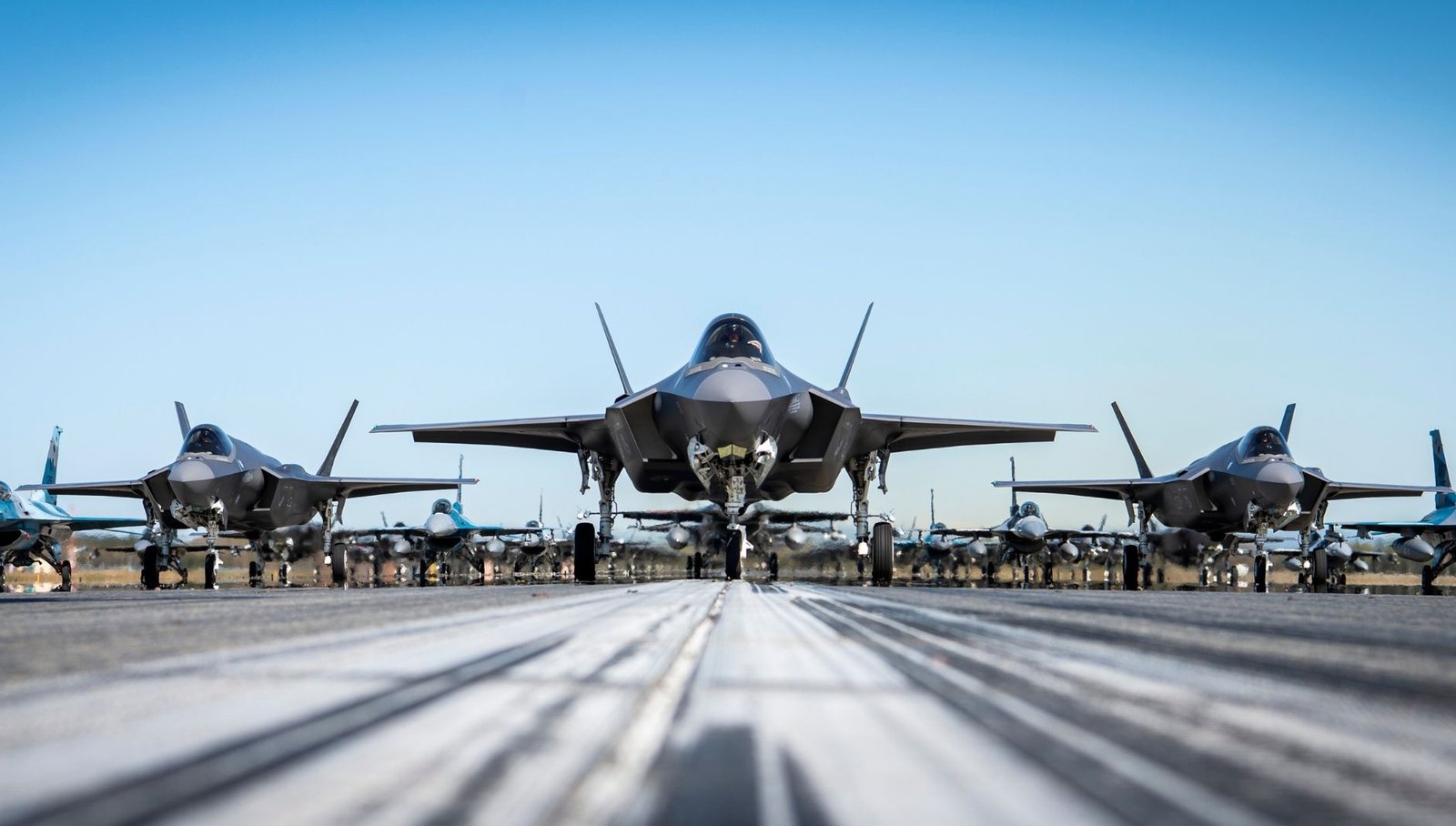
U.S
FORT WORTH, Texas — Lockheed Martin said the global F-35 Lightning II fleet has surpassed 1,355 aircraft deliveries and one million flight hours, as the programme continues to expand across 20 participating countries. Data through August 27 shows the fleet has completed more than 807,820 sorties and over 810 detachments and deployments. More than 3,560 pilots and 21,680 maintainers have been trained to operate and support the aircraft. The F-35 is now flown by 17 military services, with 12 countries operating the aircraft from their home territory. Fourteen services have declared Initial Operational Capability (IOC), while three have reached Full Operational Capability (FOC). The programme currently covers 55 active operating locations, including 42 land bases and 13 ships. Based on customer procurement decisions, Lockheed Martin expects this network to grow to 58 land bases and 24 ships by 2030. The United States remains the largest customer, with planned fleets of 1,763 F-35As for the Air Force, 280 F-35Bs and 140 F-35Cs for the Marine Corps, and 273 F-35Cs for the Navy. The programme's partner nations are the United Kingdom, Italy, the Netherlands, Canada, Australia, Denmark and Norway. Foreign Military Sales customers include Israel, Japan, South Korea, Belgium, Poland, Singapore, Finland, Switzerland, Germany, the Czech Republic, Greece and Romania. Japan's planned fleet is the largest among FMS customers, with 105 F-35As and 42 F-35Bs. Recent Developments Denmark declared a new deployable F-35 operations facility fully operational on August 14. On August 17, Lockheed Martin completed final assembly of Germany's first F-35. On August 19, US Marine Corps VMFA-542 received the US Air Force Gallant Unit Citation after flying more than 1,000 combat sorties during Middle East deployments in 2025. Belgian pilots conducted the first GBU-12 bomb release from a Belgian F-35 on August 20, while a British pilot flew an F-35C for the first time on August 21. Lockheed Martin said F-35 aircraft have demonstrated their capabilities during Epic Fury, Midnight Hammer, Rough Rider and Rising Lion, while also participating in Absolute Resolve, Inherent Resolve and Operation Shader. The global fleet first exceeded one million cumulative flight hours in March 2025. Lockheed Martin delivered a record 191 F-35s in 2025, compared with the previous annual high of 142 in 2021. The 2025 deliveries also helped clear earlier backlogs linked to TR-3 upgrades. By early 2026, the fleet stood at nearly 1,300 aircraft, before exceeding 1,355 deliveries by late August. The programme continues to expand its fleet, operating locations, training base and international operations.
Read More → Posted on 2026-09-08 13:20:21
Europe
LONDON, — The UK government has launched a new £7.8 billion national space strategy covering planned investment through 2030, with defence, national security, connectivity and economic growth at its centre. The strategy replaces the 2021 National Space Strategy and brings together previously separate programmes across defence, science, transport and industry. It also supports the government’s Modern Industrial Strategy. More than £3 billion will support military space capabilities, backed by the Defence Investment Plan. The funding is intended to protect UK and allied space assets and maintain secure communications. Defence and Space Security The UK will invest £880 million in space control and intelligence, surveillance and reconnaissance (ISR) systems. These capabilities will monitor military activity on Earth and detect potential attacks against satellites. A further £2.8 billion will support satellite connectivity, including the Connectivity in Low Earth Orbit (CLEO) programme and the Ministry of Defence’s SKYNET secure communications system. SKYNET supports secure communications for British forces worldwide and includes the Airbus-built SKYNET 6A satellite, scheduled for launch in 2027. The government plans to use common satellite infrastructure for both national-security and public-service requirements. The connectivity investment is also intended to support rural communities and includes £57 million to reduce mobile signal interruptions on the national rail network. Defence Secretary Wes Streeting said the UK’s national security depends on freedom of action in space and the ability to protect UK and allied assets. He said the investment would strengthen the country’s ability to detect and respond to increasingly sophisticated threats while supporting reindustrialisation and UK opportunities. Monitoring Threats in Orbit Space Domain Awareness is another major part of the strategy. The government will provide £149 million to the European Space Agency’s Vigil mission and £85 million to the National Space Operations Centre. The programmes will monitor satellites, rockets and debris and provide earlier warnings of potential collisions, solar storms and potentially hostile activity. The information will help protect services including power networks, communications and navigation. Another £9 million will support space-weather forecasting. Supporting the UK Space Industry The UK space sector is valued at £18.6 billion and supports more than 55,000 skilled jobs. For the first time, government departments will use a common approach to purchasing and developing space technology, beginning with satellite communications. The government expects this to speed up delivery, improve value for money and direct more work towards British suppliers. Business, Innovation, Science and Trade Secretary Jonathan Reynolds said the strategy would strengthen the UK’s ability to launch satellites, detect threats and protect services while helping domestic industry create skilled jobs and drive economic growth. The package includes £148 million for European rocket programmes and £60 million to finalize SaxaVord Spaceport in Shetland, including £30 million from the private sector. Science, Exploration and New Space Technologies The government will invest £190 million in astronomy and space-science research and £163 million in science and exploration missions, including continued support for the UK-built Rosalind Franklin Mars Rover. Another £40 million will support in-orbit servicing, assembly and manufacturing (ISAM) technologies for repairing satellites, addressing orbital debris and supporting manufacturing in space. The strategy also introduces planned regulatory changes designed to lower costs and attract private investment. These include revised liability limits and specific waivers for certain lunar and ISAM missions launched before the end of 2030, along with changes to third-party liability insurance models and a more proportionate approach to monitoring the financial health of satellite constellation operators instead of requiring decommissioning funds. The strategy was published on September 8, 2026, and sets out the UK’s space priorities through 2030, including satellite communications, space domain awareness, ISAM and assured access to space.
Read More → Posted on 2026-09-08 13:11:14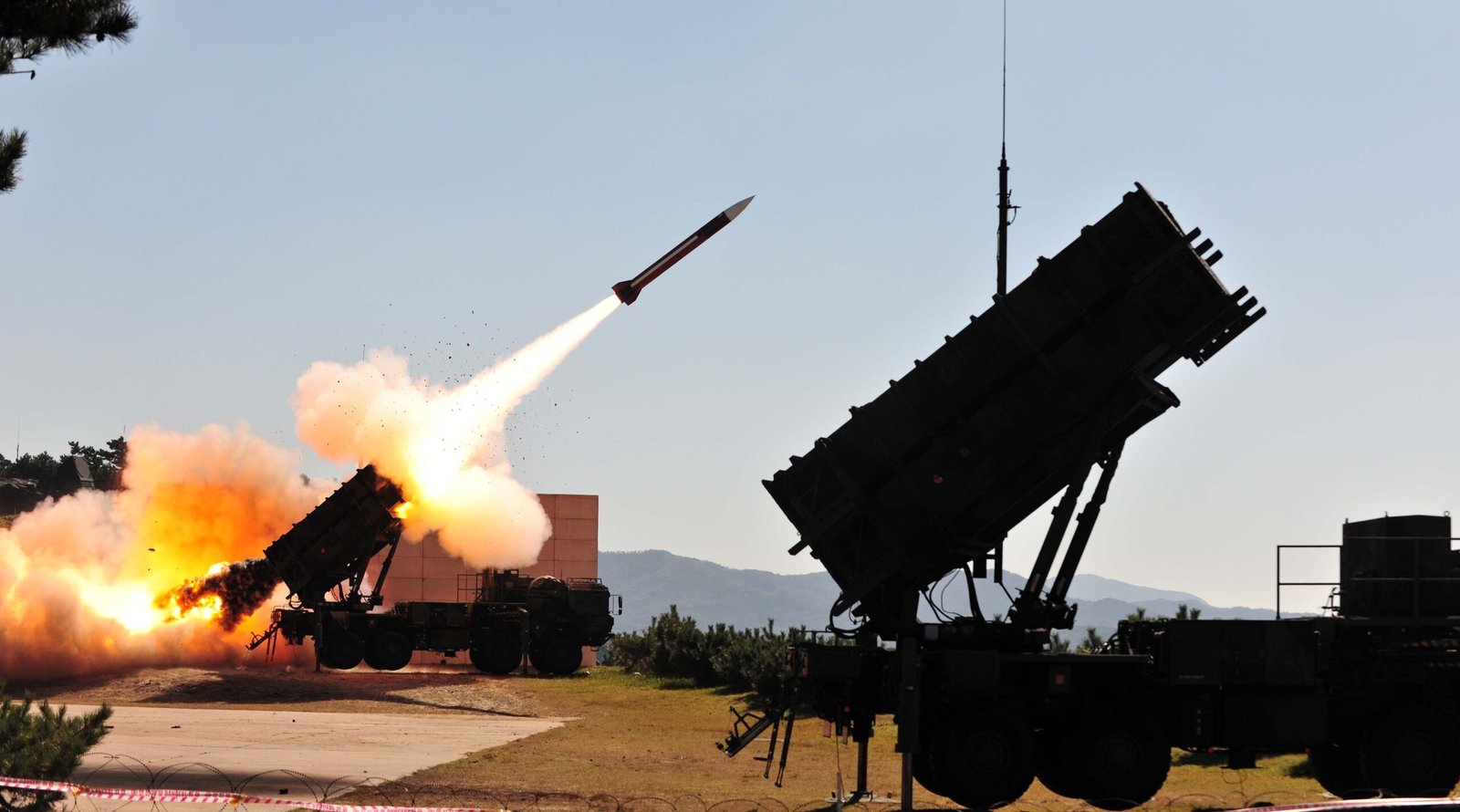
Europe
LONDON — The United Kingdom has announced a £100 million contribution to strengthen Ukraine’s air defence ahead of winter, including support for Patriot missiles and other air defence equipment. The funding will be provided through NATO’s Prioritised Ukraine Requirements List (PURL), a mechanism used by NATO Allies to fund critical military equipment identified as urgent requirements for Ukraine. NATO says PURL has been used to coordinate the purchase and delivery of equipment, including air defence capabilities, from the United States. According to the UK Ministry of Defence, the new package will also include air defence interceptors, large-calibre artillery rounds and drones. The equipment is expected to be delivered before winter to help Ukraine protect critical national infrastructure, civilians and its armed forces from Russian attacks. Drone deliveries to increase The UK is maintaining its commitment to provide more than 120,000 drones to Ukraine during 2026. Around 25,000 drones have already been delivered, with the pace of deliveries expected to increase in the months ahead. The drones include several types of systems. Interceptor drones are intended to counter Russian drones, while reconnaissance drones provide battlefield awareness and information on activity behind enemy lines. Attack drones are also being supplied to support Ukrainian operations against Russian military positions. More artillery ammunition planned The UK also recently reached the milestone of delivering its millionth large-calibre artillery round to Ukraine. The government said it will build on this by supplying tens of thousands of long-range artillery rounds in the coming months. Funding for these rounds is being provided by the UK together with Germany, Denmark, Lithuania, the Netherlands, Norway and Sweden. Ukraine Defence Contact Group meets The announcement comes as UK Defence Secretary Wes Streeting co-chairs the 36th meeting of the Ukraine Defence Contact Group with German Defence Minister Boris Pistorius. The group brings together nearly 50 countries providing military assistance to Ukraine and focuses on Kyiv’s immediate battlefield requirements as well as longer-term military support. Streeting said that his recent visit to Kyiv, along with the Prime Minister’s visit, highlighted the importance of supporting Ukraine through the winter. He said the new package was intended to strengthen Ukraine’s defences and reflected efforts by the UK and its allies to provide additional military capabilities. Wider UK support The latest package follows other recent UK measures supporting Ukraine. Britain has agreed that defence company MBDA can release classified information relating to UK components used in the SCALP, also known as Storm Shadow, to support the establishment of local assembly lines in Ukraine. The UK and Ukraine have also signed an agreement on military artificial intelligence capabilities following the Prime Minister’s visit to Kyiv. The new £100 million commitment adds to the wider international effort to provide Ukraine with air defence, ammunition and drones as it prepares for another winter of the war.
Read More → Posted on 2026-09-08 12:59:53
World
KIELCE, POLAND — Ukrainian defense manufacturer Ukrspecsystems has publicly presented its latest loitering munition, the RAM-2X strike unmanned aerial vehicle (UAV), at the MSPO 2026 international defense exhibition in Kielce, Poland. The RAM-2X is designed for operational-tactical missions and features a distinctive X-shaped wing configuration intended to provide high maneuverability. The system has a range of up to 180 kilometers and an endurance of more than two hours. The strike UAV can carry either a 2.7-kilogram or 3.5-kilogram explosively formed penetrator (EFP) warhead. The warhead is designed to penetrate armor and engage high-value targets. Ударний дрон RAM-2X на MSPO 2026 pic.twitter.com/AHAu70xhxJ — Владислав (@Vladislav110528) September 8, 2026 Flexible communications and automation Ukrspecsystems says the RAM-2X incorporates artificial intelligence systems, a high level of automation and a flexible communications architecture. The UAV can be controlled through multiple radio-frequency channels operating across different bands. It can also use a Starlink satellite terminal, giving operators several communication options for different mission conditions. Another feature of the RAM-2X is its communications relay capability, which allows it to operate together with reconnaissance UAVs such as the company's SHARK-M. In a hunter-killer configuration, the reconnaissance UAV can locate and designate a target while the RAM-2X carries out the strike. According to Ukrspecsystems, this arrangement can help the strike UAV operate in areas affected by enemy electronic warfare. Designed to work with existing systems Ukrspecsystems has also focused on interoperability between the RAM-2X and its earlier reconnaissance platforms. The company said: “Each type of equipment has its own role, and every target requires an appropriate means of engagement. Following a comprehensive approach, we develop strike systems across several subclasses, built around common components, a shared ground control station, and unified software.” The approach allows operators already using Ukrspecsystems reconnaissance complexes to add strike capabilities while continuing to use their existing antennas and ground control stations. This removes the need to replace the existing control hardware or introduce a completely new control system. Already in operational use in Ukraine Although the RAM-2X has only now been publicly presented by its manufacturer, Ukrspecsystems said the system is already being actively used by the Defense Forces of Ukraine. The identity of the developer had previously been kept undisclosed because of wartime security considerations. According to the company, RAM-series loitering munitions have recorded more than 450 successful target engagements. As part of the public unveiling, Ukrspecsystems also released combat footage showing the system in use. One recently published freeze-frame shows a RAM-2X striking a Russian Buk-M3 surface-to-air missile system. Ukrspecsystems launches X-Archive To coincide with the MSPO presentation, Ukrspecsystems launched a public video portal called the “X-Archive.” The archive contains declassified combat footage of Ukrainian forces operating the company's systems. The initial release focuses on strikes against Russian air defense systems and radar stations. Ukrspecsystems said sensitive information that could compromise ongoing military operations has been removed from the footage. Additional strike videos are expected to be released in batches. The company has kept information concerning current operational flights and future modifications to the RAM-2X classified. The RAM-2X represents a further development of Ukrspecsystems' RAM family of loitering munitions, while the company continues to maintain interoperability with its existing reconnaissance systems, including the SHARK and SHARK-M series. Source : militarnyi
Read More → Posted on 2026-09-08 12:48:48
World
TEL AVIV, Israel — Israeli satellite company ImageSat International (ISI) has unveiled its new EROS NOVA Earth observation satellite, introducing a platform that combines very high-resolution imaging, short-wave infrared (SWIR) sensing, video collection and onboard artificial intelligence. According to ISI, EROS NOVA is designed to provide imagery at less than 30 centimeters of resolution, while the company has described the satellite's capability as reaching 25 centimeters. ISI's current product information lists the satellite with multiple imaging modes, including spot, strip, mosaic, stereo, video and SWIR video. Multiple Sensors on One Satellite EROS NOVA combines several sensing capabilities on a single spacecraft. Its optical imaging system is designed for very high-resolution Earth observation, while the SWIR sensor can provide additional information that is not available from standard visible-light imagery. SWIR sensing can help distinguish different materials and identify certain changes on the ground, including some forms of camouflage and recent surface disturbances. The satellite also supports video collection, allowing users to observe movement rather than relying only on individual still images. ISI lists EROS NOVA with Pan, multispectral true-color, near-infrared and SWIR capabilities, along with a 10-kilometer swath and a satellite mass of 425 kilograms. Onboard AI Processing A key feature of EROS NOVA is its use of artificial intelligence and processing capabilities directly on the satellite. Instead of sending all collected data to Earth before analysis, selected information can be processed while the satellite remains in orbit. This allows the system to identify and prioritize relevant imagery before transmission, helping reduce the amount of data that needs to be sent to ground stations and potentially shortening the time between collection and analysis. ISI has previously demonstrated onboard AI and edge-processing technologies on its satellite platforms. The company says these capabilities are being developed to support faster processing of space-based intelligence data. “EROS NOVA represents the next generation of space-based intelligence, bringing together advanced imaging, multiple sensing capabilities and onboard intelligence in a single satellite platform,” said Noam Segal, CEO of ImageSat International. He said the system is designed to help intelligence organizations obtain greater value from each collection and respond more rapidly to operational requirements. Part of ISI's Growing Satellite Portfolio EROS NOVA expands ISI's existing family of Earth observation satellites and is not intended to replace the company's other platforms. ISI's current portfolio also includes KNIGHT, which provides high-resolution imaging, SWIR and video, and RUNNER, a smaller satellite platform offering high-resolution imagery and video. The company says EROS NOVA is part of its broader GlobalEye satellite architecture. The EROS series has been operated by ISI since the launch of EROS A in 2000. The company later introduced the EROS B and EROS C series, with the EROS C3 satellite launched in December 2022. ISI's earlier EROS satellites progressively improved imaging resolution, leading to the much higher-resolution capabilities offered by its newer systems. Focus on Sovereign Space-Based Intelligence ISI describes its business model as providing sovereign space-based intelligence capabilities. Rather than only supplying satellite imagery, the company develops complete systems that can include satellites, ground infrastructure, command-and-control systems and AI-based analytics. Its current product portfolio includes satellite systems as well as platforms such as GeoImpact, which is designed to combine satellite and other intelligence data with AI-based analysis. With EROS NOVA, ISI is combining higher-resolution Earth observation with multiple sensors and onboard processing in a single platform, continuing the company's development of satellite systems intended for defense and intelligence users.
Read More → Posted on 2026-09-08 12:34:07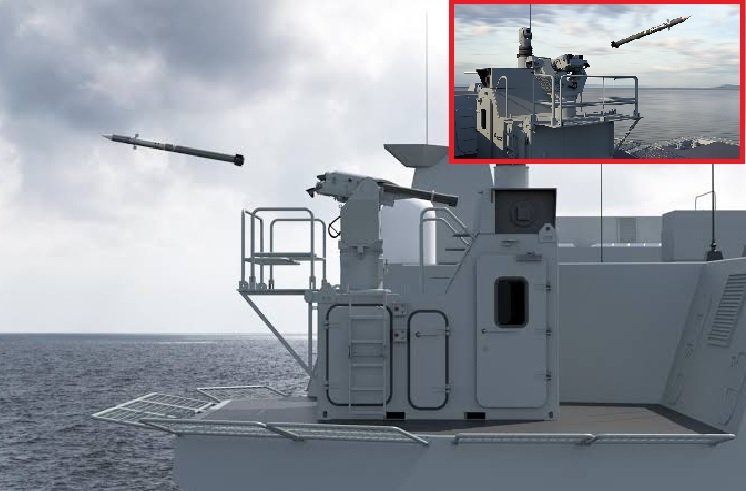
Europe
MADRID — The Spanish Navy has signed a framework agreement with European missile manufacturer MBDA to acquire three SIMBAD-RC short-range air defense systems, introducing a dedicated close-range missile defense capability for its operational fleet. The agreement is MBDA's first direct contract with the Spanish Navy and supports plans by Spain's Ministry of Defense and the Navy to strengthen protection against anti-ship missiles, sea-skimming missiles, aircraft and unmanned aerial vehicles. Initial deployment across frontline vessels The framework agreement covers three SIMBAD-RC systems with a total of four launchers. Under the initial deployment plan: Two Santa María-class (F80) frigates will each receive a single SIMBAD-RC launcher. The amphibious assault ship Juan Carlos I (L-61) will receive a twin-launcher configuration. The deployment gives both escort vessels and the Navy's flagship an organic short-range air defense layer designed to protect high-value ships during operations. SIMBAD-RC provides dedicated VSHORAD capability The SIMBAD-RC is a remotely controlled naval self-defense system built around MBDA's Mistral 3 infrared-guided missile. It can serve as a ship's primary very short-range air defense system or operate alongside existing defensive weapons. The system launches fire-and-forget missiles with a range of more than 8 kilometers. Its automated turret includes a thermal optical sensor suite and a video tracker, allowing targets to be engaged either independently or through connection with a ship's combat management system. The launcher can also be operated by a single crew member from a protected position below deck using the compact SMU-RC control terminal. MBDA says the system is designed for continuous all-weather operations. MBDA calls agreement a historic milestone MBDA Chief Executive Officer Eric Béranger described the agreement as an important step in the company's partnership with Spain. "This first direct agreement with the Spanish Navy is a historic milestone for MBDA. It demonstrates our growing footprint and long-term commitment to Spain. By delivering critical defense capabilities, we are enhancing fleet security and building a strategic partnership based on innovation and cooperation with the Spanish defense industry," Béranger said. Wider integration under discussion The framework agreement is expected to serve as the first phase of a broader fleet modernization effort. MBDA is currently negotiating with Spanish shipbuilder Navantia to expand SIMBAD-RC integration across additional surface combatants. Platforms under consideration include future Landing Platform Docks (LPDs), European Patrol Corvette (EPC) vessels and potentially the Navy's new F-110 frigates. Technical discussions continue on how the system would integrate with the combat management architecture of future ships, including the Aegis system planned for the F-110 class. From Cartago project to operational deployment Spanish efforts to introduce the Mistral missile family into naval service began nearly a decade ago through the Cartago project, which examined the feasibility of installing Mistral missiles on active naval platforms. The current contract marks the transition from concept to operational capability by equipping frontline ships with dedicated close-range missile defense. RC2 today, modular upgrades for the future The Spanish Navy's order covers the SIMBAD RC2 twin-tube configuration. MBDA has continued developing the system to address evolving threats. At Euronaval 2024, the company introduced the SIMBAD RC4, a four-round variant designed to counter saturation attacks, fast inshore attack craft and drone swarms. In 2026, MBDA updated the turret architecture so the RC2 and RC4 share a common modular design, allowing existing twin-tube installations to be upgraded more easily to the higher-capacity quad-tube configuration if required. For the Spanish Navy, the agreement delivers a dedicated very short-range air defense capability for key surface ships while establishing the foundation for broader integration across the fleet in the years ahead.
Read More → Posted on 2026-09-08 12:27:00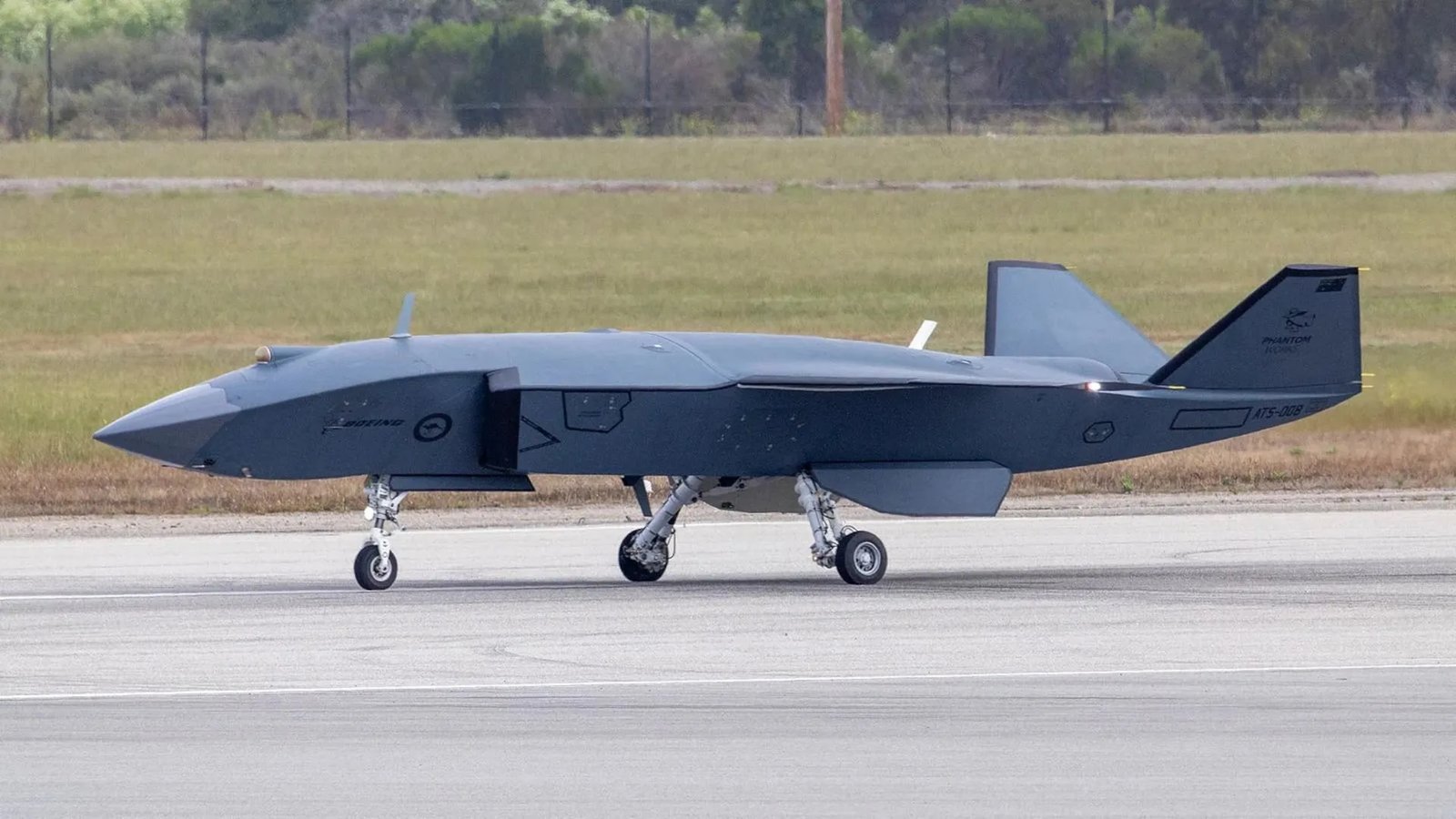
World
TOKYO — Boeing plans to offer its MQ-28 Ghost Bat unmanned combat aircraft to Japan’s Ministry of Defense as Tokyo develops a new coastal defense strategy centered on unmanned systems, according to a report by Nikkei. Steve Parker, president of Boeing’s Defense, Space & Security division, told Nikkei that Boeing will propose the MQ-28. The aircraft is designed to operate alongside crewed fighter jets, share sensor data through networks and extend the operational reach of manned aircraft without putting additional pilots at risk. Airbus is also considering entering Japan’s unmanned aircraft market, while U.S., European and Japanese defense companies are competing for opportunities connected to Tokyo’s coastal defense plans. MQ-28 Ghost Bat The MQ-28 is a stealthy collaborative combat aircraft (CCA), also known as a loyal wingman. It measures approximately 11.7 to 12 meters in length and was developed by Boeing Australia in partnership with the Royal Australian Air Force (RAAF). The aircraft has a reported range of more than 2,000 nautical miles (about 3,700 kilometers), can reach speeds of up to Mach 0.9 and operate above 40,000 feet. Its modular nose can accommodate different mission equipment, including sensors, electronic warfare and communications systems. Australia had operated eight Block 1 aircraft by late 2024. They completed more than 100 flight-test hours and conducted live weapons drops. In December 2025, an MQ-28 successfully conducted an air-to-air engagement using an AIM-120 AMRAAM while operating with an E-7A Wedgetail and F/A-18F Super Hornet. Boeing is now producing nine Block 2 aircraft, while a more capable Block 3 is planned. The upgraded version is expected to feature a larger wing for greater fuel and payload capacity, an internal weapons bay, beyond-line-of-sight communications and increased takeoff weight. International Testing Boeing has partnered with Rheinmetall to offer the MQ-28 to Germany as a collaborative combat aircraft, with potential introduction targeted around 2029. Rheinmetall would handle system integration for German requirements. In 2026, the Ghost Bat participated in Exercise Valiant Shield from the Northern Mariana Islands, operating alongside U.S. and allied aircraft, including F-35 variants and F-15EX, as well as battle-management and support platforms. The aircraft also completed operational flight testing at Naval Air Station Point Mugu, California, in 2026. These were its first flights outside Australia, with some configurations using an infrared search and track (IRST) sensor in the nose. Japan’s Existing MQ-28 Cooperation Japan already has experience working with Boeing on manned-unmanned teaming. In 2025, Japan’s Ministry of Defense awarded Boeing a contract worth about ¥155 million (approximately $997,000) for manned-unmanned teaming simulations linked to the Global Combat Air Programme (GCAP), Japan’s next-generation fighter program with the United Kingdom and Italy. Tokyo has also joined aspects of the U.S. Collaborative Combat Aircraft effort. In April 2026, Australia and Japan signed an implementing arrangement for collaborative combat aircraft activities involving the MQ-28, including research and training in Australia during Japan’s fiscal 2026. Japan’s SHIELD Coastal Defense Concept Japan’s coastal defense effort is being developed under the Synchronized, Hybrid, Integrated and Enhanced Littoral Defense (SHIELD) concept. The Ministry of Defense allocated approximately ¥100.1 billion (around $640 million) in the fiscal 2026 budget to establish a network of unmanned air, surface and subsurface systems connected with existing sensors and long-range effectors. Tokyo aims to field the architecture during fiscal 2027. The MQ-28’s range, modular design and ability to operate alongside crewed fighters such as the F-35 or future GCAP aircraft make it a candidate for Japan’s planned unmanned defense network, including operations around the country’s southwestern approaches. However, Japan has not finalized procurement of the MQ-28, and details of the competition and acquisition process remain undecided.
Read More → Posted on 2026-09-07 16:24:20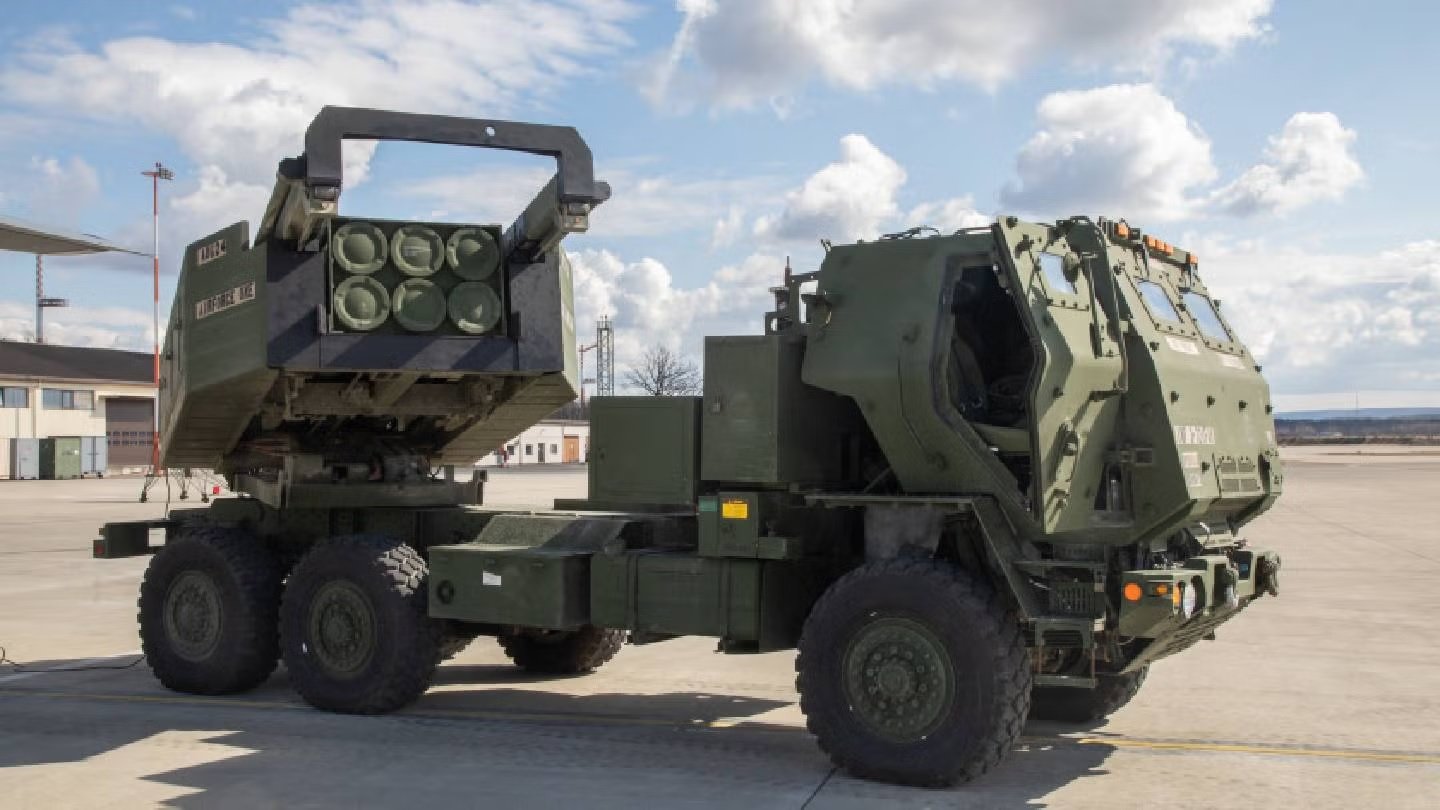
Europe
STOCKHOLM — Sweden has authorized the Swedish Armed Forces to procure the U.S.-made High Mobility Artillery Rocket System (HIMARS) from Lockheed Martin in a deal worth around SEK 7 billion ($729 million). Deliveries are scheduled to begin in 2027. The procurement covers about 10 HIMARS launchers and ammunition. It will be funded through the Swedish Armed Forces’ regular investment plan as an “opportune purchase” under the Total Defence Bill 2025–2030. HIMARS will provide Swedish forces with a long-range precision-strike capability, allowing units to operate over larger areas and engage targets at greater distances than current systems. It will complement existing artillery, including the Archer system and grenade launchers, while being compatible with equipment used by allied forces. Sweden and Finland Expand Cooperation Swedish Defence Minister Pål Jonson and Finnish Defence Minister Antti Häkkänen also signed a joint declaration covering cooperation on rocket artillery. Finland already operates the tracked Multiple Launch Rocket System (MLRS), which uses the same munitions and many of the same components as HIMARS. The cooperation will include joint training, education, maintenance, capability development, security of supply and production cooperation. Jonson said the introduction of rocket artillery demonstrates Sweden’s responsibility for European security. He said the agreement with Finland aims to strengthen capacity-building, maintenance and security of supply while developing capabilities for NATO’s collective defence. Sweden said the cooperation will strengthen defence capabilities in northern Europe. Saab and Lockheed Martin Explore Industrial Cooperation Separately, Saab and Lockheed Martin are signing a joint declaration on possible industrial cooperation linked to the HIMARS programme. The companies will examine the integration of Saab’s Ground-Launched Small Diameter Bomb (GLSDB) with HIMARS. They will also discuss production of ammunition for HIMARS and other systems, including the Patriot air-defence system. Sweden said the cooperation will improve the security of ammunition supply. The Swedish government described rocket artillery as an important capability for long-range and precision engagements and said rapidly available systems are needed to complement conventional artillery in the current security environment. The deal follows U.S. approval in March 2026 for a potential package of up to 20 HIMARS systems and associated munitions. The procurement now authorized by Sweden covers the initial batch of about 10 systems.
Read More → Posted on 2026-09-07 16:19:22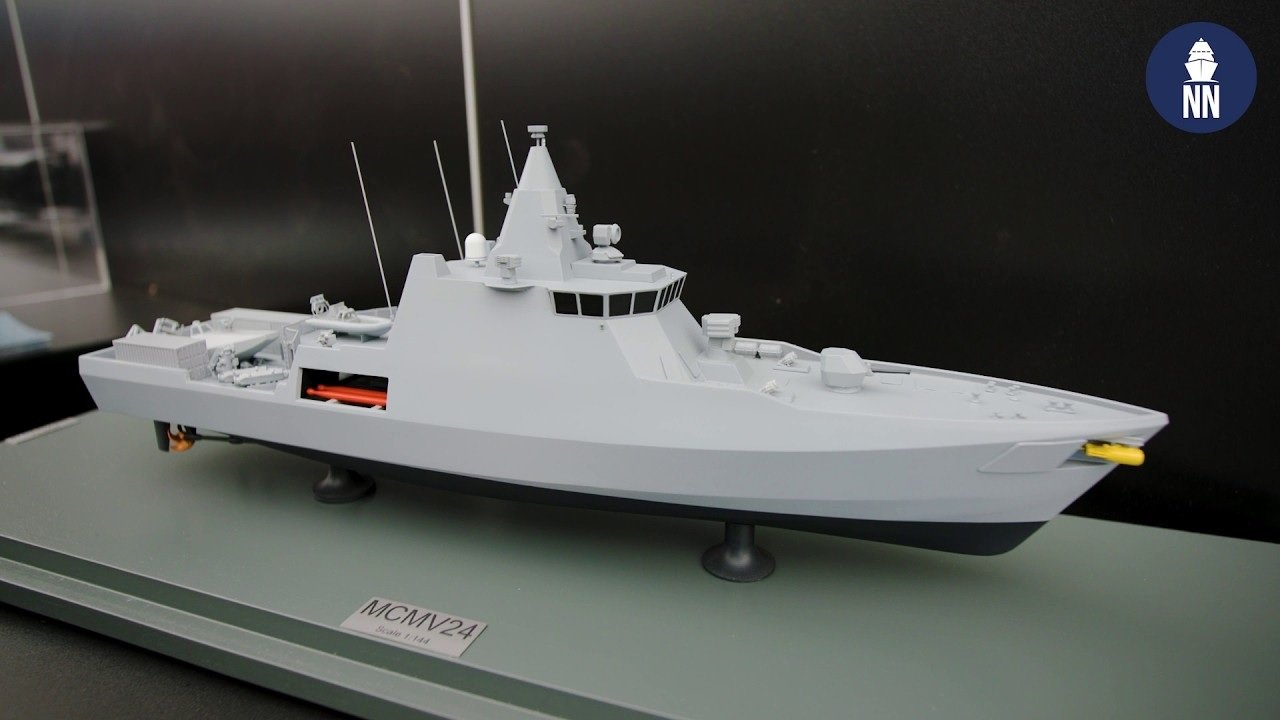
Europe
HERning, Denmark — Swedish defense company Saab has unveiled its MCMV 24 mine countermeasures vessel concept at DALO Industry Days in Herning, Denmark. The 66-meter vessel is designed for operations in the Baltic Sea and similar littoral environments, where mine threats can extend from hostile coastlines across open waters and into friendly ports. The MCMV 24 is designed to operate directly inside mine-threat areas rather than relying entirely on standoff distances. Saab's design considers conventional mines, air-dropped mines and potential future mine deployments by unmanned surface vessels (USVs). The vessel uses a composite glass-reinforced plastic (GRP) hull, a technology developed by Saab's Kockums shipyard, along with other signature-reduction features. Unlike Sweden's current Koster-class vessels, originally built as the Landsort-class in the 1980s, the MCMV 24 uses traditional propellers instead of Voith Schneider propulsors. This reduces some maneuverability and signature-reduction advantages but allows a higher top speed of 22 knots. Sensors and Armament The MCMV 24 is equipped with the Saab Giraffe 1X radar and CEROS fire-control and electro-optical system. Armament options include a Bofors 40 mm deck gun, Saab Lightweight Torpedoes, known as TP 47 in Swedish service, and Saab Nimbrix C-UAS missiles. Nimbrix is a lightweight, fire-and-forget hard-kill interceptor designed to counter drones at ranges of 2 to 5 kilometers. The missile weighs 2.5–3 kg, is less than one meter long, and uses an active seeker and air-burst warhead. Saab has developed it as a lower-cost layer between gun systems and longer-range very-short-range air-defense missiles, with first deliveries planned for 2026. Unmanned Mine-Warfare Systems The vessel includes a dedicated bow door for launching and recovering remotely operated vehicles (ROVs), including Saab's Double Eagle family. The aft deck provides space for containerized mission payloads and additional unmanned systems, including unmanned underwater vehicles (UUVs). A large stern ramp is also designed to deploy a medium mine-warfare USV. The Double Eagle family includes systems for mine disposal, reconnaissance and multi-shot neutralization, with variants operating at depths of up to several hundred meters. Potential Replacement for Koster-Class Saab is offering the MCMV 24 in dedicated mine-countermeasure, offshore patrol and coast guard configurations. The common-hull approach could allow navies to use one basic platform for different missions while reducing maintenance, training and operational requirements. The design is being considered as a potential replacement for Sweden's Koster-class and could also meet requirements in Estonia, Latvia and Lithuania, which have long focused on Baltic mine clearance while facing growing offshore patrol requirements. Saab has confirmed that early discussions are underway with Denmark and Germany regarding the new platform. DALO Industry Days 2026 was held in Herning, Denmark, on August 19–20. The MCMV 24 combines a low-signature hull and mine-warfare systems with higher speed, modern sensors, self-defense weapons and facilities for unmanned systems, giving the concept both mine-countermeasure and multi-mission capabilities. Source : navalnews
Read More → Posted on 2026-09-07 16:12:12
World
JAN MAYEN, Norway — British, U.S. and Norwegian forces have completed Operation Atlantic City, a trilateral NATO deployment on the remote Norwegian island of Jan Mayen in the High North. The exercise ran from August 26 to September 4, 2026, as part of NATO’s wider Operation Arctic Sentry. The UK Ministry of Defence confirmed the deployment on September 6. The exercise involved Royal Marine Commandos and the Royal Air Force’s LXX (70) Squadron, alongside the Royal Norwegian Navy, Norwegian Home Guard and U.S. Marine Corps. U.S. participation also included elements from Marine Corps Forces Europe and Africa, II Marine Expeditionary Force, 10th Marine Regiment and Marine Air Support Squadron 1. A HIMARS platoon from the New Hampshire Army National Guard’s 3-197th Field Artillery Regiment also participated, with support from U.S. Navy Sixth Fleet and Task Force 68. Air mobility support included U.S. Air Force MC-130 and C-130 aircraft, as well as RAF A400M Atlas aircraft. A400M lands on Jan Mayen On August 29, an RAF A400M Atlas from LXX Squadron at RAF Brize Norton landed on Jan Mayen’s unpaved dirt runway. It transported Royal Marines, U.S. Marines and two Joint Light Tactical Vehicles. The island’s runway is approximately 1,500 to 1,585 metres long and is used only a limited number of times each year by Norwegian transport aircraft. During the operation, the allied forces trained in naval operations, reconnaissance, survival in extreme Arctic conditions, and the integration of sensors and communications systems. They also worked on connecting sensors, command-and-control nodes and precision fires. A KONGSBERG StrikeMaster anti-ship missile launch vehicle was deployed to the island with Norwegian Home Guard personnel. Jan Mayen's strategic location Jan Mayen is located in the Norwegian Sea, about 1,000 kilometres from mainland Norway and north of the Greenland-Iceland-United Kingdom (GIUK) gap. The volcanic island has no permanent civilian population, while a rotating Norwegian military and scientific team maintains a meteorological and communications station. Its location makes Jan Mayen an important area for the defence of northern Europe and the wider Euro-Atlantic region. Operation Atlantic City was conducted alongside naval manoeuvres under Operation Northern Viking 26, allowing participating forces to use overlapping maritime and sensing resources. The activity formed part of Arctic Sentry, launched in February 2026 under NATO Joint Force Command Norfolk to improve coordination, situational awareness and deterrence in the High North. The name Operation Atlantic City refers to a U.S. military base established on Jan Mayen during the Second World War for weather observations and support to Allied control of the North Atlantic. Similar training was conducted around the island in September 2025. UK Defence Secretary Wes Streeting said the operation demonstrated the UK's partnership with Norway and the United States and the ability of allied forces to operate together in demanding Arctic conditions. The UK Ministry of Defence said the deployment demonstrates Britain's commitment to NATO collective security and its ability to operate in an environment characterized by extreme weather, distance, limited infrastructure and rapidly changing conditions. The deployment comes as the UK Ministry of Defence faces funding pressures. Britain has suspended some collective training exercises involving 90 or more military personnel, with units not preparing for deployments or specific operational roles instructed to reduce non-essential group training for the remainder of the year. NATO-linked exercises and deployments continue.
Read More → Posted on 2026-09-07 16:04:34
India
NEW DELHI — India’s Defence Acquisition Council (DAC), chaired by Defence Minister Rajnath Singh, has approved capital acquisition proposals worth about ₹1.10 lakh crore for the Indian Armed Forces. The DAC granted Acceptance of Necessity (AoN), which provides in-principle administrative approval and is an important step in India’s defence procurement process. According to the Ministry of Defence, approximately 98 per cent of the procurements covered by these approvals will be sourced from Indian industry, reinforcing the government’s focus on domestic defence manufacturing and reducing dependence on foreign suppliers. Indian Army to Receive New Mobility and Combat Support Systems For the Indian Army, the DAC approved the procurement of Chemical Biological Radiological and Nuclear (CBRN) Recce Vehicles, High Mobility Vehicles (HMVs), Self-Propelled Mechanical Mine Layers (MML), Advanced Light Helicopters (ALHs), Trawl Tanks and the Sarvatra Bridge System. The CBRN Recce Vehicles will be used to detect, identify, monitor and mark areas contaminated by CBRN agents. The High Mobility Vehicles are intended to improve the Army’s operational capabilities, logistics support and mobility in challenging terrain. The Self-Propelled Mechanical Mine Layers will provide the Army with a fast and responsive mine-laying capability in difficult terrain. The approved Advanced Light Helicopters will be used by both the Indian Army and Indian Air Force for complex missions across different terrains and operational situations. The Trawl Tanks and Sarvatra Bridge System will provide composite crossing capabilities to fighting formations during operations across varied terrain. Navy to Get Arudhra Radars and Indigenous Marine Gas Turbines For the Indian Navy, the DAC approved the procurement of Arudhra Radars and the design, development and subsequent procurement of Marine Gas Turbines (MGTs). The Arudhra Radars will replace the existing Air Route Surveillance Radars at various Naval Air Stations. The Marine Gas Turbines are intended for warship propulsion. Their design and development in India, followed by procurement, is aimed at reducing the Navy’s dependence on foreign vendors for this capability. Air Force Approvals Focus on Electronic Warfare and Security The DAC also approved proposals aimed at enhancing the war-fighting capabilities of the Indian Air Force’s fighters, transport aircraft and helicopters. Among the specific approvals was the Ground-Based Multi-Purpose Jammer (GBMPJ). The system will provide effective jamming against adversary radars. The council also cleared the installation of the Defence Forces Secure Access Card (DEFSAC) system. DEFSAC will replace existing paper-based identity cards, passes and permits with an interoperable Radio Frequency Identification (RFID)-based smart card system for access to defence facilities. The Ministry of Defence announced the decisions through an official press release issued by the Press Information Bureau on September 7, 2026. Defence Minister Rajnath Singh also highlighted the approvals on his official X account, pointing to the focus on strengthening India’s domestic defence industrial base. Chaired the meeting of Defence Acquisition Council (DAC) today. The DAC accorded Acceptance of Necessity (AoN) to various acquisition proposals of the Defence Forces at an estimated cost of about Rs 1,10,000 crore.Of the total AoNs accorded, approximately 98% of procurements… — Rajnath Singh (@rajnathsingh) September 7, 2026 With about ₹1.10 lakh crore in capital acquisition proposals receiving AoN and approximately 98 per cent of the procurements expected to be sourced from Indian industry, the latest approvals cover mobility, surveillance, propulsion, electronic warfare, aviation and military access-security capabilities across the three services.
Read More → Posted on 2026-09-07 15:54:10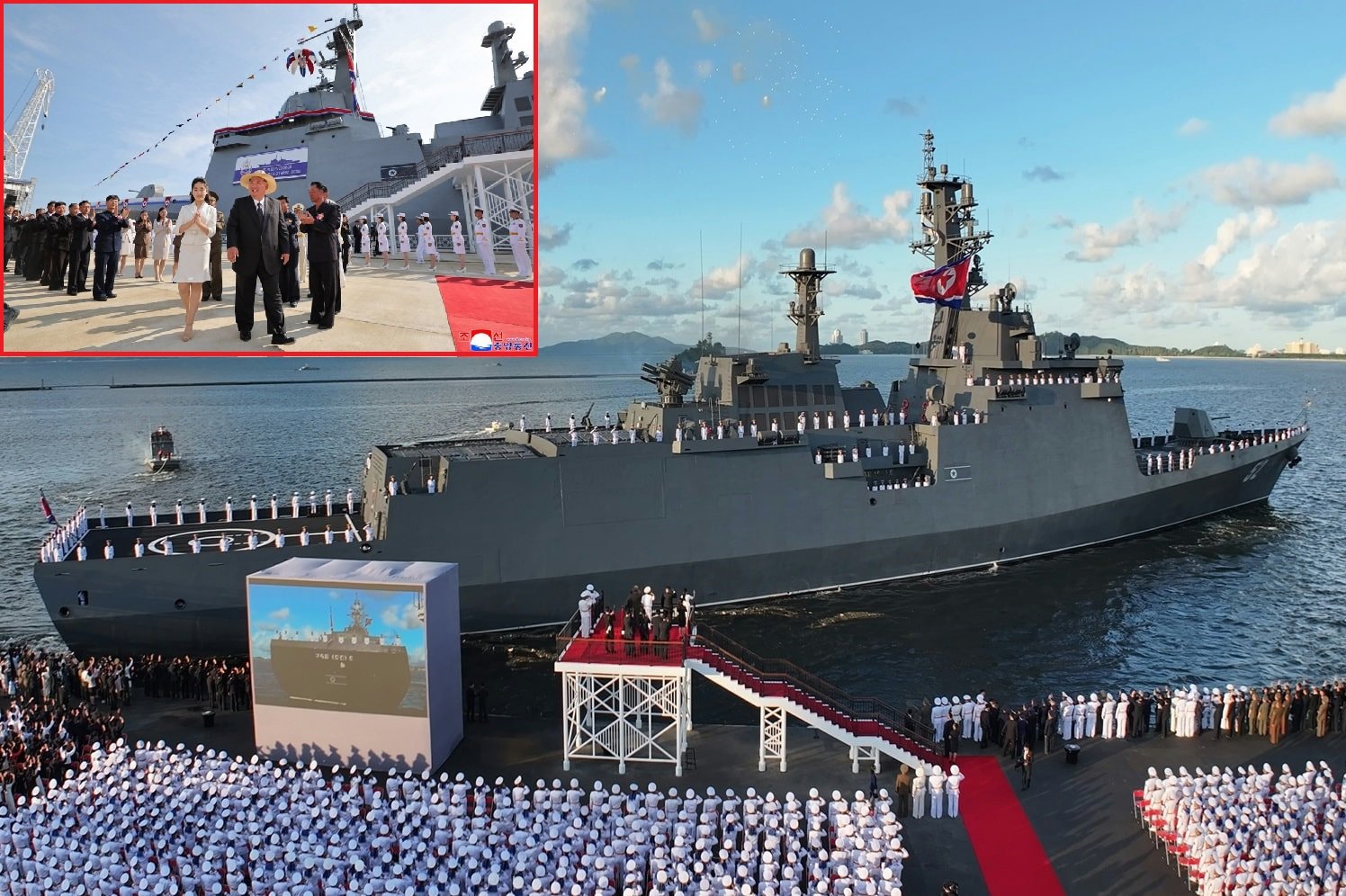
World
PYONGYANG — North Korea has officially commissioned its newest 5,000-ton Choe Hyon-class guided-missile destroyer, Kang Kon, during a ceremony at the eastern port city of Wonsan on Sunday, September 6. North Korean leader Kim Jong Un attended the ceremony with his wife Ri Sol-ju, daughter Kim Ju Ae, and senior government and military officials. The Kang Kon, hull number 52, has been assigned to the Korean People’s Navy’s East Sea Fleet. During his address, Kim described the destroyer as an offensive warship and part of North Korea’s nuclear counteraction system. He said the vessel would be responsible for defending the country’s maritime sovereignty and delivering retaliatory strikes against its enemies. Kim also said North Korea is implementing a major plan to strengthen its naval forces, with the next phase expected to be presented within eight months. Second Choe Hyon-Class Destroyer The Kang Kon is the second ship of the Choe Hyon class, following the Choe Hyon (51), which entered service on June 23, 2026, and was assigned to the West Sea Fleet. Two additional ships of the class are under construction. The class represents North Korea’s largest and most heavily armed surface warships. Each vessel displaces about 5,000 tons and measures approximately 145 meters in length. The Kang Kon was constructed at the Hambuk Shipyard in Chongjin. On May 21, 2025, it partially capsized during its initial launch attempt and suffered major hull damage. After recovery and repairs, it was successfully relaunched on June 12, 2025. The ship later underwent navigation and weapons testing. In July 2026, Kim observed tests involving a strategic cruise missile, naval artillery, automatic guns and the ship’s electronic warfare systems. He subsequently ordered the trials to be completed and the vessel placed into active service within two months. Missile and Defensive Systems The Choe Hyon-class is equipped with a large vertical launch system (VLS) containing 88 cells, including 64 cells aft of the superstructure and 24 forward. The ships also feature eight inclined missile launchers and can carry different types of missiles, including weapons described by North Korean state media as nuclear-capable cruise missiles. Other weapons include a 127mm automated naval gun, a short-range air-defense system resembling the Russian Pantsir-M, two six-barrel 30mm close-in weapon systems, twin 533mm torpedo tubes, decoy launchers and additional machine guns. The destroyers are fitted with four fixed-panel phased-array radar panels, an electronic warfare suite and countermeasure systems. Their stated missions include anti-ship, anti-aircraft, anti-submarine and other operations. Further Naval Expansion The commissioning of the Kang Kon is part of North Korea’s broader effort to expand its naval forces beyond coastal defense. Kim has previously outlined plans for larger warships, including 10,000-ton guided-missile cruisers. North Korea is also developing new naval bases along its eastern coastline to accommodate larger warships and support newly established naval units. Satellite imagery has confirmed that additional Choe Hyon-class vessels are under construction. The Kang Kon’s entry into service gives North Korea a second destroyer of the class as Pyongyang continues its stated effort to expand and modernize its surface fleet for operations on both coasts.
Read More → Posted on 2026-09-07 15:42:44
World
RIYADH — Yemen’s Houthi movement has released a video claiming to show a missile strike on Saudi-linked trucks carrying military equipment near the Al-Wadiah camp, while Saudi Aramco facilities in Jizan were hit in a separate attack on Monday. The developments come as fighting between the Houthis and Saudi-backed Yemeni government forces continues and raise questions over how the recently signed Makkah Joint Defence Agreement between Saudi Arabia, Türkiye and Pakistan could be applied if attacks on Saudi territory continue. Houthis release video of Al-Wadiah strike Houthi military media released footage on or around September 6-7 that it said shows Houthi forces using locally manufactured ballistic missiles against trucks carrying military equipment from Saudi Arabia near the Al-Wadiah camp. pic.twitter.com/EjRhy8BCdJ September 7, 2026 According to the Houthi account, the missiles struck and burned the vehicles at the site. The group described the weapons as domestically manufactured ballistic missiles. The video appears to show several vehicles being hit, but the exact location, extent of damage and any casualties have not been independently confirmed. Saudi authorities, the internationally recognized Yemeni government and other independent sources have not publicly confirmed the Houthi claims. The release comes amid renewed fighting between Houthi forces and Saudi-backed Yemeni government troops. In recent weeks, the Houthis have also claimed missile and drone attacks against positions in areas including Marib and Hadramawt and against targets close to the Saudi border. Jizan Aramco facilities hit again Separately, Saudi Aramco’s oil facilities in Jizan were struck on Monday, September 7, according to a Financial Times report citing two people familiar with the matter. The extent of the damage was still being assessed. One source described the latest incident as similar in scale to an earlier attack about a month ago. NOAA-20 satellite imagery shows large plumes of black smoke rising from Aramco’s Jazan oil refinery in southwestern Saudi Arabia after it was struck by the Houthis today. 🛰🇸🇦 NOAA-20 satellite imagery shows large plumes of black smoke rising from Aramco’s Jazan oil refinery in southwestern Saudi Arabia after it was struck today by the Houthis. https://t.co/cdhFe7I274 pic.twitter.com/bkOUWlDoYS — Egypt's Intel Observer (@EGYOSINT) September 7, 2026 Jizan, located close to the Yemeni border, is home to a Saudi Aramco refinery with a processing capacity of 400,000 barrels of crude oil per day, along with associated energy infrastructure. Aramco had not immediately issued a public comment on the latest incident. Previous Houthi-claimed attacks targeted Aramco facilities in Jizan and Yanbu during July and August. In one August incident, Saudi Arabia’s Energy Ministry confirmed a fire at the Jizan refinery that was later extinguished, with no injuries reported. The Houthis said a drone was used in that attack. Aramco CEO Amin Nasser had previously said that earlier attacks caused some production interruptions but did not have a material operational or financial impact. Oil prices also moved higher following reports of the latest attack, with Brent crude rising by about 1.2 percent. Makkah defence agreement faces a new test The latest attacks come one month after Saudi Arabia, Türkiye and Pakistan signed the Makkah Joint Defence Agreement in Makkah on August 7. The agreement states that an armed attack against any one of the three countries will be regarded as an attack against all three. It also calls for stronger defence cooperation and collective deterrence. Turkish Foreign Minister Hakan Fidan has said the agreement is not directed against Iran or any particular country. He has also indicated that assistance under the agreement would depend on the circumstances and could include areas such as intelligence, logistics, ammunition or other forms of support. The three countries have also begun work on implementing the agreement, including discussions on defence cooperation and coordination. No confirmed Turkish or Pakistani combat involvement As of September 7, there has been no official announcement from Türkiye or Pakistan confirming direct military participation in operations against the Houthis. The agreement's collective-defence provision does not by itself establish that Turkish or Pakistani forces will immediately conduct combat operations in Yemen. The exact response would depend on decisions by the member governments and the circumstances surrounding any attack. Possible assistance could include intelligence, logistics, defensive capabilities and other forms of military cooperation, but there has been no public confirmation that either country is preparing to deploy combat forces against the Houthis. The Houthi video and the reported attack on Jizan therefore come at an important point for the new Saudi-Türkiye-Pakistan defence arrangement. However, the extent of any future response from Ankara or Islamabad remains unclear. The situation remains fluid, and damage assessments for the Jizan incident are continuing. Claims made in the Houthi video about the Al-Wadiah strike have also not been independently verified.
Read More → Posted on 2026-09-07 15:21:51
Space & Technology
WASHINGTON — The U.S. Space Force has awarded $50 million to Space Kinetic Corp. to develop Whirlwind, a space maneuverability and deployment system designed to release small spacecraft from a larger host vehicle at high velocity without using a thruster for the initial boost. Space Kinetic announced the award on August 13, 2026, describing it as the largest award in the company's history. The agreement was made through an Other Transaction Authority (OTA) mechanism. Using centrifugal acceleration to deploy satellites Whirlwind takes a different approach from conventional satellite deployment. The system uses an electromechanical mechanism on a host spacecraft to spin and accelerate ruggedized microsatellites before releasing them on independent trajectories. The company describes the concept as a "space-based David sling." Rather than using chemical propulsion to provide the initial change in velocity, Whirlwind uses centrifugal acceleration to provide most of that initial Delta-V. After deployment, the individual microsatellites can use their own limited propulsion and communications systems for further adjustments. The approach is intended to shift much of the initial propulsion requirement from each individual payload to the host spacecraft. Space Kinetic says this could reduce the mass, cost and complexity of individual micro-payloads. One host spacecraft, multiple missions Space Kinetic refers to Whirlwind as a "one-to-many" architecture, in which one host spacecraft can deploy multiple mission-specific micro-payloads. The company is targeting several potential dual-use applications, including: Space domain awareness sensors Electro-optical imaging Rapid-response communications nodes Space debris characterization Scientific research probes Inspection missions Elements of asymmetric space-based missile-defense concepts The system is designed to support different payload types and orbital regimes, according to Space Kinetic. Applying "drone economics" to space A central part of Space Kinetic's concept is reducing the cost of individual spacecraft enough to enable missions that would not require a satellite to operate for years. CEO and co-founder Ryan Sullivan has described the idea as bringing "drone economics" to orbit. Under this concept, some small spacecraft could be designed for short-duration missions rather than long-term operation. Sullivan has discussed scenarios in which a payload could have a useful life measured in 30 minutes if its cost were low enough. The company says this could allow a host spacecraft to distribute different capabilities when and where they are required. Space Kinetic expands its government work The $50 million Space Force award follows a $12 million seed funding round in 2025, led by Balerion Space Ventures, with participation from Industrious Ventures, Marque Ventures and CerraCap Ventures. Space Kinetic also received a multi-million-dollar DARPA contract related to an asymmetric space-based missile-defense architecture and was selected for the SpaceWERX Adaptive and Intelligent Space Challenge in July 2026. The company currently has about 50 employees. It operates a prototyping laboratory in Albuquerque, New Mexico, maintains a multi-year partnership with Los Alamos National Laboratory, and is expanding its presence in El Segundo, California. The company is also hiring as it works to expand its team. No in-orbit test date announced Space Kinetic has not announced a firm date for an in-orbit demonstration of Whirlwind. The company is currently focused on technology maturation and discussions with government and other partners about system integration. The Space Force award gives the company funding to advance a deployment architecture that could allow a single host spacecraft to release multiple small payloads without requiring each payload to provide the full initial propulsion needed for its mission.
Read More → Posted on 2026-09-07 15:01:25
U.S
KENNEDY SPACE CENTER, Fla. — Sierra Space has signed contracts with undisclosed national security and commercial customers to fly payloads on the first orbital mission of its Dream Chaser spaceplane. The company announced the agreements on September 2, adding new payloads to a debut mission that has faced years of delays. The reusable, uncrewed spacecraft, named Tenacity, is scheduled to launch from Kennedy Space Center in Florida aboard a United Launch Alliance (ULA) Vulcan Centaur rocket. The mission will conduct multiday operations in low Earth orbit before Tenacity returns to Earth and lands on a runway at Vandenberg Space Force Base in California. Unlike traditional cargo spacecraft that use parachutes or splash down in the ocean, Dream Chaser is designed to land on a runway. If successful, the mission will mark the first orbital flight of a winged spacecraft since NASA retired the Space Shuttle fleet in 2011. From ISS Mission to Free-Flyer Demonstration Dream Chaser was originally selected by NASA in 2016 under the Commercial Resupply Services-2 (CRS-2) program to deliver cargo to the International Space Station. The contract called for at least seven resupply missions. However, technical delays, including issues involving the spacecraft's propulsion system and launch vehicle readiness, repeatedly pushed the program back. In September 2025, NASA and Sierra Space revised the agreement. The seven-mission guarantee was dropped, and Tenacity's first flight was changed from an ISS docking mission into an independent free-flyer demonstration in low Earth orbit. The multiday mission will demonstrate Dream Chaser's capabilities before NASA considers future station resupply orders. One Spacecraft, Multiple Customers Sierra Space said the mission will be the first to combine national security, commercial and civil payloads, including NASA cargo under the Cargo Resupply Services program, on a single spacecraft. The company has not disclosed the national security or commercial customers or the specific payloads. Sierra Space is still finalizing the full manifest and has not set a firm launch date. The flight is targeted for later in 2026. The schedule will also depend on the readiness of ULA's Vulcan Centaur, which experienced a solid rocket booster anomaly during a mission in early 2026. Dream Chaser Capabilities Dream Chaser is designed for high reusability and mission flexibility. Its wings fold inside a standard rocket payload fairing during launch and deploy once in orbit. Sierra Space says the spacecraft is designed to be reused up to 15 times. The vehicle can carry payloads with partial space certification rather than full environmental qualification, which Sierra Space says can reduce development costs and speed deployment. It can also use a detachable cargo module for different pressurized and unpressurized configurations. Dream Chaser is designed for autonomous reentry and a runway landing with forces below 1.5 g, helping protect sensitive payloads and equipment. Sierra Space said it has completed environmental testing, command and telemetry validation, and runway recovery rehearsals for Tenacity. Sierra Space CEO Dan Jablonsky said Dream Chaser has evolved into a strategic capability serving national security, civil and commercial customers on the same platform. Dan Polis, senior vice president of engineering and Dream Chaser at Sierra Space, highlighted the development of the spacecraft's deployable wings, hypersonic flight control, autonomous reentry and low-force runway landing. Tenacity is now being prepared for its first orbital flight while Sierra Space completes the mixed payload manifest.
Read More → Posted on 2026-09-07 14:17:19Search
Top Trending in 24 Hours
-
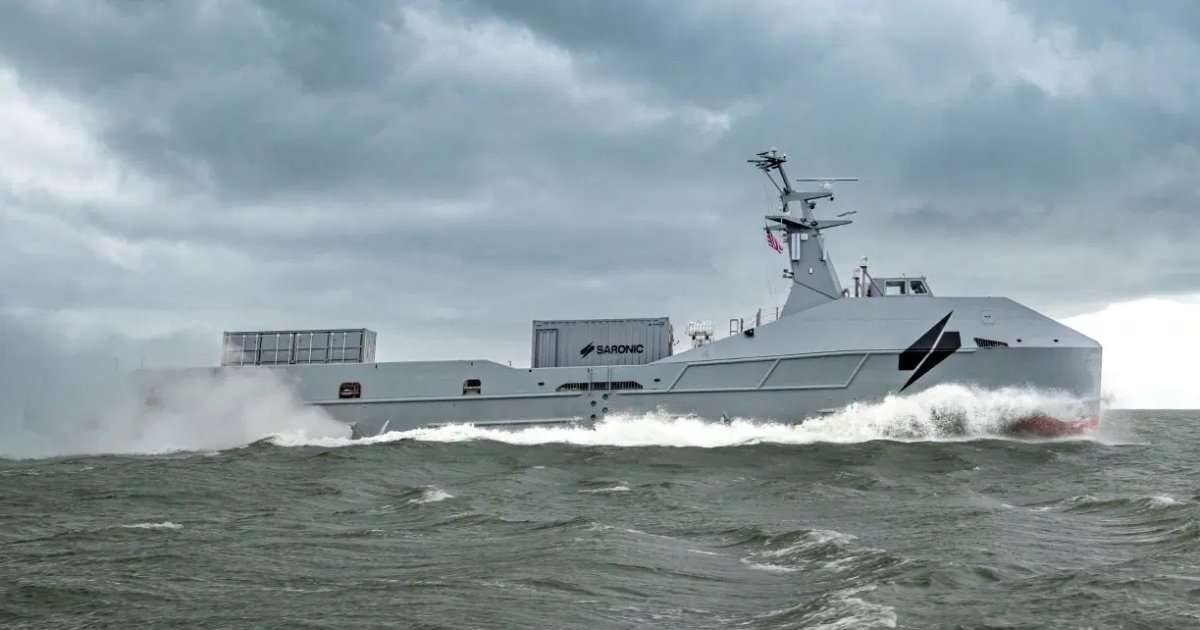 U.S. Navy Awards Production Agreements for 30 Medium Unmanned Surface Vessels, Including 10 Saronic Marauders
-
 Boeing Wins $20 Billion U.S. Navy Contract for F/A-XX Sixth-Generation Fighter
-
 Flydubai Flight to Israel Diverted to Saudi Arabia After Possible Attempted Terror Attack in Cockpit
-
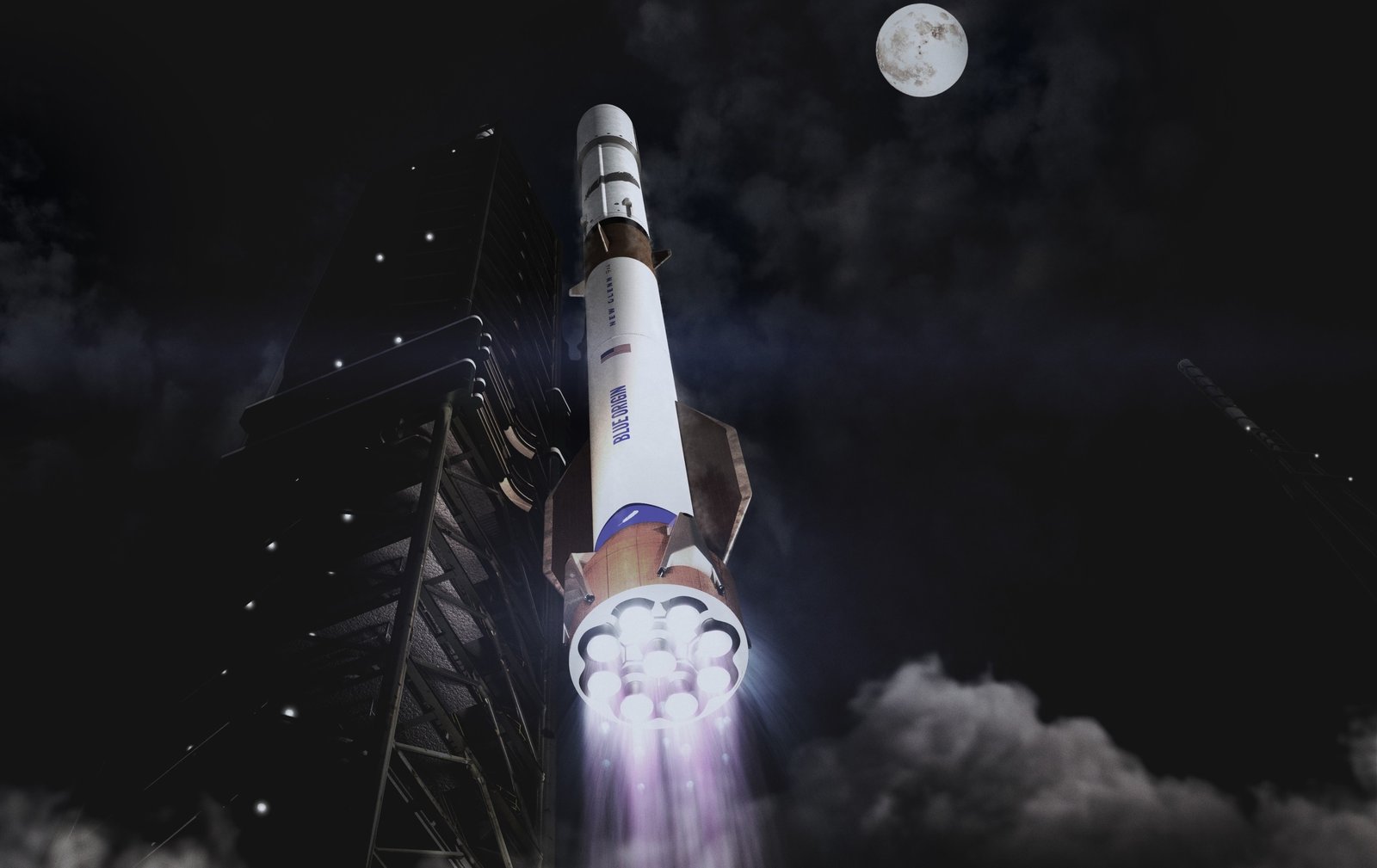 NASA Adds Blue Origin’s Upgraded New Glenn 9×4 to Launch Services Contract
-
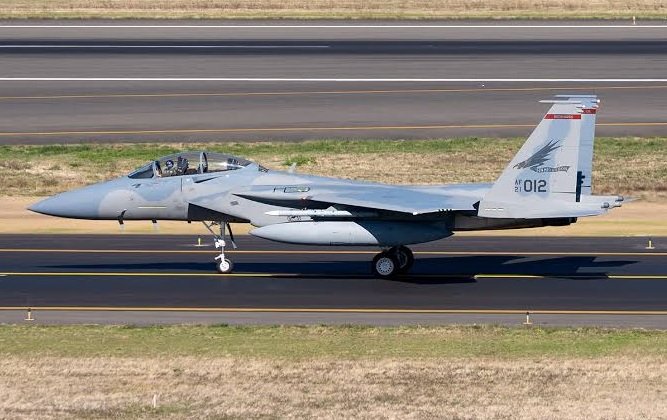 U.S. Air Force Awards Boeing $2.38 Billion Contract for 22 F-15EX Fighter Jets
-
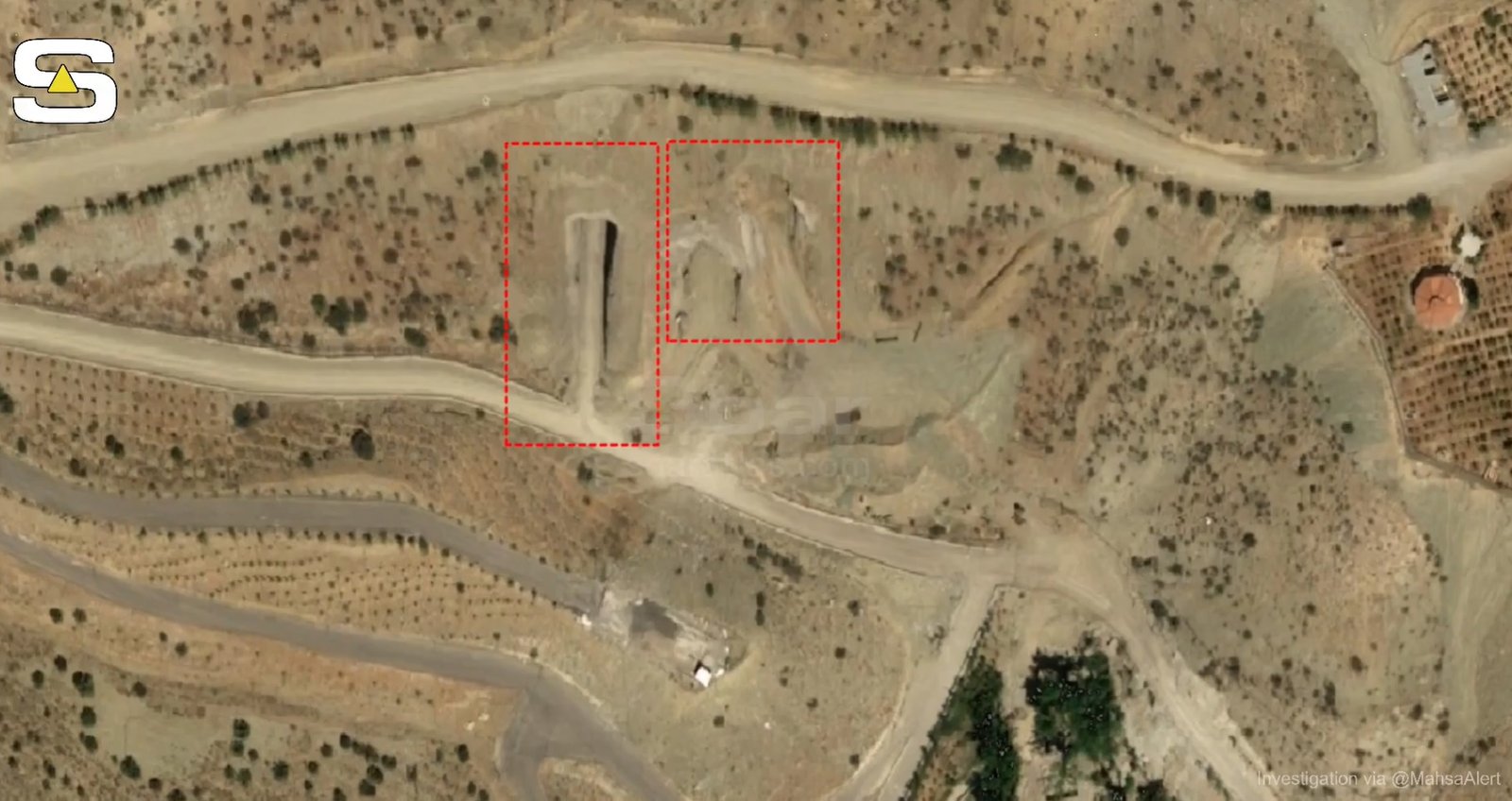 Satellite Imagery Shows Construction Changes at Hillside Site Linked to Iran’s Supreme National Security Council
-
 U.S. Army Awards Heaviside Industries $99 Million Contract for MOTH RF Spectrum Analyzers
-
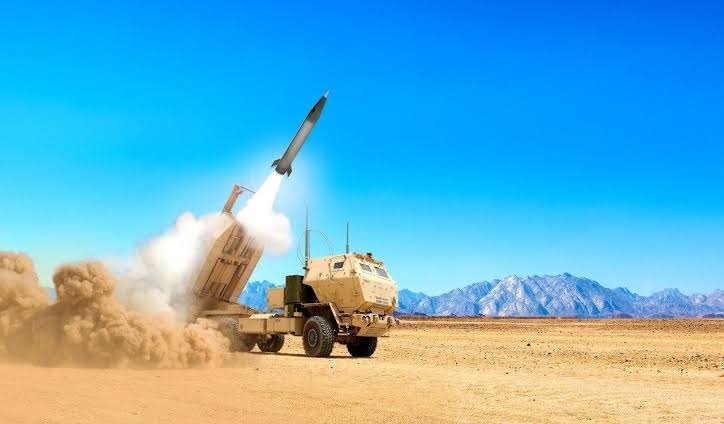 U.S. Army Selects Five Companies to Develop 1,000-Km Precision Strike Missile Prototypes
Top Trending in 4 Days
-
 Russia Says Su-75 Checkmate Could Cost Just $25–30 Million, Flight-Hour Costs 6 Times Lower Than F-35
-
 China Reports First High-Orbit Refueling of BeiDou Satellite, but Tracking Data Raise Questions
-
 Eight U.S. Marines Injured in Iranian Missile Strike on U.S Vessel in Strait of Hormuz
-
 U.S. and Russia Remove Human-Review Rules From Draft UN AI Weapons Framework
-
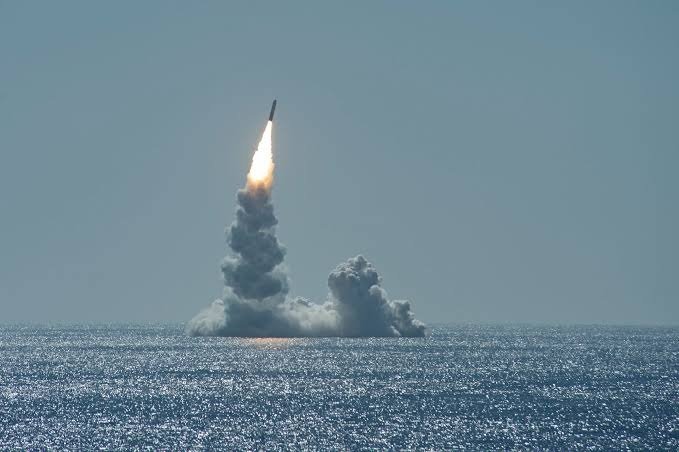 UK Offers Nuclear Deterrence for Its Northern European Defence Partners
-
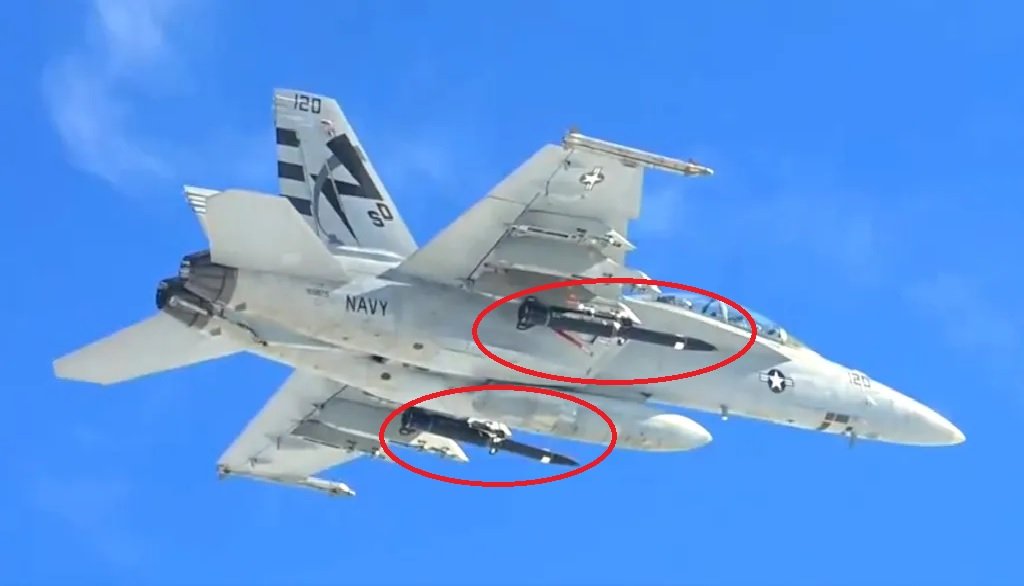 U.S. Navy Begins Flight Testing Blackbeard Hypersonic Missile on F/A-18 Super Hornet
-
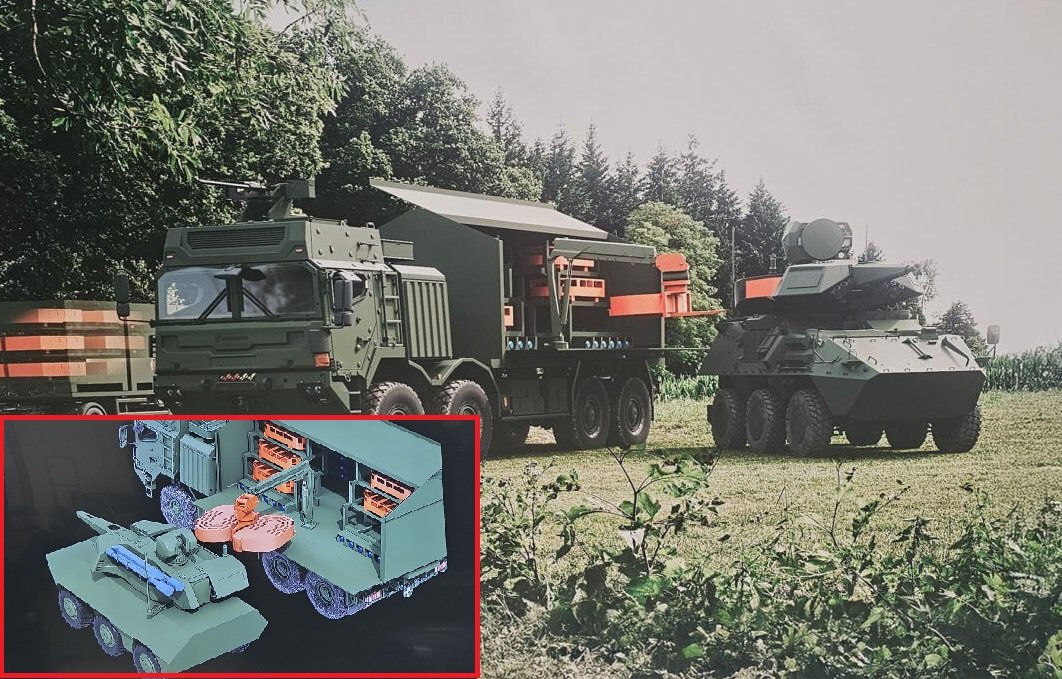 Rheinmetall Develops Automated Reloader for Austrian Skyranger Air Defense System
-
 HII Expands Massachusetts Unmanned Systems Facility by 25 Percent to Support U.S. Navy Lionfish Production
