Ukraine has now received all four promised Skynex air-defence systems from Germany, completing a delivery that began as an urgent wartime procurement nearly three years ago. With drone and loitering-munition attacks intensifying across the front and deep inside Ukrainian cities, the arrival of the full Skynex package marks one of the most significant additions to the country’s short-range air-defence network since the war began.
A Deal Born From Crisis
The story of Skynex in Ukraine began in December 2022, when Germany signed the first contract with Rheinmetall for two Skynex batteries, financed through Berlin’s special defence fund. That initial agreement, valued at around €182 million, was meant to give Ukraine a precise, cost-effective system capable of shooting down Shahed-type drones—cheap, abundant, and increasingly used to exhaust expensive missile stocks.
As the drone war escalated, Germany quietly placed a follow-on order in early 2024 for two additional systems, bringing the total promised to four. Deliveries began in stages throughout 2024 and 2025. Now, in late 2025, Rheinmetall confirms that all four systems are fully delivered and operational on Ukrainian soil.
Why Skynex Matters to Ukraine
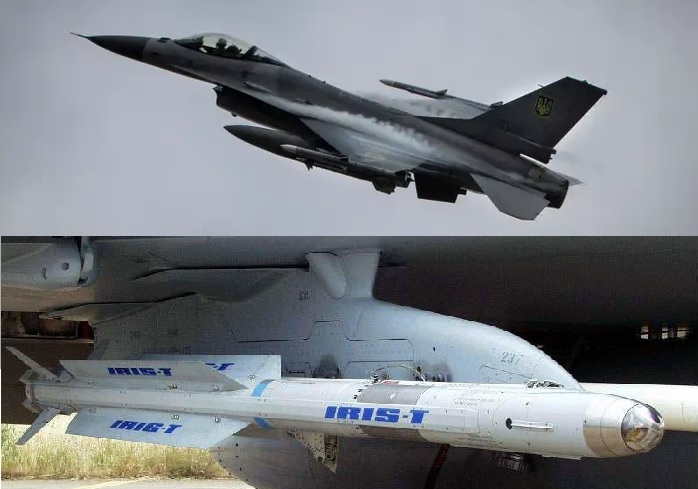
Over the past two years, Ukraine’s power infrastructure, ammunition depots, bridges and rail hubs have endured constant strikes from Shahed drones, Lancet loitering munitions, and low-flying cruise missiles. While Ukraine relies heavily on Patriots, IRIS-T, and NASAMS for long-range interception, these systems are simply too expensive and too scarce to waste on slow, low-cost drones.
Skynex fills that gap.
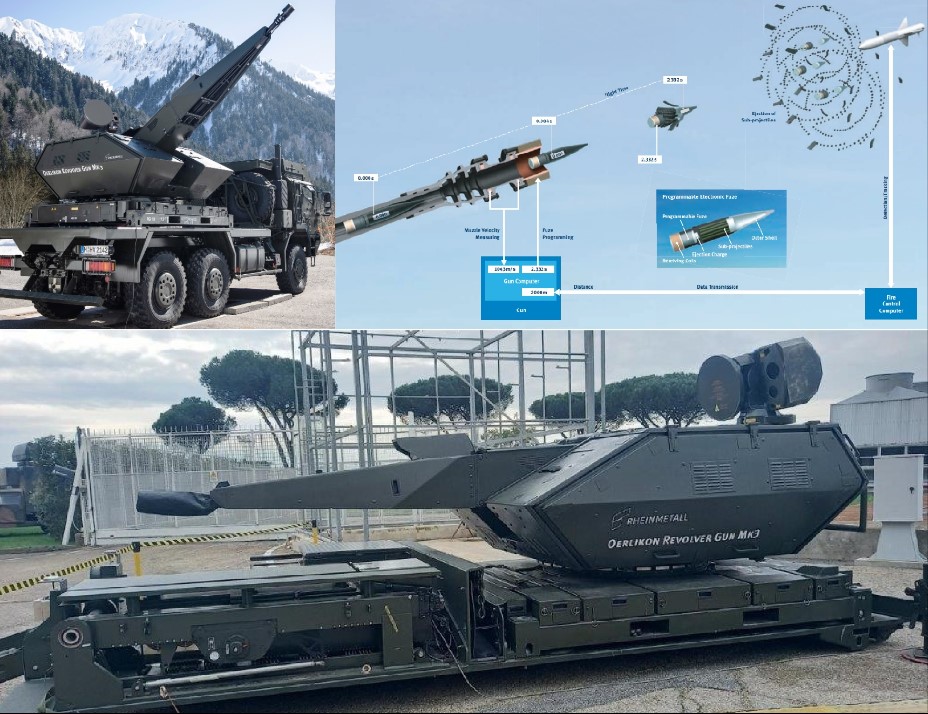
It is a system built around 35mm cannon fire, using programmable AHEAD air-burst ammunition that releases hundreds of tungsten pellets in the path of an incoming drone. Each shot costs a fraction of a missile, yet can destroy even small, hard-to-track UAVs. This makes Skynex ideal for defending power plants, military logistics hubs, airfields, and other high-value targets.
How Skynex Works – System Specifications
Each Skynex air-defense battery delivered to Ukraine includes:
• 35mm Oerlikon Revolver Gun Mk3
Mounted on Rheinmetall HX 8×8 trucks
-
Rate of fire: Up to 1,000 rounds/minute
-
Effective range: Up to 4 km
-
Gun elevates to engage fast, low-altitude targets
• AHEAD Programmable Ammunition
-
Each round releases tungsten sub-projectiles
-
Creates a “cloud” that shreds drones or missile components
-
Much cheaper than using IR-guided or radar-guided missiles
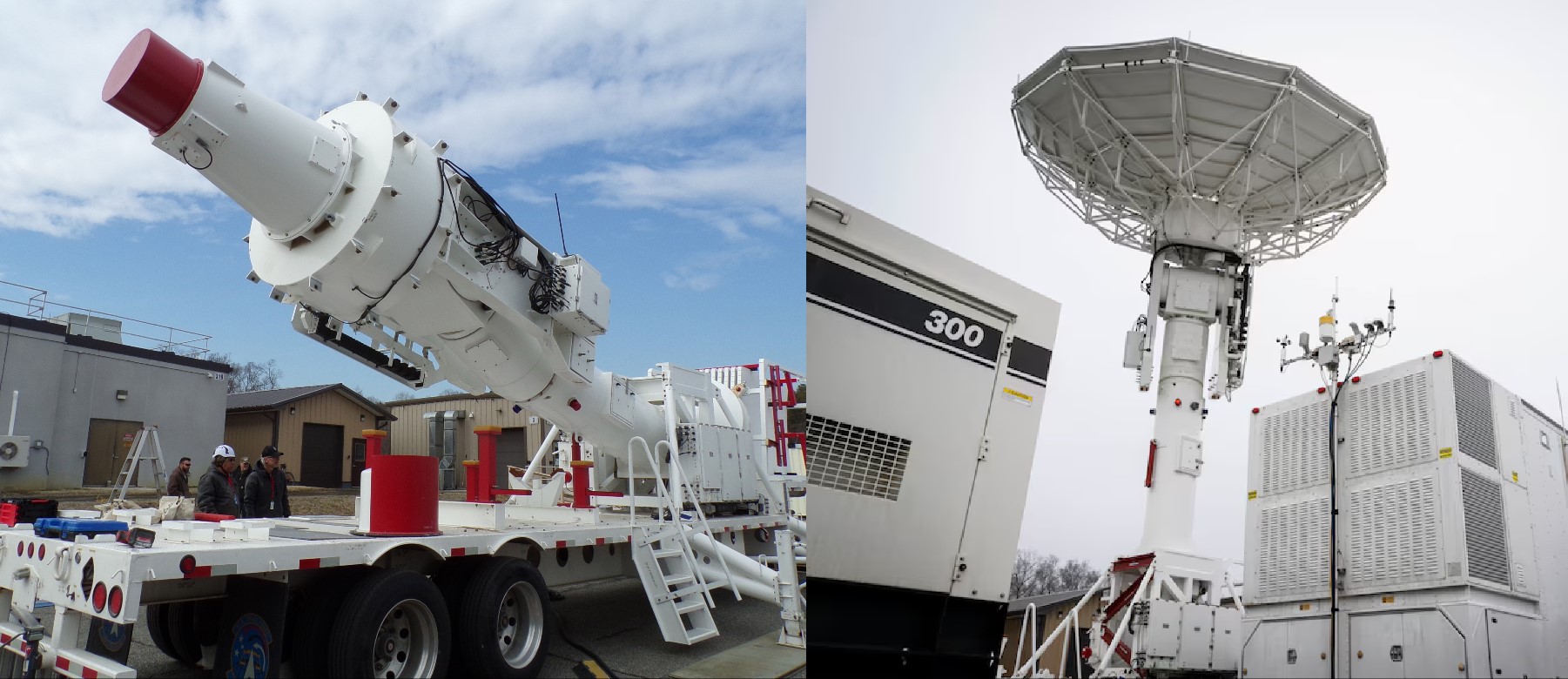
• X-TAR3D Radar and Skymaster Battle-Management System
-
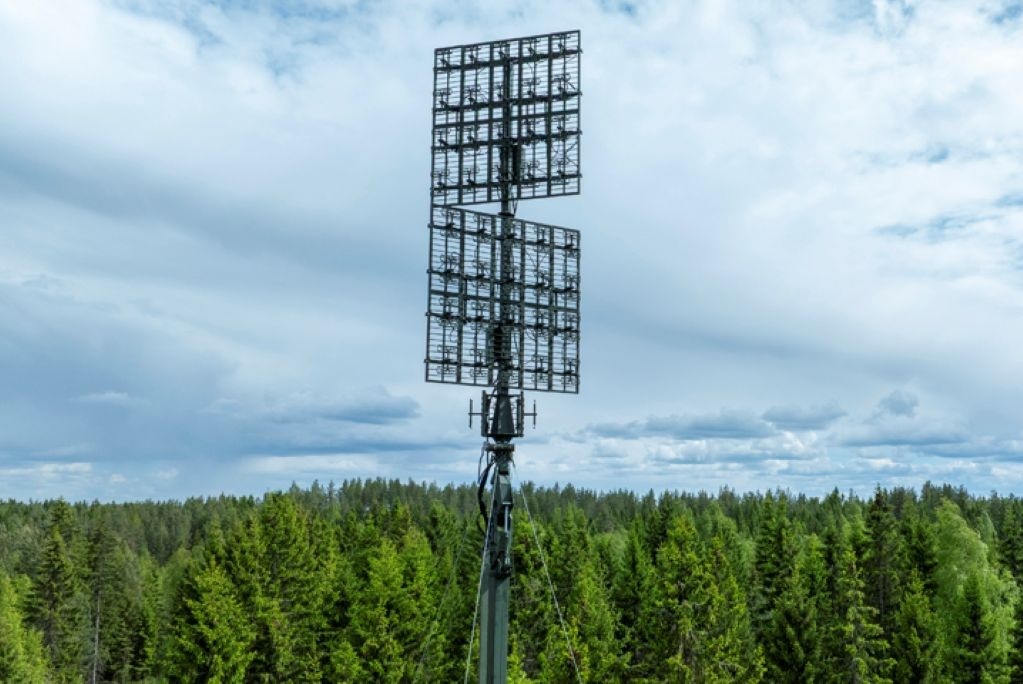
3D air-surveillance radar
-
Tracks drones, rockets, and aircraft at long distances
-
Integrates with other NATO-standard sensors
-
Can command multiple guns simultaneously
• Fully Modular Architecture
Ukraine can later add:
-
More guns
-
Missile launchers
-
Different radars
-
Electo-optical tracking units
Its open architecture also means Ukraine can attach additional radars, fire-control units, or even integrate older Soviet-era sensors.
A New Layer in Ukraine’s Defence Web
Kyiv has not disclosed exact deployment locations, but military officials hint that Skynex systems are already positioned around strategic energy facilities and logistical corridors—precisely the targets Russia has tried to cripple ahead of winter.
For Ukraine, every Skynex battery helps reduce reliance on high-cost interceptor missiles. For Germany, the successful delivery signals a maturing defence-industrial partnership with Ukraine—one that Berlin expects will last long after the war.
What Comes Next
Despite the positive news, Ukrainian officials openly acknowledge that four systems are far from enough for a country of Ukraine’s size. Demand for short-range drone-defence technology has skyrocketed, and Kyiv continues to lobby Europe for more Skynex units or similar systems.
For now, the completion of the delivery marks a rare moment of certainty in a chaotic war: a promised capability, delivered in full, and already working to protect Ukraine’s cities and soldiers.
If you want, I can now write a follow-up article comparing Skynex vs. Gepard vs. IRIS-T in Ukraine’s air-defence ecosystem.
——— End of Article ———