In a development that underscores the growing strategic alignment between Tehran and Beijing, Iran has reportedly entered into a barter agreement with China, exchanging large volumes of crude oil for HQ-9B long-range air defense systems and other advanced military technologies. This unprecedented oil-for-weapons arrangement not only signals a deeper military relationship between the two nations but also reflects a calculated effort to bypass U.S.-led financial sanctions and reshape the power balance across the Middle East.
Iran’s Oil Lifeline to China
Despite decades of Western sanctions, Iran’s oil exports have surged, largely thanks to its covert but expanding trade with China.
According to international energy trackers and trade data, over 90% of Iran’s crude oil exports now flow to China, often through indirect shipping routes using reflagged or “ghost fleet” tankers.
As of mid-2025, Iran was exporting between 1.5 and 1.8 million barrels per day (bpd) of crude oil to China — the highest level since before the U.S. reimposed sanctions in 2018.
In 2022, Iranian oil exports to China were valued at approximately $12.6 billion, and that figure has only grown as China’s independent refiners — the so-called “teapot” refineries — continue to absorb discounted Iranian crude.
This steady flow of oil has given Tehran both leverage and liquidity. But instead of relying on complex currency transactions blocked by sanctions, Iran has turned to barter mechanisms — a direct exchange of energy for weapons, training, and military support.
What Iran Gains: The HQ-9B Air Defense System
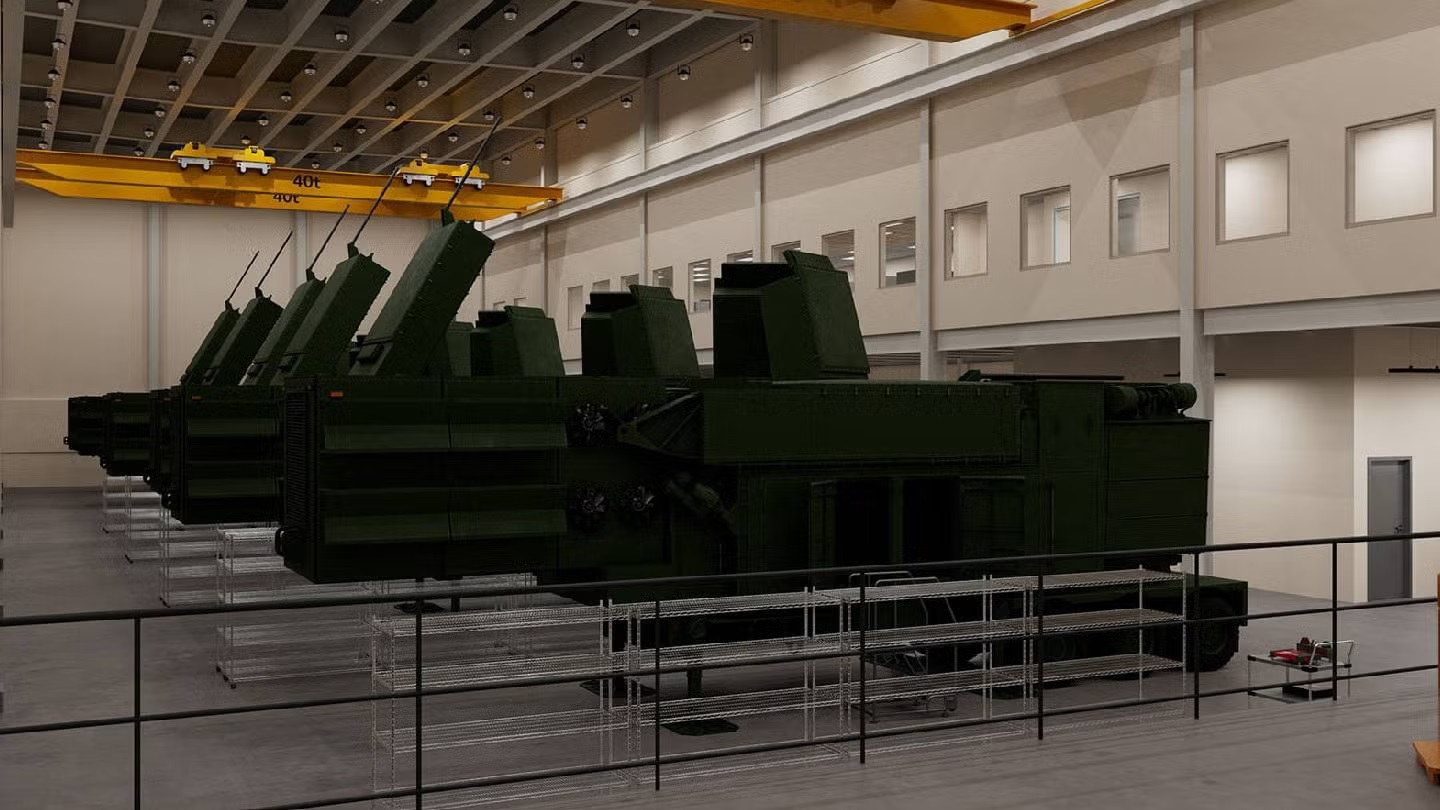
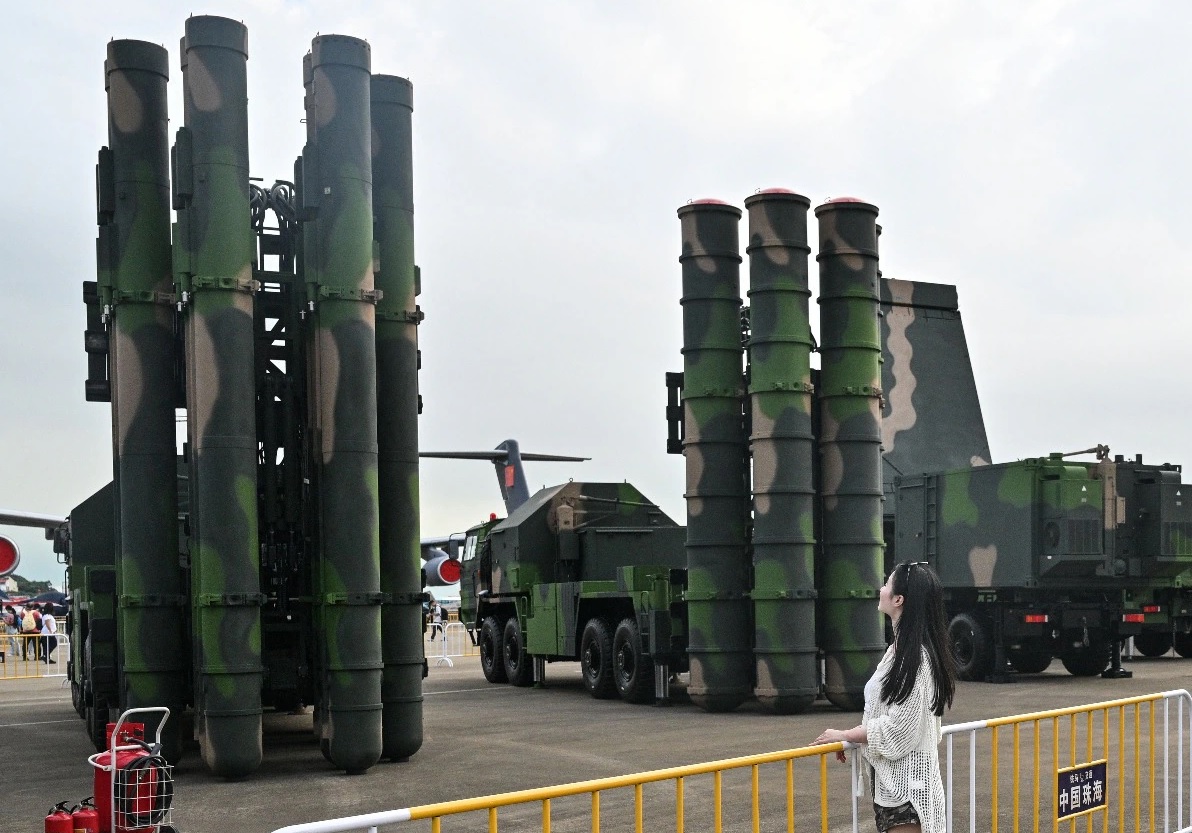
The barter deal centers on China’s HQ-9B surface-to-air missile (SAM) system, a next-generation long-range defense platform capable of engaging aircraft, drones, and ballistic missiles across a range of up to 300 kilometers.
Developed by the China Academy of Defense Technology, the HQ-9B features active radar homing, an AESA (Active Electronically Scanned Array) radar, and advanced electronic counter-countermeasures. It can track up to 100 targets simultaneously and engage several at once.
For Iran, this system fills a long-standing gap. Its existing network — composed of Russian-made S-200s, limited S-300 units, and the domestically produced Bavar-373 — struggles to provide full-spectrum coverage against modern threats. With HQ-9B batteries in place, Tehran could fortify its airspace against potential Israeli or U.S. airstrikes and better protect its critical infrastructure, including nuclear and missile facilities.
The Price of Protection
The cost of the HQ-9B system reflects its sophistication. Open-source defense market analyses estimate a single HQ-9B regiment (comprising multiple launchers, radars, command posts, and support vehicles) at around $1.3 to $1.5 billion.
Simpler HQ-9 units or earlier variants, like the FD-2000, are priced between $300 to $600 million per battery, depending on configuration and export terms.
For a barter arrangement, this translates to a massive volume of oil. Based on Brent crude averaging $85 per barrel, one HQ-9B regiment could equate to nearly 17 million barrels of Iranian crude — roughly ten days of Tehran’s current export volume to China.
In practical terms, the system’s cost will likely be paid through incremental shipments over several months, reducing Tehran’s financial pressure while deepening Beijing’s energy dependency on sanctioned crude.
Strategic Calculations Behind the Deal
For Iran, this barter is about more than technology — it’s about survival and deterrence. After years of covert strikes, drone attacks, and cyber operations against its defense facilities, Iran has prioritized the creation of a modern, layered air defense grid. The HQ-9B provides a critical upper tier to complement its medium- and short-range systems.
For China, the motivations are multifaceted. Beyond securing cheap oil, Beijing seeks to expand its arms footprint in the Middle East, where Russia’s capacity has diminished under the weight of the Ukraine war. Iran serves as a testing ground and strategic partner — a gateway for Chinese defense systems to gain operational experience in real-world, high-tension environments.
Moreover, by supplying Iran with advanced air defense systems, China effectively challenges U.S. regional influence, signaling that its defense exports are now a tool of geopolitical competition rather than simple commerce.
Implications for the Region
The introduction of the HQ-9B could reshape the Middle East’s aerial calculus.
Israel and the United States, which have previously relied on freedom of movement in Iranian airspace for reconnaissance and contingency planning, may now face new strategic constraints.
For Gulf Arab states — particularly Saudi Arabia and the UAE — the Iran-China defense linkage adds another layer of complexity. While these nations maintain deep energy ties with Beijing, they now face the reality that China is simultaneously arming their primary rival.
Regionally, this barter deal represents a symbolic break from Western-dominated defense supply chains. It showcases an alternative model of military financing that sanctions cannot easily disrupt — one in which energy resources, not currency, fuel modernization.
Integration Challenges Ahead
Despite the apparent advantages, integrating the HQ-9B into Iran’s command network will not be straightforward.
Iran’s defense infrastructure is a patchwork of Russian, indigenous, and legacy Western systems. To achieve full operational efficiency, Iran will require Chinese technical teams, logistics support, and possibly joint training programs. This dependency could tether Iran even closer to China over time — both militarily and technologically.
There are also questions about how many HQ-9B units Iran will receive. Some reports suggest only an initial delivery of two to three batteries, while others hint at a broader multi-year plan involving radar upgrades and mobile SAM variants.
A New Model for Global Defense Trade
The Iran-China oil-for-weapons deal reflects a broader trend: the rise of barter-based defense diplomacy in a sanctions-fractured world. It is a clear demonstration that state-level trade can evolve beyond dollar transactions into a strategic exchange of energy for technology.
If confirmed, this model could inspire other sanctioned or isolated nations — such as Russia, Venezuela, or North Korea — to pursue similar deals with willing partners. It also exposes the limitations of existing Western sanctions frameworks, which were designed for a financial world now being rewritten by political necessity.
The reported trade of Iranian crude oil for China’s HQ-9B air defense systems marks a turning point in Tehran’s defense strategy and Beijing’s global posture.
For Iran, it represents the arrival of cutting-edge protection at a time of mounting regional pressure.
For China, it’s another milestone in expanding its influence from East Asia to the Persian Gulf — using energy, weapons, and strategic patience as its primary tools.
This oil-for-weapons pact is more than a simple transaction. It is a statement: that in the emerging multipolar world, energy and defense are now currencies of equal value — and those who control both can redefine the balance of power.
——— End of Article ———