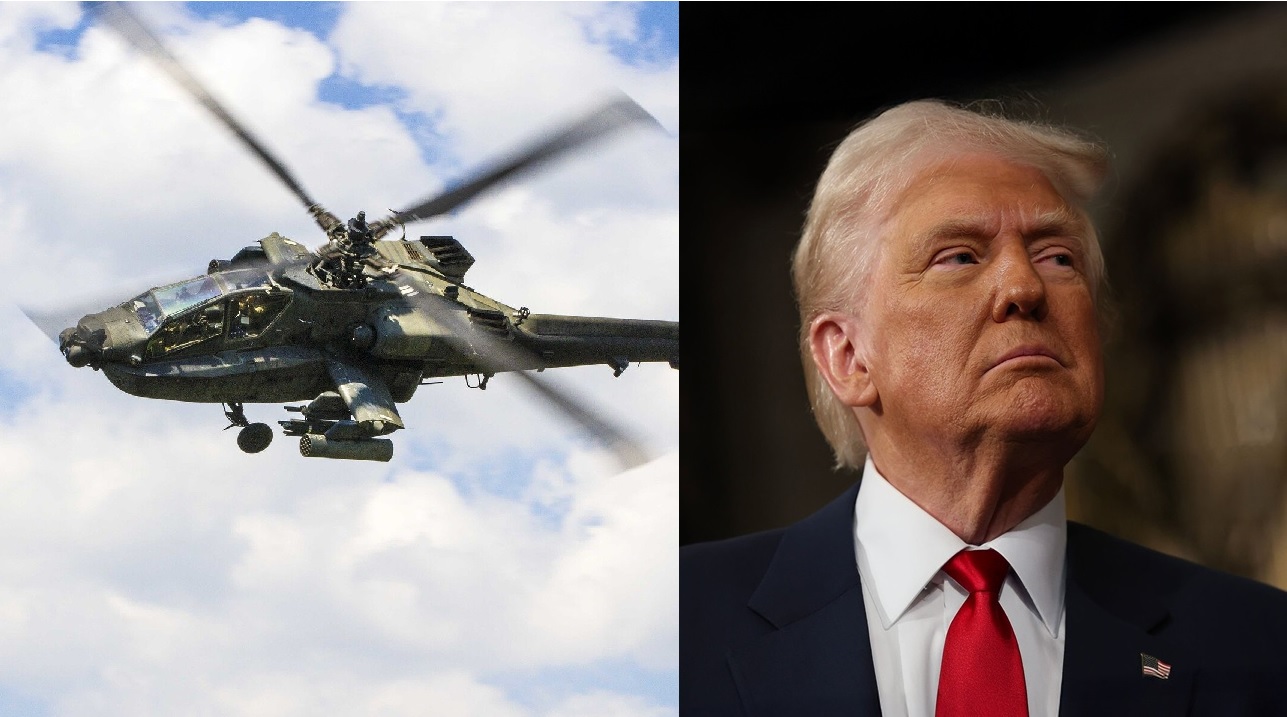
WASHINGTON, — June 09, 2026 : President Donald Trump announced that Iranian forces shot down a U.S. Army AH-64 Apache attack helicopter while it was conducting a patrol mission over the Strait of Hormuz, stating that the United States is obligated to respond to the incident.
In a statement posted on Truth Social on Tuesday, Trump said the helicopter was brought down during operations in the strategic waterway. He confirmed that the two pilots aboard survived the incident and were not injured.
The Apache helicopter crashed at approximately 7:30 p.m. Eastern Time on Monday near the coast of Oman and the Strait of Hormuz. Following the incident, the two Army aviators were rescued in a maritime recovery operation involving an unmanned surface vessel operated by the U.S. Navy's Task Force 59.
According to military officials, the 24-foot “Corsair” drone vessel, developed by Saronic Technologies, transported the pilots across the water before they were transferred to a helicopter and taken for medical evaluation. U.S. Central Command (CENTCOM) later confirmed that both service members were safely recovered and remain in stable condition.
While President Trump directly attributed the loss of the aircraft to Iranian fire, CENTCOM stated that the exact cause of the crash remains under investigation.
The incident occurred amid ongoing hostilities linked to Operation Epic Fury, a conflict involving the United States, Israel, and Iran that has continued since February 2026. The Strait of Hormuz, a key route for global energy shipments, has remained a focal point of military activity following U.S. efforts to enforce a blockade on Iranian ports.
Despite warning that the United States would respond to the attack, Trump said diplomatic efforts to secure a ceasefire are continuing. He told reporters that negotiators are working toward an agreement that could reopen the Strait of Hormuz and reduce tensions in the region.
According to a recent congressional report, more than 40 U.S. aircraft and drones have been damaged or destroyed since the conflict began, highlighting the continued risks facing military operations in the region.
——— End of Article ———