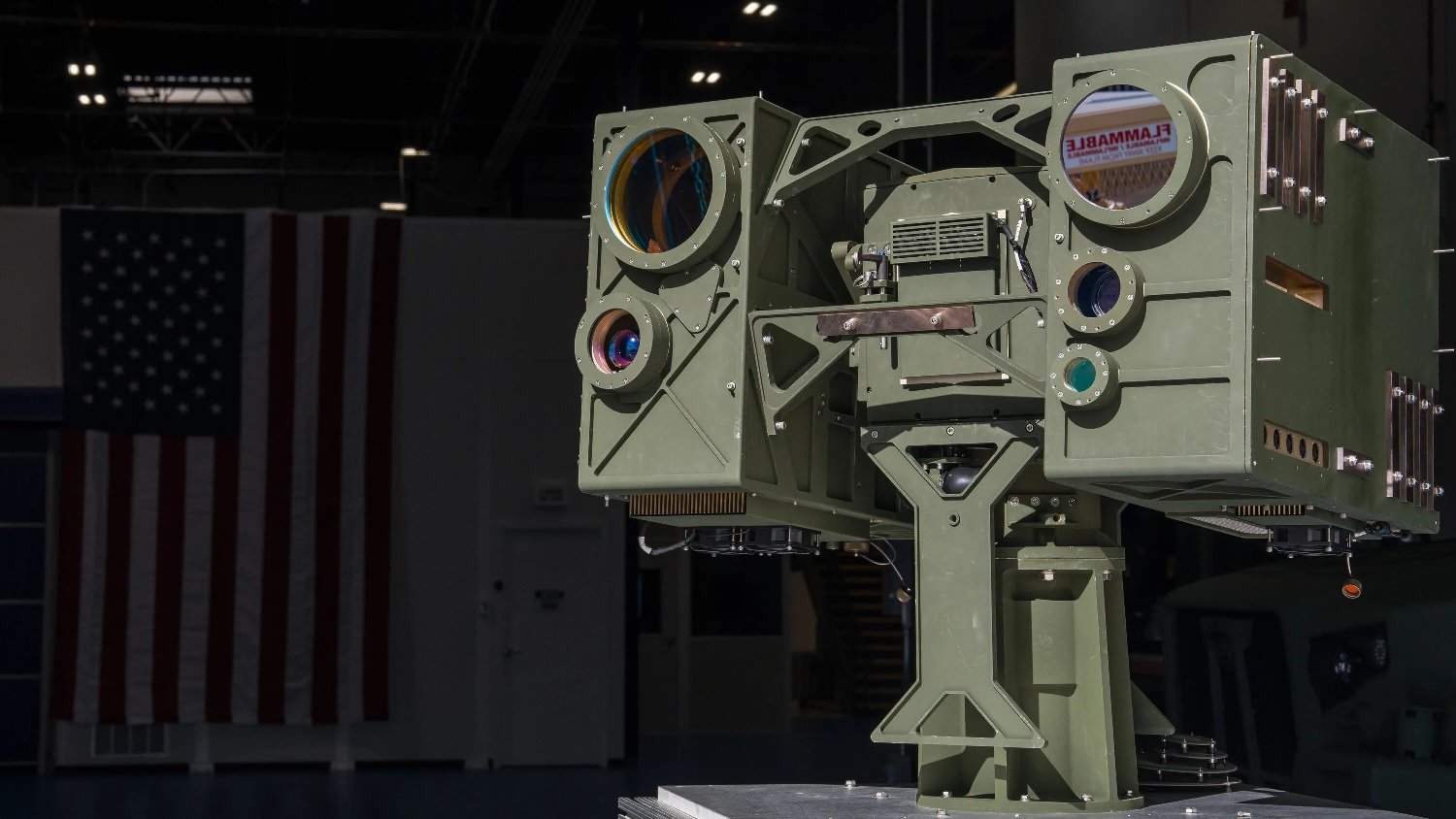
WASHINGTON, — The U.S. Department of War has selected seven defence companies for Phase II of its Directed Energy Counter-Unmanned Aerial Systems (C-UAS) evaluation. The companies will test their high-energy laser (HEL) weapons against drone targets during a live-fire evaluation scheduled for mid-December at Dugway Proving Ground, Utah.
The selection follows a competitive review of 13 technical proposals by the Office of Research and Engineering (R&E) and Joint Interagency Task Force 401 (JIATF-401).
The selected companies and their systems are:
-
Allen Control Systems: BULLFROG HEL
-
Aurelius Systems: ARCHIMEDES
-
AeroVironment (BlueHalo): LOCUST X1
-
Kord Technologies: FIREFLY
-
Lockheed Martin (IPG): Crossbow
-
Thor Dynamics: LASER ARMOR HEL
-
Yrikka: TALOS drone-based HEL system
Live-Fire Laser Testing in December
Throughout November, the companies must complete laser safety certifications and integrate their systems with the military's command-and-control (C2) architecture. At Dugway, the systems will undergo a week of safety inspections, communications checks and range-readiness testing.
The live-fire trials will involve engagements against representative unmanned aerial targets in planned scenarios. Evaluators will examine the systems' ability to track and defeat drones both above and below the horizon.
Successful Systems Could Move Towards Production
JIATF-401, established in 2025, coordinates counter-drone efforts and works to accelerate the development and deployment of solutions against evolving unmanned aerial threats.
Army Brig. Gen. Matthew Ross, director of JIATF-401, said the evaluation is designed to allow systems that perform successfully to move directly towards purchase orders. This could help manufacturers establish production lines and deliver systems to military units faster.
The approach aims to reduce traditional procurement delays by connecting testing with manufacturing decisions. However, selection for Phase II does not guarantee a purchase contract or final operational approval.
——— End of Article ———