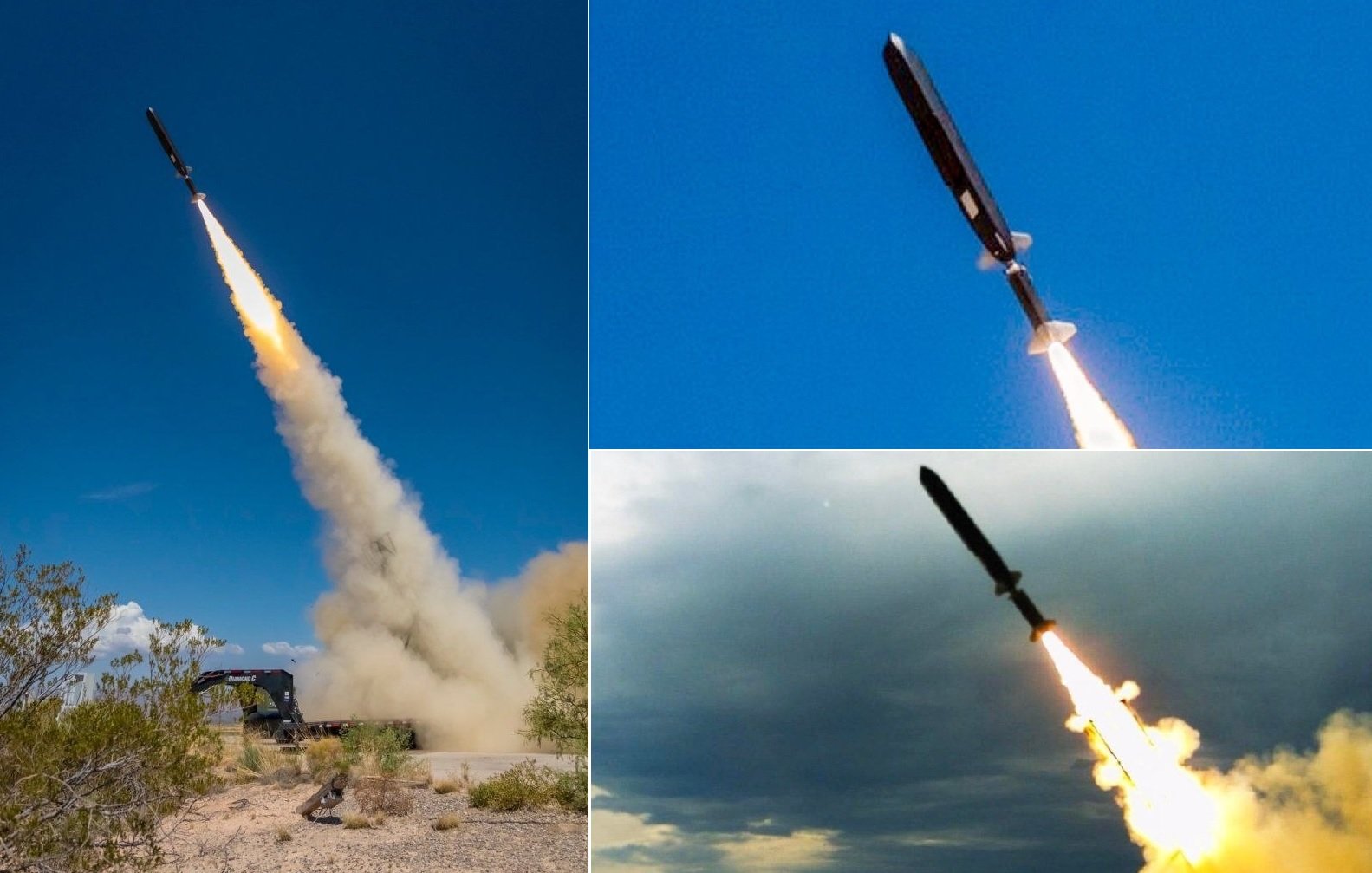
On 23 December, the United States Department of War announced the signing of a major new cruise missile production contract with RTX, reinforcing America’s long-range precision strike capabilities amid rising global security demands.
Under the agreement, RTX will manufacture and deliver 350 Tomahawk Block V cruise missiles, along with associated support equipment, in a deal valued at $785.2 million. The contract is fully funded at the time of signature, enabling immediate execution without phased budget releases.
Deliveries Scheduled Through 2028
According to official details, missile deliveries will be completed by the end of 2028. The Tomahawk Block V missiles produced under this contract will be supplied to multiple U.S. military branches, including the United States Navy, United States Marine Corps, and the United States Army.
In addition to domestic users, the contract includes foreign deliveries valued at approximately $500 million, executed through the Foreign Military Sales (FMS) program. While two foreign customers remain undisclosed, the FMS portion underscores sustained allied demand for U.S. long-range strike weapons.
Expanding Global Tomahawk Operators
To date, Tomahawk missiles acquired via the FMS framework have been purchased by Australia, Netherlands, Japan, and the United Kingdom.
Operational testing among allies has accelerated. In December 2024, Australia successfully conducted Tomahawk test launches from the HMAS Brisbane. This was followed in March 2025 by a launch from the Dutch frigate HNLMS De Ruyter. Meanwhile, preparations are ongoing for Japan’s first Tomahawk firing, planned from the destroyer JS Chokai, which is currently undergoing modifications in San Diego.
Production Surge and New Launch Platforms
RTX confirmed that it is gradually expanding Tomahawk production capacity in response to increased operational requirements and growing export demand. Once operated exclusively by the U.S. Navy and the Royal Navy, the Tomahawk missile system has now been integrated with mobile, land-based launchers for both the U.S. Army and Marine Corps, significantly broadening its deployment options.
This shift marks a doctrinal evolution, allowing Tomahawk missiles to be fired not only from surface ships and submarines, but also from ground-based platforms, enhancing flexibility in contested environments.
Block V: Longer Reach, Greater Survivability
The Tomahawk Block V variant represents the most advanced iteration of the missile family. It features extended service life, modernized navigation systems, improved resilience against electronic warfare, and, in the Block Va configuration, a maritime strike capability designed to engage moving naval targets at long range.
With a combat-proven range exceeding 1,600 kilometers, the missile remains a cornerstone of U.S. and allied deep-strike and deterrence strategies.
Allied Interest Continues to Grow
Eased U.S. export criteria and heightened regional security concerns have fueled broader interest among NATO and Indo-Pacific partners. Canada and Norway have both been cited as potential future Tomahawk customers, signaling that the missile’s international footprint may continue to expand beyond its current operator base.
Strategic Signal
The December contract reflects Washington’s prioritization of precision strike capabilities, sustained industrial readiness, and deeper interoperability with allies. With 350 additional Tomahawk Block V missiles entering the pipeline and deliveries extending to 2028, the agreement strengthens both U.S. deterrence posture and allied long-range strike capacity in an increasingly contested global security environment.
If you want, I can adapt this for a defense magazine layout, tighten it for web news, or localize it for Indian or Indo-Pacific strategic coverage.
——— End of Article ———