WASHINGTON — The United States has expanded its military air campaign against Iran for a sixth consecutive night, carrying out strikes on transportation infrastructure, energy facilities, and maritime-related targets across southern Iran. The latest operations mark a broader phase of the campaign, extending beyond earlier attacks on air defenses, radar systems, and missile sites.
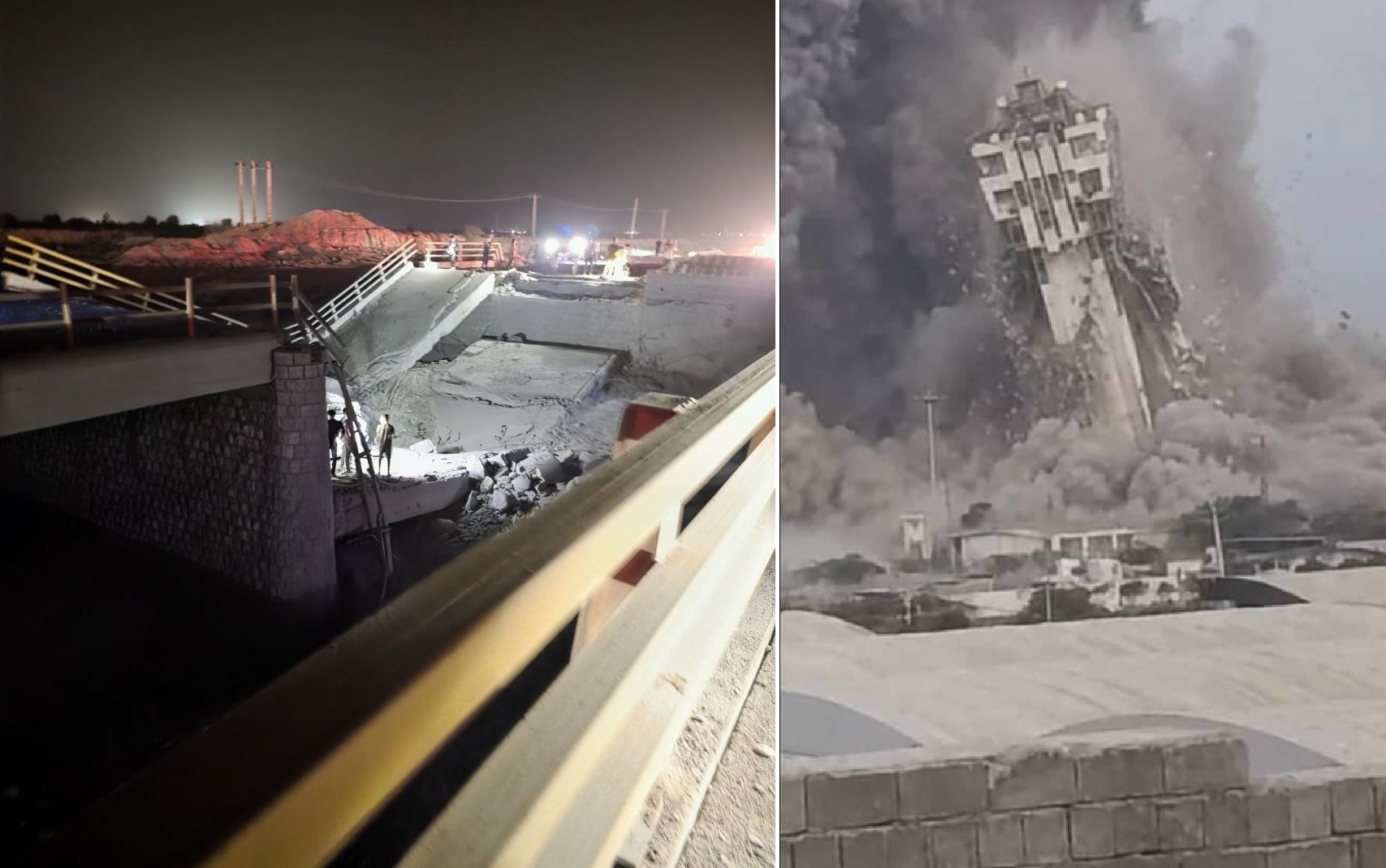
According to Iranian state and semi-official media, U.S. forces struck at least five bridges in Hormozgan Province, including the Kehvarstan (Kahurestan) Bridge, Gariveh Bridge, and the Bandar Abbas–Shiraz Bridge near Bandar Khamir. The reported damage disrupted traffic along the Bandar Abbas–Kehvarstan–Lar corridor and forced the closure of additional highways linking Bandar Abbas with neighboring provinces.
The strikes were reportedly conducted using precision-guided munitions launched by aircraft, drones, and naval platforms under the direction of the U.S. Central Command (CENTCOM). While CENTCOM has confirmed strikes against military targets, it has not specifically listed the bridges among the targets in its official statements.
Campaign Expands to Logistics and Transport Networks
The latest wave reflects a shift in U.S. operations from primarily targeting Iran's coastal air defense systems, missile positions, and maritime assets to also focusing on transportation infrastructure that supports military logistics.
Bandar Abbas is Iran's largest commercial port and also hosts major naval facilities used by both the Iranian Navy and the Islamic Revolutionary Guard Corps (IRGC) Navy. The city's road and rail network serves as an important route for transporting fuel, military equipment, ammunition, and mobile missile systems toward Iran's southern coastline.
Military analysts note that damage to bridges and transport routes can slow the movement of military supplies and create logistical bottlenecks. However, Iran still retains alternative road networks and the ability to establish temporary crossings where required.
Chabahar Port and Other Locations Also Hit
The campaign also expanded geographically during the latest operations.
Iranian reports said a U.S. airstrike destroyed a maritime surveillance tower at Chabahar Port, Iran's only major deep-water port on the Gulf of Oman. The port provides direct access to the Indian Ocean without passing through the Strait of Hormuz, making it strategically important for both commercial shipping and regional maritime activities.
Reports indicated that the strikes also damaged the maritime traffic control tower, two marine piers, including the Shahid Beheshti dock, and nearby port facilities. Power outages affected parts of Chabahar after three electricity transmission lines were reportedly damaged, although Iranian authorities later said some electricity services had been restored.
Additional explosions were reported near Iranshahr Airport, a railway station in Bandar Khamir, and in the areas of Qeshm Island, Sirik, Bushehr, and Ahvaz.
Iran's Energy Ministry urged residents to reduce electricity consumption and limit air conditioning use after damage to parts of the regional power grid during a period of high summer temperatures.
Naval Blockade Continues
The expanded air campaign comes alongside the renewed U.S. naval blockade of Iranian ports, which resumed on July 14 after the collapse of a temporary ceasefire.
According to CENTCOM, U.S. forces disabled the Curaçao-flagged oil tanker M/T Belma after the vessel allegedly ignored repeated warnings while attempting to sail toward Iran's Kharg Island oil export terminal. U.S. officials said aircraft fired Hellfire missiles into the ship's smokestack to stop its movement.
CENTCOM also reported that U.S. Marines boarded one vessel suspected of attempting to breach the blockade, redirected three additional commercial ships, and neutralized another vessel during enforcement operations.
Washington says the blockade is intended to protect commercial shipping and maintain freedom of navigation in the Strait of Hormuz, one of the world's most important maritime trade routes through which a significant share of global oil exports passes.
President Donald Trump said U.S. military operations would continue as Washington seeks what he described as a permanent settlement following the breakdown of the ceasefire.
Casualties Reported
Iranian state broadcaster IRIB reported that strikes near Bandar Khamir killed seven people and injured nine, while another strike in a residential area of Bandar Abbas left one person dead and eight others injured.
Hossein Kermanpour, spokesperson for Iran's Health Ministry, said that at least 38 people have been killed and more than 400 injured across the country during several days of U.S. strikes. These casualty figures have not been independently verified.
Iran Responds with Regional Attacks
Iran has continued retaliatory operations following the U.S. strikes.
Iranian military officials claimed they targeted U.S. logistics facilities in Kuwait and a special operations command center at al-Tanf in Syria. Iranian forces also reported launching drone and missile attacks against U.S. military facilities in Bahrain and Jordan. Independent verification of these claims remains limited.
Sirens were also activated in Qatar and Bahrain amid the regional security situation following the latest exchanges.
Regional Situation Remains Tense
The United States maintains more than 50,000 military personnel across the Middle East. The latest combination of infrastructure strikes, attacks on maritime facilities, and naval interdiction reflects an effort to disrupt Iran's military logistics supporting operations around the Strait of Hormuz.
The exchanges have continued since the reported collapse of a temporary ceasefire, with both Washington and Tehran maintaining military operations. While the United States says its actions are intended to reduce threats to commercial shipping and regional security, Iranian officials have described the strikes as an escalation and continue repair work on damaged infrastructure where possible.
The situation remains fluid, and many battlefield claims from both sides have not been independently verified. International observers continue to monitor developments closely because of their potential impact on regional security, global shipping, and energy markets.
——— End of Article ———