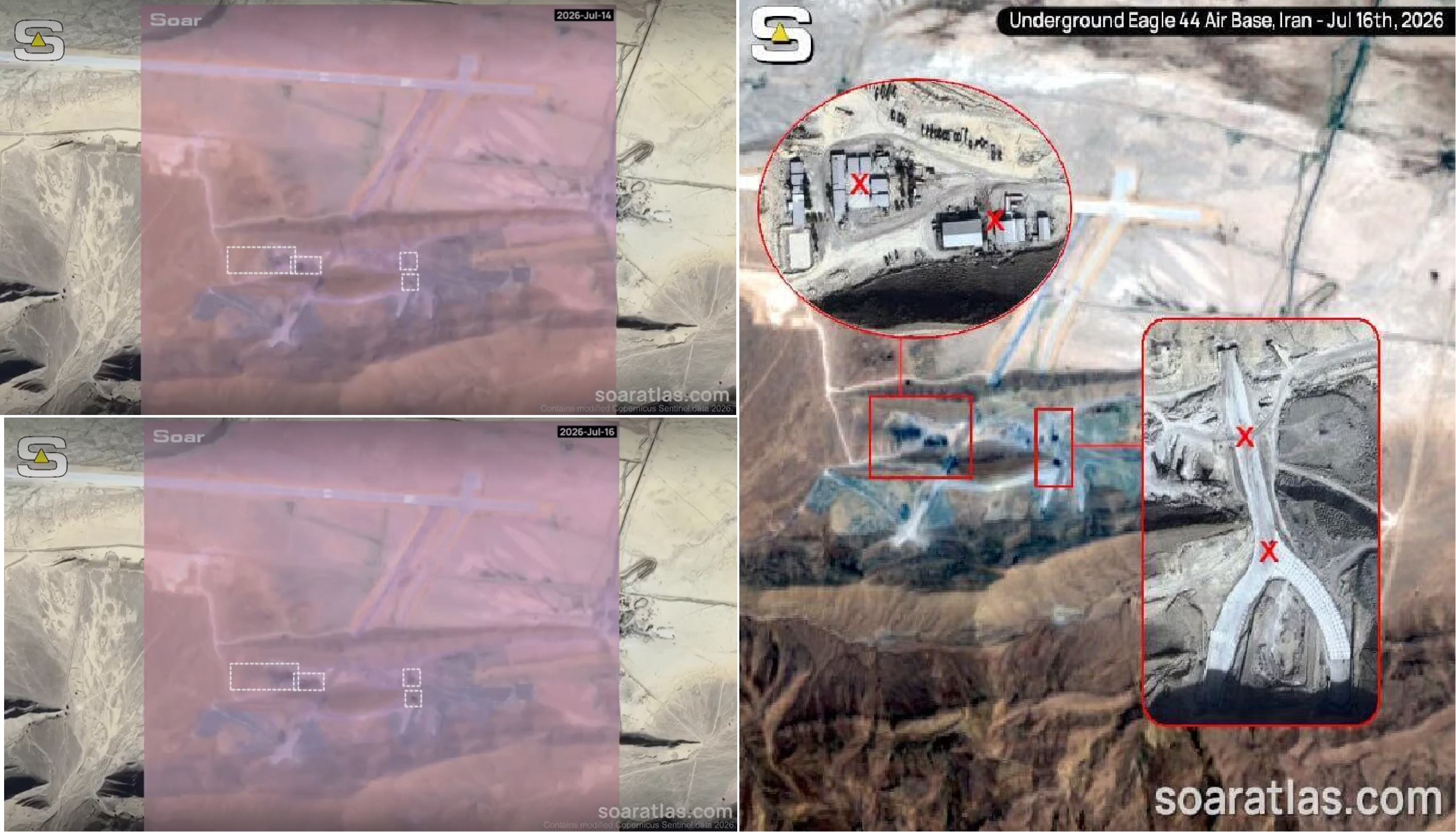
New satellite imagery released by Soar Atlas confirms that Oghab 44, the underground emergency support base of the Iranian Air Force's 9th Tactical Fighter Base, was struck by the U.S. military in the early hours of July 16, 2026.
The imagery provides visual evidence of damage at the military facility near Bandar Abbas in southern Iran. According to the released images, two impact sites are visible along the taxiway connecting the underground tunnel complex to the runway, while two additional strikes hit nearby infrastructure.
Several buildings belonging to the base's construction unit were damaged, and the imagery also shows impacts affecting taxiways and tunnel entrances used to access the underground complex.
Oghab 44 is believed to house the last three or four operational F-4E Phantom II fighter aircraft still in service with the Iranian Air Force, although the exact number of aircraft at the site has not been independently confirmed.
Underground Base Designed for Protected Air Operations
Located in Hormozgan Province, about 160 kilometers (100 miles) north of the Strait of Hormuz, Oghab 44 is the first tactical underground air base built by the Iranian Air Force to accommodate fighter aircraft, bombers, and unmanned aerial systems.
Construction of the underground facility began in mid-2013, while work on its surface runway started approximately eight years later. Iran officially revealed the existence of the base in February 2023, when state media released footage showing fighter aircraft, including F-4 Phantom jets, and drones operating inside the underground complex.
The facility was named Oghab 44 (Eagle 44) because it was unveiled 44 years after the 1979 Islamic Revolution.
The underground base was designed to improve the survivability of Iran's air assets by protecting aircraft and support infrastructure from potential air attacks. It includes aircraft hangars, maintenance and repair facilities, command posts, navigation equipment, fuel storage areas, and an alert section for rapid operations.
According to information released by Iranian authorities when the base was unveiled, aircraft can also be equipped inside the underground complex with electronic warfare systems and precision-guided munitions, including Yasin, Qaem, and Asef missiles.
Satellite Images Show Damage to Key Infrastructure
The latest Soar Atlas imagery highlights damage to infrastructure supporting aircraft movement between the underground tunnel network and the runway.
The visible strike locations include:
- Two impact sites along the taxiway linking the tunnel complex to the runway.
- Two additional strikes on surrounding infrastructure.
- Damage to construction unit buildings.
- Impacts affecting taxiways and tunnel entrances.
The released imagery provides visual confirmation of physical damage to parts of the base, although the full operational impact on the facility has not been independently assessed.
Part of Broader Military Operations
The strike on Oghab 44 comes amid renewed military hostilities following the breakdown of a regional ceasefire agreement.
Earlier this month, U.S. Central Command (CENTCOM) reported carrying out airstrikes against approximately 80 Iranian military targets, including air defense systems, coastal radar sites, and military facilities in the Bandar Abbas region. U.S. officials said those operations were intended to reduce Iran's ability to threaten commercial shipping routes through the Strait of Hormuz.
Earlier satellite imagery released during spring 2026 had also indicated previous damage near tunnel entrances at Oghab 44, including impact craters that affected access between the underground complex and the runway. The latest imagery provides additional evidence of further strikes at the facility.
Iran has not released an official damage assessment or casualty figures related to the July 16 strike, and no independent verification of personnel losses has been reported. However, the newly released satellite imagery offers the clearest visual confirmation so far that multiple areas of the underground air base were hit during the operation.
——— End of Article ———