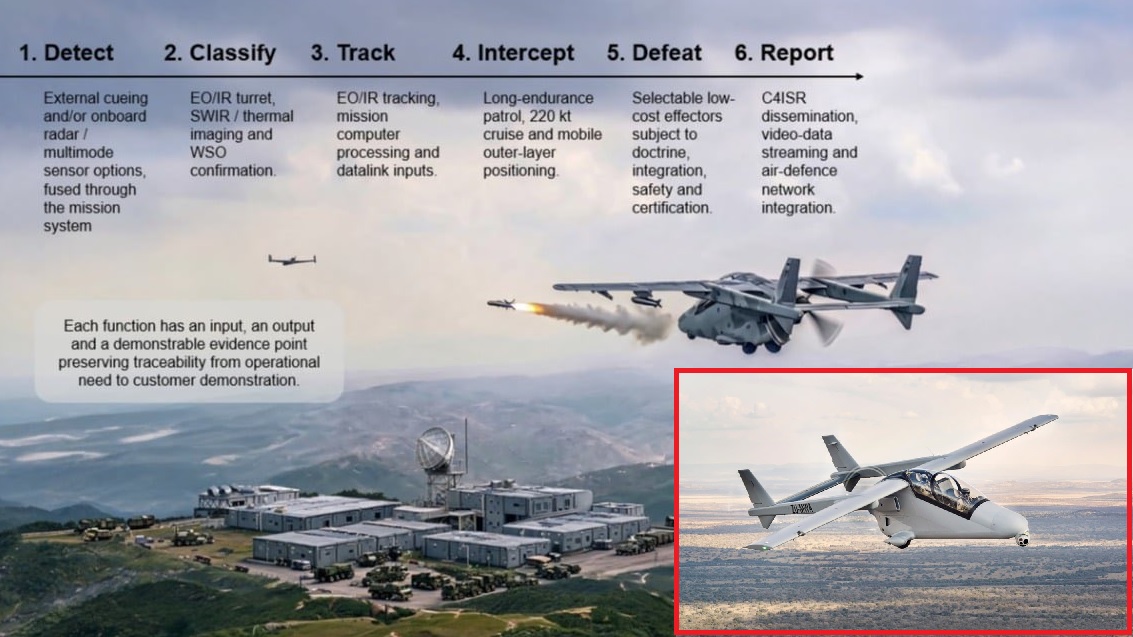
PRETORIA, South Africa — Paramount Aerospace Industries has unveiled a dedicated counter-unmanned aerial system (C-UAS) configuration for its Mwari aircraft, introducing an airborne solution designed to detect, track, and engage one-way attack drones targeting critical infrastructure.
The announcement, made on July 16, 2026, comes as low-cost attack drones increasingly threaten military bases, power plants, ports, and other strategic facilities. Unlike conventional air defense systems that rely on fixed ground-based radar networks, the Mwari can conduct airborne surveillance and intercept threats while on patrol, making it suitable for areas with limited radar coverage.
Addressing the Growing Drone Threat
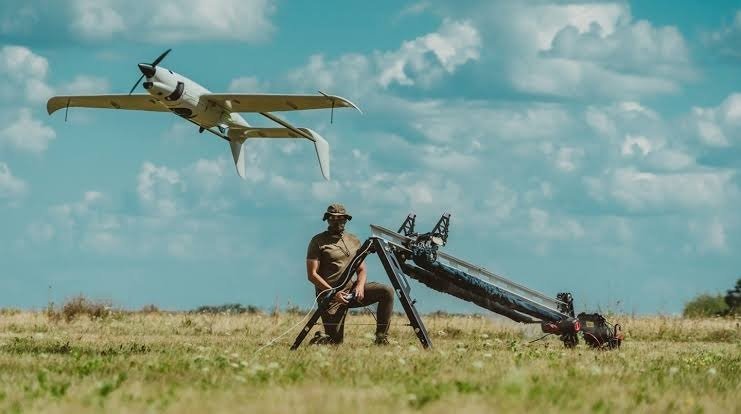
One-way attack drones, also known as kamikaze drones or loitering munitions, are inexpensive and can be launched in large numbers, creating a significant challenge for conventional air defense systems that often rely on costly interceptors.
The widespread use of these drones in conflicts such as Ukraine and the Middle East has highlighted the growing need for affordable and flexible counter-drone solutions. The threat has also expanded beyond battlefields, prompting governments and infrastructure operators to seek better protection for critical facilities.
Paramount Aerospace Industries CEO Lee Connolly said the rapid proliferation of low-cost one-way attack drones has created new vulnerabilities for defense forces and infrastructure operators while placing increasing pressure on existing air defense networks.
He said the Mwari addresses one of the biggest operational challenges by conducting airborne patrols to detect drones before they reach protected areas. Once a target is identified, the aircraft can immediately transition from surveillance to interception. Connolly also noted that the aircraft's modular architecture allows it to be configured according to each customer's existing air defense systems and operational requirements.
Human-in-the-Loop Operations
The counter-UAS configuration is operated by a two-person crew using advanced electro-optical sensors for day and night surveillance. The system enables operators to visually identify and track suspected drone targets before engagement, ensuring that human decision-making remains part of the process.
According to Paramount, recent upgrades also enable the platform to engage Medium Altitude Long Endurance (MALE) drones operating between 20,000 and 30,000 feet, expanding its capability against a broader range of unmanned aerial threats.
Aircraft Capabilities
Originally developed as the Advanced High Performance Reconnaissance Light Aircraft (AHRLAC), the Mwari first flew near Pretoria in July 2014. It is regarded as the first fully indigenous military aircraft developed in Africa since Denel's Rooivalk attack helicopter. Paramount later partnered with Boeing to develop the aircraft's mission systems.
The aircraft is powered by a Pratt & Whitney PT6A-66B turboprop engine producing 950 horsepower (710 kilowatts). It has a maximum cruise speed of approximately 500 km/h (311 mph), a service ceiling of 9,450 meters (31,000 feet), and a ferry range approaching 3,700 kilometers (2,300 miles).
For long-endurance patrol missions, the Mwari can loiter at 110 knots and remain airborne for up to 10 hours with external fuel tanks. It requires only 550 meters for takeoff, allowing operations from remote or unprepared airstrips while maintaining an operating cost of under $1,200 per flight hour.
A key feature of the aircraft is its Interchangeable Mission System Bay (IMSB), which enables crews to replace sensors and mission equipment in less than two hours. The aircraft also has six wing-mounted hardpoints that support different mission payloads.
For counter-drone operations, the Mwari can carry 20mm rapid-fire cannon pods with an engagement range of approximately 800 meters, while guided rockets or new-generation multi-role air-to-air missiles provide engagement ranges of up to 4,000 meters. Its open-architecture design also allows integration of weapons and mission systems from multiple suppliers.
Flexible Counter-Drone Solution
Paramount designed the Mwari to complement existing air defense systems rather than replace them. The aircraft provides airborne detection and interception for locations where permanent radar infrastructure is unavailable or limited.
Its modular design also allows operators to integrate existing weapons, sensors, and future technologies without replacing the aircraft itself. According to the company, this approach enables the platform to adapt as drone threats and counter-UAS technologies continue to evolve while supporting different operational and procurement requirements.
Source : edrmagazine
——— End of Article ———