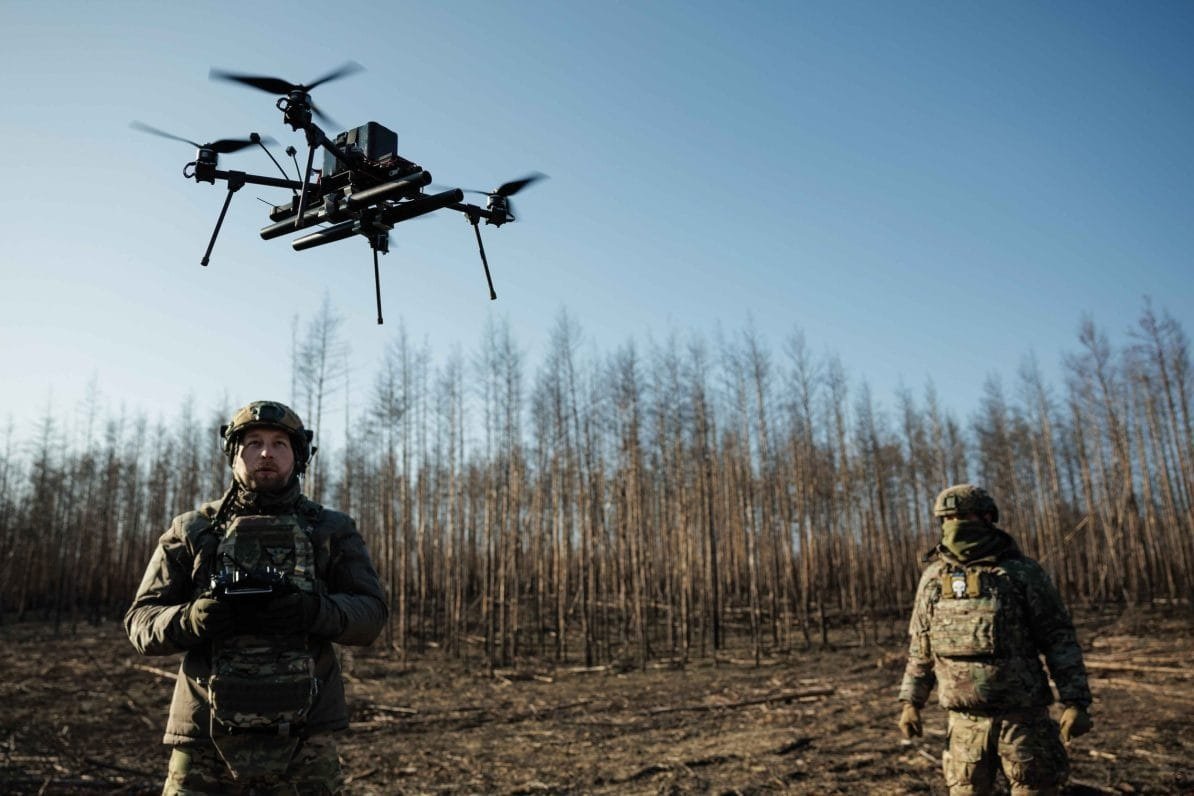
HOHENFELS, Germany — The U.S. Army is preparing to end the specialized role of an experimental drone battalion in Europe that was created to study lessons from the war in Ukraine and improve how unmanned systems are used in combat formations.
The decision was first reported by The Wall Street Journal, citing a U.S. Army representative, and was also confirmed by Military Times and CBS News.
The battalion, designated the 3rd Battalion, 504th Parachute Infantry Regiment, was formed in January 2026 from elements of the 173rd Airborne Brigade. It has about 600 soldiers and was established to examine how unmanned aerial vehicles (UAVs) and unmanned ground vehicles (UGVs) could be integrated into brigade-level operations.
The unit was modeled in part on Ukraine's use of specialized drone formations. Soldiers from the 173rd Airborne Brigade had already been experimenting with and building their own systems, including first-person-view drones, before the battalion was formally activated.
Final Mission in Germany
The battalion is scheduled to participate in the Saber Junction exercises at Hohenfels, Germany, in August and September 2026. After the exercise, it will submit its findings to Army command for further analysis.
The findings are expected to contribute to future Army planning, experimentation and decisions on integrating unmanned systems into larger formations.
After completing the study, the battalion will end its specialized unmanned-assault role and return to standard airborne infantry duties as part of a Mobile Brigade Combat Team (Airborne).
An Army representative said the service remains committed to accelerating U.S. capabilities in drone warfare but did not provide details about what organization or structure could replace the experimental battalion.
Part of a Broader Army Restructuring
The decision is part of Acting Chief of Staff of the Army Gen. Christopher LaNeve's broader “back-to-basics” approach. LaNeve assumed the position after Gen. Randy George was dismissed in April 2026.
His strategic guidance, known as “Army Azimuth,” places emphasis on core warfighting tasks, homeland defense and power projection.
The Army is also making wider structural changes. A Multi-Domain Task Force responsible for cyberspace and electronic warfare is being moved from Europe to South Korea. The Army has also established the 7th Infantry Division (Multi-Domain Command-Pacific).
In another major change, the U.S. III Armored Corps, which had previously focused on strengthening the Army's European presence, has been reassigned to the newly established Western Hemisphere Command.
Internal Disagreements
The rapid organizational and personnel changes have also produced disagreements within the Army's senior leadership. Gen. LaNeve and Secretary of the Army Daniel Driscoll have disagreed over the dismissal of senior commanders and proposed changes to physical fitness standards.
Separately, U.S. military leadership recently canceled scheduled presentations by senior Ukrainian officers at the Maneuver Center of Excellence at Fort Benning. The presentations were intended to provide additional insight into lessons from the Ukraine war, but officials did not give a specific reason for the cancellation.
The experimental drone battalion's final exercise and subsequent report will provide the Army with another set of findings as it determines how drone and ground-robot technologies should be incorporated into future force structures.
——— End of Article ———