LONDON — The UK’s Stratus future cruise and anti-ship missile programme is moving toward its Demonstration Phase, with the first full-scale system tests scheduled to begin in 2028, the Ministry of Defence has confirmed.
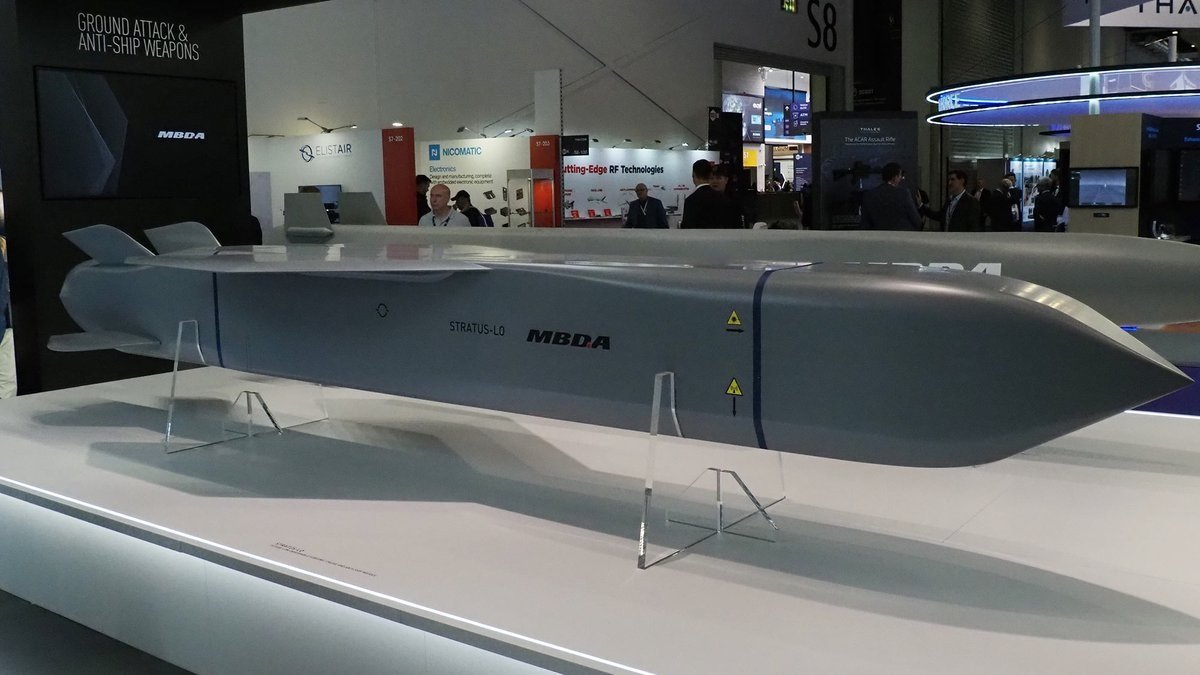
Stratus, formerly known as the Future Cruise/Anti-Ship Weapon (FC/ASW) programme, is being developed by the UK, France and Italy and is led by MBDA. The programme was renamed Stratus at the DSEI defence exhibition in London in September 2025.
The weapon is intended to replace the capabilities provided by the Storm Shadow cruise missile for deep land strikes and the Harpoon for anti-ship warfare. Storm Shadow has an approximate range of 560 km, while Harpoon variants typically reach around 220 km.
UK Defence Minister Luke Pollard said the programme remains on schedule and that its weapons and subsystems are continuing to mature. He confirmed that testing of the airframe design, engine demonstration, warhead and seeker performance has already been completed.
“The first full scale system tests are scheduled from 2028,” Pollard said in a parliamentary response.
The Ministry of Defence has not disclosed Stratus’ exact operational range because it is classified. Pollard said the range of the Stratus LO (Low Observable) variant is “significantly greater” than the Storm Shadow and Harpoon weapons it will replace. Previous independent reporting has indicated a possible ship-launched range of around 1,000 km for the LO variant, but this has not been officially confirmed.
Two Stratus Variants
The programme consists of two complementary missiles.
Stratus LO is a subsonic, low-observable missile designed for long-range strikes against land and naval targets. It is led by the UK.
Stratus RS (Rapid Strike) is a supersonic, ramjet-powered and highly manoeuvrable missile led by France. It is intended for anti-ship missions, suppression of enemy air defences and related roles.
Integration With UK and European Platforms
The Ministry of Defence has confirmed that Stratus will be integrated across air and maritime platforms, including Eurofighter Typhoon, Dassault Rafale and selected naval platforms such as the Royal Navy’s Type 26 frigates.
Stratus LO is also intended to meet the Royal Navy’s Future Offensive Surface Weapon requirement, including long-range anti-ship and land-attack capabilities compatible with the Mk 41 Vertical Launch System.
The UK is introducing eight Type 26 anti-submarine warfare frigates, making the planned integration of Stratus an important part of their future offensive weapon capability.
The UK has also allocated £1.4 billion over four years to the Stratus programme. The investment is part of the UK’s wider complex weapons programme and builds on defence cooperation between Britain and France under the Lancaster House framework, later expanded to include Italy.
With full-scale testing scheduled from 2028, Stratus is now moving from airframe, propulsion, warhead and seeker development toward complete system demonstration. Earlier planning indicated maritime-launched service could begin around 2028, while air-launched service was expected in the early 2030s, although final in-service dates remain subject to programme progress.
——— End of Article ———