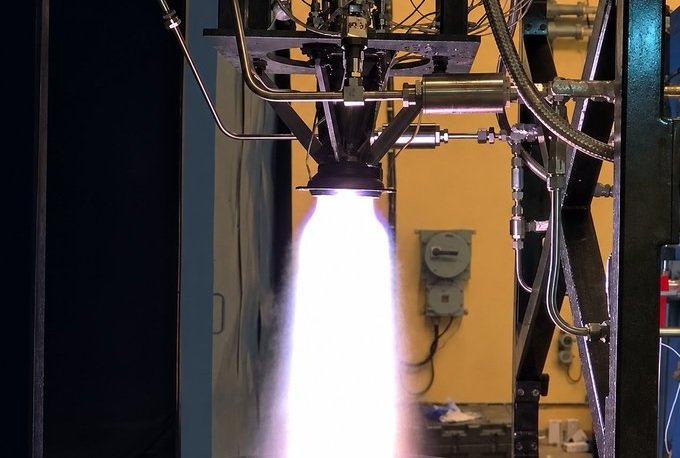
HYDERABAD — India’s private space company Skyroot Aerospace has announced that its Raman-2 liquid-fuelled engine has cleared its acceptance test for the second flight of the Vikram-1 rocket. The milestone moves the company closer to preparing the rocket’s upper stage for its next orbital mission.
Skyroot announced the test result on X. The next steps include integrating the engine into the Orbital Adjustment Module (OAM) and completing electrical checks.
Raman-2 Engine and Its Role
The Raman-2 is installed in Vikram-1’s fourth stage, which provides the final thrust needed to place satellites into their intended orbits. The engine is fully 3D-printed and regeneratively cooled, using circulating propellant to manage heat during operation.
It is also designed for multiple restarts in space, allowing the rocket to perform several orbital manoeuvres and deploy satellites into different orbits during a single mission.
In October 2025, Skyroot completed a full-stage test of the OAM, involving one Raman-2 engine, four Raman Mini thrusters and eight cold-gas thrusters. The system completed more than 1,000 thruster pulses under flight-like conditions.
Earlier, Raman-2 was tested at ISRO's Propulsion Complex in Mahendragiri, where it demonstrated 820 N of sea-level thrust and 1,460 N in vacuum. The engine uses monomethylhydrazine (MMH) and nitrogen tetroxide (NTO) as propellants.
Vikram-1 Flight 2 Preparations
Skyroot is targeting the second Vikram-1 flight for December 2026 or early January 2027. The first-stage hardware has already been shipped to the Satish Dhawan Space Centre in Sriharikota.
Other preparations include the successful test-firing of the Raman-1 roll-control thruster on November 9 and the completion of vibration testing for the rocket's interstages.
Skyroot plans to begin fully commercial launch operations from its third mission.
Building on the First Successful Flight
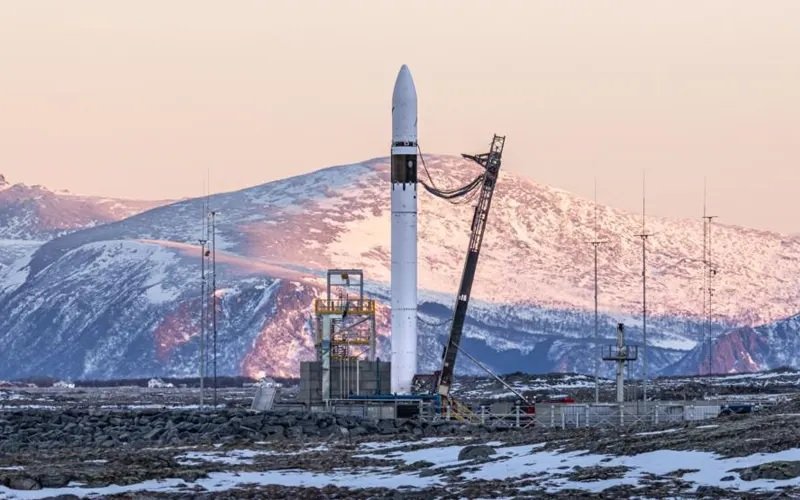
Vikram-1 is a four-stage rocket, approximately 22 metres tall, with three solid-fuel stages and a liquid-fuelled fourth stage. It is designed to carry payloads of up to 350 kg to low Earth orbit.
Its maiden flight, Mission Aagaman, took place on July 18, 2026, from Sriharikota. The rocket successfully placed six payloads into an approximately 450-km orbit, making Skyroot the first Indian private company to achieve an orbital launch.
With Raman-2 clearing its acceptance test, Skyroot has completed another important step towards its second Vikram-1 mission and its plans to establish regular commercial launch services.
——— End of Article ———