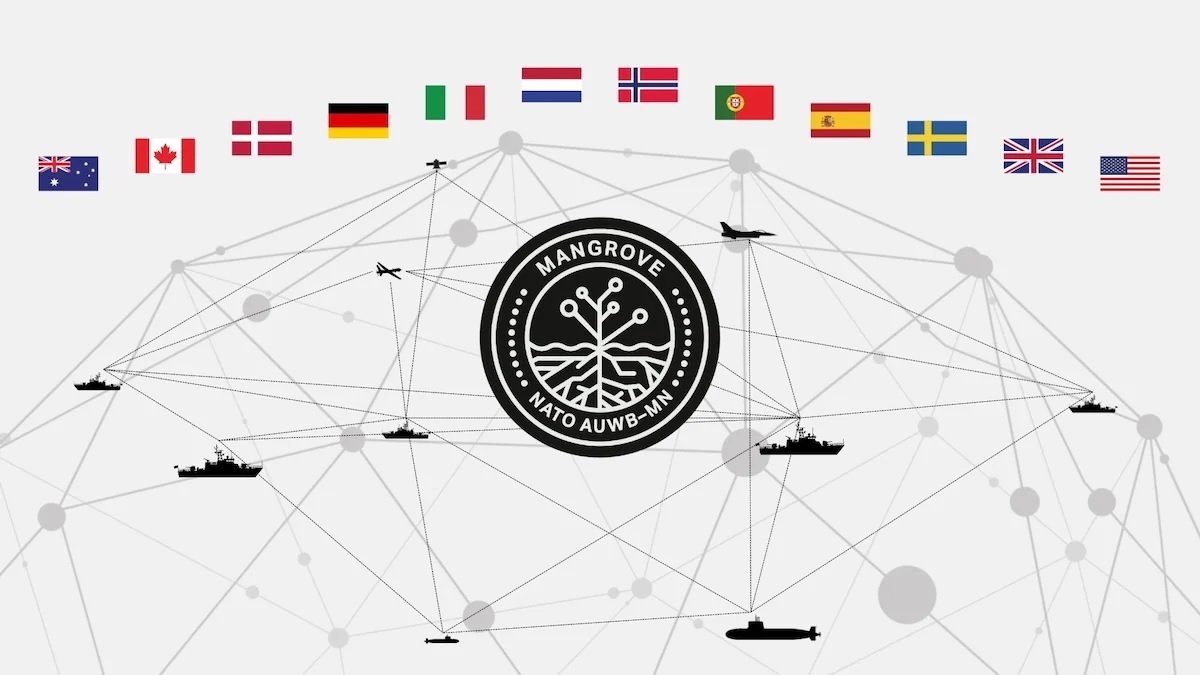
Stockholm, Sweden — The Saab-led MANGROVE consortium has completed Phase 1 of NATO’s Allied Underwater Battlespace Mission Network (AUWB-MN), a programme designed to connect crewed and uncrewed underwater systems through a common, secure network. NATO plans to test the architecture during the Task Force X-Arctic exercise in July 2027.
The network aims to improve information sharing and coordination between allied naval forces. It will support submarines, uncrewed underwater vehicles (UUVs), sensors and other maritime systems. Instead of developing separate connections for individual platforms, countries will follow common communication, security and interoperability standards.
David Burton, Project Director of NATO's Antisubmarine Warfare Barrier Smart Defence Initiative, described the concept as an "underwater internet." He noted that navies are moving towards deploying hundreds or potentially thousands of smaller uncrewed systems. Without common standards, these platforms could become incompatible across allied forces.
600-Page Architecture Delivered to NATO
The consortium submitted a reference architecture report of more than 600 pages, along with an accompanying software model, at the end of September 2026. The work focused on bringing existing NATO Standardization Agreements (STANAGs) into a unified framework rather than creating entirely new standards.
The architecture is technology-agnostic and vendor-neutral. Countries can select their own equipment and suppliers as long as their systems meet the framework's requirements.
Around 80% of Phase 1 focused on developing the architecture, while the remaining 20% established the foundations for a Test and Reference Environment (TRE). This facility will allow developers to test new sensors, platforms and systems for interoperability before their deployment.
Funding and Consortium Members
Selected by NATO in July 2025, the programme formally started on 1 September 2025. It is part of NATO's Digital Ocean initiative and the UK-led Antisubmarine Warfare Barrier Smart Defence Initiative.
Phase 1 received €1 million from 12 sponsor nations, led by the United Kingdom. Other sponsors include Australia, Canada, Denmark, Germany, Italy, Sweden, the Netherlands, Norway, Portugal, Spain and the United States. The nine consortium members also provided financial contributions.
Led by Saab's Naval business area, the consortium includes CETENA and IDS of the Fincantieri Group, FlySight, GraalTech, Miraya, Saab UK, S2IX and the University of Plymouth.
Spiral Zero and Phase 2 Plans
An interim programme called Spiral Zero has secured another €1 million from NATO and is expected to begin in early 2027. The initial contract has also been extended by 12 months to maintain progress, while funding for the bridging period is still being finalised.
Full Phase 2 is expected to begin around mid-2027. It will focus on developing the TRE and further refining the network architecture.
National Reviews and Arctic Testing
The UK has compared the MANGROVE architecture with its Atlantic Bastion network and found very few differences. Canada is conducting a similar review, with bilateral discussions planned for December 2026.
Finland has indicated its intention to participate, while Greece has expressed interest. Discussions are also underway with Belgium and France.
The consortium is working with NATO's Centre for Maritime Research and Experimentation (CMRE) in La Spezia, Italy, to demonstrate the architecture during Task Force X-Arctic in July 2027. The exercise will take place in the High North, although its exact location is yet to be confirmed. Commercial arrangements with NATO are still being finalised.
Dr Frida Lindberg, Co-Chair of the MANGROVE consortium and Business Director at Saab, said Phase 1 has established the foundations for a resilient, scalable and technology-agnostic network. The objective is to improve underwater situational awareness, operational agility and cooperation between allied forces.
The next stages will determine how effectively the common architecture can connect different national underwater systems during multinational naval operations.
——— End of Article ———