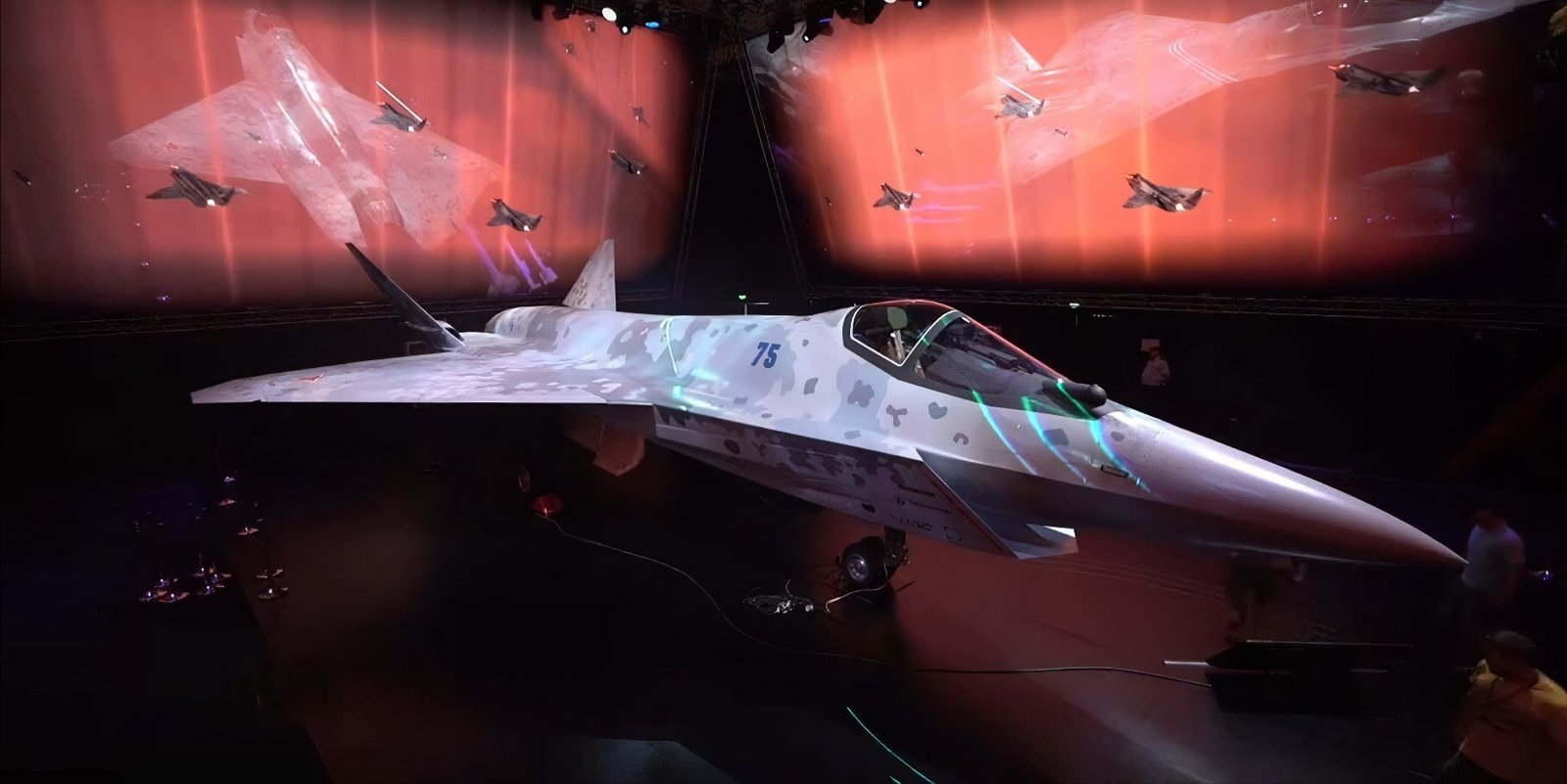
MOSCOW — Russia has started assembling the flight prototype of the Sukhoi Su-75 Checkmate single-engine fifth-generation fighter, with a test flight expected in the near future.
The development was reported by Alexei Bogatyrev, head of the Safir analytical center. The Su-75 is being developed by Sukhoi under United Aircraft Corporation (UAC), part of the state-owned Rostec defense conglomerate.
UAC General Director Vadim Badekha confirmed in June 2026 that construction of the aircraft's prototype had begun. Assembly is being carried out at the Komsomolsk-on-Amur Aviation Plant named after Y.A. Gagarin (KnAAZ). Earlier plans called for two prototypes, including one for static testing and another for flight trials.
The Checkmate was first presented as a full-scale non-flying mock-up at the MAKS-2021 air show. Its first-flight schedule has changed several times, with earlier targets of 2023, 2024 and 2025. In November 2025, Sukhoi chief test pilot Sergei Bogdan said the aircraft was on the shop floor and being finalized, with the first flight expected in 2026.
Cost and design
The Su-75 has been positioned as a lower-cost alternative to existing fifth-generation fighters, particularly the U.S. F-35 Lightning II. Russian officials and industry representatives have put the expected price of the Checkmate at around $25 million to $30 million, compared with approximately $82 million for an F-35A. Russian claims also state that the Su-75's cost per flight hour could be six to seven times lower than the F-35's.
The aircraft was designed as a light-to-medium-weight tactical fighter primarily aimed at export customers, while UAC has also confirmed that it is being developed for the Russian Ministry of Defence.
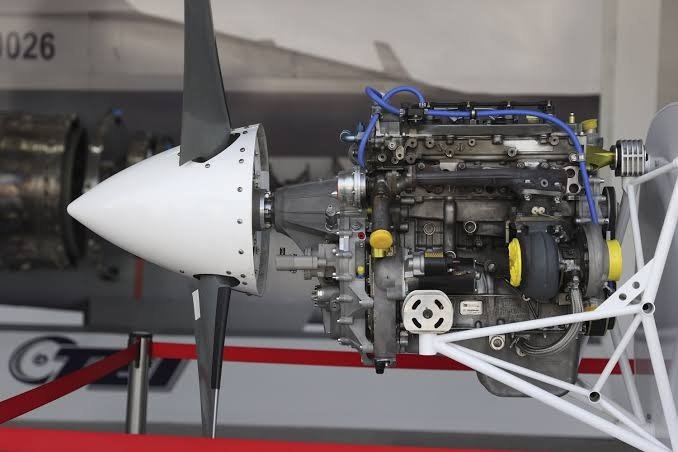
The single-engine fighter incorporates a diverterless supersonic inlet, V-tail and internal weapons bays as part of its low-observable design. It is planned to use an engine from the Saturn family, related to engines developed for the Su-57.
Published design figures include a maximum speed of around Mach 2, a service ceiling of 16,500 meters, a range of up to approximately 2,800–2,900 km, and a ferry range of about 3,000 km. The aircraft has been described with a maximum payload of up to 7,400 kg, carried through internal weapons bays and external hardpoints.
The planned weapons configuration includes air-to-air and air-to-surface weapons, while the aircraft is also expected to feature an active electronically scanned array radar and systems that can be adapted for different customers.
Next development stage
The start of flight-prototype assembly represents the latest major step in the Su-75 program. The aircraft must still complete ground checks, systems integration and other testing before its first flight.
The exact timing of the maiden flight will depend on completion of these activities. Its flight-test program will provide the first opportunity to verify the aircraft's actual performance against its published design targets.
The Su-75 is intended as a lighter and lower-cost complement to Russia's twin-engine Su-57 and has been promoted for both Russian and international customers. However, no confirmed large-scale export order has been publicly established.
——— End of Article ———