MOSCOW, Russia — Russia has received KN-30 ballistic missiles from North Korea that could be used in strikes against Ukraine, according to data from Ukraine’s Defence Intelligence (HUR) provided in response to a request from Ukrainska Pravda.
The delivery marks the first publicly reported transfer of the KN-30 missile system to Russia. Russian forces have previously used North Korean KN-23 and KN-24 ballistic missiles during attacks on Ukraine.
Russia Reportedly Holds Around 50 North Korean Missiles
According to HUR data, as of July 2026, Russia had around 50 Kinzhal aeroballistic missiles in its active inventory. It also held approximately 50 North Korean ballistic missiles, consisting of KN-23, KN-24 and the newly reported KN-30 systems.
Russian forces resumed the use of North Korean ballistic missiles in late July 2026 after a pause of nearly a year. Ukrainian intelligence linked the renewed use to fresh deliveries from North Korea, including a reported strike near Kryvyi Rih.
The new KN-30 deliveries add another North Korean ballistic missile type to the systems already available to Russian forces.
What Is the KN-30?
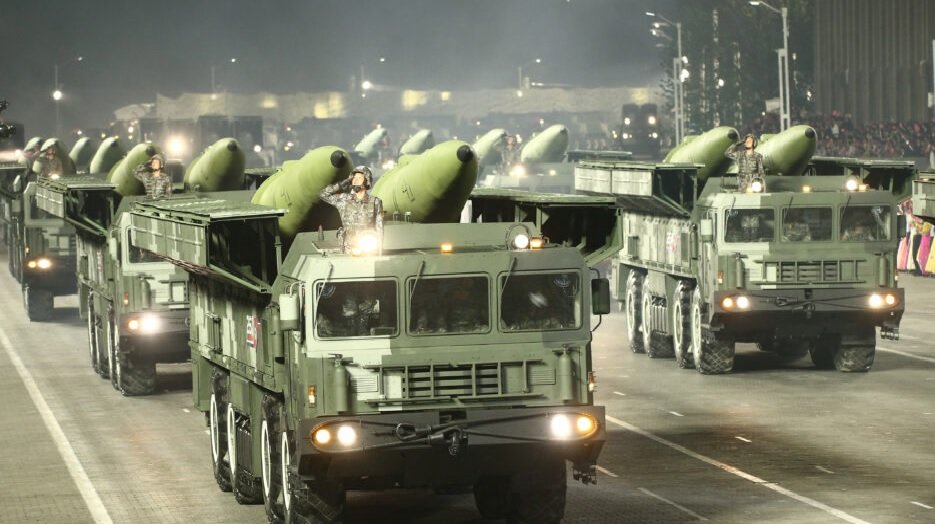
The KN-30 is the Western designation for North Korea’s Hwasong-11C, also referred to as the Hwasong-11Da. It is an enlarged member of the Hwasong-11 family and is classified as a short-range ballistic missile.
The missile uses a solid-fuel engine and is launched from a mobile ground-based launcher. It was first publicly displayed during a military parade in Pyongyang on January 14, 2021.
Its first known flight test took place on March 25, 2021, when the missile demonstrated a range of at least 600 kilometers. Estimates place its operational range at around 600–900 kilometers depending on the payload.
North Korea has claimed that the missile can carry a 2.5-tonne warhead. However, this payload figure has not been independently confirmed.
North Korean Missile Unit Reportedly Deploying to Russia
The missile transfers are reportedly accompanied by a broader expansion of military cooperation between Moscow and Pyongyang.
In early August, Andrii Cherniak, a representative of Ukraine’s Defence Intelligence, said North Korea had begun deploying a specialized missile unit to Russia’s Voronezh region, which borders Ukraine. The unit is reportedly intended to conduct ballistic missile strikes against Ukrainian targets.
According to the Ukrainian intelligence assessment, the unit includes around 90 North Korean personnel and is expected to be integrated into Russia’s 112th Missile Brigade.
North Korea has reportedly delivered another batch of 40 KN-23 and KN-24 missiles together with personnel. Russia expects the deployment to involve up to 120 North Korean ballistic missiles and six launchers, although the final numbers are expected to be determined through high-level talks.
North Korea previously supplied approximately 150 KN-23 and KN-24 missiles between late 2023 and August 2025.
Russia’s Wider Missile Inventory
HUR also provided updated estimates of Russia’s domestic missile stocks. As of August 5, 2026, Russia was assessed to have approximately:
- More than 600 Oniks anti-ship missiles
- More than 450 Kalibr sea-launched cruise missiles
- Around 400 RM-48U missiles for S-400 air defense systems, which can also be used against ground targets
- Around 130 9M723 ballistic missiles for Iskander-M systems
- More than 120 Zircon hypersonic missiles
- Up to 100 Kh-101 air-launched cruise missiles
According to HUR, Russia’s defense industry is continuing to prioritize mass production of several missile systems, particularly the Iskander-M, Kh-101 and Kalibr, to maintain its ability to conduct long-range strikes.
The reported arrival of the KN-30 gives Russia access to another North Korean ballistic missile type alongside the KN-23 and KN-24 systems it has previously used in the war against Ukraine.
Source : militarnyi
——— End of Article ———