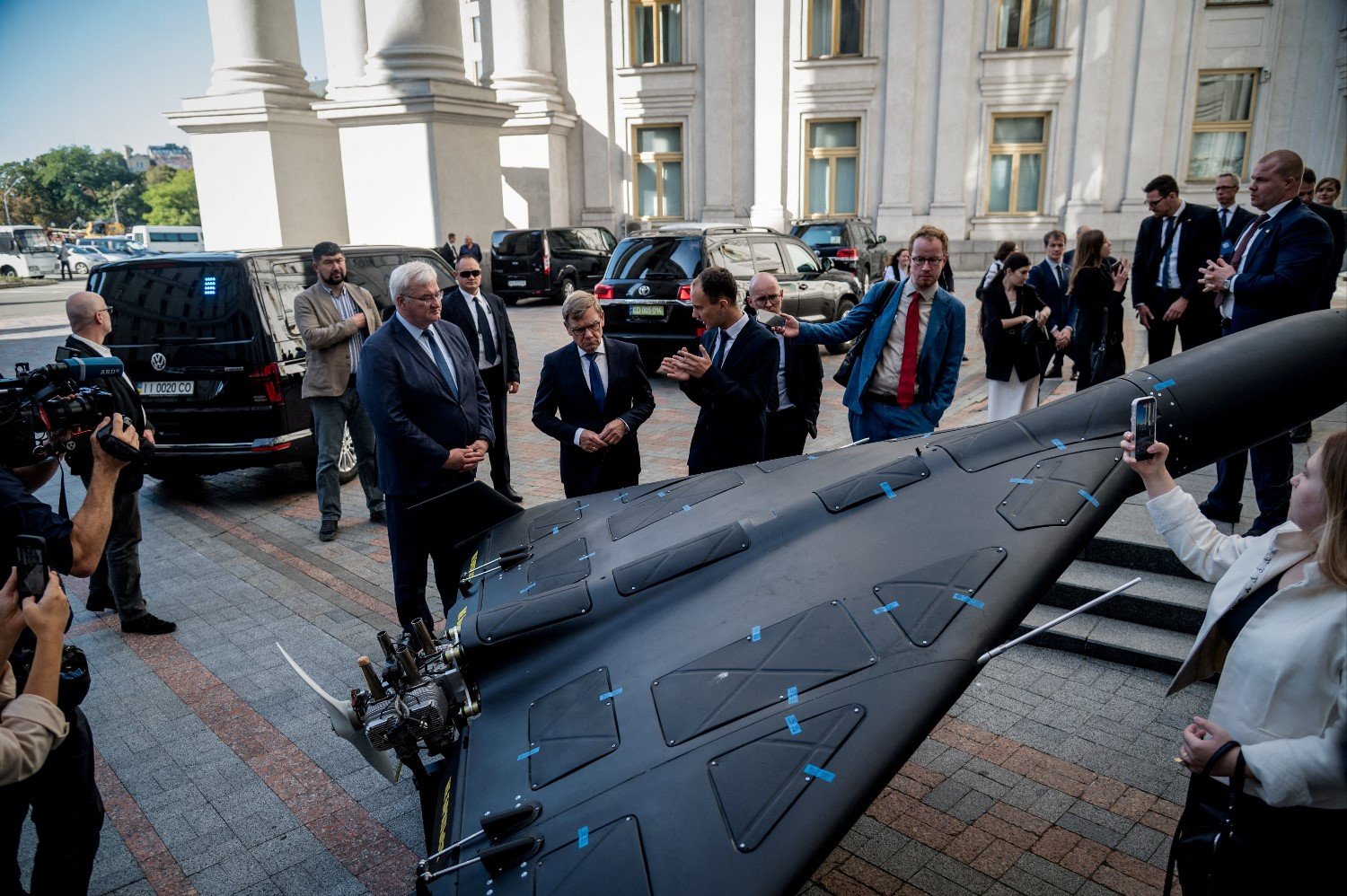
RŪDNINKAI, Lithuania – The German Army has begun testing kamikaze drones and AI-based targeting software in Lithuania, near the border with Belarus. The trials started on November 22, 2026, at the Rūdninkai military training ground as part of the Freedom Shield exercise.
Testing German Attack Drones
German soldiers tested loitering munitions developed by defence companies Helsing and Stark. The drones conducted simulated attacks against main battle tanks using inert warheads without live explosives.
Germany approved the procurement of loitering munitions in 2025. Similar single-use attack drones have been widely used by Russia and Ukraine in the war.
Testing AI Targeting Software
German troops also tested Clarity, an AI-powered battlefield analysis system developed by Helsing.
The software processes information from satellites, reconnaissance drones and ground-based sensors to identify potential targets and recommend actions to military commanders.
German Army Chief Lieutenant General Christian Freuding observed the exercises and described attack drones and AI targeting systems as essential technologies for modern warfare.
Germany Expands Military Presence in Lithuania
The trials are part of the multinational Freedom Shield exercise, running from November 6 to December 3. Military personnel from Germany, Lithuania, Belgium, Croatia, the Czech Republic, Luxembourg, the Netherlands and Norway are participating.
The exercise also supports the deployment of Germany's 45th Armored Brigade (Panzerbrigade 45) in Lithuania to strengthen NATO's eastern flank.
Around 1,800 German soldiers are already stationed in Lithuania. Germany plans to permanently deploy approximately 5,000 soldiers and 2,000 military vehicles in the country by the end of 2027.
The brigade is being established at Rūdninkai and Rukla. Announced in 2023 by German Defence Minister Boris Pistorius, it marks Germany's first permanent deployment of a combat brigade abroad since World War II.
NATO has warned that Russia could rebuild its military capabilities sufficiently to threaten allied territory by 2029. Moscow has rejected the warning, denied plans to attack NATO and accused the alliance of increasing regional tensions through its military deployments.
——— End of Article ———