BLACK SEA, Türkiye — Turkish defence company Aselsan has successfully tested its GÖKDENİZ close-in weapon system (CIWS) by detecting, tracking and destroying a jet-powered target drone during a live-fire demonstration off Türkiye’s northern coast. The company announced the test on November 23, 2026.
During the engagement, the host naval vessel maintained a speed of 5–10 knots, while the target drone performed low-altitude manoeuvres designed to simulate incoming drones and cruise missiles.
Semi-Autonomous Operation
GÖKDENİZ operated in semi-autonomous mode, automatically detecting, tracking and prioritising the target. A human operator authorised firing with a single button press.
The system also offers a fully autonomous mode, allowing it to complete the engagement sequence, including firing, without operator intervention.
GÖKDENİZ System Capabilities
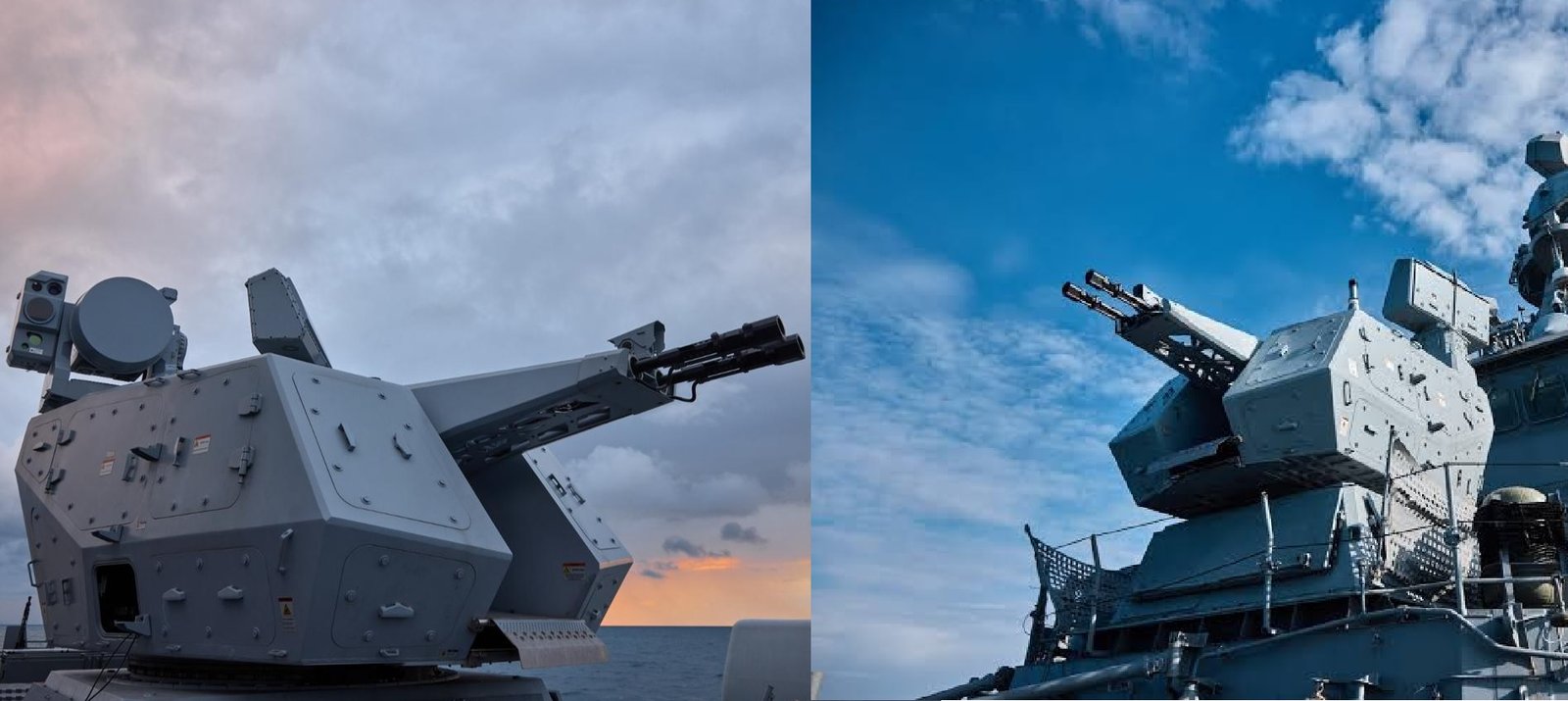
GÖKDENİZ is the naval version of Aselsan's land-based KORKUT air defence system. It combines integrated 3D search and tracking radars with twin-barrel 35 mm cannons to protect ships against aerial threats, including anti-ship missiles and unmanned aerial vehicles.
The system has a firing rate of up to 1,100 rounds per minute and an effective range of approximately 4 kilometres.
It uses Aselsan's 35 mm ATOM programmable airburst ammunition, which detonates near the target and releases tungsten pellets. Its automatic linkless ammunition feed allows two types of ammunition to be loaded simultaneously and selected during an engagement.
According to Aselsan, GÖKDENİZ is in service with the Turkish Naval Forces and has been selected by the navies of six other countries.
Containerised GÖKDENİZ Configuration
Aselsan also presented a containerised version of GÖKDENİZ at the Euronaval 2026 exhibition in Paris.
The configuration features an independent power supply and an integrated operator workspace. It can be installed on vessels without permanent structural modifications.
Aselsan says the containerised version can provide close-in air defence for commercial ships, merchant vessels and other maritime assets.
——— End of Article ———