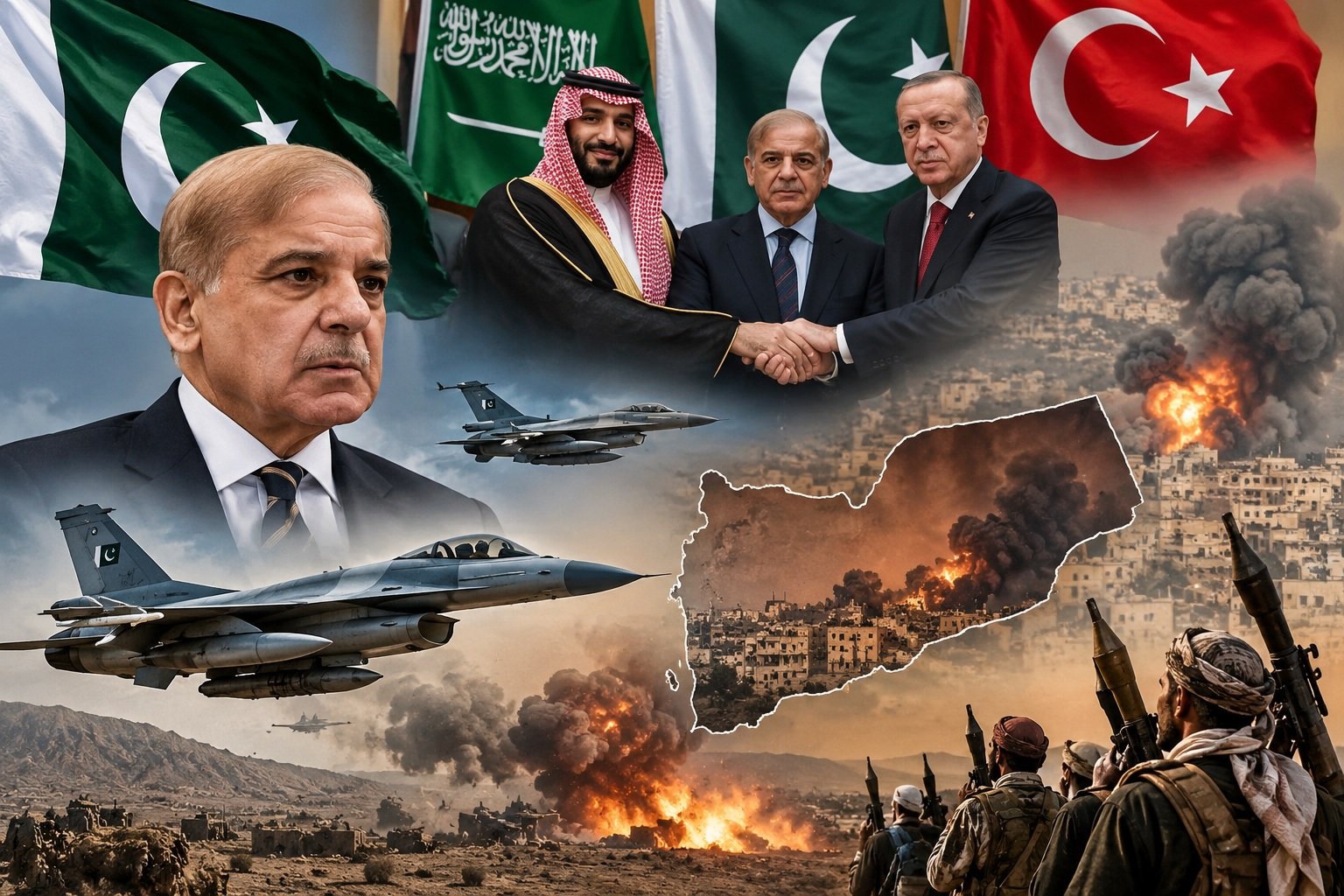
ISLAMABAD — Pakistan has denied a New York Times report claiming that Pakistan Air Force (PAF) fighter jets have begun conducting strikes against Houthi targets in Yemen following the activation of the Mecca Joint Defence Agreement between Pakistan, Saudi Arabia and Türkiye.
The New York Times report, citing an unnamed senior Pakistani military official, said PAF jets were being used against Houthi targets. A second Pakistani official reportedly said Pakistan's role would focus on air support against Houthi drones and missiles rather than a ground operation in Yemen. Pakistan's Ministry of Information and Broadcasting later described the report as “fake and fabricated” and urged international media to avoid speculative reporting. Pakistan has not officially confirmed any offensive PAF operations inside Yemen.
The report came after Houthi forces attacked Abha International Airport and King Khalid International Airport in Riyadh. Saudi authorities said the attacks killed three people and injured 36. Houthi military spokesman Yahya Saree claimed responsibility and said missiles and drones were used. The Saudi-led coalition subsequently announced strikes against Houthi military sites, later reporting attacks on 82 targets.
What the Mecca Pact Changes
The Mecca Joint Defence Agreement was signed on August 7, 2026, by Saudi Crown Prince Mohammed bin Salman, Turkish President Recep Tayyip Erdogan and Pakistani Prime Minister Shehbaz Sharif. It provides that an armed attack against one member will be treated as an attack against all three.
On October 5, the alliance's Strategic Political and Defence Committee met in Riyadh and agreed to implement collective-deterrence measures, including the rapid deployment of agreed military forces and capabilities to Saudi Arabia, subject to national laws.
The agreement, however, did not create Pakistan's military presence in Saudi Arabia.
Pakistan Has Been in Saudi Arabia for Decades
Pakistan and Saudi Arabia have maintained military cooperation since the 1960s, with a formal security cooperation agreement signed in 1967. A 1982 protocol later expanded arrangements for Pakistani military personnel and training in Saudi Arabia.
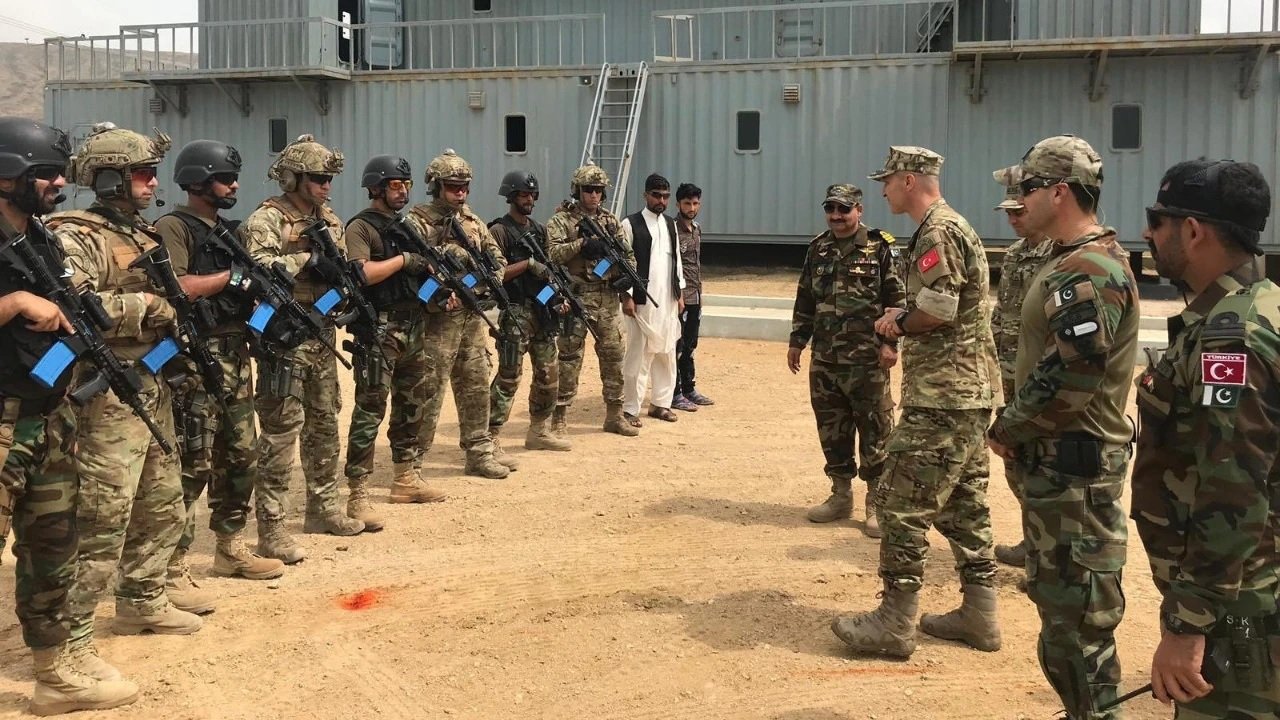
Pakistani deployments became much larger during the 1970s and 1980s, while around 13,000 Pakistani troops and advisers were deployed during the 1990-91 Gulf War. Smaller Pakistani contingents continued in later years, mainly for training, advisory and security duties.
The relationship expanded again under the Pakistan-Saudi Strategic Mutual Defence Agreement signed in 2025. Under arrangements that followed, Pakistan deployed around 8,000 troops, a squadron of fighter aircraft, two drone squadrons and an HQ-9 air-defence system to Saudi Arabia, according to Reuters.
Pakistani military spokesman Lt. Gen. Ahmed Sharif Chaudhry has confirmed that Pakistani forces are already stationed in Saudi Arabia and said they have been present there for decades in different capabilities and domains.
Why Was a New Pact Needed?
This raises an important question for Pakistan: if Pakistani forces were already deployed in Saudi Arabia under decades-old defence arrangements and the 2025 bilateral agreement, what additional role does the Mecca pact provide?
The main difference is that the new agreement brings Türkiye into the defence framework and creates a trilateral collective-defence mechanism. It also provides for coordinated rapid deployment of agreed military capabilities in response to threats.
However, the exact number of Pakistani aircraft or troops that could operate under the new arrangement, their specific missions and whether Pakistani aircraft have actually conducted strikes inside Yemen have not been officially disclosed.
For now, Pakistan's military presence in Saudi Arabia is confirmed, but the reported PAF strikes against the Houthis remain unconfirmed and have been officially denied by Islamabad.
——— End of Article ———