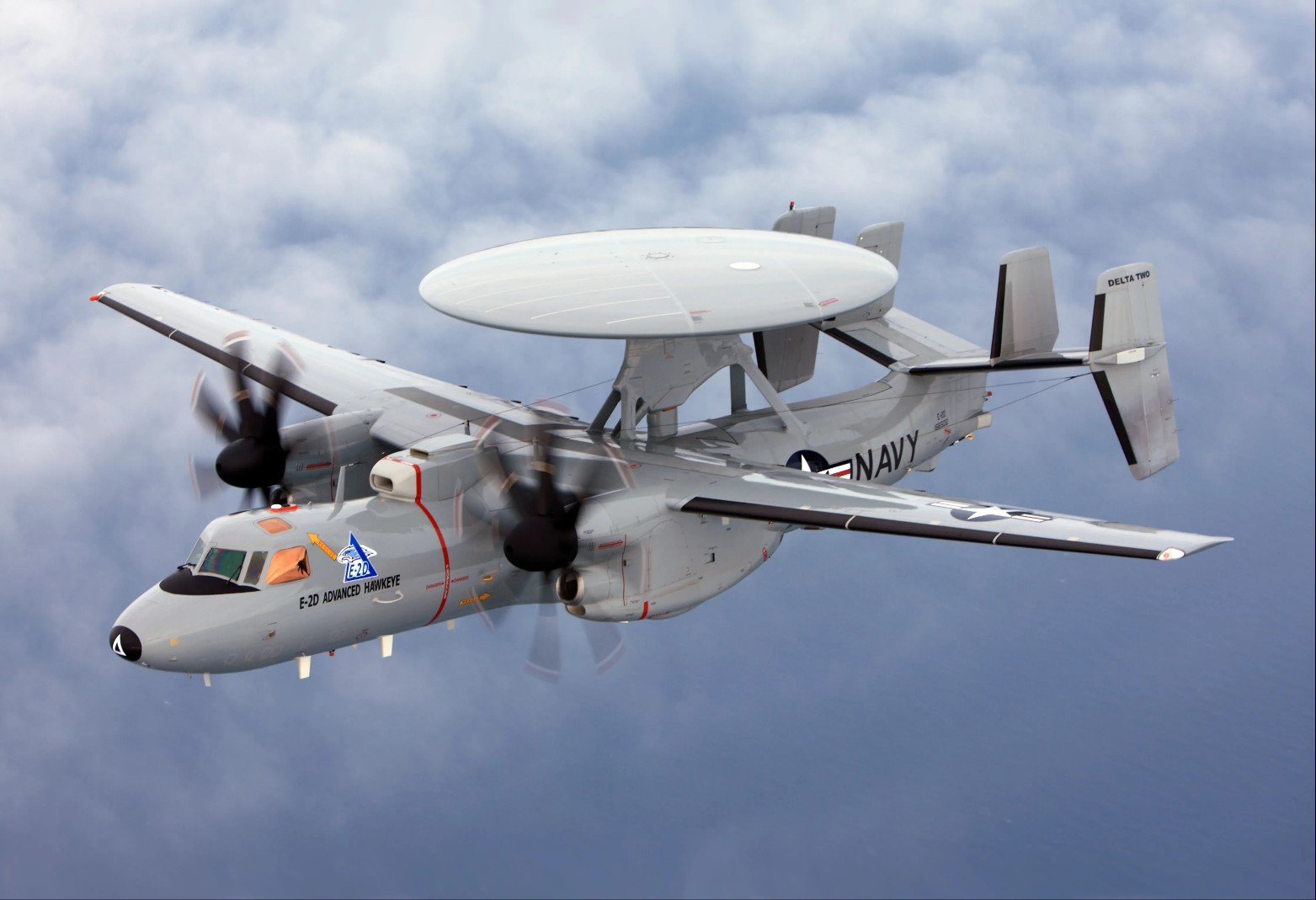
WASHINGTON, D.C. — Northrop Grumman and the U.S. Navy have completed a government-led Critical Design Review (CDR) for the Block II upgrade of the E-2D Advanced Hawkeye. The review was completed in May 2026 and officially announced this week.
The successful CDR clears the program to move from detailed design into hardware and software integration, physical aircraft modifications and testing. Flight testing of the upgraded configuration is scheduled to begin in fiscal year 2029, with the first Block II aircraft expected to be delivered by the end of the decade.
Major modernization of the E-2D
The E-2D Advanced Hawkeye is a carrier-based airborne early warning and command and control aircraft used for missions including target detection, interceptor control, communications relay, and air and missile defense. The U.S. Navy describes the aircraft as a platform for airborne command and control and battlespace awareness.
The Block II upgrade focuses largely on modernizing the aircraft's mission-system architecture, computing infrastructure and supporting systems.
The aircraft's AN/APY-9 UHF-band active electronically scanned array (AESA) radar will remain unchanged under the upgrade. Instead, the systems responsible for processing and managing the radar and other mission data will receive major improvements.
Key elements of Block II include:
- Open Mission Systems architecture: A modular architecture will allow future capabilities, including artificial intelligence and machine-learning tools, to be incorporated through software and containerized applications rather than requiring major hardware changes.
- Modernized cockpit: A redesigned cockpit architecture is intended to reduce pilot workload and improve crew effectiveness during complex battlespace management.
- Increased computing power: Newer processors will provide greater capacity to handle the growing volume and complexity of information exchanged between ships, aircraft, satellites and uncrewed systems.
- Enhanced cybersecurity: Additional cybersecurity improvements are incorporated into the Delta System Software Configuration 6 (DSSC-6) baseline.
- Commercial off-the-shelf components: The modernization makes use of commercial off-the-shelf products to address component obsolescence and support long-term fleet sustainment.
The Navy has previously described the DSSC-6 effort as providing improved computing and electronic storage, better command-and-control connectivity, parts-obsolescence mitigation and a modular open-systems environment for future technology insertion.
Production and retrofit work
Northrop Grumman plans to integrate the Block II configuration into newly built E-2D aircraft on the active production line while also applying the upgrade to aircraft already in the Navy's fleet.
This approach will allow new-production aircraft and existing E-2Ds to receive the modernization as the program progresses.
With the CDR complete, engineering teams can now move into the physical integration and modification phase ahead of testing.
Janice Zilch, vice president and program manager for the E-2D Advanced Hawkeye at Northrop Grumman, said the completion of the review reflects the work of the company's team and its partners. She said the upgrade is intended to strengthen the E-2D's capabilities, improve situational awareness, reduce crew workload and support future technology insertion.
Northrop Grumman has also described the broader modernization effort as being aimed at improving operational availability, software resiliency, security and interoperability through new mission computers, displays and an open mission-systems approach.
Continued E-2D production
The Block II modernization comes as the U.S. Navy continues procurement and modernization of the E-2D fleet. The aircraft provides airborne early warning and command-and-control capabilities for carrier operations and broader naval missions. The Navy's FY2026 budget documents identify Northrop Grumman as the airframe prime contractor, with Rolls-Royce providing the engines and Lockheed Martin responsible for the radar.
The E-2D program also supports more than 4,000 jobs across 411 supplier companies in 40 U.S. states, according to the information provided by Northrop Grumman.
The company has delivered E-2D aircraft to the U.S. Navy and international customers, including Japan, while France has E-2D aircraft in production.
The completion of the Block II Critical Design Review marks the transition of the upgrade from design definition toward aircraft integration and flight testing. The next major test milestone is scheduled for fiscal year 2029, followed by expected delivery of the first Block II aircraft by the end of the decade.
——— End of Article ———