Brussels — The NATO Communications and Information Agency (NCIA) has awarded a contract to a consortium led by European defense companies Thales and Leonardo to provide a next-generation secure deployable communication and information system for the Allied Special Operations Forces Command (SOFCOM).
The contract marks the first phase of a wider NATO program aimed at modernizing communication capabilities for Special Operations Forces and improving the alliance's ability to operate in demanding environments.
Following the announcement on Monday, Thales shares rose 1.6% on the Paris stock exchange, while Leonardo gained 3.9% in Milan trading.
Six Deployable Headquarters to Receive New Systems
Under the agreement, the consortium will deliver equipment and training for six Deployable Points of Presence for Special Operations Component Commands (DPOP SOCC).
The deployable headquarters are designed specifically for NATO Special Operations Forces and will provide secure communication and information systems that can be rapidly deployed during operations. Built on classified and resilient networks, the systems are intended to maintain reliable connectivity and support command and control in challenging operational environments.
The DPOP SOCC units will also serve as the foundation of NATO's future secure communication and information architecture for special operations missions.
New Capabilities for Deployed Forces
The systems will include deployable IT infrastructure, resilient communications and high-performance computing capabilities to support operations in the field.
According to Thales and Leonardo, the equipment has been designed with a reduced physical and electromagnetic footprint, helping lower its detectability during deployment.
One of the main additions is the ability to share Full Motion Video (FMV) in real time between deployable systems. The companies said this is the first time such a capability will be introduced in a NATO deployable communications program.
The new communication architecture will also provide a secure multi-domain environment for exchanging mission data while meeting NATO requirements for cybersecurity, interoperability and network resilience.
Long-Term Support and Upgrades
Thales and Leonardo will manage the systems throughout their operational life, allowing future upgrades as technology and operational requirements evolve. The consortium will also provide training and technical support to help ensure the systems are successfully introduced into service under NCIA's leadership.
The project is being delivered through a wider European industrial partnership. While Thales and Leonardo lead the program, it also includes technologies and industrial contributions from the United Kingdom and Germany.
Company Executives Welcome the Agreement
Alexandre Bottero, Vice President of Networks and Infrastructure Systems at Thales, said the project combines the expertise of both companies to deliver a modular and upgradeable solution for NATO Special Operations Forces.
"Thales brings end-to-end expertise in secure information and communication systems, deep knowledge of NATO's reference architecture, and a long track record of delivering projects to the Alliance," Bottero said. "By combining this expertise with Leonardo's capabilities, we are harnessing the best of European industry in a modular, upgradable, and field-proven system."
Antonio Levato, Senior Vice President of Air and Land Systems at Leonardo Electronics, said the company's experience in delivering regimental and divisional command post capabilities in Italy supports the development of modular NATO-ready systems based on fixed and expandable shelters.
He added that close cooperation with operational users has helped shape the design, combining Leonardo's deployable command post expertise with Thales' experience in NATO secure communications.
Strengthening NATO Special Operations
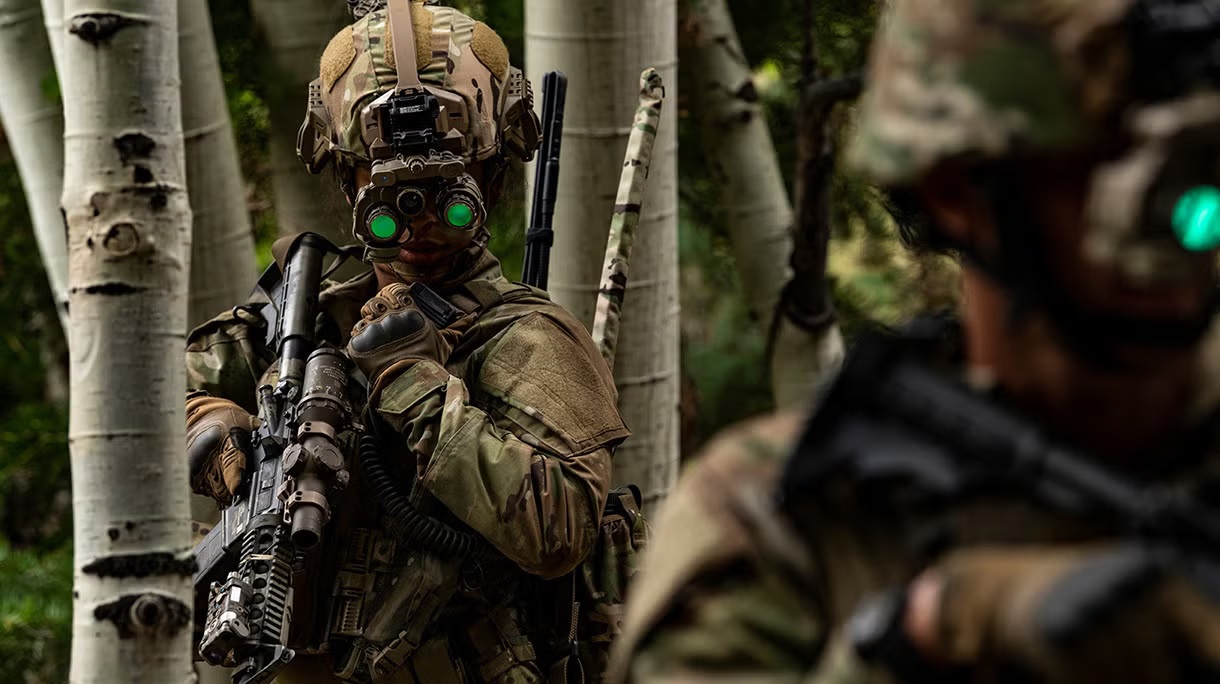
The contract forms part of NATO's broader effort to improve secure communications and command capabilities for Special Operations Forces, which often operate in dispersed locations and complex environments.
By introducing deployable, secure and interoperable communication systems, the program is expected to improve information sharing, situational awareness and operational coordination across NATO special operations units while providing a platform that can be upgraded as future requirements emerge.
Source: thalesgroup
——— End of Article ———