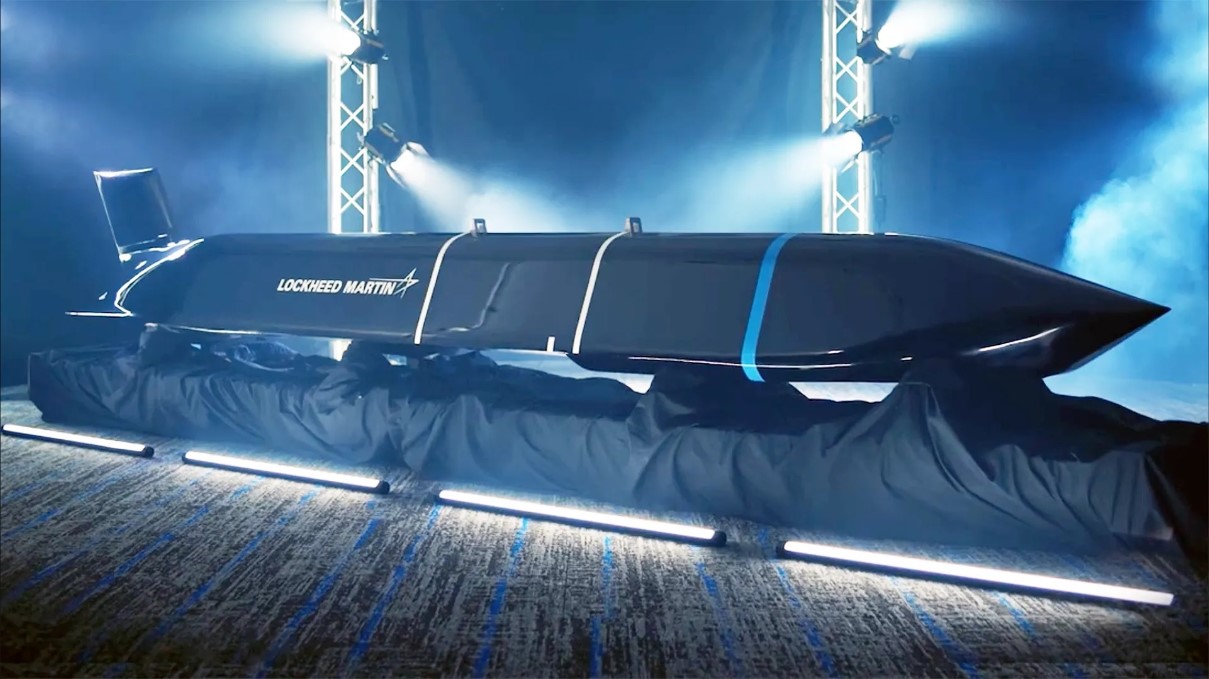
Lockheed Martin has taken its renowned AGM-158 Joint Air-to-Surface Standoff Missile (JASSM) to the next level with the unveiling of an 'extreme range' variant, known as the AGM-158 XR. This new missile promises to significantly enhance the long-range strike capabilities of the US military, offering greater lethality and survivability for pilots while maintaining compatibility with modern fighter jets such as the F/A-18 and F-35.
The AGM-158 JASSM has already proven itself to be a reliable weapon, capable of delivering precision strikes from beyond enemy air defenses. However, the new AGM-158 XR aims to surpass its predecessors in almost every aspect. The missile has been designed to carry a 1,000-pound (453-kilogram) armor-piercing warhead, making it a formidable tool for deep penetration strikes against hardened targets. It is also significantly larger, allowing for more fuel capacity, which will likely enable it to reach farther than existing JASSM variants, though Lockheed has not disclosed the exact range.
Current estimates suggest that the AGM-158 XR could exceed the range of both the standard JASSM and the Long-Range Anti-Ship Missile (LRASM), both of which already offer standoff capabilities in excess of 500 miles (around 800 kilometers). While these numbers remain speculative, it's clear that the new missile is designed to strike from even further distances, well outside the reach of enemy air defenses, enhancing pilot safety during high-risk missions.
A key aspect of the AGM-158 XR is its modularity. Lockheed has incorporated smart internal modifications that not only improve performance but also make future upgrades easier to implement. This forward-thinking design ensures that the missile can be adapted to meet evolving threats without requiring complete redesigns or reengineering.
One of the advantages of the AGM-158 XR is that it builds on the existing JASSM production lines and supply chains. According to Lockheed Martin's General Manager, John Hill, this means that the missile can be rapidly produced and delivered to the US military once development is complete. The company has suggested that flight testing could begin within the next one to two years, although the missile is still several years away from being ready for operational use.
Although the US Department of Defense has not yet committed to purchasing the AGM-158 XR, its potential is undeniable. The missile’s extreme range and powerful warhead make it an attractive option for the US Air Force as it seeks to modernize its strike capabilities in an increasingly contested global environment. Additionally, by maintaining compatibility with advanced aircraft like the F/A-18 and F-35, Lockheed Martin ensures that the AGM-158 XR can be easily integrated into the existing fleet without requiring costly modifications or delays.
Lockheed Martin has emphasized that the AGM-158 XR is designed to meet the future needs of warfighters, anticipating the challenges of tomorrow’s battlefields. The missile’s increased range would allow it to target high-value assets deep within enemy territory while minimizing the risk to US pilots. Furthermore, its ability to penetrate heavily fortified structures means it could be a key asset in any conflict where precision strikes are essential.
In summary, the AGM-158 XR represents a significant leap forward in missile technology, offering greater range, modularity, and striking power than previous variants. While it is still in development, the missile is poised to play a crucial role in future US military operations, providing commanders with a powerful new tool to deter adversaries and protect American forces.
——— End of Article ———