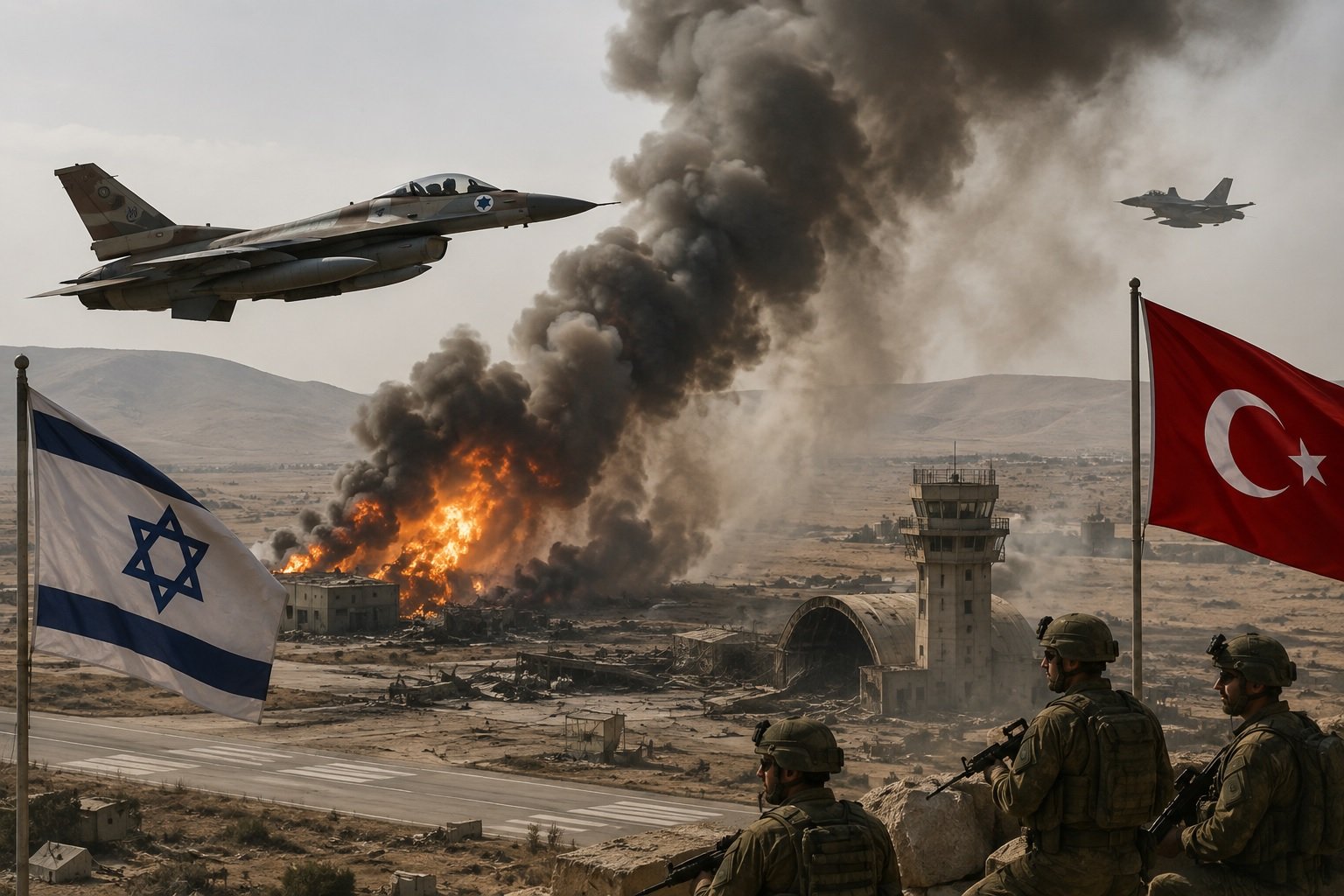
DAMASCUS, Syria — Tensions between Israel and Turkey have increased following Israeli airstrikes on the Abu al-Duhur military airbase in Syria’s Idlib province. The strikes, carried out on August 18, damaged the runway and storage facilities at the base and came shortly after a Turkish military delegation visited the site to assess rehabilitation work.
The incident has raised concerns in Washington over the possibility of an unintended confrontation involving Israel, Turkey and Syria. The United States is now working to improve communication between the three countries and revive a mechanism designed to prevent military incidents in Syrian airspace.
Israeli Strikes on Abu al-Duhur
Syrian state media reported that Israel carried out eight airstrikes on the Abu al-Duhur airbase in northwestern Syria. The attacks damaged the runway and storage facilities, while Syrian military sources and local residents reported no casualties.
The airbase is located about 70 kilometers from the Turkish border. It had been largely inactive since the Syrian civil war, although the facility has been undergoing rehabilitation as Syria works to rebuild parts of its military infrastructure.
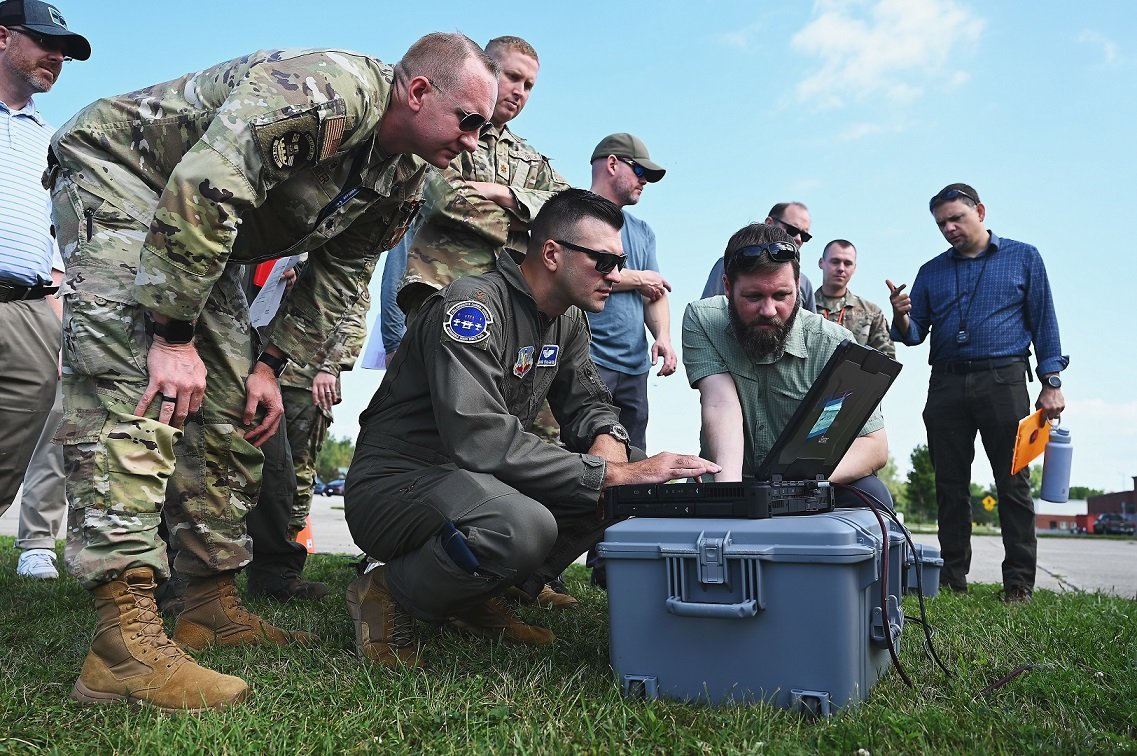
A Turkish delegation visited the base on August 17 to review rehabilitation plans. The Israeli strikes took place hours after the delegation left, according to Syrian officials and other reports.
Israel later acknowledged responsibility for the operation. The Israeli Prime Minister’s Office said Syria was close to violating an existing security status quo with Israel by allowing Turkish troops to deploy at the base near Aleppo.
Israel said it had repeatedly warned Syria that such a deployment would pose a security threat and demanded a return to the previous arrangement.
Turkey Rejects Israel’s Claims
Turkey strongly condemned the Israeli strikes and rejected Israel’s explanation for the operation.
The Turkish presidency described Israel’s claims as untenable and accused the Israeli government of using them to justify attacks against Syrian sovereignty. Ankara also said it would continue cooperating with Damascus.
A Turkish source cited by Axios said there was no Turkish military presence at the base at the time of the strike.
Turkey has become an important supporter of Syria’s new government following the fall of Bashar al-Assad in 2024. Ankara has supported efforts to rebuild Syrian state institutions and military capabilities, increasing concerns in Israel over Turkey’s expanding role in Syria.
U.S. Warns of Possible Military Miscalculation
The United States has expressed concern over the potential consequences of the Israeli operation.
Tom Barrack, the U.S. ambassador to Turkey and special envoy for Syria, described the strike as an “unnecessary escalation.” He said the incident created a real risk of a rapid escalation involving Israel, Turkey and Syria.
Barrack said Turkish forces were not aware that Israeli aircraft were heading toward the Syrian base or what their intended target was. He warned that Turkish forces could potentially have interpreted the aircraft movement as an attack against them and responded accordingly.
He also said the United States was relieved that no one was killed and that the situation did not develop into a larger confrontation.
U.S. Pushes for Deconfliction Mechanism
Washington is now working to establish a more reliable communication mechanism involving Israel, Syria and potentially Turkey.
Barrack said the United States is involved in quiet discussions aimed at relaunching a deconfliction cell between Israel and Syria, with Turkey potentially participating directly or indirectly. The proposed arrangement would provide a permanent communication channel intended to reduce the risk of misunderstandings between military forces operating in the region.
The United States has previously supported discussions between the Syrian government of President Ahmed al-Sharaa and Israeli officials over border security and reducing tensions.
Barrack said Syria has presented itself as a stable sovereign neighbor and that the Syrian government has indicated it does not seek conflict with Israel.
Turkish Radar Adds to Israeli Concerns
Another issue in the wider dispute is Turkey’s role in rebuilding Syria’s aviation and security infrastructure.
In January 2026, Turkey supplied Syria with the ASELSAN HTRS-100 air traffic control radar system for Damascus International Airport. Turkish and Syrian officials have described the system as part of efforts to improve civilian aviation safety and air traffic management.
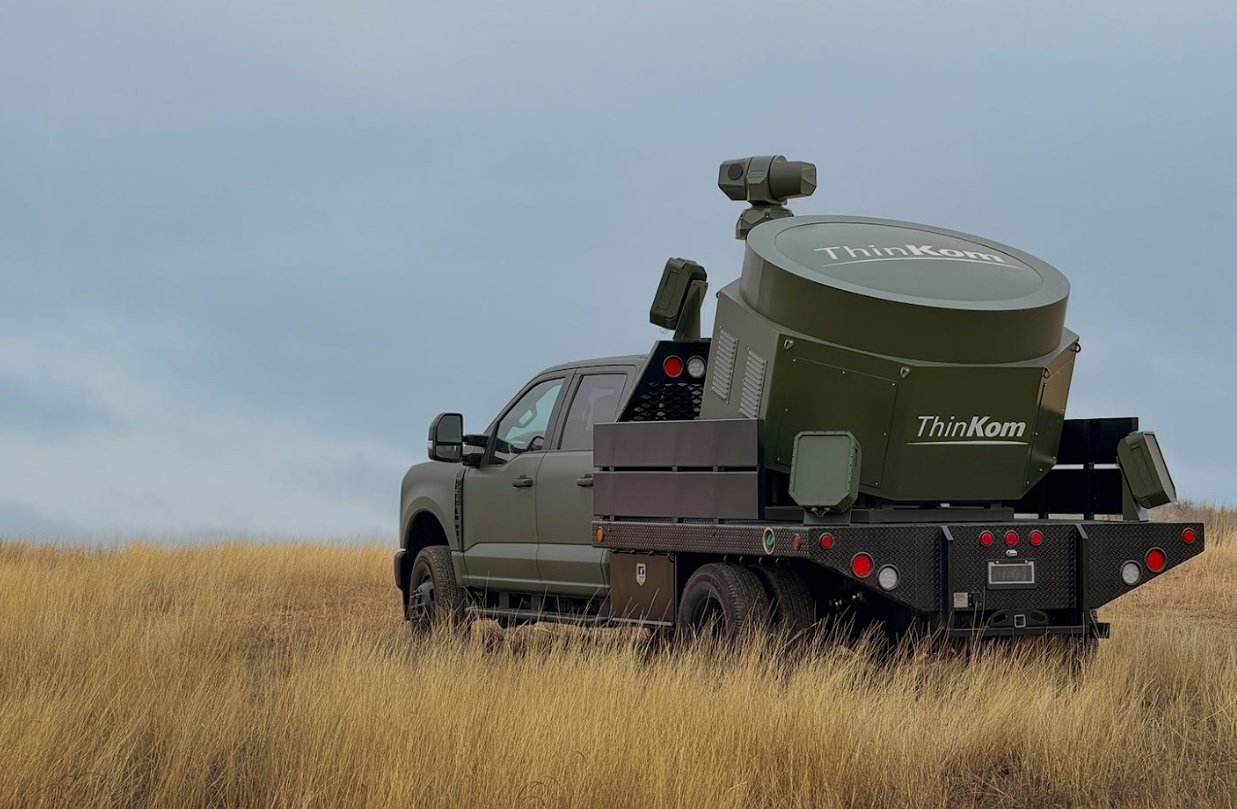
The HTRS-100 combines primary and secondary surveillance radar functions and is designed to detect and track airborne targets around airports. Its primary surveillance component operates in the S-band, while the secondary system supports aircraft identification functions.
Israeli concerns over the system have been reported because of its potential effect on Israel’s freedom of military operations in Syrian airspace. The Jerusalem Post reported in January that the Turkish radar deployment had raised concerns in Israel.
However, Syrian aviation authorities have said the system is intended for civilian air traffic control and that it operates under the authority of Syria’s civil aviation administration.
U.S. officials have similarly argued that Syria’s requirement for functioning civilian radar does not necessarily represent a security threat to Israel and that the issue can be addressed through further discussions.
Growing Competition Over Syria
The Abu al-Duhur strikes have brought the competing positions of Israel and Turkey in Syria into sharper focus.
Israel has continued to conduct military operations in Syria to address threats it identifies to its security and wants to preserve its ability to operate in Syrian airspace. Turkey, meanwhile, has expanded its cooperation with Damascus and is supporting efforts to rebuild Syrian institutions and infrastructure.
The United States is attempting to prevent these competing interests from producing a direct military incident between Israel and Turkey. The immediate focus is therefore on restoring reliable communication channels and preventing further miscalculations.
The latest dispute also adds another complication to U.S.-supported efforts to reduce tensions between Israel and Syria. Washington has emphasized that continued communication among the parties is necessary to prevent an incident in Syria from developing into a wider regional confrontation.
——— End of Article ———