JERUSALEM, — Israel is reportedly developing a three-layer physical protective screen to shield bridges, buildings and other critical infrastructure from heavy munitions carrying warheads weighing between 300 kilograms and 1 metric ton. According to reports by Scientica and Russian media citing Israeli sources, the proposed system uses a stationary barrier to reduce the effects of a direct strike.
Three-Layer Protection Design
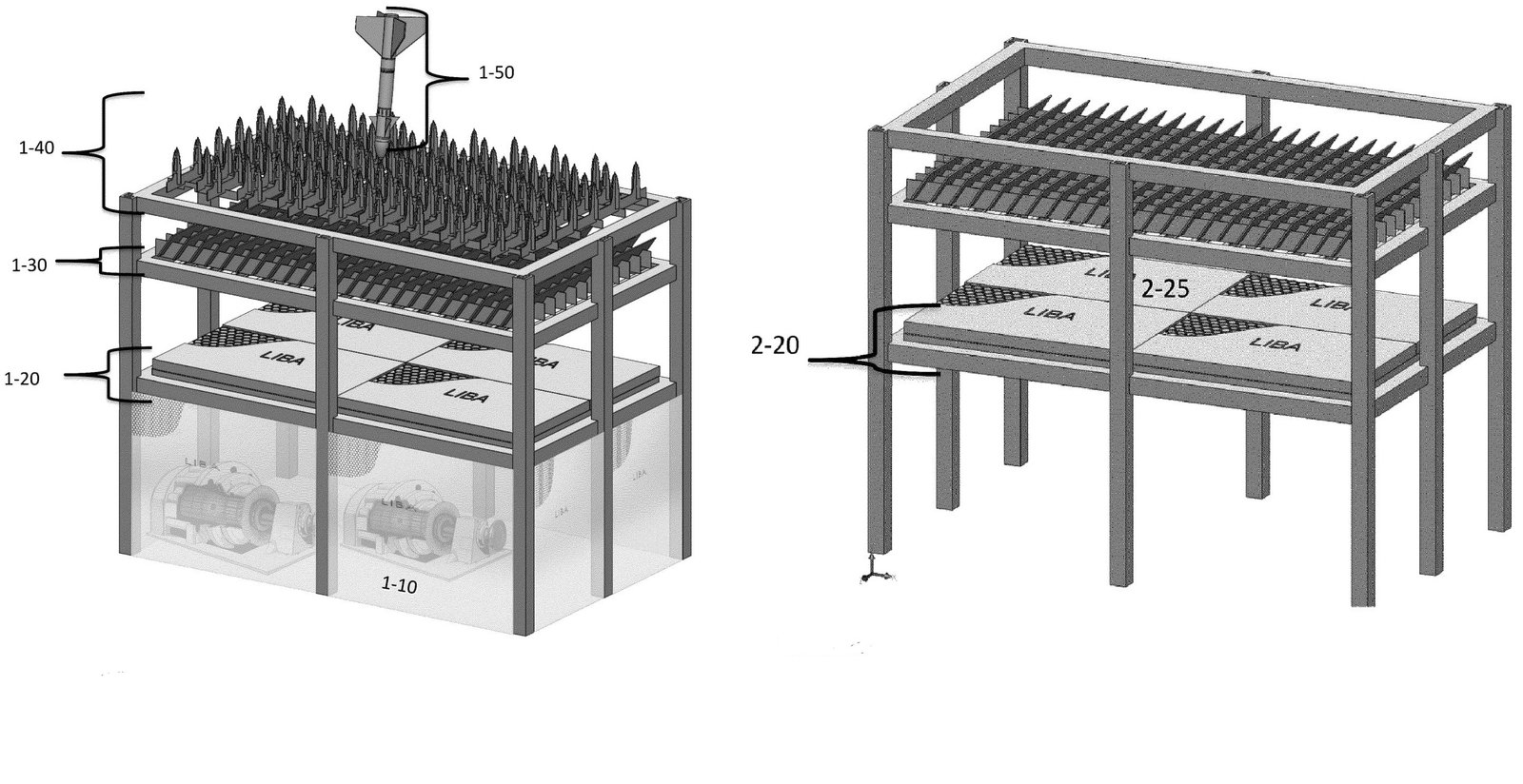
The proposed system consists of three specialised layers:
-
First layer: A spiked grid designed to trigger a warhead prematurely or mechanically disrupt it before it reaches the protected structure.
-
Second layer: Angled slats intended to redirect explosive gases and shrapnel sideways, reducing the blast and fragments reaching the target.
-
Third layer: Composite ceramic armour plates designed to absorb the remaining kinetic impact and shock. The design may incorporate high-density ceramic elements.
The system requires a minimum gap of 1.5 metres between the outer spiked grid and the final ceramic plates. Its independently standing support frame is designed to avoid transferring additional weight or structural stress to the protected bridge or building. The system is passive and contains no explosive components of its own.
Patents and Intended Applications
The concept corresponds to patent documents associated with Israeli inventors Michael Cohen and Eliyahu Schwalm. These include Israeli patent IL271158B2, the related U.S. patent US11402177B2, granted in 2022, and the later U.S. application US20240210145A1, which focuses on protection against large explosive devices.
A Russian media report published on October 27, 2026, described the proposed system for applications including bridge foundations and building roofs. The spacing between the layers is intended to encourage detonation away from the target, disperse blast energy and reduce the force reaching the protected structure.
Complementing Israel’s Existing Air Defences
Unlike active interception systems, the proposed shield would provide a passive, last line of defence for stationary infrastructure if a munition penetrates the air defence network.
Israel’s existing systems include Iron Dome for short-range rockets and drones, David’s Sling for medium-range missile threats, Arrow-2 and Arrow-3 for long-range ballistic missiles, and the Iron Beam high-energy laser system against smaller aerial threats. U.S.-supplied THAAD batteries also strengthen Israel’s high-altitude missile defence capabilities.
The physical barrier would serve a different purpose by protecting selected structures against the effects of heavy munitions that reach their targets.
Development Status Not Independently Verified
As of October 27, 2026, the system’s development status and real-world performance have not been independently verified. No public test data or official statements from Israeli defence authorities have confirmed operational deployment or demonstrated its effectiveness against warheads weighing between 300 kilograms and 1 metric ton.
——— End of Article ———