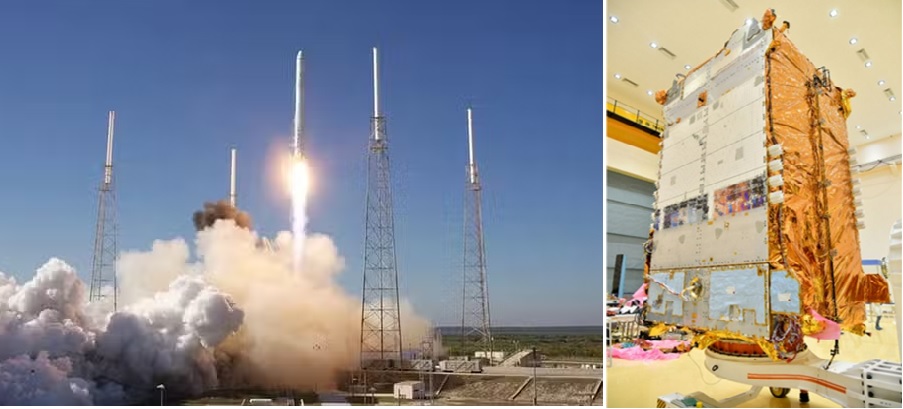
In a major milestone for India's space ambitions and digital connectivity goals, the Indian Space Research Organisation (ISRO) is gearing up to launch the advanced GSAT-N2 satellite, also known as GSAT-20, aboard SpaceX's Falcon 9 rocket. This exciting mission, scheduled for the second quarter of 2024, not only represents ISRO's debut commercial launch collaboration with SpaceX but also marks a significant step in expanding high-speed internet coverage across India, including in-flight connectivity for passengers traveling over Indian skies.
The GSAT-N2 satellite stands as a testament to ISRO's commitment to modernizing communication networks across the country. Weighing in at an impressive 4,700 kilograms, this high-throughput satellite (HTS) is tailored for internet data transmission and operates within the Ka-band frequency spectrum. What makes this satellite a technological marvel is its extraordinary throughput capacity of approximately 48 gigabits per second (Gbps), which will drastically enhance broadband services across India.
Designed to provide extensive coverage, GSAT-N2 is equipped with 32 specialized user beams. This includes 8 narrow spot beams specifically aimed at the densely populated and strategically important Northeastern regions of India, while 24 wide spot beams will span the rest of the country. Moreover, GSAT-N2's reach extends to some of the most remote and underserved areas, such as the Andaman and Nicobar Islands and Lakshadweep, regions where reliable internet access has long been a challenge.
A standout feature of GSAT-N2 is its impact on aviation connectivity. While in-flight internet has become a standard service in many parts of the world, it has remained restricted within Indian airspace until recently. This was primarily due to regulatory limitations, which have now been relaxed to allow in-flight internet services at altitudes exceeding 3,000 meters. Once operational, GSAT-N2 will close this gap, empowering airlines to offer seamless internet access to passengers from takeoff to landing over Indian territory.
The advent of GSAT-N2-enabled services will require service providers to take a few critical steps. Providers will have to acquire the appropriate licenses from Indian authorities and install specialized equipment on their aircraft. Despite these technical and regulatory hurdles, companies are already preparing to harness this opportunity. Viasat Inc., a prominent satellite communications firm based in the United States, has revealed its plans to leverage GSAT-N2 for delivering maritime and in-flight internet solutions throughout India. This partnership is anticipated to set a new benchmark in on-the-move connectivity.
Interestingly, ISRO's choice of SpaceX's Falcon 9 rocket for this mission was dictated by the sheer size and weight of GSAT-N2. ISRO's own launch vehicles, such as the GSLV and PSLV, lack the payload capacity needed for a satellite of this scale. Consequently, the launch will take place from Cape Canaveral, Florida, and will be handled by NewSpace India Limited (NSIL), ISRO's commercial arm, which has played a pivotal role in arranging and executing this international collaboration.
Beyond just enhancing in-flight connectivity, GSAT-N2 is set to revolutionize internet access across vast swathes of India, bridging the digital divide in regions that have historically lagged in network infrastructure. With a robust operational lifespan of 14 years, the satellite promises long-term benefits for both remote communities and travelers in the skies.
In an era where internet access is increasingly synonymous with economic growth and social development, GSAT-N2 is poised to be a game-changer. It exemplifies ISRO's relentless drive to harness space technology for the nation's progress and sets the stage for a new chapter in global collaboration with leading space companies like SpaceX.
——— End of Article ———