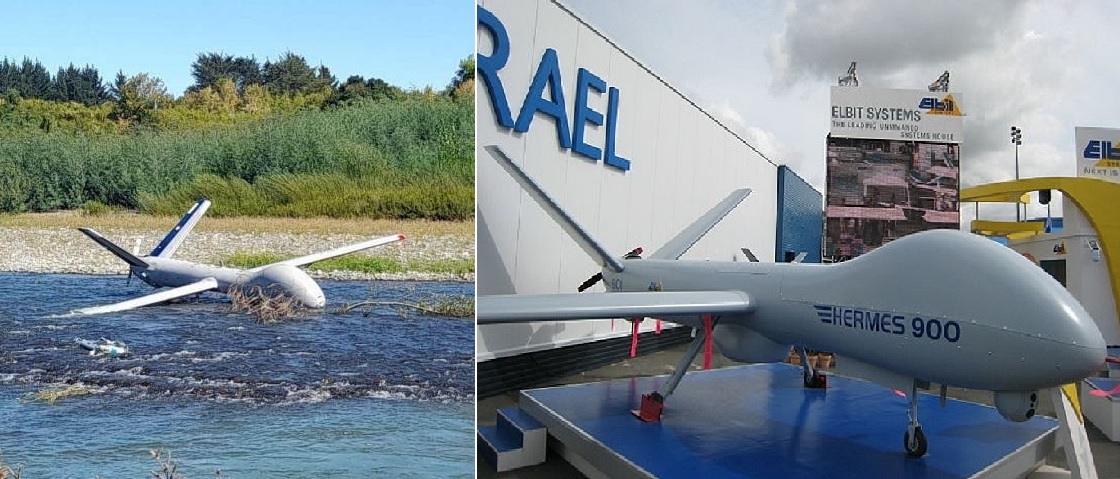
In an unforeseen incident, a Hermes 900 drone, locally known as Drishti 10, crashed during acceptance trials off the coast of Porbandar, Gujarat. The unmanned aerial vehicle (UAV), operated by Adani Defence and Aerospace under a license from Israel's Elbit Systems, lost communication mid-flight, leading to its crash. This setback occurred as part of the Indian Navy's evaluation process for these advanced drones.
Strategic Role in India’s Defense
India had procured two Drishti 10 drones for the Navy through an emergency procurement initiative, with two additional units ordered by the Army for surveillance operations along the Pakistan border. These drones were seen as critical force multipliers, enhancing the country’s ability to monitor vast stretches of coastline and hostile borders.
Concerns Raised by the Crash
The crash, occurring during acceptance trials, raises questions about the operational reliability of the Hermes 900 drones. Acceptance trials are crucial for identifying potential issues before full-scale deployment, and this incident underscores vulnerabilities in communication systems.
The loss of communication, which caused the crash, highlights a critical failure point, especially for UAVs operating in environments where secure and uninterrupted connectivity is paramount. This incident also casts a shadow over the vendor’s testing protocols, which will now likely come under scrutiny.
Implications for Future Procurement and Operations
The Indian Navy and Army are expected to conduct a detailed investigation to determine the root cause of the crash. The findings could lead to:
- Enhanced Communication Systems: To prevent similar failures, robust fail-safe mechanisms might be developed and integrated.
- Revised Testing Protocols: Vendors may face stricter guidelines to ensure operational reliability during trials.
- Potential Modifications: Design and software updates could be mandated to address technological gaps.
Moving Forward
While the Hermes 900 has proven its capabilities in various international markets, including operations by Israel, Brazil, and Mexico, the incident in Porbandar underlines the challenges of adapting such technology to specific operational needs. As India strengthens its UAV fleet, this crash serves as a reminder of the importance of rigorous testing and the continuous evolution of defense technology to meet real-world challenges.
The Indian Navy’s confidence in the Drishti 10’s potential to enhance maritime surveillance and security remains evident, but the focus will now shift to ensuring these drones meet the highest operational standards before deployment.
——— End of Article ———