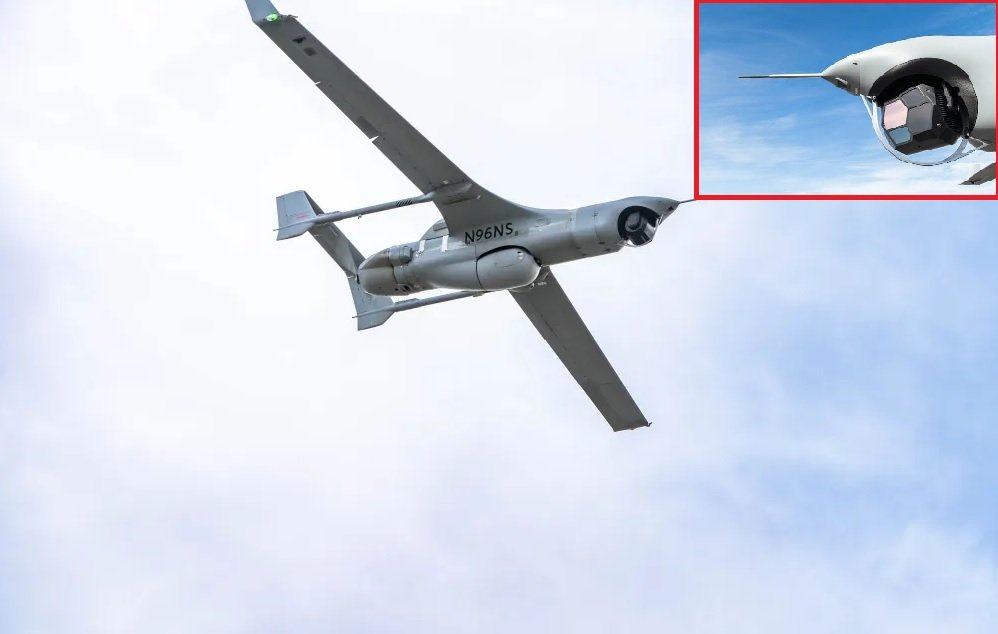
MELBOURNE, Australia — The Australian Army is introducing the Arkeus Warden Hyperspectral Optical Radar (HSOR) on its Integrator uncrewed aerial systems (UAS) under the Tactical Uncrewed Aerial System (TUAS) program. The system is designed to provide wide-area intelligence, surveillance and reconnaissance (ISR) support for combat brigades across land and littoral environments.
Melbourne-based Arkeus announced that the Army has acquired an initial tranche of Warden systems following its down-selection in November 2025, when the system outperformed other advanced sensing technologies evaluated from around the world. Integration, testing and validation on the Army’s Integrator UAS were completed with the Army and Insitu Pacific, which will deliver and sustain the capability.
AI-Powered Hyperspectral Sensing
Unlike conventional electro-optical and infrared sensors that mainly rely on human operators to review imagery, Warden uses the ARK artificial intelligence orchestration and data-fusion engine, which operates on the sensor itself.
The system is designed to autonomously detect, classify, locate and track objects in real time over wide areas. Its hyperspectral technology collects information across multiple electromagnetic bands, providing sensing information beyond conventional optical cameras.
Warden can operate during day and night and in degraded visual conditions including smoke, dust, haze and humidity. Arkeus said earlier evaluations showed detection ranges beyond comparable optical sensors in some degraded environments. The system is designed to extend the area that each Integrator can monitor across land, littoral and maritime domains.
Army and Industry Statements
Colonel Joel Domigan from Headquarters Army Aviation Command said the acquisition is part of the Army’s TUAS program to meet tactical-level ISR requirements for combat brigades. He said Warden will provide persistent, wide-area surveillance from the Integrator, helping commanders extend situational awareness, shorten decision cycles and operate effectively in contested environments.
Arkeus CEO and co-founder Simon Olsen said Warden combines real-time wide-area hyperspectral sensing with the company’s ARK AI software to provide a more comprehensive picture of the battlespace in a shorter time.
Insitu Pacific Managing Director Andrew Duggan said the Integrator’s range, endurance and mission flexibility support persistent surveillance across land and maritime environments. He described Warden as an additional wide-area sensing layer that combines hyperspectral collection with onboard AI processing to support the Army’s ISR requirements.
The Integrator is already in Australian Army service. The addition of Warden provides an AI-enabled wide-area sensing capability alongside the platform’s existing capabilities, reducing reliance solely on traditional human-controlled electro-optical turrets for detection and tracking.
Delivery of the first Warden systems is underway through Insitu Pacific as part of the ongoing TUAS program.
——— End of Article ———