The Archer NG (Next Generation) unmanned aerial vehicle (UAV) is poised for its inaugural flight, anticipated between late March and early April 2025. This milestone follows the successful completion of both low-speed and high-speed taxi trials, signaling a significant advancement in India's indigenous UAV development program.
Design and Configuration
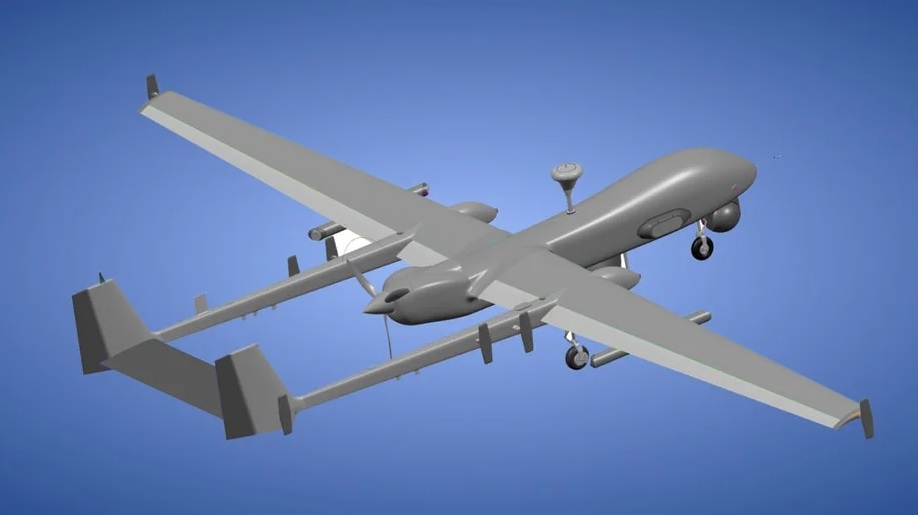
The Archer NG features a Single Engine Twin Boom (SETB) configuration, optimizing performance and fuel efficiency. This design aligns with the Armed Forces' requirements for a Medium-Altitude Long-Endurance (MALE) UAV capable of operating at altitudes up to 30,000 feet. The UAV has an all-up weight of approximately 1,700 kilograms and a wingspan of 18.6 meters, contributing to its stability and control during flight operations.
Performance Specifications
Equipped with a single turboprop engine, the Archer NG achieves a maximum speed of 225 kilometers per hour, enabling rapid surveillance over extensive areas. It boasts an endurance of up to 18 hours, allowing for prolonged missions without the need for immediate refueling. The UAV operates effectively within a range of 250 kilometers for Line-of-Sight (LOS) communications and extends up to 1,000 kilometers for Beyond Line-of-Sight (BLOS) operations, facilitated by satellite communication links.
Payload and Capabilities
Designed to handle complex reconnaissance and combat roles, the Archer NG supports a payload capacity of up to 300 kilograms. It is equipped with advanced sensors, including electro-optical/infrared (EO/IR) cameras, radar systems, and electronic intelligence (ELINT) apparatus, enhancing its intelligence, surveillance, target acquisition, and reconnaissance (ISTAR) capabilities. The UAV also features autonomous take-off and landing (ATOL) capabilities, reducing the need for manual intervention and increasing operational efficiency.
Armament Potential
While the initial focus of the Archer NG is on ISR functions, plans are underway to integrate weapon systems into the platform. The UAV is designed to carry a variety of armaments, including Smart Anti-Airfield Weapons (SAAWs) and Anti-Tank Guided Missiles (ATGMs). These capabilities will be tested and integrated following the completion of core developmental trials, with weaponization efforts expected to commence approximately three years after the first flight.
Advancements Over Predecessors
The Archer NG aims to fulfill and surpass the objectives of earlier UAV programs, such as the TAPAS-BH-201, which faced challenges in meeting certain performance benchmarks. With its advanced design and successful testing phases, the Archer NG is on a promising trajectory to enhance India's UAV capabilities, offering improved reliability, payload capacity, and overall performance.
Significance for India's Defense
The development of the Archer NG represents a significant leap in modernizing India's defense capabilities. By providing the Indian Armed Forces with a versatile and advanced UAV platform, the Archer NG is set to play a crucial role in enhancing aerial surveillance, reconnaissance, and precision strike capabilities, thereby strengthening national security and operational effectiveness.
——— End of Article ———