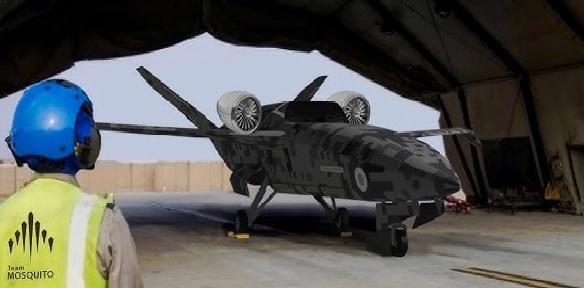
Bengaluru-based NewSpace Research and Technologies (NRT) is making headlines with its innovative "Abhimanyu" drone project, designed to revolutionize India's tactical aerial capabilities. This Collaborative Combat Aircraft (CCA) is poised to reshape modern warfare through its ability to operate in a Manned-Unmanned Teaming (MUMT) system. With its focus on cost-effectiveness, adaptability, and scalability, Abhimanyu stands out as a versatile platform for modern combat missions.
The Vision Behind Abhimanyu
The Abhimanyu is engineered to be an expendable and intelligent drone capable of performing a variety of roles. Its primary applications include Intelligence, Surveillance, and Reconnaissance (ISR); kinetic strikes; decoy operations; and Electronic Warfare (EW). By integrating seamlessly with manned aircraft, the drone aims to enhance battlefield effectiveness through collaborative tactics.
Key Specifications and Features
The Abhimanyu is designed with a Tactical Interdiction and Attack Air Vehicle (TIA-AV) philosophy. Here are some notable features and specifications:
- Compact Size: Smaller than HAL's CATS Warrior, the Abhimanyu fills operational gaps where larger drones might be less practical or too expensive.
- Payload Versatility: Modular design enables quick payload changes to suit ISR, EW, or strike missions.
- Stealth and Agility: Its aerodynamic structure ensures low radar visibility and high maneuverability.
- Collaborative Systems: Designed for seamless integration with manned aircraft to share intelligence, perform coordinated strikes, or deploy decoys.
- Scalability: Capable of being produced and deployed in large numbers to overwhelm adversaries or execute attritable warfare strategies.
- Cost Efficiency: Engineered to be low-cost and expendable, making it ideal for high-risk missions where expensive manned aircraft may not be suitable.
Complementing HAL’s CATS Warrior
The Abhimanyu complements HAL’s CATS Warrior by addressing different operational requirements. While the CATS Warrior is a more advanced and robust system designed for high-end combat scenarios, the Abhimanyu excels in its ability to perform as an expendable asset in high-risk environments. Together, these platforms form a cohesive unmanned aerial ecosystem capable of handling a wide range of mission profiles.
Strategic Significance
The Abhimanyu is part of India’s growing focus on MUMT systems, a concept gaining traction globally for its ability to enhance tactical flexibility. This approach reduces reliance on manned missions, thus lowering the risk to human pilots and cutting costs associated with expensive fighter jets.
NRT's focus on attritable warfare—a strategy that accepts potential losses of unmanned systems while maintaining operational superiority—is in line with global trends. Countries like the United States and China have also been developing similar systems to bolster their military capabilities without incurring prohibitive costs.
Future Prospects
Though still in development, the Abhimanyu represents a leap forward in India’s military strategy. It is envisioned as a platform that can be rapidly deployed and scaled up during conflict, enabling India to respond swiftly to evolving threats. The ability to collaborate with manned aircraft and other drones adds a layer of operational depth that could redefine aerial warfare tactics.
NRT’s emphasis on creating an ecosystem of unmanned systems signals a transformative approach to modern warfare. Platforms like the Abhimanyu could influence global defence strategies, positioning India as a leader in MUMT and drone technology.
Conclusion
By spearheading the Abhimanyu project, NRT is not just developing a drone but contributing to the evolution of collaborative aerial warfare. Paired with HAL’s CATS Warrior, the Abhimanyu promises to enhance India’s aerial capabilities, offering a cost-effective, adaptable, and scalable solution for modern combat needs. As unmanned systems continue to gain prominence, the Abhimanyu could play a pivotal role in shaping the future of India’s defence strategy.
This pioneering platform underscores India’s growing emphasis on innovation in defence, heralding a new era of collaborative and cost-effective warfare.
——— End of Article ———