
World
KYIV — Ukraine has launched a new grant program to help local companies develop humanoid robots for military use as it looks to automate more battlefield tasks and reduce the risks faced by frontline soldiers. The announcement was made by Brave1 CEO Andriy Hrytsenyuk during the recent Brave1 Advantage event in Kyiv, according to a Militarnyi reporter who attended the event. Brave1 is a government-backed defense technology group created by Ukraine's Ministry of Digital Transformation and other government agencies to speed up the development, testing, and deployment of new military technologies. The new grant program will support Ukrainian developers building humanoid robots for military operations. Officials said the main goal is to use robots for dangerous frontline missions, reducing the need to expose soldiers to high-risk combat situations. Hrytsenyuk said the project follows similar efforts in countries such as the United States and China, which are also investing in humanoid robot technology. However, Ukraine plans to take a gradual approach by first developing simpler robots before adding more advanced capabilities. The aim is to improve reliability while expanding what the robots can do over time. Unlike many humanoid robot projects around the world that are designed for factories and other commercial uses, Ukraine's program is focused entirely on military operations. The robots are expected to support troops, carry out dangerous tasks, and operate in combat areas where sending soldiers would be more risky. Since the start of the war, Ukraine has become an important testing ground for new defense technologies. Many Western defense companies and startups have used real battlefield conditions to evaluate new equipment. Before the grant program was announced, the Phantom MK-1 humanoid robot, developed by U.S. startup Foundation, was delivered to Ukraine for operational testing to assess how it performs in combat conditions. Although interest in military humanoid robots is growing, the technology still faces several challenges. Current robots are heavy, expensive to build, require frequent battery charging, and often struggle to move across rough terrain. Reports also say a typical humanoid robot uses around 20 motors to control its movements, meaning the failure of just one motor can affect the robot's performance. Military experts also believe more work is needed before humanoid robots can be widely used on the battlefield. Issues such as maintenance, logistics, safety, and reliable autonomous operation must be solved before they can become a practical part of future military operations.
Read More → Posted on 2026-07-02 14:07:07
World
KYIV, Ukraine — Ukrainian defense technology company Phantom Defense has unveiled an integrated counter-unmanned aerial system (C-UAS) ecosystem that combines electronic warfare systems, interceptor drones, detection sensors and a centralized command-and-control (C2) platform into a single operational network. The system was presented during the Brave1 Advantage defense technology event in Kyiv after it was previously showcased at the Eurosatory 2026 exhibition in Paris. Rather than offering individual products, Phantom Defense displayed a "Detect-to-Defeat" architecture that detects, tracks, identifies and neutralizes different types of aerial threats through one integrated network. At the center of the ecosystem is a centralized C2 platform that combines data from radars, radio-electronic intelligence sensors and video interceptors to create a single operational picture. The software automatically identifies targets, gives operators real-time engagement recommendations and records the results of every engagement for later operational analysis. The company also introduced several electronic warfare systems under its Specter family. The Specter L, XL and A variants are built to protect both fixed and mobile assets while providing 360-degree coverage. Depending on the configuration, they operate across the 300-900 MHz frequency range and support active jamming at 1.4 GHz, 2.4 GHz and 5.8 GHz. The Specter Pro system provides omnidirectional narrowband signal suppression across frequencies from 250 MHz to 6 GHz. It is supported by the Vector Pro directional jammer, which covers the same 250 MHz to 6 GHz frequency range for targeted electronic suppression. Phantom Defense also displayed several kinetic interception systems. The Balaban fixed-wing interceptor drone has an endurance of up to 2.5 hours, a maximum speed of 260 km/h and can carry a 1.2 kg payload. The Blade Interceptor multirotor drone is intended to engage Shahed-type attack drones. It has a top speed of 310 km/h, an operational range of 15 km and a 0.5 kg payload. The company also presented the Karakurt net-launching module, which can be integrated with different drone platforms to disable aerial targets by deploying nets. Several detection systems were also introduced as part of the ecosystem. The Streamhunter video interceptor is already available and detects signals at ranges of up to 30 km across frequencies from 800 MHz to 8 GHz. It can receive five channels simultaneously and has a detection time of less than one second. The Skydarix all-round radar, planned for release in the fourth quarter of 2026, can detect aircraft-type drones at distances of up to 20 km and FPV drones at up to 5 km. It also supports ASTERIX protocol integration. The Radiotrex direction finder, expected in the second quarter of 2027, has a detection range of 30 km, operates across 300 MHz to 8 GHz, provides directional accuracy of up to 3 degrees, and features a 250 MHz bandwidth. Phantom Defense said the ecosystem has already been tested under operational conditions in Ukraine during a project protecting urban infrastructure in one regional center. The company said the deployment provided more than 90% of a dome protection system covering an area of more than 100 square kilometers. Between June 1, 2025, and June 24, 2026, the company said the system detected 10,821 hostile drones and actively suppressed 7,397 of them. "There is no single answer for all types of threats from drones; each type of UAV requires a special approach," a Phantom Defense representative said. "That is why we do not sell individual devices—we offer an ecosystem of solutions that have already proven their effectiveness in combat conditions." Phantom Defense employs more than 600 personnel and said its production capacity exceeds 100 interceptor drones and 200 electronic warfare units per day to support ongoing operational requirements.
Read More → Posted on 2026-07-02 14:00:45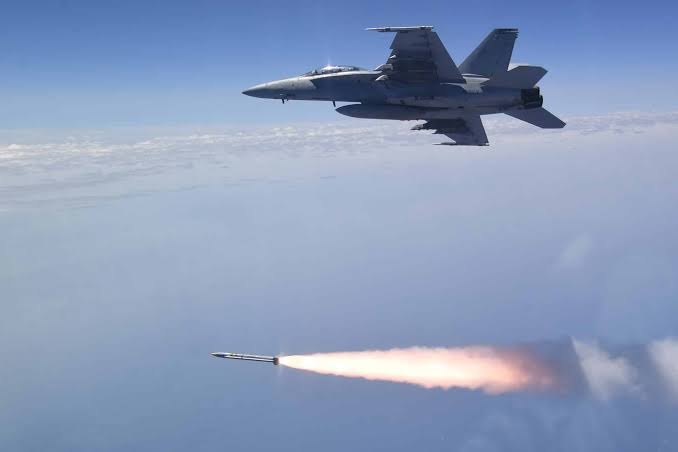
World
WASHINGTON — The U.S. Navy is looking for a second supplier to develop its next-generation anti-radiation missile under the Advanced Emission Suppression Missile (AESM) program, increasing planned production capacity while reducing dependence on a single manufacturer. In a Request for Information (RFI) issued on July 1, 2026, the Naval Air Systems Command (NAVAIR) asked industry for a missile equivalent to the AGM-88G Advanced Anti-Radiation Guided Missile-Extended Range (AARGM-ER), which is currently produced by Northrop Grumman. The latest RFI raises the planned production target to as many as 600 missiles per year, up from the 300 missiles annually outlined in a February 2026 market survey. The AESM effort is managed by the Program Executive Office for Unmanned Aviation and Strike Weapons through its Direct and Time Sensitive Strike Weapons office (PMA-242). The Navy wants the new missile to match or expand the capabilities of the AARGM-ER. Anti-radiation missiles detect and destroy enemy radar systems by tracking their radio-frequency emissions, allowing aircraft to suppress enemy air defenses before they can threaten friendly forces. The current AARGM-ER can fly at speeds of Mach 4 and has an estimated range of about 160 nautical miles (300 kilometers). Under requirements released in the February 2026 RFI, the AESM should also be capable of engaging ground-based radar systems and high-value airborne targets, including Airborne Early Warning and Control (AWACS) aircraft. The higher production objective indicates the Navy is preparing for larger procurement quantities while establishing another production source for the missile. The AARGM-ER received Milestone C approval in 2024, allowing low-rate initial production, and completed a live-fire test in a GPS-denied environment in January 2026. Its Initial Operational Capability (IOC), originally planned for 2024, is now expected later in 2026. NAVAIR requires the AESM to integrate with the F/A-18E/F Super Hornet, EA-18G Growler, and F-35 Lightning II. The missile must be compatible with both the F-35's internal weapons bay and external carriage. The missile must also comply with MIL-STD-1760 and the Universal Armament Interface while using a Modular Open Systems Approach (MOSA) that supports future upgrades using sensors and software from different suppliers. Other requirements include advanced GPS/INS navigation, broad radio-frequency coverage, and Electronic Counter-Counter Measures (ECCM) capable of operating against modern jamming and other electronic warfare threats. The missile is also required to have a 15-year service life, withstand more than 500 hours of captive carriage under aircraft wings, and operate in the demanding maritime environment of carrier-based aviation. NAVAIR also directed that the missile should support Foreign Military Sales (FMS) for future exports to U.S. allies. Companies responding to the RFI must have the required facility certifications and security clearances to handle Secret-level classified information. The July 1 RFI is a market research effort and not a formal contract solicitation. Companies have until July 31, 2026, to submit capability statements along with pricing information for annual production quantities ranging from 50 to 600 missiles. The Navy will use the responses to evaluate industrial capacity and production costs before deciding on a formal competition.
Read More → Posted on 2026-07-02 13:50:02
World
KOMSOMOLSK-ON-AMUR, Russia — Russia's state-owned United Shipbuilding Corporation (USC) has launched Shtorm (Storm), the third Project 22800 Karakurt-class small missile ship built at the Amur Shipbuilding Plant for the Russian Navy's Pacific Fleet. The ship was moved from the shipyard slipway using the specialized floating pontoon dock "Amurets", completing the primary hull construction phase. Shtorm will now undergo equipment outfitting, installation of onboard systems, harbor acceptance tests, factory sea trials and state trials before entering operational service. Shtorm is part of Russia's ongoing Project 22800 construction program, which is building compact missile-equipped surface combatants for coastal and regional naval operations. The Project 22800 Karakurt-class was developed by the Almaz Central Marine Design Bureau in St. Petersburg. The class was created to provide the Russian Navy with a compact multi-role missile ship capable of operating in littoral and near-shore waters while offering improved seaworthiness compared with the Buyan-M class. The vessel has a stealth-shaped superstructure with faceted surfaces intended to reduce radar reflections. It also features an integrated mast fitted with four phased-array radar panels to improve situational awareness while reducing the ship's radar cross-section. Although the ship has a displacement of about 800 tons, it carries an eight-cell UKSK (3S-14) vertical launch system. The launcher can fire Kalibr-NK cruise missiles for land-attack and anti-submarine missions, with reported land-attack ranges of up to 2,500 kilometers, as well as P-800 Oniks supersonic anti-ship missiles. For air defense, Shtorm is fitted with the Pantsir-M naval air defense system, combining 57E6 short-range surface-to-air missiles with twin 30 mm rotary cannons to engage aircraft, helicopters, unmanned aerial vehicles, anti-ship missiles and other aerial threats. Its additional armament includes an AK-176MA 76.2 mm automatic dual-purpose naval gun capable of firing up to 150 rounds per minute. Close-range defense is provided by two 12.7 mm Kord heavy machine guns. The ship can also operate Orlan-10 unmanned aerial vehicles for reconnaissance, surveillance and target acquisition missions. Shtorm has a standard displacement of about 800 tons, increasing to around 870 tons at full load. The ship measures 67 meters in length, has a beam of 11 meters and a draft of 3.3 meters. Power is provided by a Combined Diesel and Diesel (CODAD) propulsion system using three M-507D-1 diesel engines and three diesel generators, each producing 8,000 horsepower. The propulsion system gives the ship a maximum speed of 30 knots. The vessel has an operational range of about 2,500 nautical miles at an economical speed of 12 knots and an endurance of 15 days at sea. It is operated by a crew of around 50 personnel. The ship is built with domestically produced components for green-water operations. Shtorm is the third Project 22800 Karakurt-class missile ship built at the Amur Shipbuilding Plant, one of several Russian shipyards producing the class for different fleets. Earlier Karakurt-class ships have already entered service with the Russian Navy carrying Kalibr and Oniks missile systems. The modernization of production facilities at the Amur Shipbuilding Plant, including the introduction of the "Amurets" pontoon dock, is expected to improve shipbuilding efficiency and support continued serial production. After completing outfitting and sea trials, Shtorm will join the Russian Navy's Pacific Fleet.
Read More → Posted on 2026-07-02 12:00:39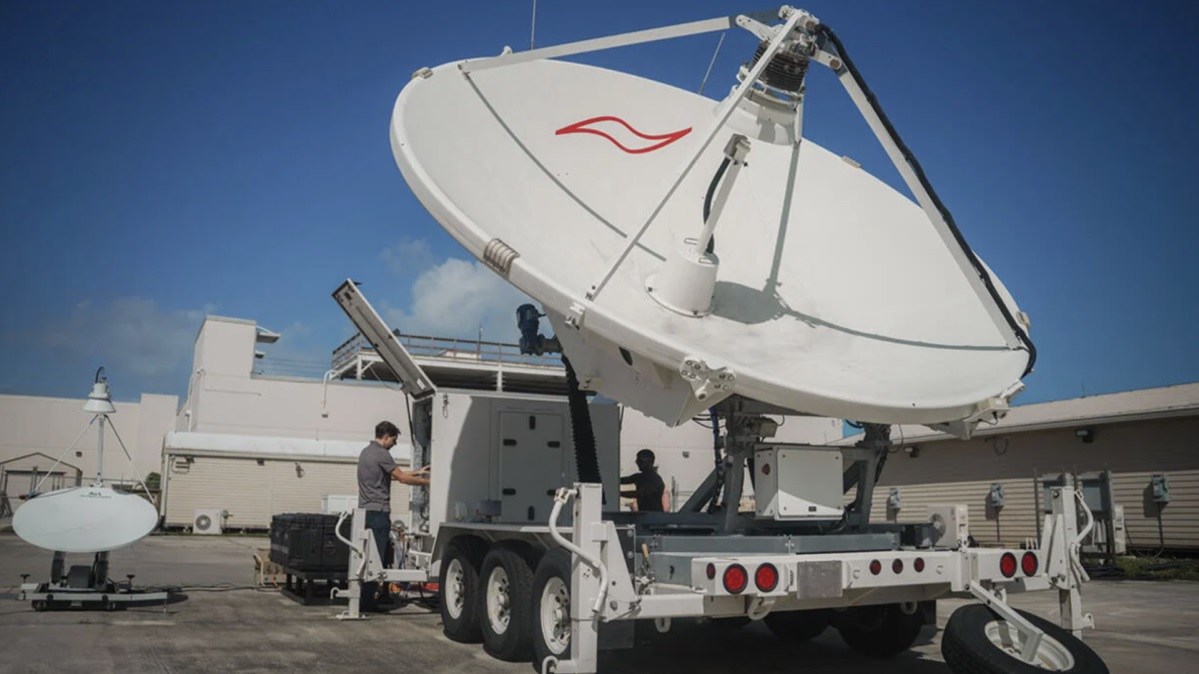
World
WASHINGTON — The U.S. Space Force has formally accepted the Meadowlands electromagnetic warfare system for operational use, expanding its ground-based capability to disrupt adversary satellite communications in support of combatant commands. The system was operationally accepted on June 8, 2026, by the U.S. Space Force Combat Forces Command. Developed by L3Harris Technologies, Meadowlands is built to detect, deny, disrupt and degrade enemy communications in support of joint military operations. It replaces the Counter Communications System (CCS) Block 10.2 with improved reversible and non-reversible electromagnetic warfare capabilities. Meadowlands introduces a much smaller hardware footprint than the previous system. Using an open software architecture and upgraded electronics, the number of transportable equipment cases has been reduced from 23 to seven, making transportation and deployment much easier. The system uses ground-based radio frequency units mounted on wheeled trailers, allowing operators to quickly reposition the equipment if adversaries attempt counter-jamming. Its smaller size allows deployment in forward austere locations as well as secure rear operating areas. The new architecture also supports faster software upgrades and future capability improvements. Meadowlands provides multi-frequency jamming in both the S-band and X-band, allowing operators to disrupt a wider range of satellite communications. The system will be operated by Guardians assigned to Mission Delta 3 (MD 3) – Space Electromagnetic Warfare, the unit responsible for organizing, training and equipping electromagnetic warfare forces supporting combatant commands, including United States Space Command. The Space Force cited the operational use of electromagnetic warfare during Operation Midnight Hammer, where operators established a communications "silence zone" by disrupting adversary communications. The operation supported the secure ingress and egress of bomber aircraft while also providing indications and warnings during the mission. Following delivery of the first production system in December 2025, L3Harris is working toward a production rate of one Meadowlands system per month. The Space Force has requested $450 million for Meadowlands production in its fiscal year 2027 budget and projects another $605 million for procurement between 2028 and 2031. The service also plans to establish five new Space Electronic Warfare Tactical Operations Centers (SEWTOCs) to expand electromagnetic warfare operations worldwide. Mission Delta 3 currently operates one SEWTOC at Peterson Space Force Base. Meadowlands has also completed an International Initial Baseline Review, making the system eligible for potential Foreign Military Sales (FMS). Subject to U.S. government approval, allied nations will be able to acquire and integrate the system into their own defense capabilities.
Read More → Posted on 2026-07-02 11:47:19
World
BEIJING, July 2, 2026 — China has publicly demonstrated a truck-mounted Electromagnetic Aircraft Launch System (EMALS) for the first time, successfully launching a fixed-wing unmanned aerial vehicle (UAV) from a modular road-mobile catapult. The demonstration highlights China's continued efforts to expand flexible drone deployment capabilities by enabling aircraft launches without relying on conventional airfields. The newly released footage shows a propeller-driven fixed-wing drone being launched from a modular catapult assembled by connecting multiple specialized heavy trucks. The system is designed to support operations from austere environments, including highways, remote islands, temporary forward operating bases, and converted civilian vessels. Modular Truck-Based Launch System The mobile EMALS consists of three or more specially designed heavy trucks linked together to create a continuous launch rail. According to the system's developer, Tiantao Technology, the launch track can be configured between 20 and 60 meters in length depending on the size and weight of the aircraft being launched. Unlike conventional drone launch systems that rely on rocket-assisted takeoff or compressed air, the truck-mounted EMALS uses a linear electric motor to accelerate the aircraft along the launch rail. The technology is derived from the electromagnetic launch system currently installed aboard China's Type 003 Fujian aircraft carrier. Because the launch force is generated electromagnetically, operators can precisely adjust acceleration according to the drone's weight and airframe characteristics. This reduces mechanical stress on the aircraft during launch while allowing support for different UAV types from the same platform. The specialized launch vehicles are also equipped with an all-wheel steering system, enabling the connected convoy to maneuver with a relatively tight turning radius despite its overall length. This allows operators to align the launch rail into prevailing headwinds, improving aerodynamic performance and launch safety. Designed for Runway-Independent Operations The truck-mounted EMALS is intended for operations where conventional runways are unavailable, damaged, or vulnerable to precision strikes. Its modular architecture allows the launch system to be transported by road or ship, assembled quickly, and relocated as operational requirements change. The system provides military forces with the ability to disperse UAV launch sites across multiple locations rather than relying on fixed airbases. Such distributed operations can increase operational flexibility while reducing dependence on permanent infrastructure. In addition to land deployment, the modular catapult is designed for installation on converted civilian vessels that can serve as drone carriers, extending launch capability into maritime environments. Part of China's Containerized Military Platform Initiative The truck-mounted EMALS forms part of a broader Chinese effort to develop a family of containerized military systems that can be deployed rapidly on land or aboard civilian platforms. The modular ecosystem includes containerized vertical launch systems (VLS) for cruise and anti-ship missiles, radar systems, electronic warfare equipment, command-and-control modules, and other mission systems. These containerized modules are designed to resemble standard commercial shipping containers, allowing them to be transported using existing logistics infrastructure and installed on a wide range of civilian or military platforms. Testing on Zhong Da 79 The modular concept has previously been demonstrated aboard the commercial cargo vessel Zhong Da 79, which was converted into an experimental drone carrier and arsenal ship. The vessel was observed equipped with containerized vertical launch cells, close-in weapon systems (CIWS), and a deck-mounted electromagnetic catapult. Available observations indicated the ship-based EMALS configuration could launch larger unmanned aircraft, including CH-4 medium-altitude long-endurance (MALE) drones and collaborative combat aircraft (CCA) designed for unmanned operations alongside crewed aircraft. Production Plans The truck-mounted electromagnetic catapult first emerged publicly toward the end of 2025 and has since undergone testing in multiple configurations. Chinese sources indicate that production of containerized military modules is planned on a large scale, with an annual output target of up to 2,000 systems. The initiative is intended to expand distributed operational networks and provide flexible deployment options for unmanned aircraft, missile systems, electronic warfare assets, and command infrastructure. The public demonstration of the truck-mounted EMALS represents the latest step in China's development of mobile electromagnetic launch technology, extending carrier-based launch concepts to road-mobile and modular platforms capable of supporting UAV operations in a wide range of environments.
Read More → Posted on 2026-07-02 11:30:08
World
NAVI MUMBAI, MAHARASHTRA , July 2, 2026 — Paras Defence and Space Technologies Ltd has signed an exclusive Intellectual Property (IP) License Agreement with Tandem Defense LLC, a wholly owned subsidiary of US-based Autonomous Power Corporation (Powerus), securing exclusive rights to manufacture and commercialize the Guardian-1 Interceptor counter-drone system in India. Under the agreement, Paras Defence will locally manufacture, market, and support the Guardian-1 system for the Indian market. The license is non-transferable and non-sublicensable, applies only within India, and is valid for an initial 12 months, with an option for renewal by mutual consent. Paras has also been authorized to appoint domestic partners for specialized manufacturing, IP management, and regional sales operations. The financial value of the agreement has not been disclosed. The Guardian-1 Interceptor is a battery-powered kinetic counter-drone system designed to physically intercept and destroy aerial threats such as commercial quadcopters, swarm drones, and first-person view (FPV) drones. Unlike electronic warfare systems that rely on jamming or GPS spoofing, the Guardian-1 is a hard-kill solution that tracks and neutralizes hostile drones before they can reach protected locations. The interceptor has a cruise speed of around 100 mph, a maximum burst speed of approximately 211 mph, and an operational range of up to 10 miles. The partnership expands Paras Defence's existing anti-drone portfolio, which already includes man-portable drone detectors and handheld jammers through its subsidiary, Paras Anti-Drone Technologies. The addition of the Guardian-1 enables the company to offer a multi-layered counter-drone capability combining both electronic and kinetic interception technologies for military, paramilitary, and critical infrastructure protection. The agreement also supports the Indian government's Aatmanirbhar Bharat initiative by enabling local production, final assembly, and servicing of advanced counter-drone systems, strengthening indigenous defence manufacturing capabilities. Following the announcement, shares of Paras Defence and Space Technologies Ltd rose nearly 9% to close at ₹1,289.25 on the BSE, extending the company's strong market performance with an increase of about 101% from its January 1, 2026, trading price of ₹684.45.
Read More → Posted on 2026-07-02 11:21:36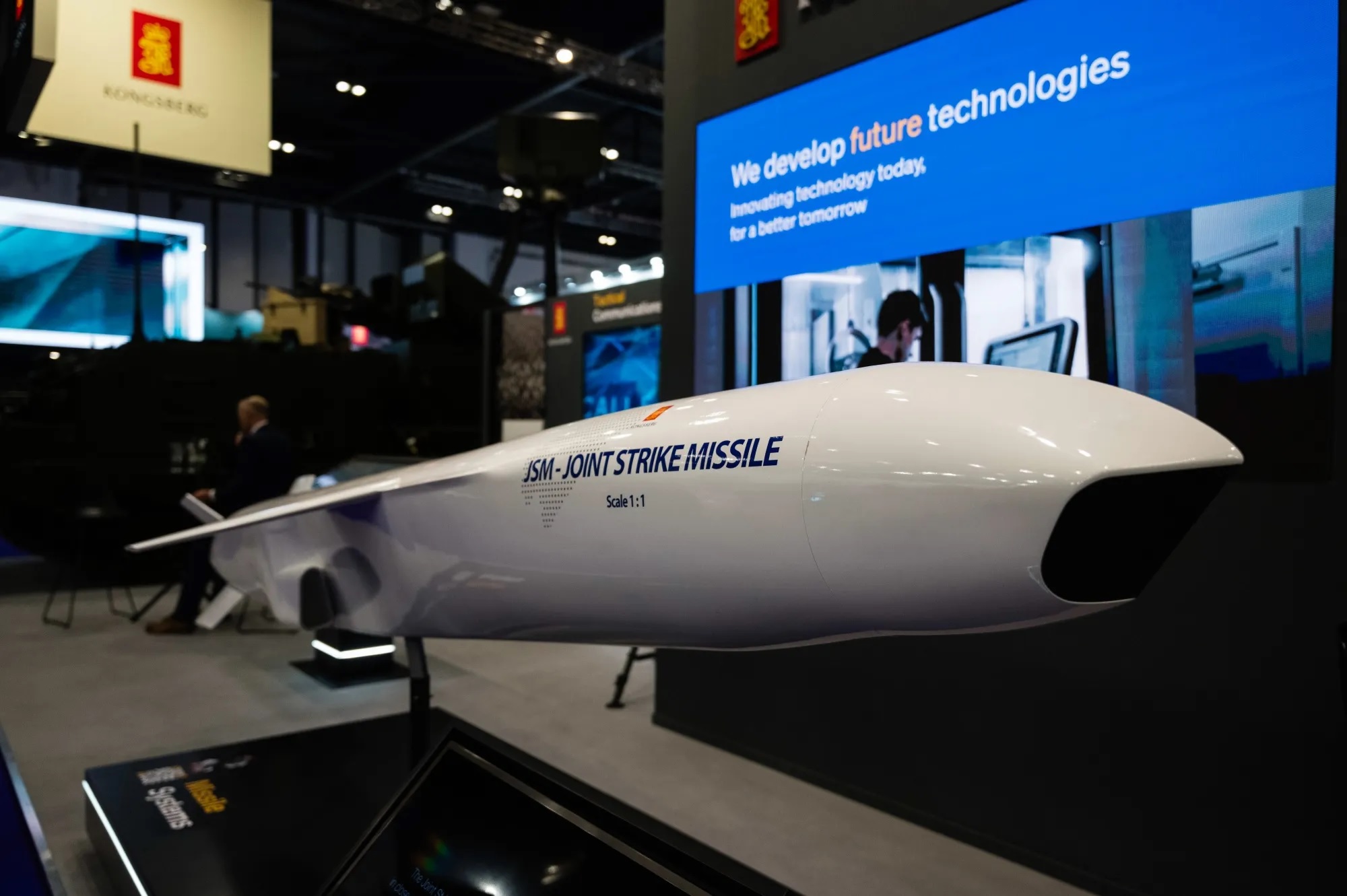
World
OSLO, NORWAY , July 2, 2026 — Kongsberg Defence & Aerospace has secured a NOK 4.7 billion (approximately $474 million) contract to supply its Joint Strike Missile (JSM) to an undisclosed international customer, marking the sixth nation to select the long-range precision weapon for its fighter aircraft fleet. The agreement, announced on June 30, 2026, expands the international adoption of the JSM, although Kongsberg has not disclosed the identity of the customer or the number of missiles included in the order. The Joint Strike Missile has previously been selected by Norway, Japan, Australia, the United States, and Germany, with Germany expected to begin receiving deliveries before the end of 2027. The growing customer base reflects continued demand for long-range precision weapons designed for fifth-generation combat aircraft. Developed by Kongsberg Defence & Aerospace from the Naval Strike Missile (NSM) in cooperation with Raytheon Missiles & Defense, the JSM is a multi-role cruise missile capable of engaging both land and maritime targets. It features a low-observable design, autonomous target recognition, terrain-following and sea-skimming flight profiles, and guidance systems combining INS/GPS navigation, an imaging infrared (IIR) seeker, terrain-reference navigation, and a two-way data link. The missile measures 4.0 meters in length, weighs approximately 416 kilograms, carries a 120-kilogram blast-fragmentation warhead, and has an estimated range of more than 500 kilometers, although the official range remains classified. A key feature of the JSM is its compatibility with the Lockheed Martin F-35 Lightning II, allowing internal carriage on the F-35A and F-35C without affecting the aircraft's stealth characteristics. The missile is also compatible with external carriage on the F-35B, as well as the Boeing F/A-18E/F Super Hornet and Boeing F-15EX Eagle II. The latest contract further strengthens the JSM program as Kongsberg expands missile production capacity through new manufacturing and maintenance facilities in Australia and the United States to support increasing international demand and long-term sustainment of both the JSM and NSM programs.
Read More → Posted on 2026-07-02 11:12:42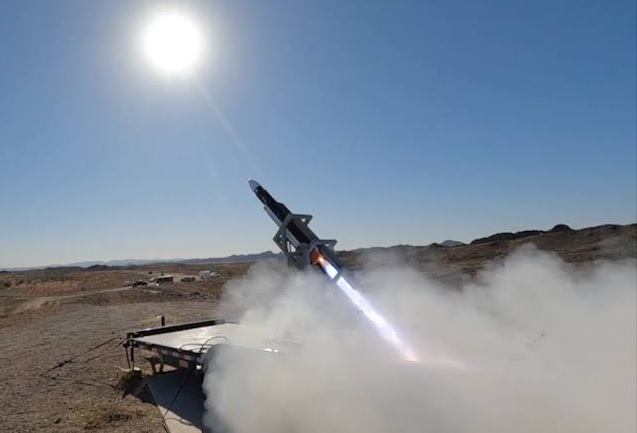
World
WASHINGTON, July 2, 2026 — The U.S. Department of Defense has awarded AeroVironment Inc. a $500 million firm-fixed-price contract to supply the U.S. Army with commercial counter-unmanned aerial systems (C-UAS), strengthening the military's ability to detect, track, and defeat hostile drones. The contract, announced on July 1, was awarded by the U.S. Army Contracting Command at the Detroit Arsenal, Michigan, under contract number W912CH-26-D-A073. The agreement is scheduled to run through June 29, 2029, with work locations and funding allocations to be determined through individual task orders. The procurement covers both counter-unmanned aerial systems (C-UAS) and counter-small unmanned aerial systems (C-sUAS) to address a wide range of aerial threats, including larger unmanned aircraft as well as commercially available quadcopters and fixed-wing drones that have become increasingly common in modern conflicts. Neither the U.S. Army nor AeroVironment has disclosed which specific systems will be ordered or where they will be deployed. The Department of Defense said procurement details will be finalized through future task orders. The firm-fixed-price structure means AeroVironment assumes responsibility for any cost overruns during contract execution, providing the government with predetermined pricing throughout the agreement. Although AeroVironment is headquartered in Arlington, Virginia, the Department of Defense contract announcement lists the company under its Simi Valley, California, operating address. Expanding Counter-Drone Capabilities Known for its Switchblade loitering munition systems, AeroVironment has expanded its counter-drone portfolio in recent years. Its offerings include the Titan family of radio frequency jamming systems, which disrupt the control and navigation signals used by hostile drones, providing a non-kinetic method of defeating unmanned aircraft without relying on conventional interceptors. The company's capabilities grew significantly after completing its $4.1 billion acquisition of BlueHalo in May 2025, adding directed-energy weapons, advanced electronic warfare technologies, and additional counter-drone capabilities. In April 2026, AeroVironment introduced Halo_Shield, a modular counter-UAS platform designed to detect, track, and defeat threats ranging from drone swarms to subsonic cruise missiles. The company has also advanced prototype high-energy laser weapon systems and expanded production of its Freedom Eagle kinetic interceptor missiles. Growing Demand for Counter-Drone Systems The contract reflects the U.S. Army's continued investment in counter-drone technologies as unmanned aircraft become more widely used for reconnaissance, surveillance, targeting, and attack missions. Commercially available drones have become increasingly common on modern battlefields, driving demand for systems capable of detecting and neutralizing these threats. Financial Outlook Following the announcement, AeroVironment shares (NASDAQ: AVAV) rose more than 3% in after-hours trading. The company expects fiscal year 2027 revenue between $2.125 billion and $2.225 billion, supported by growing demand for unmanned and counter-unmanned systems. The award follows an $874 million Foreign Military Sales contract secured in December 2025 to provide unmanned aircraft and counter-drone systems to allied and partner nations. Combined with the new $500 million U.S. Army award, AeroVironment has secured more than $1.3 billion in drone and counter-drone-related contract capacity over the past seven months, reinforcing its position as a key supplier of unmanned and counter-unmanned technologies for U.S. and allied forces.
Read More → Posted on 2026-07-02 10:57:24
World
PATUXENT RIVER, Md. , July 2, 2026 — The U.S. Navy is developing a new 3D-printed composite repair method designed to reduce maintenance time for the F/A-18 Super Hornet by approximately 50 percent, allowing damaged aircraft to return to service more quickly while improving sustainment capabilities at forward operating locations. The initiative is being led jointly by the Naval Air Warfare Center Aircraft Division (NAWCAD) and Fleet Readiness Center Southwest (FRCSW). The new approach enables maintenance personnel to repair damaged composite structures directly at forward operating bases, reducing dependence on lengthy supply chains and depot-level maintenance in the United States. Reducing Aircraft Downtime Composite components are widely used throughout the F/A-18 Super Hornet to reduce weight while maintaining structural strength. When parts such as engine bay doors sustain damage, the aircraft is typically grounded until repairs are completed, affecting fleet availability and operational readiness. Under the traditional repair process, damaged composite parts often require highly specialized technicians and must be transported to dedicated repair facilities. This can significantly increase maintenance time and place additional demands on military logistics, particularly during deployed operations. The Navy's new repair technique is intended to simplify this process by allowing qualified maintenance crews to complete repairs at the aircraft's operating location. 3D-Printed Composite Patches Engineers from NAWCAD and FRCSW have developed high-performance 3D-printed composite patches that can be produced and applied directly to damaged areas of the aircraft. The team has also established standardized application procedures and quality assurance processes to ensure the repairs meet the safety and structural requirements required for flight operations. The program utilizes the Navy's existing additive manufacturing network, which includes 3D printers deployed at 22 maintenance sites worldwide. This infrastructure enables repair patches to be produced where aircraft are operating, eliminating the need to wait for replacement components to be shipped from the United States. By manufacturing repair materials closer to operational units, the Navy aims to shorten maintenance timelines, improve aircraft availability, and increase flexibility during deployed operations. Flight Testing Planned The repair method has successfully completed laboratory evaluations and ground testing. The next phase of the program will involve flight testing on an operational F/A-18 Super Hornet later this summer to validate the performance, durability, and airworthiness of the 3D-printed repairs under actual flight conditions. Successful flight testing would support the transition of the repair method into broader operational use across the Super Hornet fleet. Supporting Naval Aviation Sustainment The initiative combines NAWCAD's engineering, research, testing, and aircraft sustainment expertise with FRCSW's extensive experience in naval aviation maintenance. NAWCAD, headquartered in Patuxent River, Maryland, with major facilities in St. Inigoes, Maryland, Lakehurst, New Jersey, and Orlando, Florida, supports the research, development, testing, evaluation, and sustainment of U.S. Navy and Marine Corps aviation systems. FRCSW, based in San Diego, California, is one of the Navy's primary aircraft maintenance centers, responsible for depot-level maintenance, repair, and overhaul of naval aviation platforms. The 3D-printing initiative forms part of the U.S. Navy's broader effort to expand the use of additive manufacturing technologies to improve aircraft sustainment, reduce maintenance delays, strengthen logistics resilience, and enable more repairs to be completed at forward operating locations.
Read More → Posted on 2026-07-02 10:48:13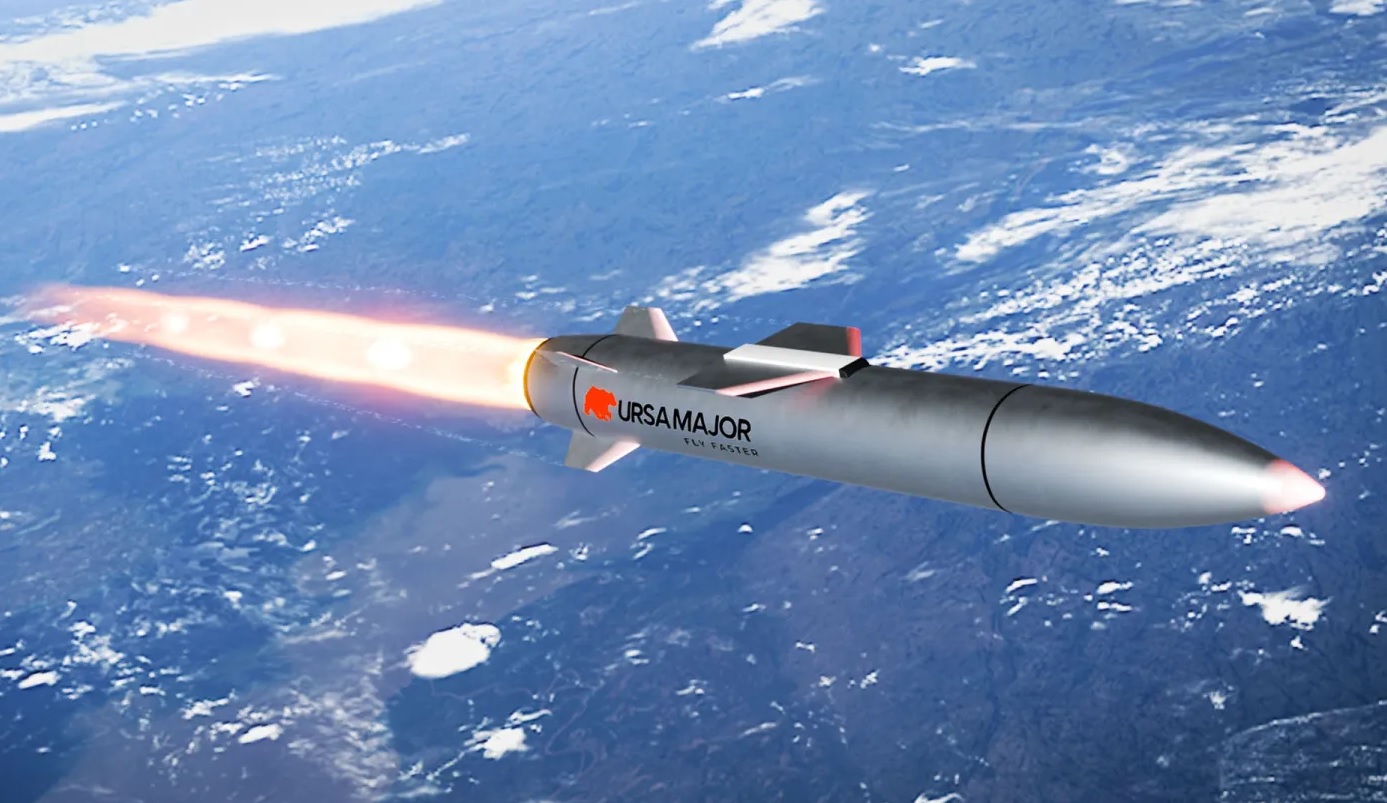
World
WASHINGTON, D.C., July 2, 2026 — The United States is expanding the use of additive manufacturing, commonly known as 3D printing, in its hypersonic weapons programs as the Department of Defense (DoD) seeks to strengthen munitions production following the heavy expenditure of precision weapons during recent military operations. Recent operations involving Iran highlighted the challenge of replenishing advanced munitions after U.S. forces conducted more than 13,000 strikes, consuming large numbers of precision-guided weapons and air defense interceptors. The campaign underscored limitations in the defense industrial base, where conventional manufacturing methods require significant time and cost to produce advanced missile systems. To address these challenges, defense contractors are increasing the use of metal additive manufacturing to produce key hypersonic propulsion components, including scramjet and ramjet engines. The technology is intended to reduce production time, lower costs, and improve manufacturing capacity. 3D Printing Simplifies Hypersonic Engine Production Companies including Aerojet Rocketdyne (now part of L3Harris), Lockheed Martin, and Ursa Major are incorporating additive manufacturing into hypersonic weapon production. Conventional manufacturing of air-breathing hypersonic engines involves numerous individually machined components and complex welding processes capable of withstanding temperatures generated during flight at speeds above Mach 5. Additive manufacturing instead enables complex engine structures to be produced as integrated components using technologies such as laser powder bed fusion and high-temperature metal alloys. Aerojet Rocketdyne has previously demonstrated that 3D printing can reduce the number of parts in a scramjet engine by up to 95%, simplifying production. The company is also advancing 3D-printed propulsion under the Department of Defense's GAMMA-H program. Meanwhile, Velo3D supplies specialized metal printing systems capable of producing complex internal engine geometries that are difficult to manufacture using traditional methods. Industry Accelerates Hypersonic Development Ursa Major has integrated AI-enabled metal printing into its Havoc medium-range hypersonic missile and the Draper liquid rocket engine. The Draper engine, which uses hydrogen peroxide and kerosene in a closed catalyst-cycle design, progressed from contract award to a flight-ready propulsion system in approximately eight months and powers the Affordable Rapid Missile Demonstrator. The company is also expanding production of solid rocket motors (SRMs) using modular tooling and software-driven manufacturing cells that allow different motor variants to be produced on the same production line without extensive retooling. Lockheed Martin is using large-format 3D printing to manufacture components for its Mako hypersonic missile, including guidance housings and tail fins. The company reports that additive manufacturing has reduced production time and costs for these parts by up to tenfold compared with conventional manufacturing. Focus on Expanding Production Capacity The increased adoption of additive manufacturing follows growing emphasis on improving the defense industrial base's ability to replenish advanced weapons inventories after recent operations. The extensive use of systems such as Tomahawk cruise missiles, JASSMs, THAAD, and Patriot interceptors highlighted the importance of scalable production capacity. By reducing dependence on complex supply chains and shortening manufacturing timelines, 3D printing is expected to support faster production of hypersonic propulsion systems while lowering manufacturing costs. As U.S. hypersonic programs continue to mature, additive manufacturing is becoming an increasingly important element in moving advanced weapons from development into operational service while improving long-term munitions production capacity.
Read More → Posted on 2026-07-02 10:38:29
World
PASCAGOULA, Miss. , July 2, 2026 — Huntington Ingalls Industries (HII) has officially begun fabrication of the U.S. Navy's future USS John F. Lehman (DDG 137), the latest Flight III Arleigh Burke-class guided-missile destroyer, marking another step in the continued expansion of the Navy's next-generation surface combatant fleet. Construction officially commenced on June 29 at HII's Ingalls Shipbuilding facility in Pascagoula, Mississippi. The vessel is the 87th Arleigh Burke-class destroyer ordered by the U.S. Navy and the seventh Flight III destroyer assigned to Ingalls Shipbuilding. The new destroyer is part of the Navy's long-term plan to sustain its large surface combatant force while replacing aging Ticonderoga-class guided-missile cruisers and maintaining fleet readiness until the future DDG(X) destroyer enters procurement in the early 2030s. Flight III Configuration The Flight III variant retains the proven Arleigh Burke hull design while introducing significant upgrades to radar, combat systems, and electrical power generation to address evolving air and missile threats. The ship measures 155.3 meters (513 feet) in length, has a 20-meter beam, and a full-load displacement of approximately 9,700 tons. Propulsion is provided by four General Electric LM2500 gas turbines, enabling speeds of more than 31 knots. Its primary enhancement is the AN/SPY-6(V)1 Air and Missile Defense Radar, which replaces the legacy AN/SPY-1D(V) system. Equipped with 37 Radar Module Assemblies (RMAs), the SPY-6 radar offers improved target detection, discrimination, tracking capacity, and ballistic missile defense performance against increasingly complex threats. To support these advanced systems, Flight III destroyers feature an upgraded 12-megawatt electrical plant, replacing the previous configuration of three 3-megawatt generators with three 4-megawatt generators. The additional power supports the Aegis Baseline 10 combat system, the SPY-6 radar, and future electronic warfare capabilities. Although the Flight III design maintains the same 96-cell Mk 41 Vertical Launching System (VLS) found on earlier variants, the ship's improved sensors and combat systems significantly enhance its operational effectiveness. The Mk 41 VLS can employ a wide range of weapons, including SM-2, SM-3, SM-6, ESSM Block 2, Tomahawk, and VL-ASROC missiles. Additional armament includes a 127 mm (5-inch) naval gun, 25 mm autocannons, a 20 mm Close-In Weapon System (CIWS), and lightweight torpedoes for anti-submarine warfare. Rather than increasing missile capacity, the Flight III design focuses on improving detection, classification, tracking, and engagement performance while maintaining compatibility with existing Navy missile inventories, logistics, and training systems. Distributed Shipbuilding Strategy HII is continuing to expand its distributed shipbuilding model to support production of DDG 137 and other destroyers. Under this approach, major structural sections of the ship are being fabricated at six partner shipyards located across Texas, Louisiana, Mississippi, and Florida before being transported to Pascagoula for final assembly, outfitting, testing, and combat system integration. The company plans to outsource more than 2.5 million shipbuilding labor hours during 2026 as part of this strategy, helping address skilled labor shortages, supplier constraints, and production capacity challenges while maintaining construction schedules. "Our Ingalls shipbuilders have worked hard to reach fabrication start on DDG 137, and by focusing our teams and facilities on final assembly and integration, our distributed shipbuilding partners are enabling us to grow the Flight III fleet," said Chris Brown, Ingalls Shipbuilding DDG 51 program manager. The distributed production model requires strict quality control, dimensional accuracy, and coordinated scheduling to ensure fabricated modules arrive ready for integration with minimal rework. Arleigh Burke Program Continues to Expand The Arleigh Burke-class remains the U.S. Navy's longest-running and largest surface combatant production program, having entered production in 1988. The class currently includes 75 active destroyers, 10 ships under construction, and 13 on order, with the total fleet expected to approach 99 vessels. The Flight III program is intended to sustain the Navy's guided-missile destroyer force while replacing retiring Ticonderoga-class cruisers and maintaining escort capability for carrier strike groups and amphibious ready groups until the DDG(X) program enters service. Ingalls Shipbuilding has delivered 36 Arleigh Burke-class destroyers to the U.S. Navy and currently has five additional Flight III destroyers under construction: USS Ted Stevens (DDG 128) USS Jeremiah Denton (DDG 129) USS George M. Neal (DDG 131) USS Sam Nunn (DDG 133) USS Thad Cochran (DDG 135) In addition to DDG 137, Ingalls is conducting early planning and material procurement for future destroyers including USS Telesforo Trinidad (DDG 139), USS Ernest E. Evans (DDG 141), USS Charles French (DDG 142), USS Richard J. Danzig (DDG 143), USS Intrepid (DDG 145), and USS Robert Kerrey (DDG 146). Honoring John F. Lehman The future USS John F. Lehman (DDG 137) is named in honor of John F. Lehman, who served as U.S. Secretary of the Navy from 1981 to 1987 during the Reagan administration. Lehman was the principal architect of the Navy's 600-ship fleet initiative, which emphasized fleet expansion, forward deployment, and wartime surge capacity during the latter years of the Cold War. In addition to his civilian leadership role, he also served as a Naval Reserve commander and naval flight officer. The start of fabrication marks the first major construction milestone for DDG 137 as Ingalls Shipbuilding continues production of the Flight III Arleigh Burke-class destroyer program, which remains central to the U.S. Navy's long-term surface fleet modernization efforts.
Read More → Posted on 2026-07-02 10:27:57
World
KYIV, Ukraine , July 2, 2026 — Russia launched one of its largest combined missile and drone attacks on Kyiv overnight, striking residential neighborhoods and critical infrastructure across the Ukrainian capital. The large-scale aerial assault killed at least 13 people, injured more than 85 others, and caused extensive damage at dozens of locations, according to Ukrainian authorities. Emergency services continued search and rescue operations throughout Thursday after several buildings were severely damaged or destroyed. Among the worst-hit sites was a nine-story residential apartment building that partially collapsed following a direct strike, leaving rescue teams searching for survivors trapped beneath the rubble. The attack lasted for approximately 11 hours and impacted at least 33 locations across Kyiv. Fires broke out in multiple districts as explosions and air-defense interceptions were reported throughout the night. A major fire also engulfed a hotel on central Shevchenko Boulevard, while an ambulance substation and numerous civilian vehicles were destroyed in the strikes. According to the Ukrainian Air Force, Russia launched 74 missiles and 496 attack drones during the operation. The missile salvo included Tsirkon anti-ship missiles, Iskander ballistic missiles, Kh-101 air-launched cruise missiles, and Kalibr cruise missiles. Ukrainian air-defense systems intercepted the majority of the incoming missiles and drones. However, officials said 25 ballistic missiles and 12 drones penetrated the country's air defenses and struck targets across Kyiv, causing widespread destruction to residential buildings and civilian infrastructure. Authorities had received intelligence indicating a large-scale Russian strike was imminent and issued advance air raid warnings. Thousands of Kyiv residents sought shelter in underground metro stations and other protected facilities as air-defense systems engaged incoming threats throughout the night. The casualty toll continued to rise as emergency responders searched damaged buildings. Local authorities confirmed that at least 13 people were killed and more than 85 others were injured, including children and emergency personnel. Officials warned that the number of casualties could increase as rescue operations continue. Ukrainian President Volodymyr Zelenskyy cut short his diplomatic visit to Dublin, Ireland, after receiving intelligence about the expected attack. Zelenskyy had been attending events marking the beginning of Ireland's six-month rotating presidency of the European Union and returned immediately to Ukraine. Following his arrival in Kyiv, Zelenskyy visited the damaged residential areas and inspected the destruction. During his return announcement in Dublin, he urged residents to take shelter and protect themselves and their families as the attack unfolded. After the strikes, Ukrainian Foreign Minister Andrii Sybiha appealed to international partners for the rapid delivery of additional advanced air-defense systems and interceptor missiles, saying stronger air defenses were essential to protect civilians from continued missile and drone attacks. The Russian Defense Ministry confirmed carrying out the operation, stating that its forces used high-precision, long-range weapons to strike military positions, energy infrastructure, and senior military facilities in Kyiv and other regions. Moscow described the attack as retaliation for recent Ukrainian long-range drone strikes against Russian civilian infrastructure, including an attack on the Kstovo oil refinery east of Moscow. Ukrainian officials rejected Russia's justification, stating that the strikes primarily hit civilian neighborhoods and non-military facilities in Kyiv. They reiterated that Ukraine's military actions are conducted under the right to self-defense as recognized by Article 51 of the United Nations Charter. The overnight assault represents one of the largest combined missile and drone attacks on Kyiv in recent months and highlights Russia's continued use of coordinated long-range missile and drone operations against Ukraine. Ukrainian authorities continue to assess the full extent of the damage as rescue and recovery efforts remain underway across the capital.
Read More → Posted on 2026-07-02 10:16:46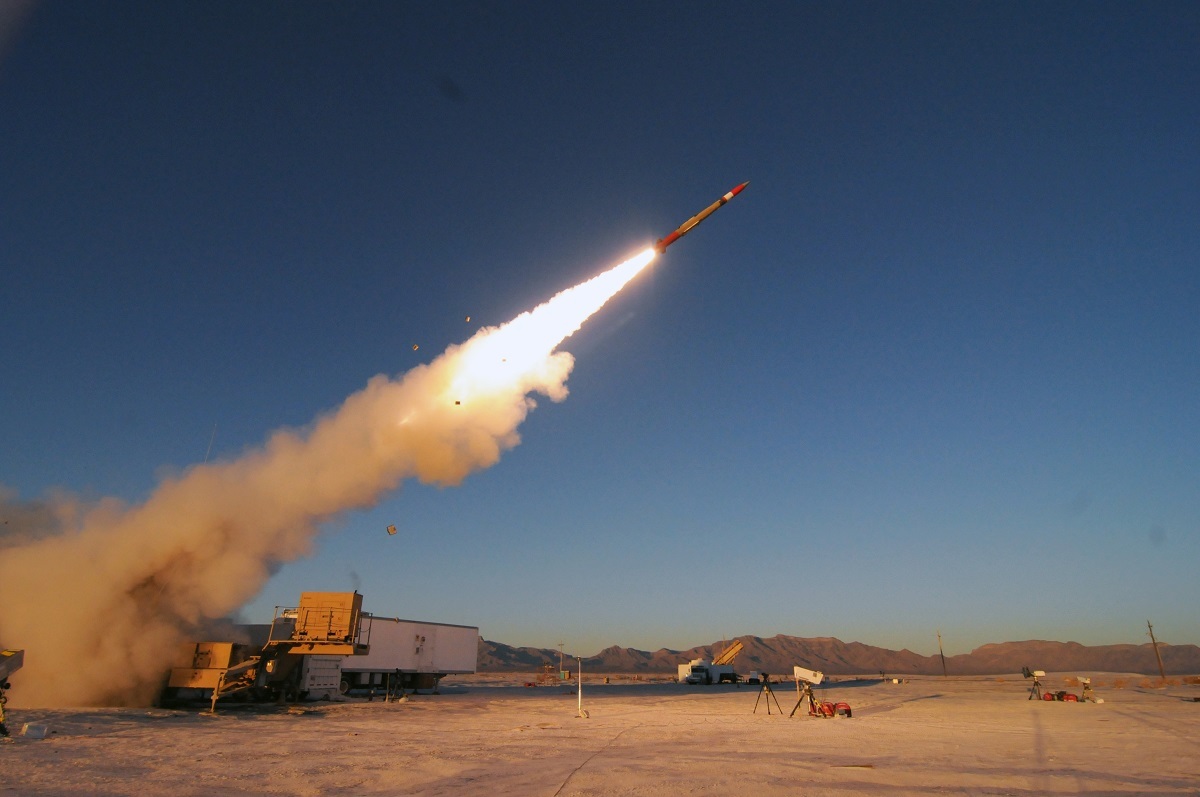
World
GRAND PRAIRIE, Texas, July 2, 2026 — Lockheed Martin has been awarded a $347.5 million cost-plus-incentive-fee contract by the United States Army to develop, fabricate, and test improvements to prototype air and missile defense systems. The contract, announced by the Pentagon on July 1 and managed by the Army Contracting Command at Redstone Arsenal, provides an open-ended framework under which individual task orders will determine specific work locations and funding. The project is scheduled for completion by December 31, 2028. The Pentagon's announcement does not identify a specific interceptor, missile, radar, or air defense system that will receive upgrades. Instead, the agreement is structured to support a range of related prototype technologies, allowing the Army to issue task orders as operational requirements and funding priorities evolve. The contract was awarded after bids were solicited through an online competition, with Lockheed Martin submitting the only proposal. Single-bid awards are not unusual in advanced missile defense programs because only a limited number of companies possess the required security clearances, specialized testing infrastructure, and technical expertise needed to develop and evaluate complex air and missile defense systems. Rapid Prototyping Approach The flexible structure of the agreement aligns with the Pentagon's rapid prototyping model, which is designed to accelerate the development of emerging defense technologies. Rather than committing to detailed technical requirements at the beginning of a program, the Army can issue individual task orders for separate prototype projects as new operational needs arise. Such efforts commonly use the Pentagon's Middle-Tier Acquisition authority, established by the U.S. Congress in 2016. The acquisition pathway is intended to shorten development timelines by allowing prototype systems to move from concept to demonstration more quickly than under traditional defense procurement processes. Redstone Arsenal's Role Redstone Arsenal remains the U.S. Army's principal center for missile procurement and is home to the Program Executive Office for Missiles and Space. During fiscal year 2025, the Army Contracting Command at Redstone oversaw approximately $34 billion in contract awards across multiple defense programs. The new prototype agreement adds to a series of major contracts recently awarded to Lockheed Martin through Redstone Arsenal, reflecting continued investment in air and missile defense capabilities. Among the largest recent awards are: A contract worth up to $35 billion to expand production of the Terminal High Altitude Area Defense (THAAD) interceptor system. A $9.8 billion multi-year contract covering 1,970 Patriot Advanced Capability-3 Missile Segment Enhancement (PAC-3 MSE) interceptors. A $3 billion fixed-price-incentive contract for production of the Sentinel A4 air surveillance radar. An $8.4 billion contract modification to increase procurement and production capacity for Precision Strike Missile (PrSM) Increment One systems. These programs support the Army's efforts to strengthen missile defense, long-range precision strike, and battlefield surveillance capabilities. Broader Missile Defense Modernization The latest contract comes as the United States continues investing in layered missile defense capabilities, including the Trump administration's proposed Golden Dome initiative. The program aims to establish a nationwide defensive architecture capable of detecting and intercepting ballistic, hypersonic, and cruise missile threats. Congress allocated $13.4 billion for related activities in the fiscal year 2026 defense appropriations legislation, adding to funding approved in previous years. The Missile Defense Agency also continues to manage prototype development through its SHIELD contracting vehicle, which had qualified more than 2,440 companies to compete for future task orders as of early 2026. Separately, the United States Space Force selected Lockheed Martin as one of twelve companies eligible to compete for prototype agreements valued at up to $3.2 billion to develop concepts for space-based interceptors designed to counter missile threats traveling at speeds exceeding Mach 20.
Read More → Posted on 2026-07-02 10:02:23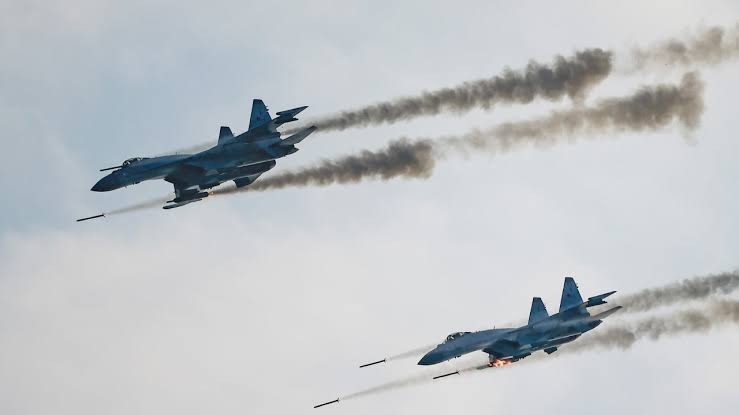
World
TEHRAN, July 1, 2026 — Russia is continuing the production of Sukhoi Su-35 multirole fighter aircraft for the Islamic Republic of Iran Air Force (IRIAF), although deliveries remain delayed until reconstruction work at Iran's Hamadan Airbase is completed. According to sources close to the IRIAF, production is progressing steadily, with a total of 30 aircraft expected to be completed by early 2027. Production has advanced consistently over recent months. By March 2026, Russian manufacturing facilities had completed 16 Su-35 fighters. One additional aircraft was completed in April, bringing the total to 17. As of July, defense estimates indicate that between 19 and 20 aircraft have now been completed and are being stored in Russia pending delivery. The Su-35 acquisition is part of a broader defense agreement between Russia and Iran that was formally initiated in 2021 and is valued at more than $6 billion. The package includes fighter aircraft, pilot training, compatible weapons systems, and reports indicate the wider agreement could eventually include up to 48 Su-35 fighters, with production and deliveries extending into 2027 and 2028. Deliveries Await Hamadan Airbase Upgrades The transfer of the aircraft has been delayed because Hamadan Airbase, also known as Noje Airbase, is undergoing reconstruction and modernization to support the operational requirements of the Su-35 fleet. Military engineering units are reportedly working continuously to restore damaged infrastructure. Recent satellite imagery has shown extensive construction activity, including the development of large hardened aircraft shelters designed for the Su-35. These reinforced shelters are intended to improve protection for the aircraft once they enter service. The completed fighters will remain in Russia until the upgraded facilities at Hamadan Airbase are ready. According to sources, Iran is also bearing the cost of storing and maintaining the completed aircraft during this period. Pilot Training and Weapons Package While awaiting delivery, Iran is continuing preparations for the aircraft's induction into service. The country has purchased three Su-35 flight simulators, which are expected to be delivered shortly. These will complement the Yak-130 advanced trainer aircraft that Iran has operated since 2023 and support pilot transition to the Su-35. The Su-35 is equipped with advanced avionics, a phased-array radar, long-range detection capabilities, and high maneuverability. It is expected to significantly enhance the IRIAF's combat capabilities and gradually supplement its aging fleet of F-14 Tomcat, F-4 Phantom II, and MiG-29 fighters. According to leaked defense documents, the contract includes approximately 327 guided munitions, comprising R-73 and R-77 air-to-air missiles, as well as Kh-31 and Kh-38 precision-guided air-to-surface missiles. The Su-35 acquisition is one of Iran's largest air force modernization programs in recent decades and reflects the continuing defense cooperation between Tehran and Moscow. With production progressing as planned and infrastructure work advancing at Hamadan Airbase, deliveries are expected to begin once the base is fully prepared to receive and operate the new fighters.
Read More → Posted on 2026-07-01 13:58:31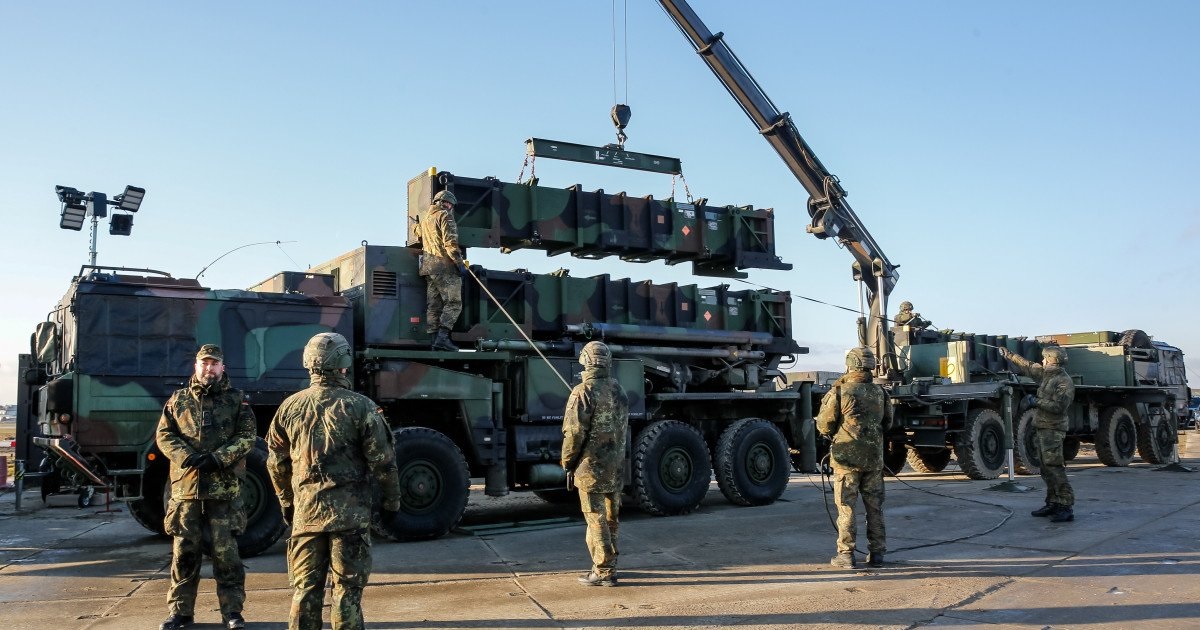
World
BERLIN, July 1, 2026 — Germany is seeking US approval to manufacture selected American weapon systems on German soil as part of a broader effort to strengthen Europe's defense capabilities and reinforce long-term transatlantic cooperation ahead of next week's NATO summit in Ankara. The proposal, currently under discussion between German and US officials, focuses on the joint production of PAC-3 interceptors used in Patriot air defense systems and Tomahawk long-range cruise missiles. German officials believe co-production would help address production bottlenecks, improve the availability of advanced weapons for European allies, and strengthen NATO's overall deterrence. According to officials familiar with the discussions, the initiative aims to address capability gaps exposed by Russia's ongoing war in Ukraine while providing economic and strategic incentives for the United States to remain committed to European security. NATO Secretary-General Mark Rutte recently stated that Europe's rearmament efforts are already supporting approximately 195,000 US defense jobs through around $300 billion in defense orders placed with American companies. German Chancellor Friedrich Merz and Defense Minister Boris Pistorius confirmed the discussions on Wednesday. German officials said the country intends to continue close cooperation with the US defense industry while expanding manufacturing capacity in Europe to meet urgent military requirements over the next five to ten years and help address limited US production capacity. The initiative also supports Europe's broader objective of strengthening its own defense industry while maintaining cooperation with the United States where it serves mutual interests. Focus on Long-Range Strike Capability Germany's interest in long-range strike systems increased after the Pentagon canceled the planned deployment of a US battalion equipped with land-based Tomahawk missile systems to Germany in May. The deployment had been intended to strengthen NATO's deterrence against Russian missile forces based in Kaliningrad. Berlin is exploring domestic production options and has contacted the German branch of MBDA regarding a potential partnership with Raytheon, the manufacturer of the Tomahawk missile, to produce a land-based version of the approximately 2,000-kilometer-range cruise missile. While MBDA and Raytheon have an existing partnership, direct discussions on Tomahawk production have not yet taken place, and MBDA has declined to comment. If negotiations do not progress, Germany is also considering alternatives, including Ukraine's Flamingo cruise missile. German lawmakers have emphasized the need to acquire long-range strike capabilities as quickly as possible, even if alternative systems offer lower performance than the Tomahawk missile. Existing Cooperation and Remaining Challenges Germany and the United States already cooperate on several defense programs. Rheinmetall manufactures fuselage sections for Lockheed Martin's F-35 Lightning II, while a joint MBDA-Raytheon facility producing PAC-2 and GEM-T Patriot missiles is scheduled to begin operations later this year. However, expanding cooperation to include advanced missile production faces significant hurdles. Any transfer of sensitive US defense technology would require Washington's approval, while concerns remain over intellectual property and technology transfer. Some German lawmakers remain skeptical that the United States would permit access to its most sensitive defense technologies, arguing that existing industrial cooperation is unlikely to extend to critical missile technologies. Industrial negotiations have also progressed more slowly than expected. In May, Rheinmetall CEO Armin Papperger said discussions with Lockheed Martin on co-producing rockets and missiles were delayed by negotiations over production quotas, costs, and technology transfer. European officials hope the NATO summit in Ankara will help advance defense-industrial cooperation through memorandums of understanding and joint procurement agreements as allies continue efforts to strengthen Europe's defense capabilities.
Read More → Posted on 2026-07-01 13:54:38
World
BAGHDAD, July 1, 2026 — Iraq's newly formed government has ordered all pro-Iran armed factions operating in the country to fully disarm and transfer their weapons to state control by September 30, the date scheduled for the conclusion of the US-led international coalition's anti-ISIS mission. The move represents a major step in Baghdad's effort to strengthen state authority and bring all armed forces under government control. Government spokesman Haidar al-Aboudi announced the decision during a weekly press briefing, confirming that all relevant armed groups had been formally notified of the deadline. "After this date, all weapons outside the state framework will be subject to legal redress," al-Aboudi said, adding that the government intends to ensure that all military and security activities operate exclusively within Iraq's official institutions. The deadline has been directly linked to the withdrawal of the US-led coalition, removing one of the principal reasons historically cited by several armed groups for maintaining independent military structures outside government control. Iraqi and US officials have previously coordinated plans to transition security responsibilities to Iraqi forces as the coalition mission comes to an end. Prime Minister Ali al-Zaidi, who took office earlier this year after months of political deadlock, is leading the disarmament initiative as part of a broader effort to reinforce Iraqi sovereignty. The 41-year-old businessman and political newcomer is expected to visit Washington next month, where US officials are anticipated to press Baghdad to reduce the influence of Iran-aligned militias that have repeatedly targeted American military facilities and diplomatic sites in the region. The government's directive has prompted differing responses among factions within the Popular Mobilisation Forces (PMF), an umbrella organization that includes numerous armed groups formed during the fight against the Islamic State. Among the factions indicating compliance, Asaib Ahl al-Haq and Kataeb Imam Ali have announced plans to transfer control of their brigades, personnel, and weapons to Iraqi state authorities. Their decision supports the government's objective of integrating armed formations into the country's official security structure. Other groups have rejected the order. Kataib Hezbollah stated that it will continue what it describes as "resistance work," although it expressed willingness to coordinate with Iraqi state forces. Harakat Hezbollah al-Nujaba also refused to surrender its weapons, arguing that continued foreign military presence and concerns over national sovereignty justify retaining its armed capabilities. The disarmament initiative forms part of a wider state-building agenda pursued by Prime Minister al-Zaidi. Alongside security reforms, his government has launched a nationwide anti-corruption campaign targeting alleged graft within state institutions. Over the past weekend, Iraqi special forces conducted operations in Baghdad's Green Zone that resulted in the arrest of at least 47 government officials and lawmakers on corruption-related charges, according to government officials. The arrests are part of the administration's broader effort to strengthen public institutions and improve governance. By advancing both the anti-corruption campaign and the militia disarmament program, the Iraqi government aims to demonstrate progress in establishing state authority before the prime minister's meetings in Washington. The Popular Mobilisation Forces (PMF) were established in 2014 after a religious decree called on volunteers to help Iraqi security forces fight the Islamic State following the group's rapid territorial gains. While many PMF units were later incorporated into Iraq's security framework, several factions have continued to maintain independent command structures and weapons stockpiles. The success of the September 30 deadline will depend on whether the Iraqi government can enforce its legal measures against factions that refuse to disarm while maintaining stability and avoiding armed confrontation, particularly in Baghdad and other sensitive areas.
Read More → Posted on 2026-07-01 13:43:33
World
DÜSSELDORF, July 1, 2026 — Ukraine has awarded German defense manufacturer Rheinmetall a contract to supply several tens of thousands of 155mm artillery shells and associated propellant charges to support the country's NATO-standard artillery systems. The contract is valued in the high double-digit millions of euros and will be recorded in Rheinmetall's financial results for the second quarter of 2026. Production has already begun at the company's Rheinmetall Expal Munitions facility in Spain, with deliveries scheduled for completion by the first quarter of 2027. The order includes ER02A1 B/B 155mm artillery shells and M203 propellant charges, which are already in service with several NATO member states. The ammunition is compatible with artillery systems operated by Ukraine, including the Archer, Caesar, PzH 2000, and RCH 155. Rheinmetall has significantly expanded its ammunition production capacity since 2022 to meet growing demand from NATO countries and Ukraine. The company acquired Spanish ammunition manufacturer Expal in 2023, followed by the acquisition of Muni Berka GmbH in Germany in 2025 to strengthen its ammunition-related capabilities. In May 2026, Rheinmetall stated it could produce up to 100,000 extended-range 155mm artillery shells annually in response to Ukraine's estimated requirement of 1.2 million rounds per year. The company plans to increase its total annual production capacity to approximately 1.5 million 155mm shells by 2030. The latest agreement further expands defense cooperation between Ukraine and Rheinmetall while supporting the continued supply of NATO-standard artillery ammunition through 2027.
Read More → Posted on 2026-07-01 13:33:46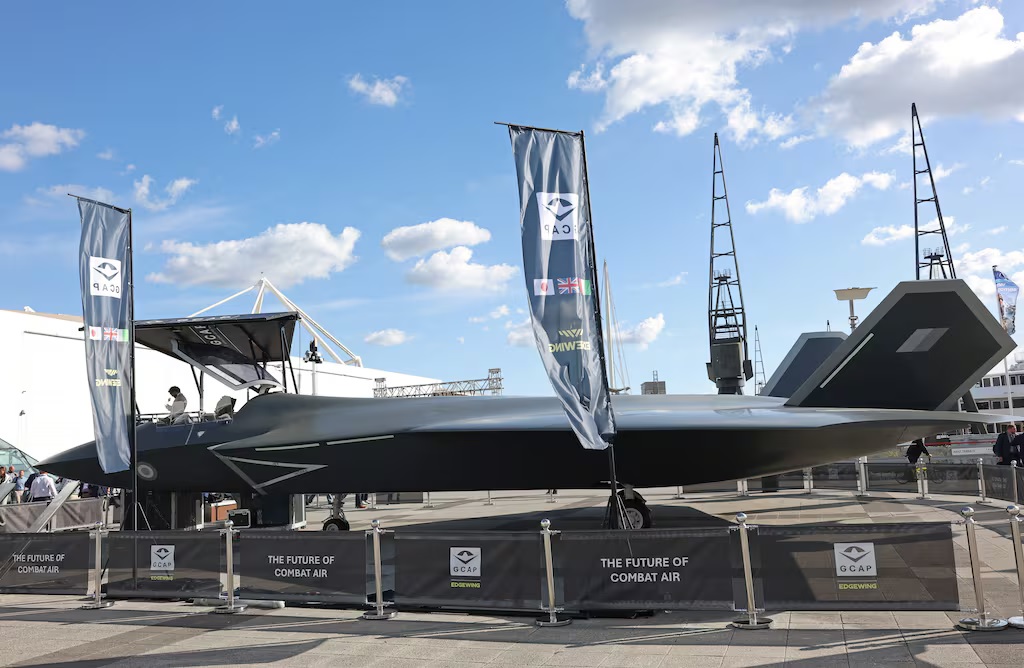
World
LONDON/TOKYO, July 1, 2026 — Japan, the United Kingdom, and Italy have agreed to extend the development contract for the Global Combat Air Programme (GCAP) through the end of 2027, providing long-term funding certainty for the trilateral sixth-generation fighter aircraft project after months of budget-related uncertainty. The 18-month contract extension follows the publication of the United Kingdom's Defence Investment Plan on June 30, 2026, which unlocked the financial commitments needed to keep the multinational programme on schedule. The agreement resolves a funding impasse that had forced the project to operate under temporary bridge funding since April. The extension is expected to be formally signed between the GCAP International Government Organisation (GIGO), which manages the programme on behalf of the three governments, and Edgewing, the joint venture responsible for the aircraft's design and development. UK Budget Approval Resolves Funding Uncertainty Earlier this year, delays in the UK's long-term defence budget created uncertainty for the programme and its industrial partners. Without multi-year funding commitments, the three nations approved a temporary three-month bridge contract worth £686 million (approximately $907 million) beginning on April 2, 2026, allowing development work to continue until the end of June. The temporary arrangement raised concerns about the programme's future. BAE Systems had warned that more than 4,000 UK-based engineers working on GCAP could be reassigned to other defence programmes if long-term funding was not secured. The uncertainty also prompted Italy to revise its programme cost estimates, while Japanese defence officials reportedly evaluated contingency options should the project experience further delays. The situation changed after British Prime Minister Keir Starmer announced the UK's Defence Investment Plan on June 30. The plan allocates more than £8 billion (approximately $10.6 billion) to GCAP over the next four years as part of a broader £15 billion increase in UK defence investment, enabling the programme to move forward with long-term financial stability. The United Kingdom had already committed around £2 billion to the programme since 2021, and the latest budget settlement provides the additional funding required for continued development. Edgewing Continues Development Toward Demonstrator Flight GCAP was formally established by treaty in late 2023 to develop a sixth-generation combat aircraft designed to replace the Eurofighter Typhoon fleets operated by the United Kingdom and Italy, as well as Japan's Mitsubishi F-2 fighter aircraft. Industrial development is led by Edgewing, a joint venture established in June 2025 and headquartered in Reading, England. The company is equally owned by BAE Systems of the United Kingdom, Leonardo of Italy, and Japan Aircraft Industrial Enhancement Co. Ltd., a consortium supported by Mitsubishi Heavy Industries. The contract extension provides Edgewing with the financial certainty needed to retain its workforce and continue development of the programme's demonstrator aircraft. The prototype is expected to make its maiden flight before the end of 2027 and will serve as a platform to evaluate key technologies, including advanced stealth design, next-generation sensors, electronic warfare capabilities, and new propulsion systems. The demonstrator will also be the first British combat-air prototype developed since the Eurofighter programme nearly four decades ago. Service Entry Target Remains 2035 The three partner nations continue to target 2035 for the aircraft's entry into operational service. Japan has repeatedly stated that this schedule is a critical requirement because it coincides with the planned retirement of its aging Mitsubishi F-2 fleet. Japanese officials have maintained that any changes to the programme, including the addition of new partner nations, should not delay the planned 2035 service entry date. International Interest Continues GCAP has attracted growing international attention as development progresses. Canada joined the programme as an observer in March 2026, while Saudi Arabia has continued to express interest in becoming a future participant. Reports that the rival Future Combat Air System (FCAS) programme involving France, Germany, and Spain has encountered significant difficulties have also increased speculation that Germany could consider closer involvement with GCAP as it evaluates future combat aircraft options. Despite this international interest, the existing partners have emphasized that maintaining the programme schedule remains the priority. Japan, in particular, has made clear that expanding membership should not affect the project's 2035 operational deadline. With funding now secured through 2027, the contract extension provides greater stability for the programme's industrial base and allows development to continue toward the demonstrator aircraft's first flight while supporting work on the technologies that will form the foundation of the future sixth-generation combat air system.
Read More → Posted on 2026-07-01 13:25:52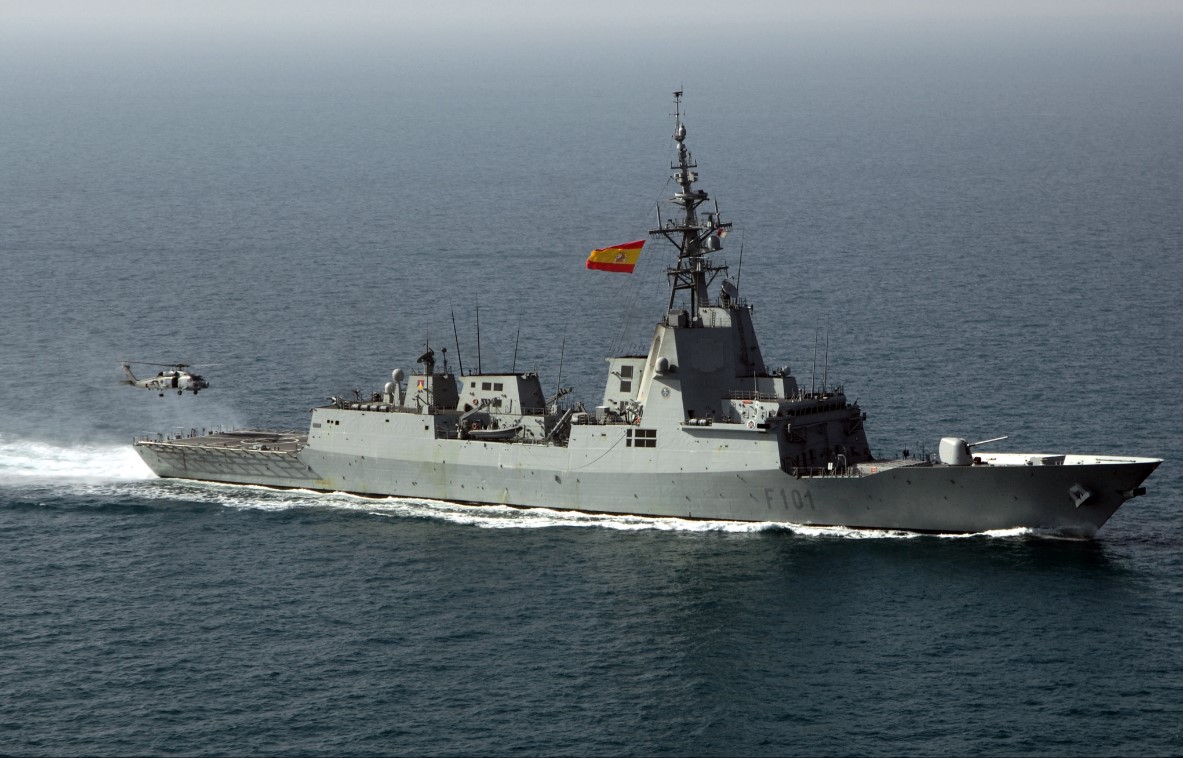
World
MADRID/WASHINGTON, July 1, 2026 — The U.S. Navy has awarded Lockheed Martin a $103.9 million contract to begin the initial phase of the Spanish Navy's Álvaro de Bazán-class (F-100) frigate mid-life modernization program. The contract, awarded on June 26, 2026, marks the first procurement phase of a broader effort to modernize Spain's principal surface combatants and maintain their interoperability within the U.S.-developed Aegis naval defense architecture. The contract is structured as a cost-only undefinitized contract action (UCA), allowing engineering activities to begin while the final scope, pricing, and technical requirements are refined. Of the total award, $51.4 million has been immediately obligated to procure long-lead materials, conduct preliminary engineering work, and establish specialized testing facilities ahead of the physical modernization of the ships. Approximately 90 percent of the engineering and planning work will be carried out at Lockheed Martin's naval combat systems facility in Moorestown, New Jersey, which has served as the company's primary center for Aegis combat system development since the 1970s. Additional work will be performed in Clearwater, Florida, and Madrid, Spain. The contract was awarded on a sole-source, non-competitive basis under international agreement authority because the F-100 frigates are built around Lockheed Martin's proprietary Aegis combat system architecture, making the company the only qualified integrator for the modernization effort. First Phase of $1.7 Billion Modernization Program The contract represents the first active procurement following the January 2026 approval by the U.S. State Department of a Foreign Military Sale (FMS) package for Spain valued at an estimated $1.7 billion. The broader modernization program is expected to include upgraded Aegis Weapon System shipsets, MK 41 Baseline VIII Vertical Launching Systems, and Next Generation Surface Search Radars, along with supporting combat system integration and testing. The mid-life upgrade is intended to extend the operational service life of the frigates while improving their ability to integrate modern weapons, advanced electronic warfare systems, and updated radar technologies required to address evolving air, missile, and surface threats. Spain's Most Capable Surface Combatants Built by Spanish shipbuilder Navantia, the Álvaro de Bazán-class frigates entered service beginning in 2002. Each vessel displaces approximately 6,050 tonnes, measures 147 meters (482 feet) in length, and was designed from the outset around the AN/SPY-1D phased-array radar and the Aegis combat management system. The class was historically significant as the first non-U.S. warship design built from inception with the full Aegis combat system, providing advanced air defense capabilities and allowing the ships to track and engage multiple aerial and missile threats simultaneously. Spain currently operates five F-100 frigates: Álvaro de Bazán (F-101) Almirante Juan de Borbón (F-102) Blas de Lezo (F-103) Méndez Núñez (F-104) Cristóbal Colón (F-105) Over the past two decades, the fleet has participated in NATO operations, maritime security missions, and multinational deployments across the Mediterranean, Atlantic, and other regions. Operational Experience Supports Modernization One of the class's most notable recent deployments occurred in December 2023, when Méndez Núñez (F-104) was deployed to the Red Sea as part of an international maritime security coalition responding to drone and missile attacks launched by Houthi forces against commercial shipping. According to Spanish Defense Minister Margarita Robles, the deployment represented the first time an Álvaro de Bazán-class frigate operated in a contested, live-fire environment. The mission provided valuable operational data on the performance of the Aegis combat system under real combat conditions and helped inform future modernization requirements. Importance for Allied Navies The Spanish Navy's F-100 modernization program is also being closely monitored by allied nations because the frigate's design formed the basis for other Aegis-equipped warships. Norway's Fridtjof Nansen-class frigates and Australia's Hobart-class destroyers both share significant design characteristics and combat system architecture derived from the F-100 program. As a result, engineering solutions, software integration methods, and system upgrades developed during Spain's modernization are expected to provide a reference for future mid-life upgrades in both fleets. Once completed, the modernization program will extend the operational life of Spain's F-100 frigates while ensuring they remain fully compatible with U.S. Navy and NATO naval operations and capable of addressing evolving maritime security requirements.
Read More → Posted on 2026-07-01 13:18:12Search
Top Trending in 24 Hours
-
 Boeing Wins $20 Billion U.S. Navy Contract for F/A-XX Sixth-Generation Fighter
-
 U.S. Navy Awards Production Agreements for 30 Medium Unmanned Surface Vessels, Including 10 Saronic Marauders
-
 NASA Adds Blue Origin’s Upgraded New Glenn 9×4 to Launch Services Contract
-
 Satellite Imagery Shows Construction Changes at Hillside Site Linked to Iran’s Supreme National Security Council
-
 Flydubai Flight to Israel Diverted to Saudi Arabia After Possible Attempted Terror Attack in Cockpit
-
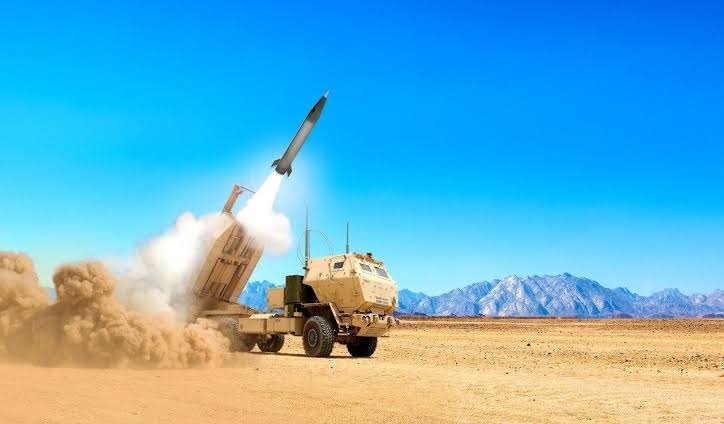 U.S. Army Selects Five Companies to Develop 1,000-Km Precision Strike Missile Prototypes
-
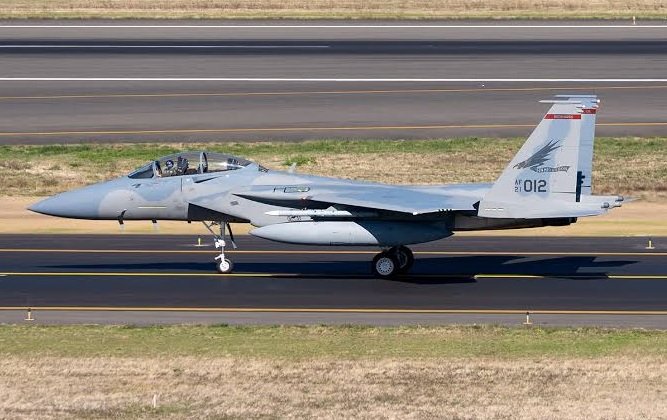 U.S. Air Force Awards Boeing $2.38 Billion Contract for 22 F-15EX Fighter Jets
-
 Northrop Grumman Delivers First 21 Satellites for Pentagon’s Next-Generation Military Network
Top Trending in 4 Days
-
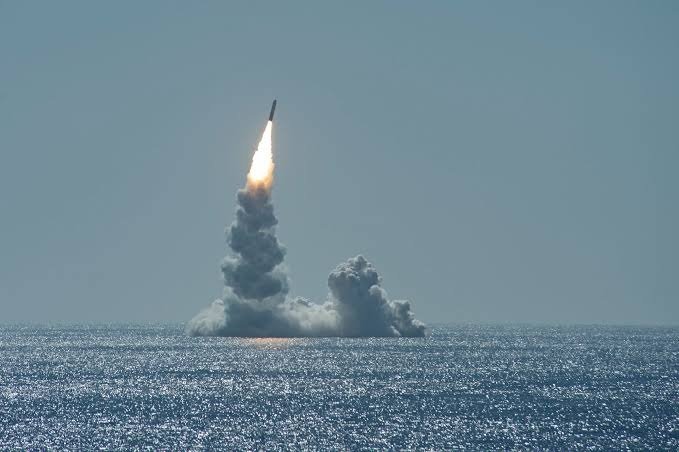 UK Offers Nuclear Deterrence for Its Northern European Defence Partners
-
 Russia Says Su-75 Checkmate Could Cost Just $25–30 Million, Flight-Hour Costs 6 Times Lower Than F-35
-
 China Reports First High-Orbit Refueling of BeiDou Satellite, but Tracking Data Raise Questions
-
 Eight U.S. Marines Injured in Iranian Missile Strike on U.S Vessel in Strait of Hormuz
-
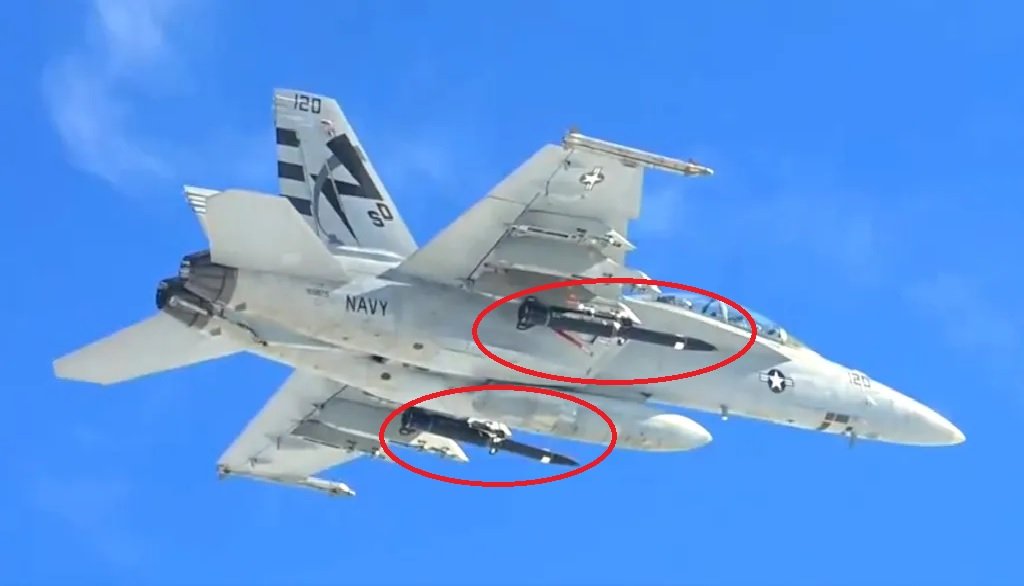 U.S. Navy Begins Flight Testing Blackbeard Hypersonic Missile on F/A-18 Super Hornet
-
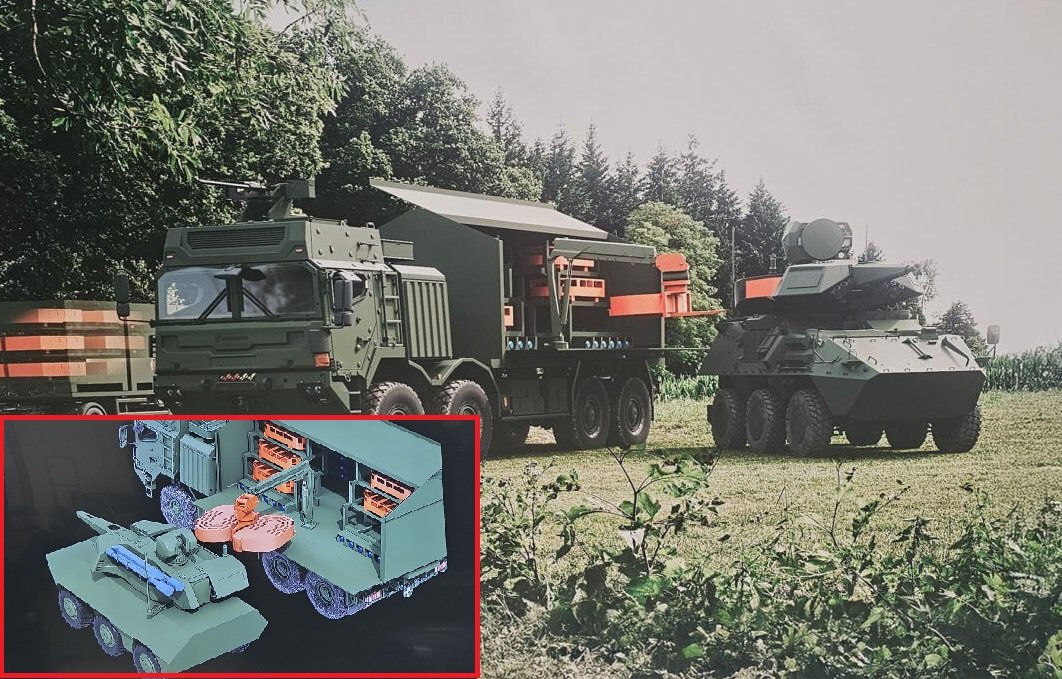 Rheinmetall Develops Automated Reloader for Austrian Skyranger Air Defense System
-
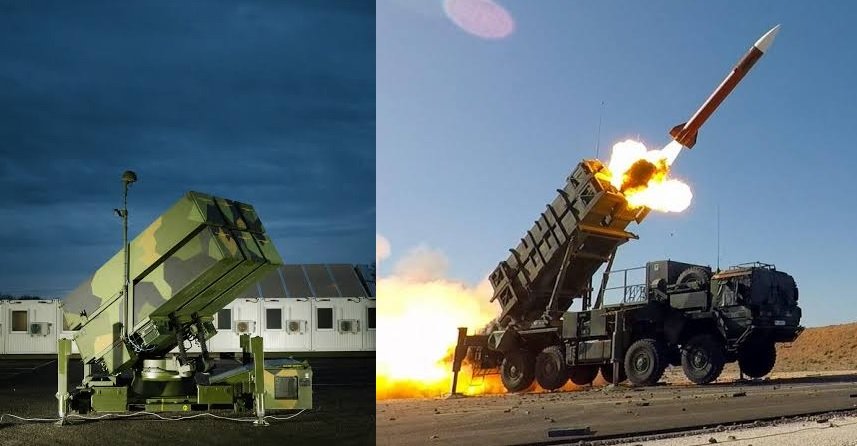 Ukraine Receives New NASAMS Air Defense System and Interceptor Missiles From U.S. and Norway
-
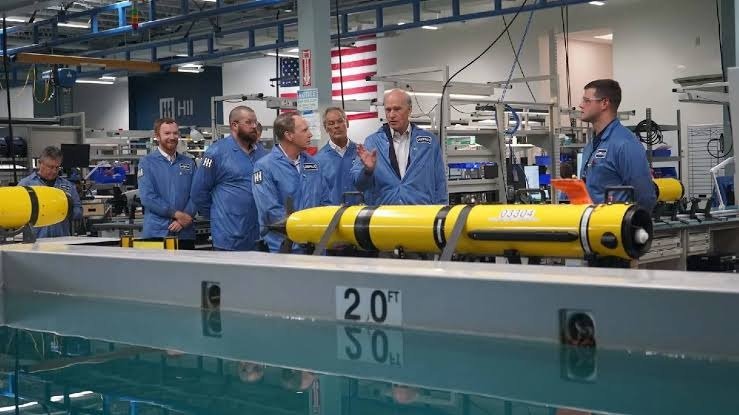 HII Expands Massachusetts Unmanned Systems Facility by 25 Percent to Support U.S. Navy Lionfish Production
