World
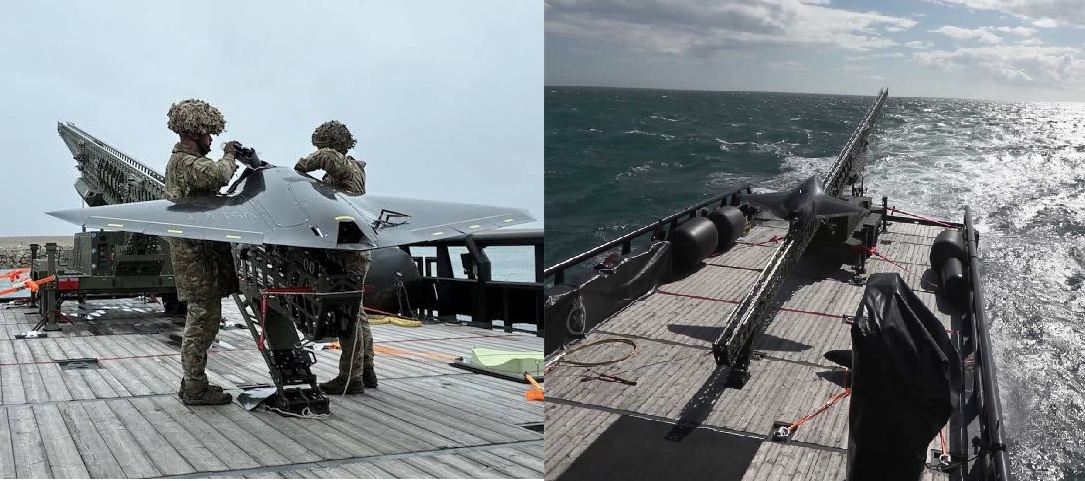
London — The Royal Navy has completed the first at-sea launch of the British-built Nyan One-Way Effector (OWE) autonomous strike drone from the experimental vessel XV Patrick Blackett, during trials off the south coast of England. The launch was carried out while the ship was underway as part of Exercise Neptune Reach under Project VANTAGE, a tri-service programme bringing together the Royal Navy, British Army and Royal Air Force to evaluate maritime strike drones for operational use. A catapult launcher was fitted to the deck of XV Patrick Blackett for the trial. The launcher accelerated the drone to speeds of up to 55 metres per second, after which the aircraft flew autonomously to a pre-programmed target area. Personnel from 26 Regiment Royal Artillery, 744 Naval Air Squadron, and the ship's crew supported the launch. UK Tests Indigenous Nyan One-Way Effector Drone The Royal Navy and British Army have successfully conducted the first extensive trials of the Nyan One-Way Effector (OWE) Uncrewed Air System, a domestically developed precision-strike drone designed for both maritime and land… pic.twitter.com/LsHU1PxEp6 — Global Defense Insight (@Defense_Talks) July 4, 2026 The Royal Navy said flight data from the test is now being reviewed. Further trials could be conducted from the aircraft carrier HMS Queen Elizabeth. The Nyan One-Way Effector is built by Callen-Lenz, a subsidiary of BAE Systems. The autonomous strike drone has a 2.9-metre wingspan, is powered by a small turbojet engine, and has an estimated range of more than 150 kilometres. It is built mainly from carbon fibre and includes a low-observable exhaust nozzle intended to reduce detection by air defence systems. The estimated unit cost is under £100,000. Callen-Lenz Chief Executive Matt Foster said the company has already produced more than 1,000 Nyan drones. The system provides a lower-cost precision strike option than traditional naval missiles and has a range exceeding several legacy anti-ship weapons. The drone had already completed land-based trials before the maritime launch. During Exercise Spring Storm in Estonia in May 2026, British Army units from the Royal Artillery used the system alongside NATO forces to demonstrate deep-fire support during field exercises. The sea trial forms part of the UK's Hybrid Navy programme, which combines crewed warships with autonomous vessels and drone systems. The concept is included in the UK's Defence Investment Plan, which allocates more than £5 billion over the next four years for autonomous systems and drone technologies. Minister for Defence Readiness and Industry Luke Pollard said Britain is moving forward with the Hybrid Navy concept by bringing Army and Navy expertise together to field ship-launched strike drones. Lieutenant Commander David Burton, the Royal Navy's Maritime One-Way Effectors capability sponsor, said the trial moves the programme from land-based experimentation into maritime operations. Under Project VANTAGE, the service is working to integrate one-way strike drones with crewed naval platforms to expand operational reach and increase the tempo of operations. The Nyan builds on one-way effector technology already fielded by the British Army. Project VANTAGE is focused on adapting those capabilities for use at sea through a common approach across the Royal Navy, British Army and Royal Air Force. Source: forcesnews.
Read More → Posted on 2026-07-04 11:28:42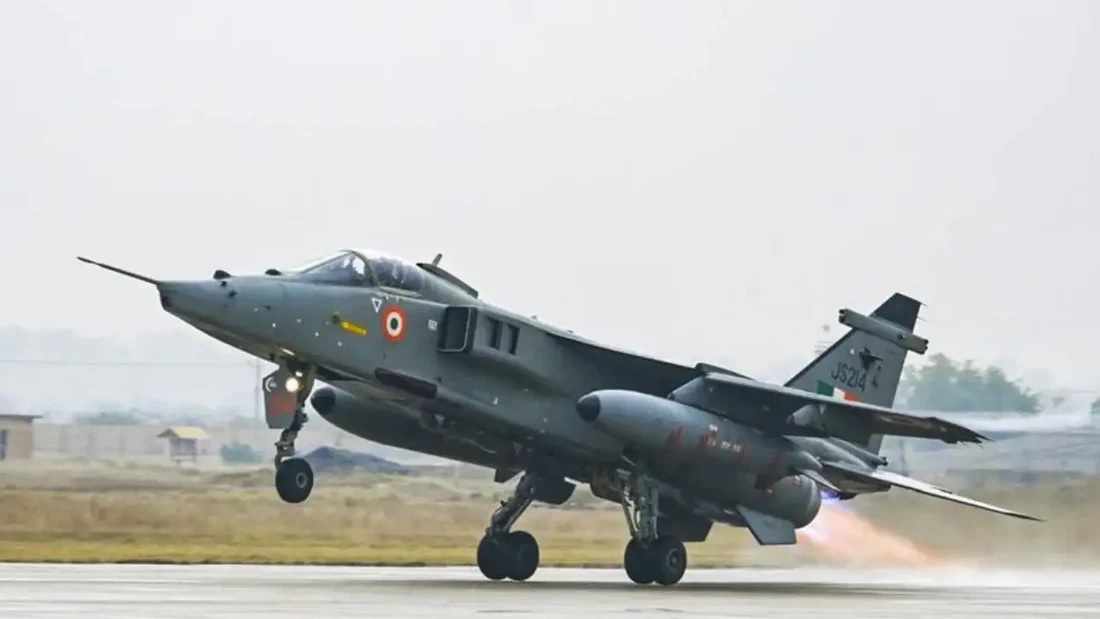
World
LONDON — The United Kingdom has transferred nine retired SEPECAT Jaguar aircraft to the Indian Air Force (IAF), while Britain's Ministry of Defence (MoD) continues to hold 42 retired Jaguars nearly 20 years after the Royal Air Force (RAF) withdrew the type from service. The figures were disclosed in a written parliamentary answer released on July 3 by UK Minister for Defence Readiness and Industry Luke Pollard, responding to a question from Conservative MP Ben Obese-Jecty on the remaining Jaguar GR1 and T2 aircraft in the MoD inventory. Pollard said nine Jaguars had already been transferred to India, including five GR1 variants and four T2 variants. He also confirmed the Ministry of Defence still holds 42 Jaguar airframes. Of those, 13 are GR1 aircraft and none are T2s. The parliamentary response did not identify the remaining 29 aircraft by variant, though they are understood to include later GR3 models and T4 trainers. None of the aircraft retained by the UK are flight-capable. Most of those airframes are used as ground instructional aircraft at RAF Cosford, where engineering technicians train on aircraft maintenance and systems after the Jaguar's retirement from RAF service in 2007. India is now the only country operating the Jaguar. Built under licence by Hindustan Aeronautics Limited since the early 1980s, the aircraft, known as the Shamsher, remains in service with about 120 aircraft across six IAF squadrons based at Ambala, Gorakhpur and Jamnagar. The fleet continues to perform the deep-penetration strike role as the Indian Air Force operates with 29 fighter squadrons, below its authorised strength of 42. With Jaguar production and component manufacturing closed for years, India has relied on retired aircraft from former operators to maintain the fleet. The latest transfer follows reports in mid-June that former RAF Jaguars were prepared for shipment from a British port. The consignment included the nine aircraft along with more than 150 categories of spare parts and components. India has sourced retired Jaguars before. France transferred 31 aircraft free of charge in 2018, while Oman supplied retired airframes, Rolls-Royce Adour engines and thousands of spare parts after withdrawing the type from service. A proposal to replace the Jaguars' engines with Honeywell powerplants was later dropped after costs were estimated at nearly $16 million per aircraft. The aircraft transferred from the UK will be dismantled for serviceable components, including avionics, landing gear and hydraulic systems. Those parts will support the IAF's DARIN-III upgrade programme, which adds updated cockpit displays and improved weapons integration to the remaining operational fleet. Indian defence officials plan to begin retiring the Jaguar fleet around 2029. The upgraded DARIN-III aircraft are expected to remain in service into the mid-2030s while indigenous fighters, including the Tejas Mk1A, gradually replace them in the deep-strike role. Source: ukdefencejournal.org.uk.
Read More → Posted on 2026-07-04 11:18:17
World
Singapore / Tokyo — Russia is preparing to import at least 200,000 barrels of jet fuel originating from Japan through a network of intermediary traders, as domestic fuel supplies remain under pressure after repeated Ukrainian strikes on Russian energy infrastructure. The cargo is scheduled to load at the Japanese port of Chiba during the first half of July. Rather than sailing directly to Russia, the shipment will first head to South Korea, where it is expected to be transferred to another tanker, likely through a ship-to-ship operation off Yeosu, before continuing to Russia. The final destination inside Russia has not been disclosed. Three sources familiar with the arrangement told Reuters the transaction is being handled through intermediary traders. Russia's Energy Ministry did not respond to requests for comment. South Korea's Ministry of Trade, Industry and Energy declined to comment, while Japan's Ministry of Economy, Trade and Industry did not immediately respond. The import follows months of disruption to Russia's refining sector after Ukrainian drone strikes targeted oil refineries, storage sites and other energy facilities across the country. Reports indicate about one-third of Russia's refining capacity has been knocked out, reducing domestic fuel production and tightening supplies. The fuel shortage has already led Moscow to impose restrictions on some fuel purchases. Russian farmers have also warned that limited fuel availability could affect harvesting operations if supplies do not improve. Among the facilities struck over the past year were the Moscow Oil Refinery, energy infrastructure in the Rostov region, and the Kristall oil storage facility in Engels, part of the Rosrezerv system. The Engels site stores aviation fuel used by Russia's strategic aviation, including aircraft based at the nearby Engels-2 air base. Russia has traditionally exported refined petroleum products, but export volumes have fallen sharply this year. Data from Kpler shows Russian jet fuel exports are averaging about 13,000 barrels per day in 2026, with most cargoes shipped to Turkey. That compares with roughly 30,000 barrels per day exported during 2025. Ship-tracking data from Kpler shows a similar route was used in February 2022, when about 22,000 barrels of jet fuel were shipped from Yeosu to Vladivostok in Russia's Far East. The planned shipment from Japan reflects Russia's effort to supplement domestic aviation fuel supplies while parts of its refining sector remain offline. Officials in Moscow have not publicly commented on the reported cargo. Source: Reuters.
Read More → Posted on 2026-07-04 11:03:27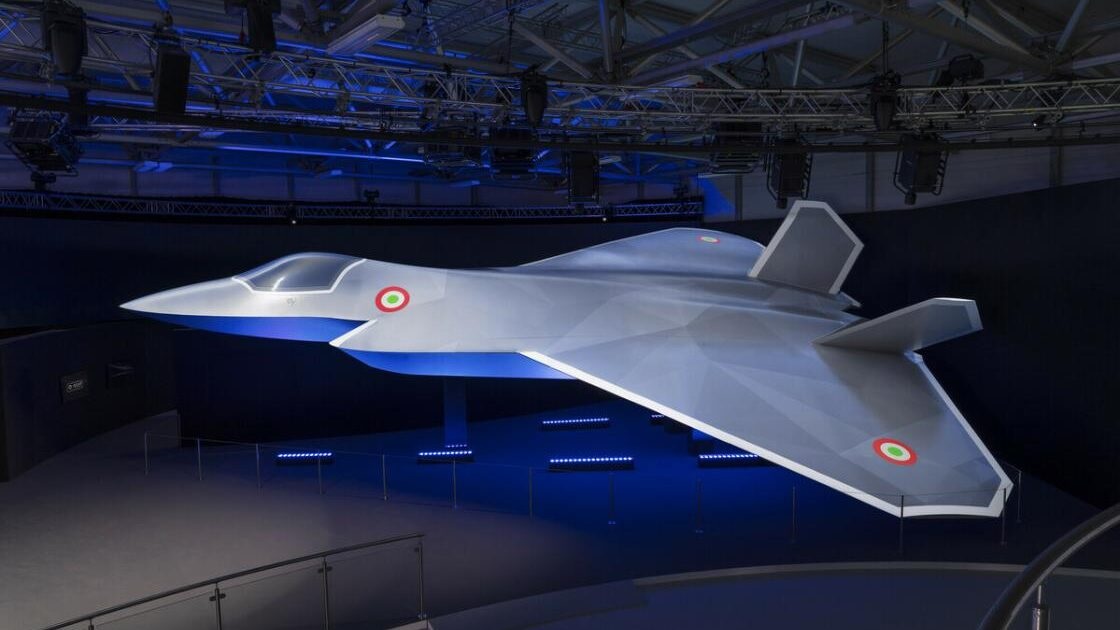
World
LONDON — The governments of the United Kingdom, Italy and Japan have awarded a £4.6 billion ($6.14 billion) development contract to Edgewing, advancing the next phase of the Global Combat Air Programme (GCAP) and funding work on the three nations' planned sixth-generation fighter aircraft through the end of 2027. The 18-month contract, which began on July 1, 2026, was placed by the GCAP Agency, the trinational organisation overseeing the programme. It covers completion of the advanced concept and assessment phase, establishes the aircraft's final capability requirements and funds detailed engineering, design and testing activities. The award follows a £686 million bridging contract issued to Edgewing in April 2026, allowing development work to continue while the larger agreement was being finalised. Funding for the latest contract is provided jointly by the UK, Italy and Japan. Edgewing serves as the programme's prime contractor and design authority. The company is headquartered in Britain and was created by BAE Systems, Leonardo, and Japan Aircraft Industrial Enhancement Co. Ltd. (JAIEC), a consortium involving Mitsubishi Heavy Industries, to manage development of the future combat aircraft. "This contract represents the trust placed in us by all three nations and our GCAP Agency partners," Edgewing Chief Executive Marco Zoff said. He described the company as the first engineering prime formed by three countries to work on behalf of their national defence industries under a single customer. GCAP Agency Chief Executive Masami Oka said the agreement enables the agency and Edgewing to continue work across all areas of the programme. He said the project supports shared development costs, technology cooperation and highly skilled jobs across the three partner nations, adding that the long-term funding provides greater certainty for the programme. The announcement coincides with the UK government's new Defence Investment Plan, which commits an additional £8.6 billion to GCAP over the next four years, resolving earlier questions over Britain's long-term funding profile for the project. The aircraft under development will replace the Eurofighter Typhoon in UK and Italian service and the Mitsubishi F-2 in Japan. Entry into service remains planned for 2035. Preliminary specifications released by BAE Systems indicate the aircraft will be three to four metres longer than the Typhoon, giving it greater internal fuel capacity, longer range and the ability to carry a larger payload. The platform will integrate digital engineering, artificial intelligence and data fusion technologies. It is also being developed to operate alongside autonomous drones during combat missions. Work on the aircraft's mission systems is being carried out by the GCAP Electronics Evolution (G2E) consortium, which is responsible for advanced sensors, secure communications and electronic warfare systems. A separate propulsion consortium, including Rolls-Royce and Japan's IHI Corporation, is developing the next-generation engine. GCAP was formally launched in 2022, with the international government organisation established in late 2023. The latest contract moves the programme through its concept phase and into more detailed design work. The award also follows the reported collapse of the rival Franco-German Future Combat Air System (FCAS) programme in June 2026 after prolonged industrial disagreements between its partners. Saudi Arabia and Canada have expressed interest in joining or observing GCAP, while executives from Leonardo have said Germany could also become a future partner. Any expansion of the programme would require unanimous approval from the United Kingdom, Italy and Japan. Source: Gov.uk.
Read More → Posted on 2026-07-04 10:54:58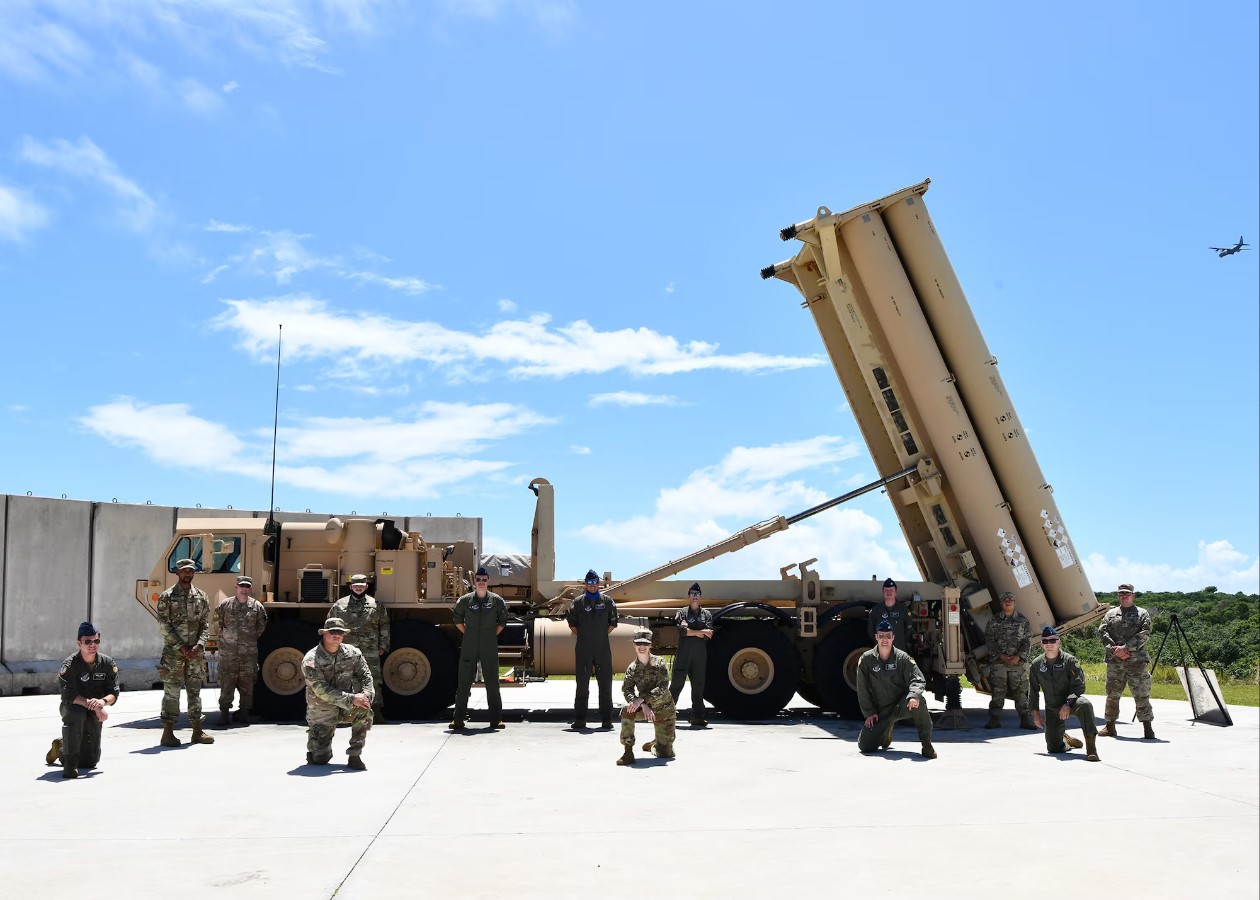
World
WASHINGTON — The U.S. Army has opened competition for a new command-and-control software package that will integrate Guam's air and missile defence network, issuing a Request for Solutions Brief to industry for a prototype known as the Battle Manager Suite. The solicitation, released on June 25 by the Army's Portfolio Acquisition Executive for Fires, seeks software capable of connecting more than 20 existing defence programs and prototypes operated by the Army, Navy, Air Force, Marine Corps and the Missile Defense Agency into a single operational network. The Battle Manager Suite will combine data from multiple radars and sensors to provide commanders with a common operating picture in real time. It must detect and track ballistic missiles, cruise missiles and drones, then recommend the most appropriate interceptor or weapon available for each threat. Guam remains one of the U.S. military's most important positions in the western Pacific. The island hosts Andersen Air Force Base and Naval Base Guam and lies closer to Beijing than Hawaii. It is considered a likely target in any future conflict involving Taiwan and is also within range of Chinese and North Korean missile systems. The effort supports the Fiscal Year 2022 National Defense Authorization Act, which directed the Pentagon to establish a 360-degree Enhanced Integrated Air and Missile Defense capability for Guam. The Army created the Guam Defense System Joint Project Office in February 2024 to manage the program, under the leadership of Lt. Gen. Robert A. Rasch Jr. The Pentagon is using an Other Transaction Agreement (OTA) under 10 U.S. Code Section 4022 rather than a traditional acquisition process. Under the terms of the solicitation, proposals must include substantial participation from non-traditional defence companies, nonprofit research institutions, or provide outside investment covering at least one-third of the prototype's development cost. Competition is limited to U.S. companies cleared to handle SECRET-level information. Initial submissions are due by 4:00 p.m. Eastern on July 15. Selected companies will be invited to demonstrate their systems in mid-August before the Army issues a formal Request for Prototype Proposal. A contract award is scheduled for the first quarter of fiscal year 2027, between October and December 2026. The contract includes a one-year base period with four one-year option periods, allowing work to continue for as long as five years if all options are exercised. The solicitation also tells companies not to rely heavily on artificial intelligence when preparing proposals. The government said submissions will be screened using AI-detection tools, and extensive AI-generated content may be treated as evidence that the bidder does not have sufficient technical understanding of the requirement. The Battle Manager Suite is also expected to support work beyond Guam. Defense Secretary Pete Hegseth has identified the Guam Defense System as a proving ground for the Golden Dome homeland missile defence initiative announced by the Trump administration in May 2025. The program is intended to defend the United States against ballistic, hypersonic and cruise missile threats using layered defences, including space-based tracking sensors and interceptors. The Congressional Budget Office has estimated Golden Dome could cost as much as $1.2 trillion. Program officials have said the joint engagement coordination and sensor fusion architecture developed through Guam's Battle Manager Suite could be transferred to the larger national missile defence program. The wider Guam Defense System is still dealing with management issues. A Government Accountability Office report published in May 2025 found the Pentagon had not established a clear plan for transferring operational responsibilities between military services. The report also said the Guam Defense System Joint Project Office was staffed at only 45% of its required level by mid-2025, contributing to delays from the program's original 2024 schedule. Hardware testing continues while the software competition moves forward. During Exercise Valiant Shield 2026, U.S. forces are conducting live-fire tests of the Army's Patriot air defence system and the Marine Corps' Medium-Range Intercept Capability on Guam as work continues to integrate the island's air and missile defence architecture. Source: Defence-Blog.
Read More → Posted on 2026-07-03 15:04:34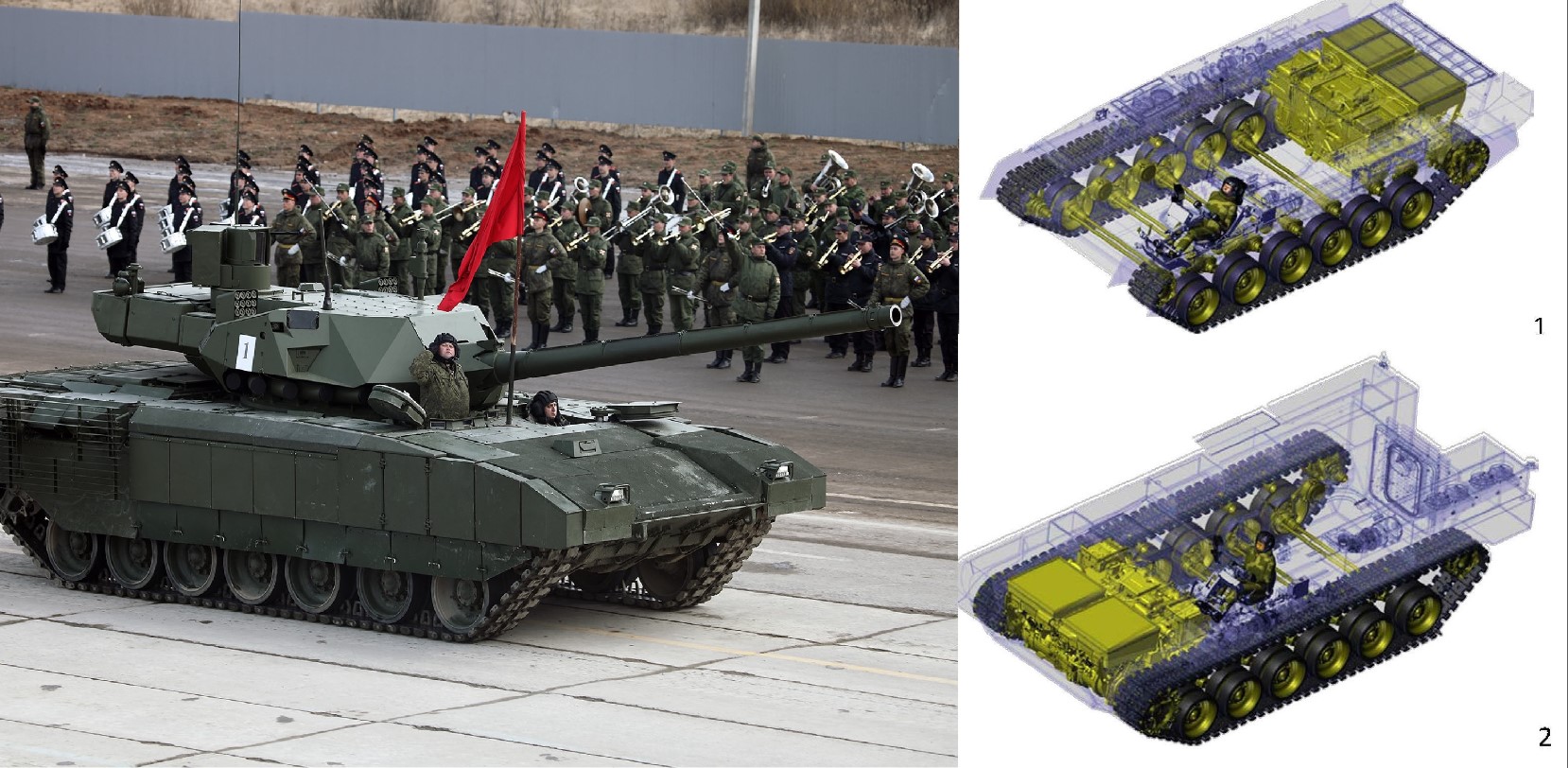
World
MOSCOW — Russia's T-14 Armata main battle tank underwent major design changes during development after engineering constraints forced the program to move away from its original compact configuration, resulting in the larger seven-road-wheel vehicle now associated with the platform. Early concept presentations showed the Armata on a six-road-wheel chassis with a smaller hull. During development, engineers incorporated the Motor-Transmission Unit (MTU) from the canceled T-95 (Object 195) program into the new platform. The size of that powerpack required a larger hull, and the final design shifted to a seven-road-wheel chassis to accommodate the internal components. The T-95 project had been canceled before the Armata program moved forward. UKBTM, the Ural Design Bureau of Transport Machine-Building, carried over elements from the earlier project while developing the new tank under its parent company, Uralvagonzavod (UVZ). Reports on the program say the preliminary images shown during the approval stage differed from the final vehicle that entered prototype production. Once physical prototypes were built, the original compact layout could no longer accommodate the large MTU and the chassis had to be redesigned. Engine selection became another issue during development. One option was the 6TD opposed-piston diesel engine. After the breakup of the Soviet Union, production facilities for the engine remained in Ukraine, leaving Russia without direct access to it for the Armata program. Another alternative was the gas turbine engine used in the T-80 series. Development priorities inside Russia's armored vehicle industry favored other programs, while competition between different tank designs affected decisions on future powerplant selection. The production vehicle uses the A-85-3, also known as the 12N360, an X-shaped 12-cylinder multi-fuel diesel engine. The complete Motor-Transmission Unit weighs about 5,150 kg, while the engine itself weighs roughly 1,550 kg. The engine is rated at about 1,500 horsepower, although part of that output is consumed by onboard systems including cooling fans, compressors and auxiliary pumps required to operate the powerpack. Its size had a direct effect on the overall dimensions of the tank. The larger engine compartment increased the vehicle's length and contributed to the adoption of the seven-road-wheel chassis instead of the six-wheel layout shown in early concepts. The T-14 also introduced an unmanned turret, with the crew placed inside a protected armored compartment in the hull rather than beneath the turret. The tank remains the only Russian main battle tank built around that configuration. Production of the Armata has remained limited, and public information on the number of tanks in operational service is still limited. Development of the platform has involved repeated changes from its original concept as engineering requirements, engine availability and internal design decisions evolved during the program. Source: Btvt.
Read More → Posted on 2026-07-03 14:55:52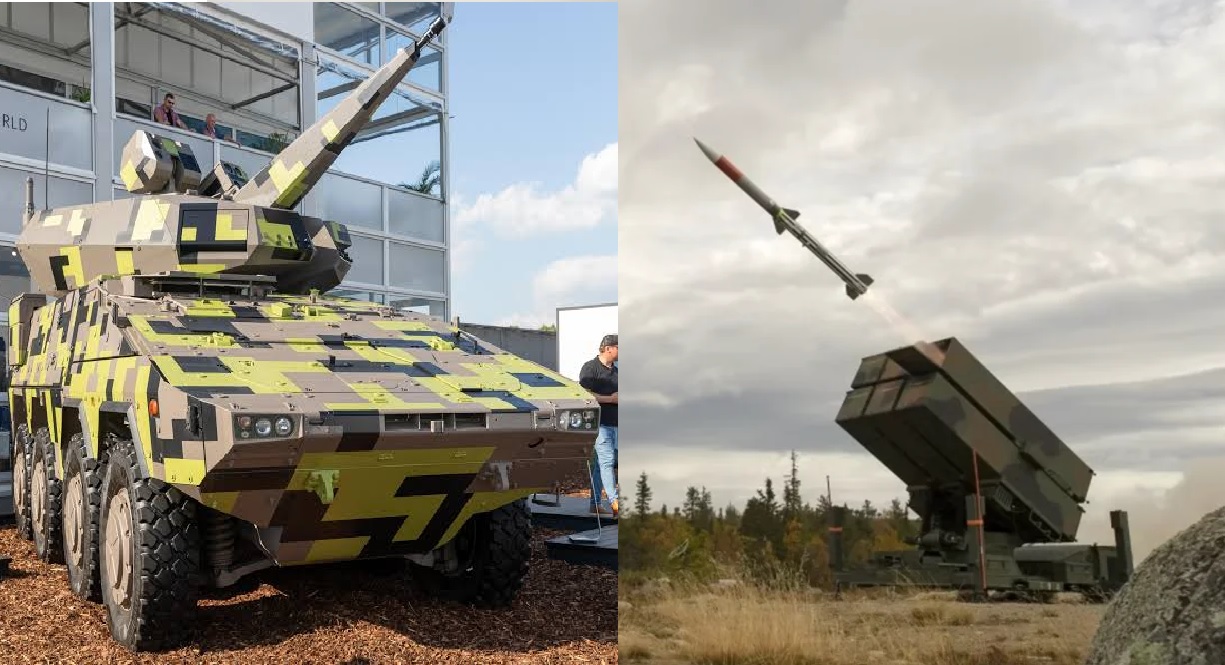
World
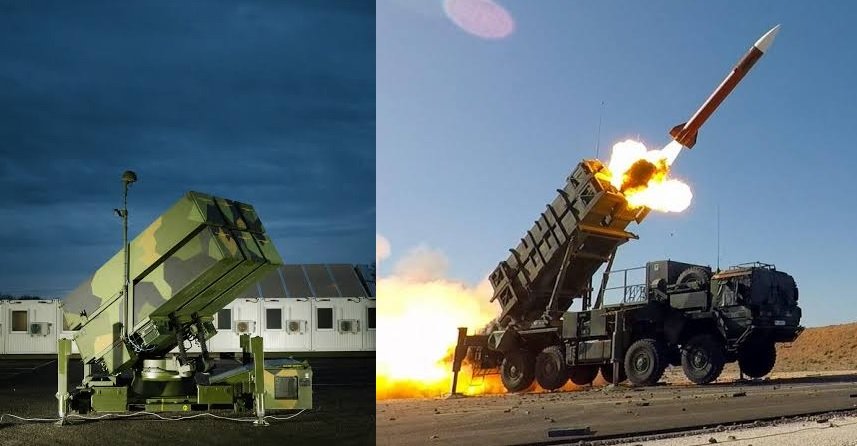
BRUSSELS — Belgium is preparing a €3.1 billion procurement of 20 Skyranger short-range air defense systems and 10 National Advanced Surface-to-Air Missile System (NASAMS) launchers, with the proposal expected to be announced during the NATO summit in Ankara on July 7-8, pending approval by the Belgian council of ministers. A Belgian official confirmed the plan to Reuters on July 2. The package restores a mobile ground-based air defense capability Belgium has lacked since the early 2010s. It also follows Defence Minister Theo Francken's earlier confirmation that the Skyranger platform would be part of the country's Strategic Vision 2025 modernization plan covering 2026-2034. Belgium intends to procure the systems through existing Dutch framework contracts instead of launching a separate tender. The Netherlands signed its agreement with Rheinmetall on Dec. 11, 2025, covering Skyranger 30 systems, tracked vehicles, static mounts and logistical support, with deliveries scheduled from 2028. Using the same framework makes the Skyranger 30 variant the expected choice for Belgium, although the government has not confirmed the final configuration. The arrangement would allow common training, shared spare parts, software updates and aligned operational procedures with the Dutch armed forces. Belgium has also not confirmed which carrier platform will be selected. The Dutch use the ACSV Gen 5 tracked support vehicle, a choice that would increase commonality but also require Belgium to operate a new tracked fleet. Static firing units remain another option for fixed-site protection, though they would not provide mobile cover for maneuvering brigades. The Skyranger 30 carries an unmanned turret fitted with a 30×173 mm Oerlikon KCE revolver cannon capable of firing about 1,200 rounds per minute at targets up to 3 kilometers away. It uses programmable AHEAD airburst ammunition, including the PMC308 round and the developing PMC455 round, which disperses around 500 tungsten fragments against drones, loitering munitions and other low-altitude threats. The system can also be equipped with short-range missiles including Stinger, Mistral 3, MBDA DefendAir or SkyKnight, extending engagement range to about 10 kilometers. Detection is provided by the Hensoldt Spexer 2000M 3D MkIII X-band AESA radar. The radar can detect small drones at 9 kilometers and low-flying helicopters at 36 kilometers. Thermal imaging and electro-optical tracking systems are integrated for target tracking and engagement. Rheinmetall displayed a layered air defense configuration at the BEDEX 2026 exhibition pairing static Skyranger 30 units with NASAMS batteries through Thales Ground Master 200 multi-mission radars. In that configuration, NASAMS engages medium-range aerial threats while Skyranger protects the missile batteries from drones and cruise missiles at close range. Belgium plans to use the systems to protect both deployed forces and critical infrastructure. Earlier reports said NASAMS batteries would also be deployed around the Port of Antwerp after several incidents involving unidentified drones over sensitive facilities. The procurement enters a European market where demand for ground-based air defense systems continues to increase. Rheinmetall plans to expand Skyranger production from about 70 turrets annually to as many as 400, but existing orders and planned acquisitions from Germany, Austria, Denmark, the Netherlands, Romania and Hungary have already filled much of the production pipeline. If approved, the procurement will provide Belgium with 20 Skyranger systems and 10 NASAMS launchers under a single €3.1 billion package while rebuilding the country's inner layer of ground-based air defense through a procurement process aligned with the Netherlands. Source: Reuters.
Read More → Posted on 2026-07-03 14:39:52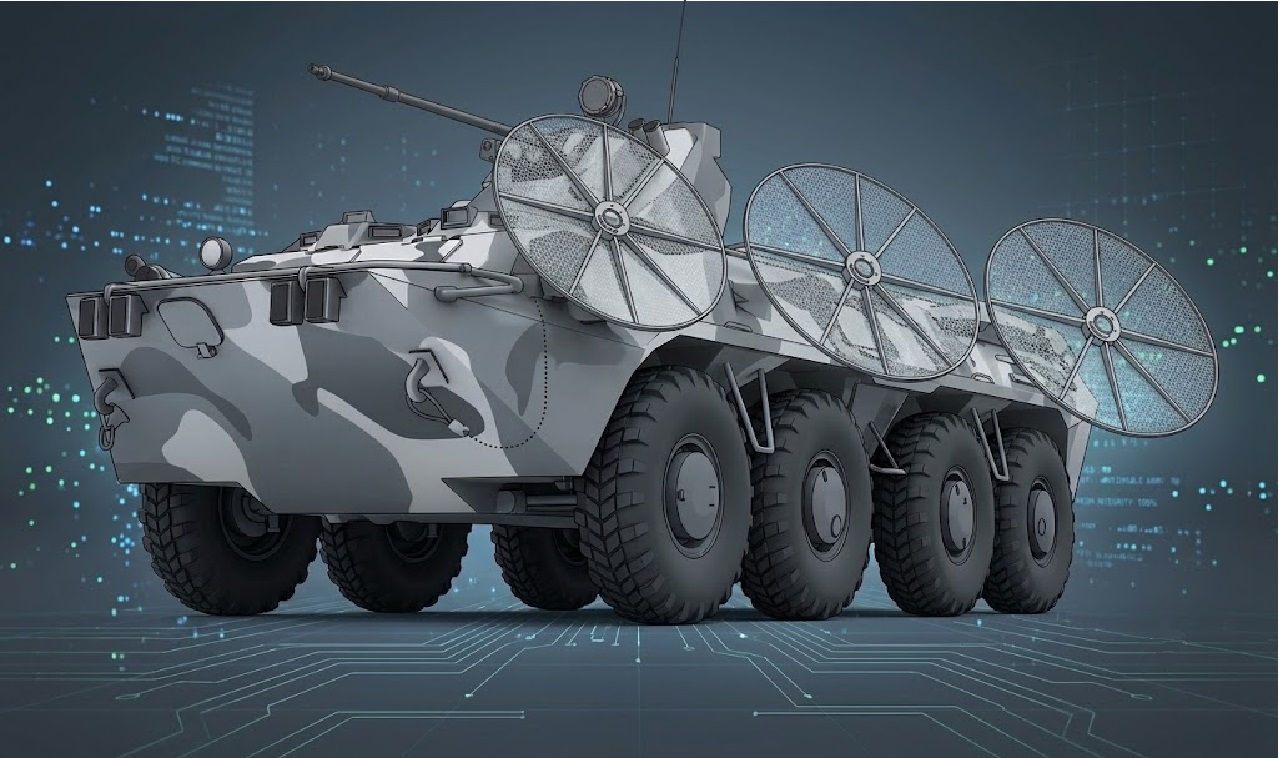
World
MOSCOW — Russia's Zhukov Order Combined Arms Academy has patented a mechanical protection system that uses a rotating, umbrella-like net launcher to defend armored vehicles against loitering munitions and FPV drones through physical interception rather than electronic jamming. The patent describes a device that can be mounted on the rear, side, or armor shielding of a vehicle. It consists of a base connected to a tube-shaped holder carrying a cartridge with a protective covering. The base also houses a drive mechanism linked to the holder, allowing it to rotate. An ejection mechanism mounted on the holder releases the cartridge after receiving a remote control signal. Inside the cartridge is a circular washer fitted with attachment points around its perimeter. Each attachment point is connected to a cable ending in a weight, while protective fabric panels are stretched between adjacent cables. Once the cartridge is ejected, the rotating mechanism spins the assembly and centrifugal force deploys the cables, weights and fabric into a wide net intended to catch an incoming drone before it reaches the vehicle. The academy states the invention provides an additional method of protecting military equipment from loitering munitions, expanding the range of countermeasures available against unmanned aerial vehicles (UAVs) used in attack roles. An experimental prototype with part of the patented features was built in 2024. Engineers mounted it on the rear of a pickup truck and used a DJI Mavic quadcopter to simulate a loitering munition. The drone approached from behind, following what the patent describes as a "hunter-like" attack profile. The launcher activated when the drone was about 3.5 meters from the vehicle. The protective net intercepted the quadcopter, with the simulated detonation taking place roughly 3 meters away from the truck instead of directly on it. The patent states this increased the vehicle's protection by moving the explosion farther from the target. The filing notes that the test used an unarmed commercial quadcopter. It does not state whether the same stand-off distance would provide equivalent protection against military drones carrying larger explosive payloads. Loitering munitions, particularly first-person-view (FPV) drones, have become a common threat to armored vehicles in the war in Ukraine. Russian forces have introduced several physical protection measures in response, including welded metal grilles, commonly known as "cope cages," fitted to tanks and other armored vehicles. The rotating umbrella launcher joins other anti-drone concepts patented by Russian military institutions. These include the Oduvanchik ("Dandelion") system, which uses flexible fiberglass rods to intercept drones, and a net-launching turret for the BTR-82A armored personnel carrier developed by the Karbyshev Military Engineering Academy that deploys perimeter netting with radar support. Unlike electronic warfare systems that attempt to disrupt radio links, the patented launcher relies on direct physical interception. That approach can also be used against drones operating with autonomous guidance or fiber-optic control, where radio-frequency jamming is ineffective. The Zhukov Order Combined Arms Academy is one of Russia's military education and research institutions. The patent documents the concept and prototype testing, but do not indicate that the system has entered serial production or operational service. Source: Btvt.
Read More → Posted on 2026-07-03 14:32:22
World
New Delhi — On July 03, 2026, India's Defence Acquisition Council (DAC) has approved capital acquisition proposals worth about ₹52,000 crore, clearing a broad package of military procurement for the Indian Army, Navy and Air Force under the Acceptance of Necessity (AoN) process. The approvals were granted during a DAC meeting chaired by Defence Minister Rajnath Singh on Friday. AoN is the first stage in India's defence procurement process before tendering and contract negotiations begin. The Indian Army received the largest share of the approvals, with procurement covering electronic warfare, air defence, armoured vehicle protection and precision strike systems. Among them is the Akash Tarang Electronic Warfare System, which will provide anti-UAV capability for frontline formations by jamming and neutralising hostile drone signals. The council also cleared jet-based kamikaze drones, giving the Army loitering munitions equipped with electronic warfare features for precision strike missions. The DAC also approved an Active Protection System (APS) for Army tanks. The system intercepts incoming anti-tank projectiles before impact, increasing vehicle survivability. Infantry units will receive the Man-Portable Anti-Tank Guided Missile (MPATGM), a shoulder-fired missile intended for engaging enemy armoured and mechanised formations across different terrain. Air defence approvals include the Medium Range Surface-to-Air Missile (MRSAM) system for engaging aircraft and missile threats at medium range. The Very Short Range Air Defence System (V-SHORADS), fitted with multi-spectral sensing technology, was also cleared. The portable system is intended for low-altitude aerial threats while improving resistance against enemy countermeasures. For the Indian Navy, the council approved the Naval Shipborne Unmanned Aerial System (NSUAS), allowing warships to launch sensor-equipped unmanned aircraft for maritime surveillance and situational awareness during operations at sea. The Navy's procurement package also includes the Multi Influence Ground Mine (MIGM), which will be used to restrict an adversary's freedom of manoeuvre in maritime areas. The DAC also cleared the establishment of a Land-Based Testing Facility (LBTF) to evaluate electric motors and propulsion systems for future naval warships. The facility will support testing before those systems are integrated into operational platforms. For the Indian Air Force, the council approved procurement of the Fixed-Wing High Altitude Pseudo Satellite (FW-HAPS). The solar-powered unmanned platform operates in the stratosphere for extended periods and will provide intelligence, surveillance and reconnaissance (ISR), telecommunications and remote sensing capability over wide areas. It can remain airborne for months, depending on mission requirements. The procurement package places emphasis on indigenous technology alongside unmanned systems and electronic warfare capabilities. Several of the approved systems are intended to support domestic defence manufacturing as India continues reducing dependence on foreign military imports. The approvals issued on July 3 cover only the Acceptance of Necessity (AoN) stage. The programmes will now move into the next phases of the procurement process, including preparation of tenders, technical evaluation and contract award before production and induction into service. Source: PIB Delhi.
Read More → Posted on 2026-07-03 14:02:36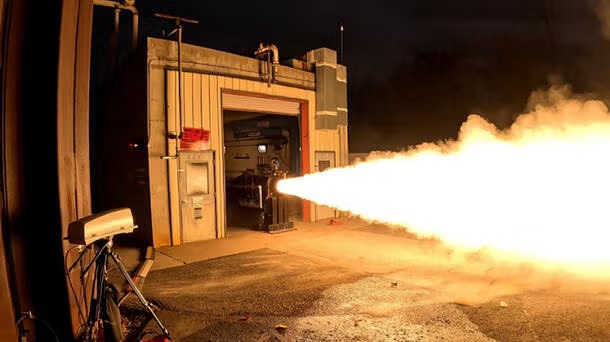
World
ORANGE COUNTY, Va. — L3Harris Technologies has completed the first full-scale ground test of a newly developed solid fuel ramjet propulsion system at its Orange County, Virginia, facility, validating a new fuel formulation intended to lower production costs while supporting longer-range, high-speed missile programs. The company announced the successful test on July 1. It was the first full-scale evaluation of a newly formulated solid fuel ramjet grain, with engineers operating the propulsion system in a direct-connect, flight-representative test environment that simulated actual flight conditions. The test campaign covered a broad portion of the engine's expected flight envelope. L3Harris said the propulsion system generated thrust levels consistent with flight expectations, providing data that will be used before the technology advances into tactical missile flight demonstrations. The new fuel chemistry was developed to reduce manufacturing costs compared with historical industry standards, addressing production challenges identified across the defense industrial base. The company said the work supports U.S. military requirements for weapons that combine extended range, sustained speed and lower production cost at larger manufacturing volumes. "This test is an important step in proving solid fuel ramjet propulsion can deliver the speed, range, and affordability our customers need," Scott Alexander, President of Missile Propulsion at L3Harris, said. "We are reducing risk now so we can move faster toward a scalable capability for the warfighter." Unlike conventional solid rocket motors, a ramjet uses oxygen from the atmosphere instead of carrying an onboard oxidizer. That reduces propulsion system weight and allows sustained supersonic flight, typically above Mach 2, over longer distances. Solid fuel ramjets also have fewer moving parts than liquid-fueled ramjets and do not require complex fuel plumbing, simplifying manufacturing, handling and long-term storage. "We are designing for manufacturing, performance, and production capacity with a straightforward goal of more speed, more range at a cost point that supports affordable mass," Joel Warhurst, L3Harris Director of Business Development, said. L3Harris said it is applying advanced manufacturing methods, including high-temperature 3D printing, to shorten production time and simplify component designs. The company has invested internal funding over the past several years to mature its ramjet and advanced propulsion technologies. The propulsion system was tested at the company's Orange County site, which is being expanded under the Virginia Advanced Propulsion Facilities program. In April 2026, L3Harris announced a $1.5 billion investment to increase solid rocket motor production capacity at the location. The 2,000-acre campus includes 256,000 square feet of manufacturing space, a static test facility, an aerothermal propulsion laboratory and an altitude test site. L3Harris said additional ground testing will be completed before the propulsion system moves into live tactical missile flight demonstrations. Source: L3Harris.
Read More → Posted on 2026-07-03 13:10:41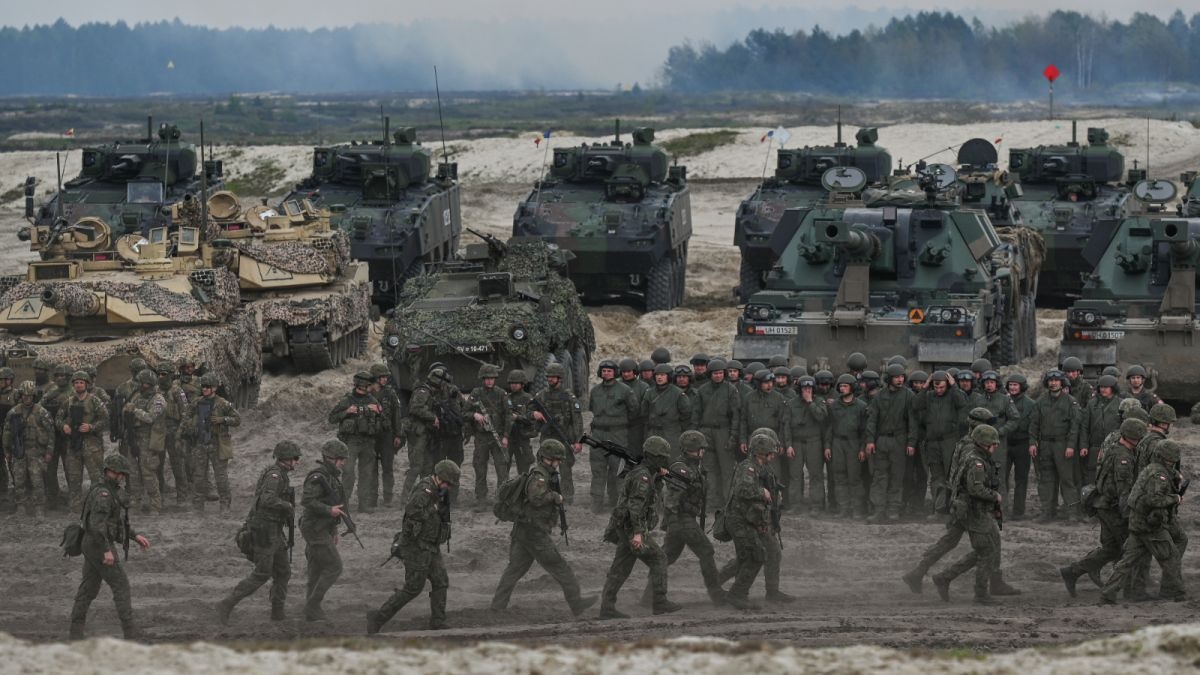
World
WARSAW, Poland — The United States has warned Poland that Russia may be preparing a series of armed provocations on Polish territory designed to test NATO's response while avoiding a wider military conflict, according to Polish and allied security sources. The intelligence was shared directly with the administration of Polish President Karol Nawrocki. Sources familiar with the matter told Polish news outlet Onet and The Telegraph that the alleged operation could take place within the coming months. According to the reported intelligence, Russia is examining several possible scenarios that range from hybrid operations to limited military actions intended to increase pressure on NATO without triggering a full-scale war. Among the options being discussed are simulated air attacks that would force Poland to activate its air defense systems, as well as drone or missile strikes targeting critical infrastructure, including power stations and other key facilities. Security officials believe such actions would be intended to create instability while remaining below the threshold of a large conventional attack. Polish intelligence sources also warned that Moscow is considering a limited ground incursion involving a small number of Russian or Belarusian troops crossing into Polish territory. Rather than seeking military gains, such an operation would reportedly be aimed at creating a political crisis within the alliance. According to the intelligence assessment, Russia could attempt to portray any border crossing as an accident. Possible explanations discussed by officials include troops allegedly losing their way because of a GPS malfunction or crossing the border during what would be described as a rescue mission to recover a disabled helicopter. Security officials believe the objective would be to force a political response instead of a military one. Russian planners reportedly calculate that if a small force entered Polish territory, Washington could urge Warsaw to avoid opening fire and instead pursue negotiations to prevent the situation from escalating into a broader confrontation involving NATO's Article 5 collective defense commitment. Sources said Moscow could then use the withdrawal of its forces as leverage during negotiations, potentially demanding that Western countries suspend or reduce military assistance to Ukraine in exchange for ending the incident. A Baltic security source also told reporters that such scenarios are actively being discussed in Moscow. The source added that Russia could attempt a false flag operation in which it carries out a provocation but publicly blames the Ukrainian military in an effort to weaken support for Kyiv among NATO allies. The reported intelligence has been corroborated by multiple officials, including a source close to President Karol Nawrocki, a Polish Defense Ministry official and a NATO ambassador, according to the reports. Officials said any ground-based operation would most likely originate from Belarus, which has become increasingly integrated with Russia's military, or from Russia's heavily militarized Kaliningrad exclave on Poland's northern border. Kaliningrad hosts Russia's Baltic Fleet and is widely believed to contain nuclear-capable military assets. Military planners have long viewed the Suwalki Gap, the narrow land corridor between Kaliningrad and Belarus connecting Poland with the Baltic states, as one of NATO's most strategically sensitive areas because it represents the alliance's primary land link to Estonia, Latvia and Lithuania. The latest warnings are consistent with previous assessments by regional intelligence agencies, including Latvia, which have cautioned that Russia could attempt hybrid operations targeting Poland or the Baltic states as part of broader efforts to test NATO's unity and resolve. Poland has continued to strengthen its military posture in recent years through increased defense spending, expanded border security measures and regular participation in NATO exercises along the alliance's eastern flank. Polish authorities remain in close coordination with the United States and other allies as they monitor developments. The reported intelligence comes as Russia's war in Ukraine continues and both sides maintain long-range strikes against military targets. Western governments have repeatedly warned that hybrid activities, including cyberattacks, sabotage, disinformation campaigns and limited cross-border incidents, remain part of the broader security challenge facing NATO's eastern members. No official Russian response to the reported intelligence has been issued. The reports are based on unnamed Polish, NATO and allied security sources, who also noted that there is no indication the Kremlin has made a final decision to carry out any of the scenarios under discussion. Polish and U.S. authorities continue to assess the intelligence while preparing contingency plans for potential developments along NATO's eastern border. Our Analysis The reported intelligence outlines scenarios that officials say are being discussed, not a confirmed Russian decision to carry out an operation. The reports themselves note there is no indication the Kremlin has approved any of the proposed actions. Russia is also dealing with continuing Ukrainian long-range drone attacks on military and energy infrastructure. The strikes have hit multiple oil refineries across the country. At their peak, they are estimated to have disrupted 17% to 20% of Russia's total oil refining capacity, with daily fuel output falling by roughly 13%. Repair work is still underway at several facilities, while Ukrainian drones continue to reach targets deep inside Russian territory, keeping pressure on both Russia's air defense network and its energy sector. Reuters has reported that Russia has started importing gasoline to help stabilize domestic fuel supplies. Industry sources said the country has already received at least 60,000 metric tons of gasoline from India and is planning to import around 400,000 metric tons per month from several suppliers, including Belarus, as refinery repairs continue. Taken together, these developments show that Russia remains heavily engaged in managing the war in Ukraine while also dealing with the impact of repeated attacks on its energy infrastructure. Given those ongoing military and energy pressures, Russia appears unlikely to risk a direct incident with a NATO member before stabilizing its domestic fuel situation and reducing the pressure created by continuing Ukrainian long-range drone attacks. At the same time, there is no publicly available evidence that Moscow has decided to carry out any of the scenarios described in the reported U.S. intelligence. For now, the warnings should be viewed as intelligence assessments rather than confirmation that an operation has been approved. Source: The Telegraph.
Read More → Posted on 2026-07-03 12:42:49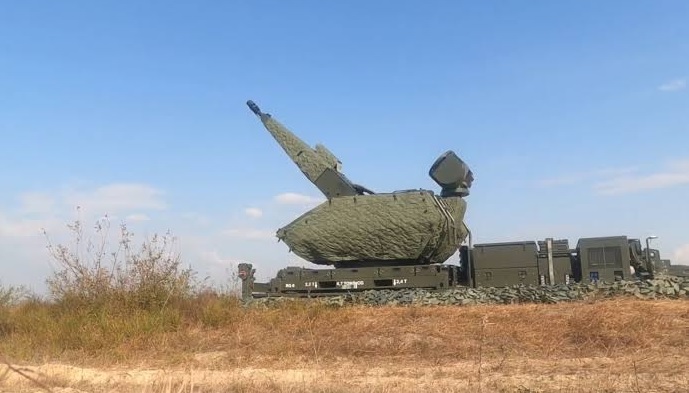
World
DÜSSELDORF, Germany — Rheinmetall has received an international contract worth several hundred million euros to supply four Skynex air defense systems to an undisclosed customer, the company said. The order was booked in the second quarter of 2026 and is the first Skynex purchase by that customer. The contract covers four complete Skynex batteries with deliveries scheduled over 39 months. The first battery will be delivered 21 months after the contract is signed. The remaining three batteries will follow one after another at six-month intervals. The package also includes transport trucks, specialized ammunition and a full Integrated Logistic Support (ILS) package. The support package covers operator and maintenance training, spare parts, special tools and consumables needed to keep the systems operational after delivery. All of those elements are included within the overall contract value. Rheinmetall Italia is the prime contractor for the program. Production and delivery will involve several companies across the Rheinmetall Group, including Rheinmetall Air Defence, Rheinmetall MAN Military Vehicles and Rheinmetall Weapon and Munitions (Switzerland). Skynex is Rheinmetall's gun-based very short-range air defense system. It is used for counter-unmanned aerial system (C-UAS) missions and Counter-Rocket, Artillery and Mortar (C-RAM) operations. The system can engage drones, including drone swarms, as well as rockets, artillery rounds and mortar shells. The system uses 35 mm automatic cannons firing programmable ammunition. Its modular architecture allows it to be integrated into wider air defense networks and configured for different operational requirements. The order follows earlier Skynex deliveries, including systems supplied to Ukraine and Italy. Rheinmetall has continued production of the system as demand for short-range air defense and counter-drone capabilities has increased in recent years. The company did not identify the customer or disclose the exact contract value beyond saying it was in the range of several hundred million euros. The full program will run for 39 months from contract signature. Source: Rheinmetall.
Read More → Posted on 2026-07-03 12:27:05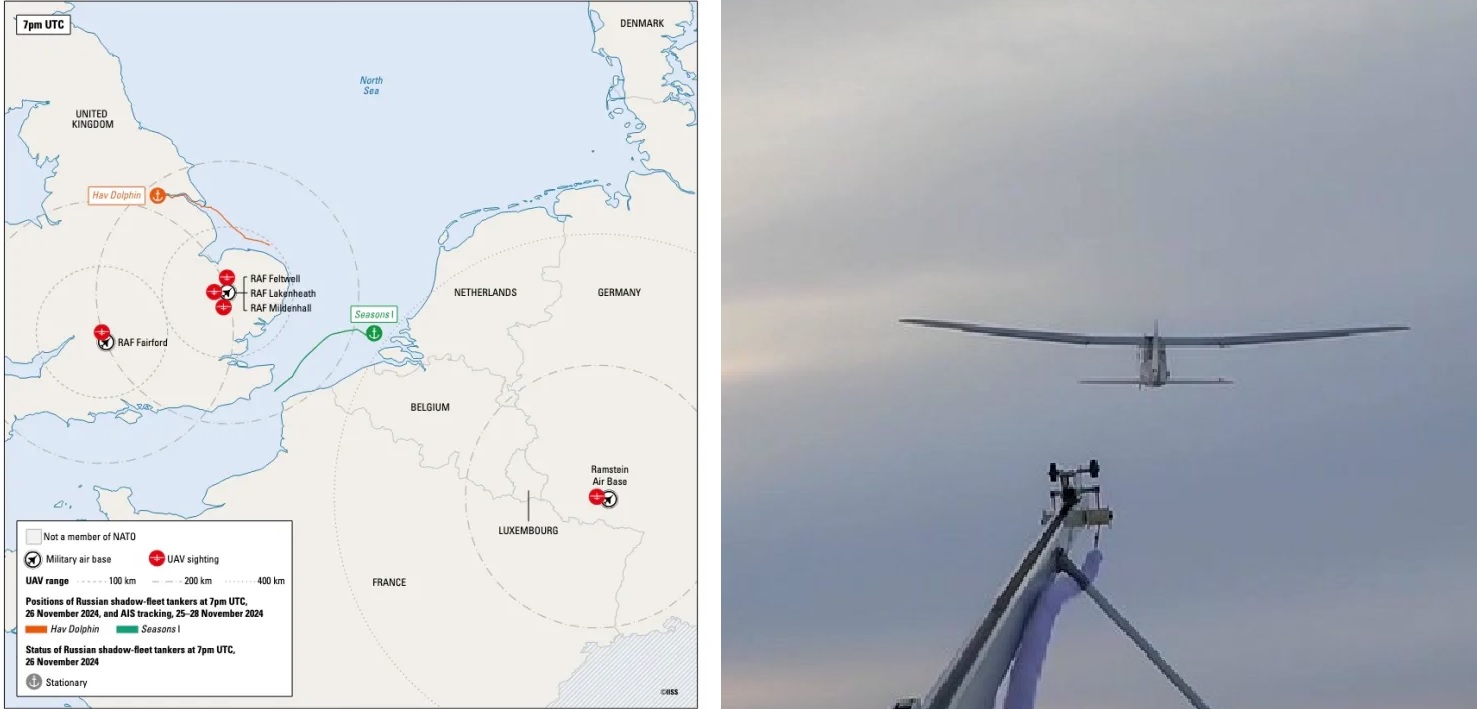
World
LONDON — Russia's so-called shadow fleet was highly likely used as a launch and recovery platform for drones that carried out surveillance missions over military bases across Europe, including U.S. Air Force installations in England and Germany, a new report by the International Institute for Strategic Studies (IISS) said. This report assesses that it is highly likely the Kremlin conducted a coordinated Uninhabited Aerial Vehicle (UAV) campaign over Europe between August 2024 and February 2026, spanning a dozen NATO states and Ireland. It is also likely that Russian-linked vessels and the shadow… pic.twitter.com/pGRtWRHPtE — IISS News (@IISS_org) July 2, 2026 The study examined 144 drone incursions recorded across 13 NATO countries and Ireland between August 2024 and February 2026. The incidents targeted military bases, nuclear facilities and other sensitive defense sites. IISS assessed that the operation was likely coordinated by Russia's Main Directorate of the General Staff (GRU), using commercial vessels operating in coastal and international waters to deploy uncrewed aircraft. The first wave of incidents documented in the report occurred in late November 2024, when unidentified drones repeatedly flew over RAF Lakenheath, RAF Mildenhall, RAF Feltwell and RAF Fairford in England. Around the same period, drones were also reported over Ramstein Air Base in Germany. RAF Lakenheath received particular attention. At the time, infrastructure work was underway to prepare the base for the return of U.S. B61 nuclear gravity bombs. Those weapons were deployed there in July 2025, the report said. Drone activity continued through 2025. In December, at least five drones were detected over France's Île Longue naval base in Brittany, home to the country's sea-based nuclear deterrent. Similar incursions were reported over Kleine-Brogel Air Base in Belgium and Volkel Air Base in the Netherlands, both locations that store U.S. nuclear weapons under NATO arrangements. Investigators combined open-source shipping records, drone performance data and the timing of the incidents to trace possible launch platforms. The report says Russian-linked commercial ships, including sanctioned oil tankers, coastal freighters and civilian vessels operating with disabled tracking transponders, were likely used to launch and recover the aircraft offshore. One vessel identified in the report is the cargo ship Hav Dolphin. Shipping data placed the vessel in Hull during the same period drones appeared over nearby RAF bases in November 2024. German and Dutch authorities later examined the ship in May 2025 after drones were reported over German defense facilities while it was anchored in the Kiel Bight. Another vessel, Seasons 1, was operating in the North Sea near British military installations during several of the reported drone sightings. Using commercial ships allowed operators to remain outside military security perimeters while providing a mobile platform that could launch and recover aircraft from coastal or international waters. Witnesses at RAF Lakenheath said the drones approached at low altitude with visible navigation lights before climbing as they departed. Observers also reported engine noise more consistent with petrol-powered aircraft than the electric motors typically used by consumer drones. The report identifies the Russian-built Orlan-10 as one possible platform. The aircraft uses an internal combustion engine, has an operational range of up to 500 kilometers and an endurance of about 12 hours. It can also carry electronic warfare equipment for signal monitoring and communications interference. Those characteristics fit a maritime launch profile from ships operating well offshore. IISS also said modified commercial drones or custom-built long-range fixed-wing aircraft using cellular communication systems instead of conventional radio links remain a plausible alternative. Using those platforms would make attribution more difficult than deploying a recognizable Russian military drone. None of the drones involved in the 144 recorded incidents were intercepted or recovered, the report found. The flights exposed gaps in NATO's ability to detect and counter small, low-flying surveillance drones operating around military facilities. A February 2025 investigation by the UK-based The i Paper suggested the incursions over British bases may have involved GRU operatives on the ground. The reporting prompted calls from former UK Security Minister Tom Tugendhat for a parliamentary inquiry. A subsequent investigation by the UK Ministry of Defence did not identify any suspects. The UK Ministry of Defence declined to comment on intelligence matters following publication of the IISS report. The ministry said it takes the security of military bases seriously, has invested in counter-drone capabilities and that the Armed Forces Bill will provide defence personnel with greater powers to defeat drones threatening military sites. U.S. Air Forces in Europe confirmed the drone activity over its installations in England during 2024. A spokesperson said the events were monitored and there was no impact on personnel or operations. The command declined to discuss intelligence assessments related to those responsible, citing operational security. European governments have not publicly accused Russia of launching drones from commercial vessels, although the IISS report says officials privately acknowledged the suspected connection between the drone flights and Russian-linked ships. Source: IISS and The War Zone
Read More → Posted on 2026-07-03 12:11:09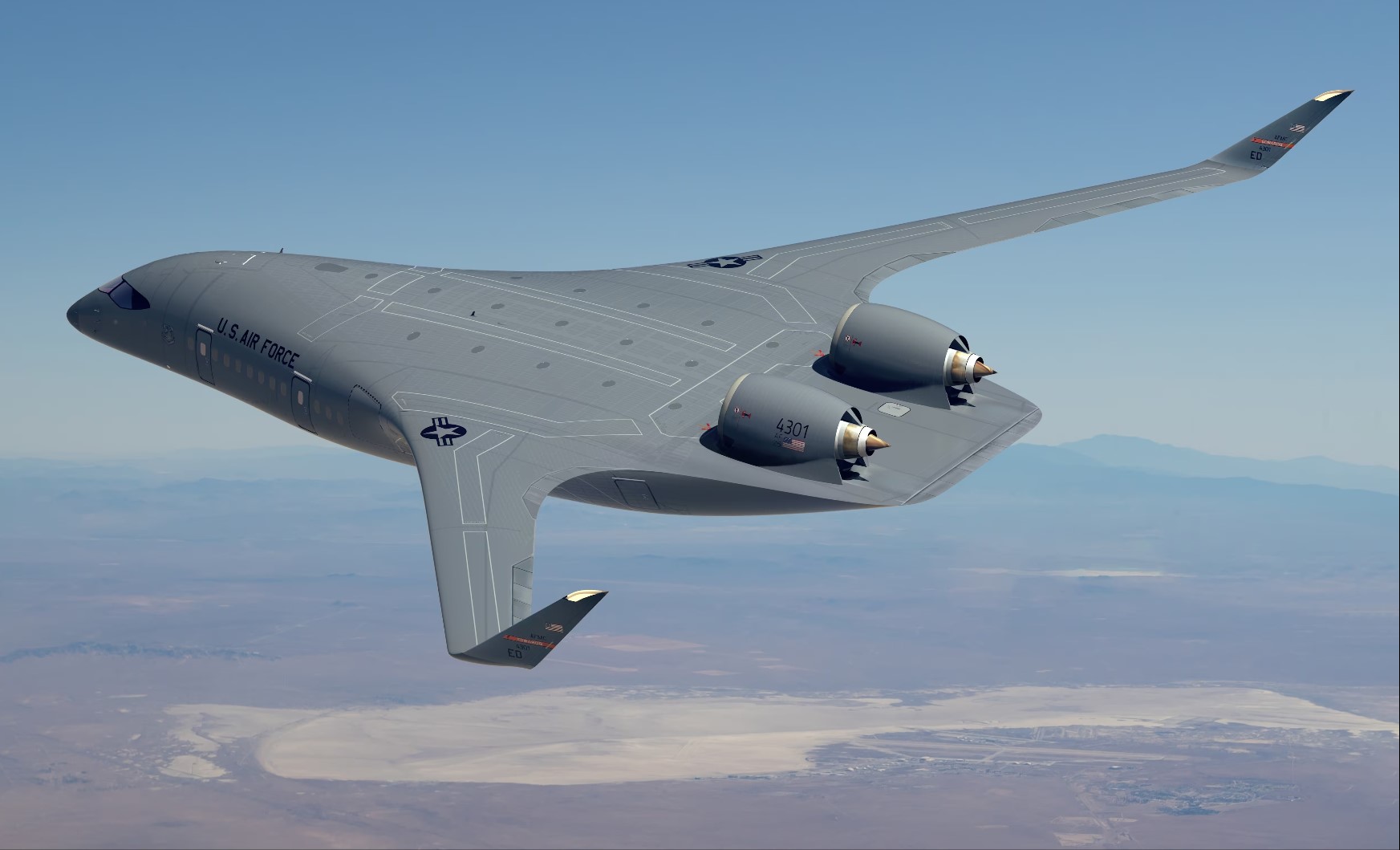
U.S. Air Force Seeks Industry Concepts for Next-Generation Airlifter, Including Pilotless Operations
World
WASHINGTON — The U.S. Air Force has opened industry discussions on a next-generation strategic airlift aircraft that could eventually fly with a traditional crew, operate as an optionally crewed platform, or fly fully autonomously as it replaces both the C-5M Super Galaxy and C-17A Globemaster III fleets. The Air Force Life Cycle Management Center's Mobility Aircraft Directorate released a Request for Information (RFI) for the Next Generation Airlift (NGAL) program on June 12. Companies have until 5:00 p.m. Eastern on July 17 to submit white papers outlining potential concepts. Questions from industry, answered by the Air Force in a public update posted on July 2, show the service is not limiting proposals to conventionally crewed aircraft. It is seeking an unconstrained view of future crew concepts, leaving industry free to propose everything from standard flight decks to fully autonomous operations. The aircraft would replace two of the Air Force's largest transport fleets with a single platform. The service currently operates 222 C-17A Globemaster III aircraft, which entered service in 1995 before production ended in 2015, and 52 C-5M Super Galaxy aircraft based on airframes built between 1968 and 1989 and later modernized. Keeping both fleets in service over the coming decades is becoming more difficult. Air Force budget documents show the C-5M mission-capable rate has fallen to 37 percent, leaving fewer than four out of every 10 aircraft available for missions at any given time. Jessica Ruttenber, a former Air Force pilot and program manager who previously managed both the C-5 and C-17 portfolios, said the readiness figures are consistent with the aircraft's age. "It's a grandfather jet, so it doesn't surprise me one bit," Ruttenber said. The Air Mobility Command's Airlift Recapitalization Strategy, signed by Brig. Gen. David Fazenbaker in November 2025, projects the C-17 fleet remaining in service until around fiscal year 2075. Under that timeline, the youngest aircraft would reach roughly 80 years of service before retirement. The Air Force is planning one replacement aircraft rather than separate successors for the C-5 and C-17. Gen. John Lamontagne, who led Air Mobility Command while the strategy was being developed, outlined that approach during the Air & Space Forces Association's 2025 conference. "When I say two-for-one, we're probably going to procure one aircraft. We won't get a C-5 replacement and a C-17 replacement. There'll be one airplane that does strategic airlift," Lamontagne said. Current planning calls for NGAL to begin replacing the C-5M fleet on a one-for-one basis around fiscal year 2050, about five years later than an earlier 2045 objective. Replacement of the C-17 fleet would follow. The Air Force estimates it will acquire about 274 aircraft over roughly five decades. If funding remains consistent and the acquisition schedule is maintained, the first NGAL aircraft could be produced in fiscal year 2038, with initial operational capability planned for fiscal year 2041. The RFI sets several fixed design limits. NGAL must have a wingspan below 223 feet (68 meters) so it can continue using existing taxiways, hangars and parking ramps worldwide. The limit is only slightly larger than the C-5's 222.7-foot (67.9-meter) wingspan. It must also carry at least 160,000 pounds (72,575 kilograms) of cargo and fly 2,500 nautical miles (4,630 kilometers) without aerial refueling. That exceeds the C-17's unrefueled range of 2,400 nautical miles (4,445 kilometers) while carrying a heavier payload. Industry also asked whether the aircraft would be expected to operate from rough or unpaved airstrips and perform low-level flight profiles. The Air Force said formal requirements will depend on an Analysis of Alternatives scheduled for fiscal year 2027, but early operational assessments indicate low-level flight capability will likely be required. The current RFI is an early step in the acquisition process. Industry responses will help shape the requirements for an aircraft expected to eventually take over the Air Force's long-range strategic airlift mission from both the C-5M and C-17 fleets. Source: Defence-Blog.
Read More → Posted on 2026-07-03 11:49:58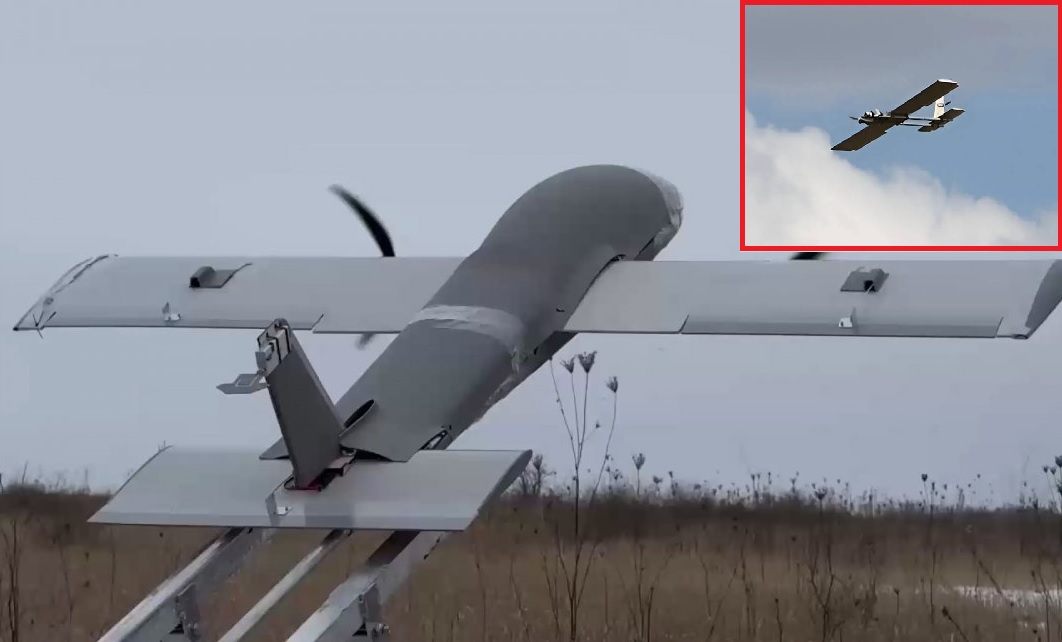
World
KYIV — Russian forces have started using a modified version of the Molniya strike drone in Ukraine that can continue its mission without the control antenna previously required for real-time operator guidance, according to Ukrainian radio technology specialist and Defense Ministry adviser Serhii "Flash" Beskrestnov. One of the drones was recovered after striking a Ukrainian facility. Beskrestnov said the aircraft carried only an onboard computer and a camera, with no antenna for an active control link. "The UAV had only a camera and a computer. This is where everything is heading," Beskrestnov said. "Navigation, target acquisition, and the attack will become fully autonomous." The Molniya is a low-cost fixed-wing strike drone that has been widely used by Russian forces during the war. Built from simple materials including plywood and foam, it has often been described as the "Kalashnikov of drones" because of its low production cost and ability to be produced in large numbers. Earlier Molniya variants depended on a live radio link that allowed operators to steer the drone using a video feed. Ukrainian electronic warfare units could disrupt those attacks by jamming the communication signal before the drone reached its target. The recovered version removes that dependency. With onboard visual processing and computing, the aircraft can continue flying toward its objective even if communication with the operator is lost or electronic jamming blocks the control link. Beskrestnov said Russian forces had previously fielded similar neural network technology on the V2U loitering munition, which was used to develop AI targeting models. The same approach has now appeared on the Molniya. "Today, we found the same solution on the Molniya. This is a bad sign," he said, calling on military personnel and civilians to report any recovered drone components for technical examination. Reports from the battlefield indicate Russian units are employing the autonomous Molniya more frequently in southern Ukraine, including the heavily contested Zaporizhzhia region, where intensive electronic warfare has made radio-controlled drones more difficult to operate. Ukraine is also deploying autonomous strike drones. One example is the Hornet fixed-wing attack drone produced by Perennial Autonomy, a U.S. defense technology company backed by former Google Chief Executive Eric Schmidt. The Hornet follows a similar operating concept by reducing reliance on continuous radio control during the final phase of flight. It costs about $5,000 to produce, carries a 5-kilogram warhead and has an operational range of up to 200 kilometers. Elite Ukrainian formations, including the Azov Corps, have used the Hornet during recent "Middle Strike" operations against Russian logistics vehicles, ammunition storage sites and supply convoys behind the front line using AI-assisted targeting. The appearance of autonomous versions of both the Russian Molniya and the Ukrainian Hornet reflects the increasing use of onboard computing and AI-assisted targeting in low-cost strike drones. Electronic warfare remains widely used across the battlefield, but drones capable of navigating and identifying targets without continuous operator input reduce the dependence on radio links that have traditionally been vulnerable to jamming. Source: Pravda.
Read More → Posted on 2026-07-03 11:20:17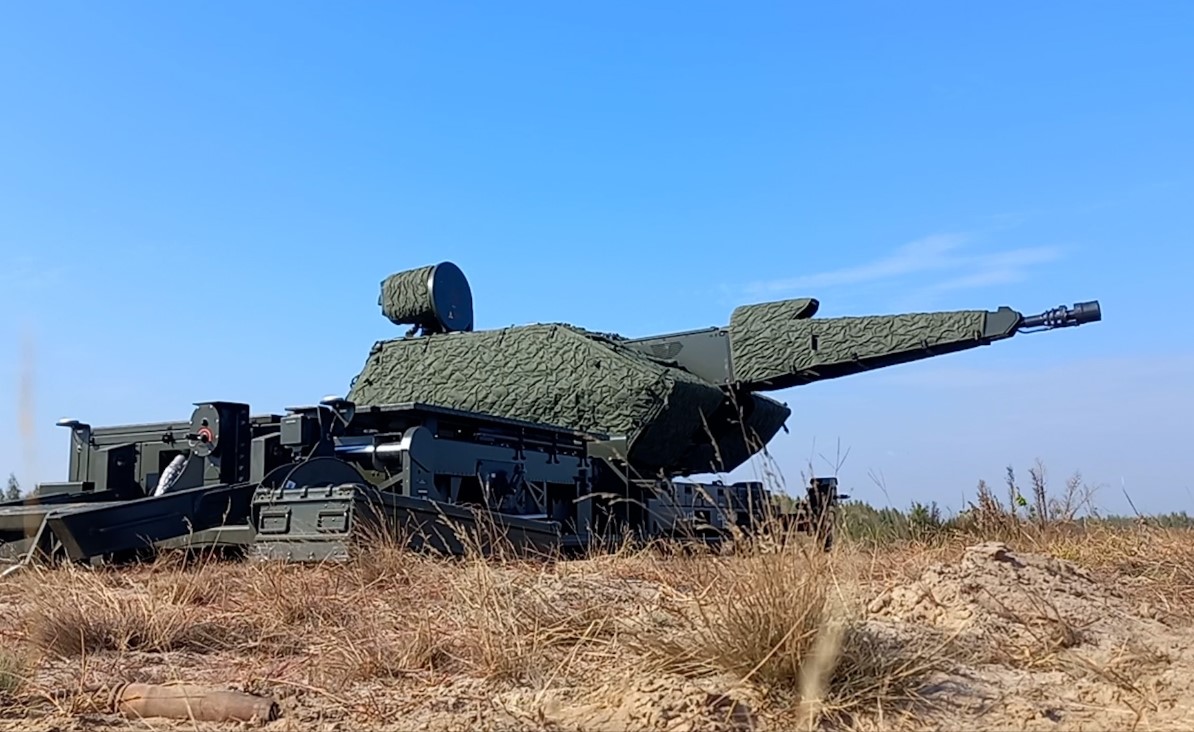
Leaked Ukrainian Report Says Skynex Air Defense System Suffered Failures During Russian Drone Attack
World
BERLIN — A leaked internal Ukrainian military assessment says the German-made Skynex air defense system experienced multiple technical failures during a Russian drone attack on April 1, 2026, allowing a Shahed-type drone to reach and strike an industrial facility in western Ukraine despite being engaged by the air defense network. The assessment, first reported by the German magazine Stern, describes a layered defense made up of two Skynex batteries protecting the site. The deployment included eight 35 mm anti-aircraft gun mounts, two X-TAR3D radar stations and two command posts, providing overlapping coverage against incoming aerial threats. The document says the system had several opportunities to intercept the drone but failed to destroy it before impact. Two independent witnesses cited in the report confirmed the drone passed through the defensive perimeter and hit its intended target. The report attributes the failed interception to a combination of equipment malfunctions and target-tracking problems that developed shortly after the engagement began. Three of the eight gun mounts reportedly went offline within minutes. The assessment lists defects in the hydraulic systems, tracking radar malfunctions and mechanical jams in the ammunition loading mechanism. As those problems spread through the network, only two guns were able to maintain stable tracking of the incoming drone. Ukrainian officials who prepared the assessment described the equipment as having "low operational readiness" and performing "extremely unreliably." The document says the combat performance observed during the April 1 engagement did not match the technical specifications presented by the manufacturer. Rheinmetall, which manufactures the Skynex system, declined to comment on the specific operational details or the date of the engagement, citing security reasons. The company rejected the assessment's conclusions and said Skynex has proven "extremely effective and reliable" during operations in Ukraine. It also said previous feedback received from Ukrainian operators had been positive. German military officials also cautioned against drawing broad conclusions from a single incident. They said the number of Skynex systems currently deployed in Ukraine remains too small to assess the platform's overall operational performance. Officials also said operator error or mistakes during technical maintenance may have contributed to the reported failures, rather than faults in the hardware itself. Skynex is a modular short-range air defense system used to defend critical infrastructure against drones, cruise missiles, helicopters and low-flying aircraft. A standard battery consists of a command post, radar and four automated 35 mm artillery mounts, commonly the Oerlikon Mk3. The guns can fire up to 1,000 rounds per minute and use AHEAD programmable airburst ammunition. Rather than relying on direct hits, the 35 mm rounds detonate near the target and release a cloud of tungsten sub-projectiles intended to destroy incoming aerial threats. The April 1 assessment reflects the findings from that single engagement. Rheinmetall continues to dispute those findings, while German officials say more operational data is needed before judging the system's overall performance. Source: Stern.
Read More → Posted on 2026-07-03 11:05:07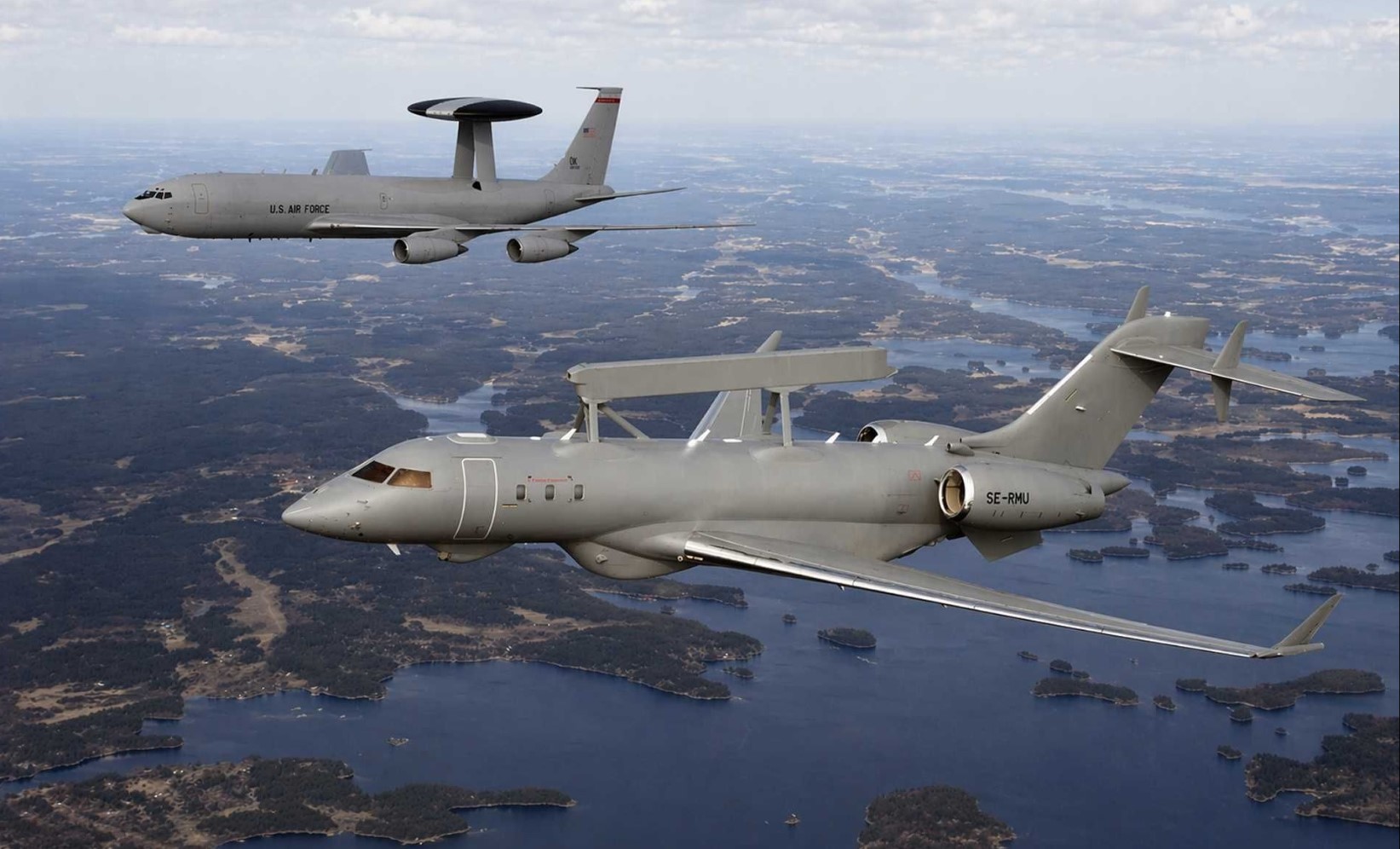
World
ANKARA, Turkey — According to a Reuters report, NATO will replace its fleet of Boeing E-3A Airborne Warning and Control System (AWACS) aircraft with Sweden's Saab GlobalEye, with the decision set to be announced at the alliance's summit in Ankara on July 7-8. Four sources familiar with the discussions said NATO has selected the Swedish platform after reviewing options to replace the alliance's aging airborne surveillance fleet. A NATO spokesperson confirmed that a decision on the AWACS replacement will be announced during the summit but declined to provide further details. Saab also declined to comment. The alliance operates 14 Boeing E-3A Sentry aircraft based at Geilenkirchen Air Base in Germany. The aircraft entered NATO service in 1982 and have provided airborne surveillance, command and control, and airspace monitoring for more than four decades. In recent years, they have flown surveillance missions along NATO's eastern flank following Russia's invasion of Ukraine. Although the fleet has received upgrades to extend its service life until around 2035, the aircraft are built on Boeing 707 airframes that have become increasingly expensive to maintain. NATO has also been seeking improved capability against low-flying cruise missiles, drone swarms and targets with reduced radar signatures over land and sea. The alliance had previously considered Boeing's E-7 Wedgetail to replace the E-3 fleet. That plan changed after the Pentagon dropped its 2025 proposal to buy 26 E-7 aircraft and shifted its focus toward satellite-based tracking. U.S. Defense Secretary Pete Hegseth later told Congress the Pentagon is seeking to restore funding for the E-7 program, but NATO moved ahead with the Saab option. The GlobalEye is built on the Bombardier Global 6000/6500 business jet platform instead of a large commercial airliner. The smaller aircraft consumes less fuel, requires lower maintenance and operates with a smaller crew because of higher onboard automation. Its primary sensor is Saab's Erieye Extended Range (ER) active electronically scanned array (AESA) radar mounted in a fixed "ski-box" configuration above the fuselage. The radar tracks air, land and maritime targets at the same time, including low-flying threats and objects with smaller radar signatures. Flying at about 35,000 feet, the aircraft can detect targets at ranges exceeding 450 to 550 kilometers. It has an endurance of more than 11 hours and can operate from runways of about 6,500 feet. GlobalEye entered operational service in 2018. NATO has not disclosed how many aircraft it intends to buy. Sources said the final order could depend on whether the alliance chooses a version equipped with aerial refueling capability, allowing the aircraft to remain on station for longer periods during missions similar to those flown near Ukraine. Geilenkirchen Air Base will remain NATO's airborne surveillance hub and could eventually operate what would be the world's largest GlobalEye fleet. The procurement will direct the contract to Sweden's Saab rather than a U.S. defense manufacturer. Reports of the pending agreement pushed Saab shares up 6.3%. The decision follows Canada's recent order for six GlobalEye aircraft as part of its effort to modernize its airborne surveillance capability while reducing reliance on U.S. defense suppliers. NATO is expected to release additional details on the procurement during the Ankara summit. Contract value, delivery schedule and the number of aircraft have not been announced. Source: Reuters.
Read More → Posted on 2026-07-03 10:55:06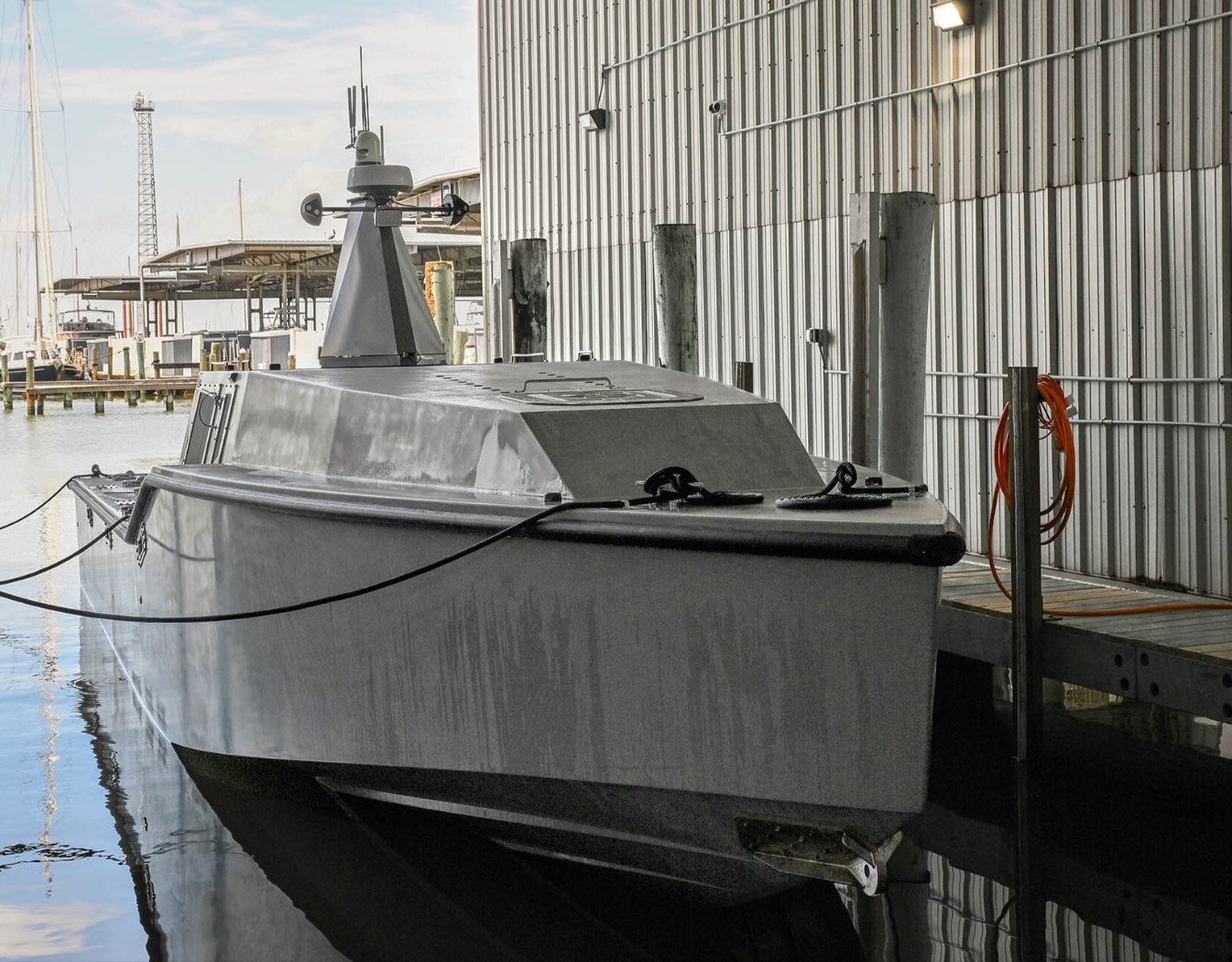
World
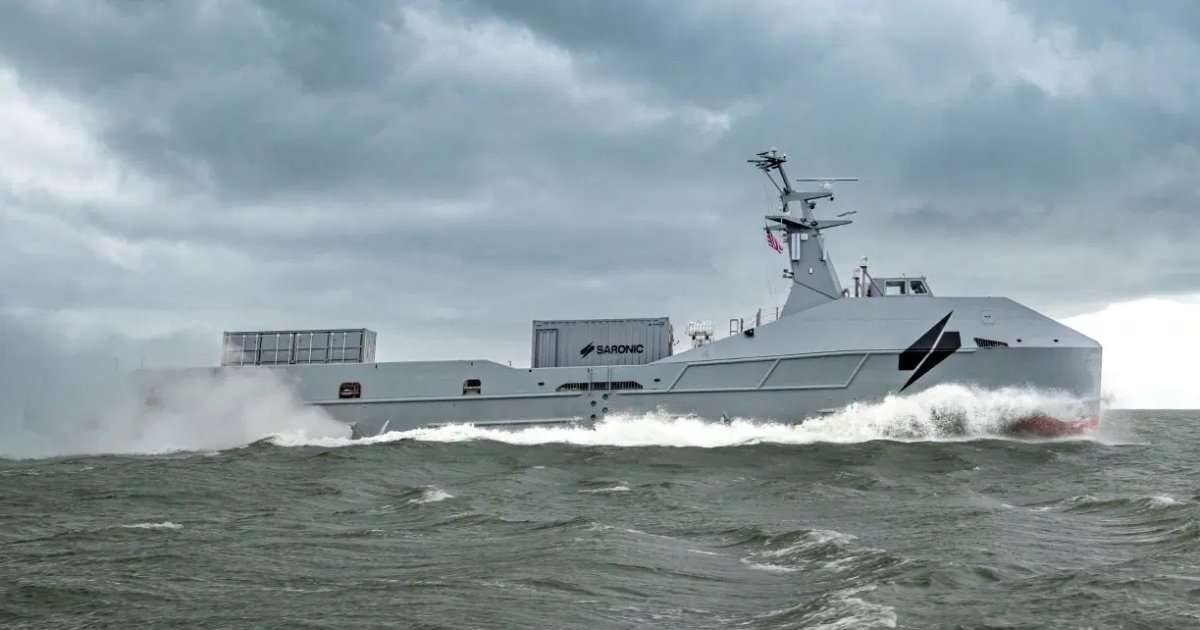
AUSTIN, Texas — Saronic has launched the Mirage, a new 52-foot dual-use autonomous surface vessel (ASV), adding a third flagship platform to its growing fleet of uncrewed surface vessels. The company announced the launch on July 2 after taking the vessel from initial design to the water in less than a year. The first Mirage has already started on-water trials at Saronic's privately funded test facility in Galveston, Texas. Production is continuing at the company's Austin headquarters, where a second hull is already moving through the manufacturing line. The Mirage sits between Saronic's 24-foot Corsair and 180-foot Marauder in both size and capability. It has a top speed of more than 35 knots, an operational range exceeding 2,500 nautical miles, and can carry payloads of up to 3,500 pounds. Compared with the Corsair, the new vessel more than doubles both range and payload capacity. The vessel can operate fully autonomously or under remote human supervision through Saronic's Echelon command-and-control platform, which provides a common autonomy software stack across the company's fleet. The software supports mission planning, simulation and real-time oversight, allowing operators to manage multiple vessels, including in communications-limited conditions. Its open, modular architecture allows government and commercial off-the-shelf sensors, payloads and communications systems to be integrated without structural modifications. Saronic said the Mirage is intended for maritime domain awareness, maritime security, and aerial and surface target detection missions. All hardware and software for the Mirage are developed at Saronic's Austin facility. The company said the site has capacity to produce hundreds of Mirage vessels each year while also building thousands of Corsair platforms. The first Mirage hull will undergo performance validation across its full operating envelope at the Galveston site, where Corsair testing is also continuing. "We launched our first Marauder four weeks ago, and today we're putting another vessel in the water. This cadence is what our production model was built to deliver," Saronic co-founder and Chief Executive Officer Dino Mavrookas said. Saronic raised $1.75 billion in Series D funding in April 2026 at a valuation of $9.25 billion. The funding is being used to expand its autonomous vessel portfolio and domestic shipbuilding infrastructure. Last month, a U.S. Navy-operated Saronic Corsair rescued two U.S. Army aviators after their AH-64 Apache helicopter crashed off the coast of Oman. The operation was one of the first publicly disclosed uses of an uncrewed surface vessel in a search-and-rescue mission, beyond its routine surveillance and maritime security roles. With the Mirage now in the water and another hull already under construction, Saronic is continuing production across its autonomous vessel portfolio from its Austin manufacturing facility.
Read More → Posted on 2026-07-03 10:32:58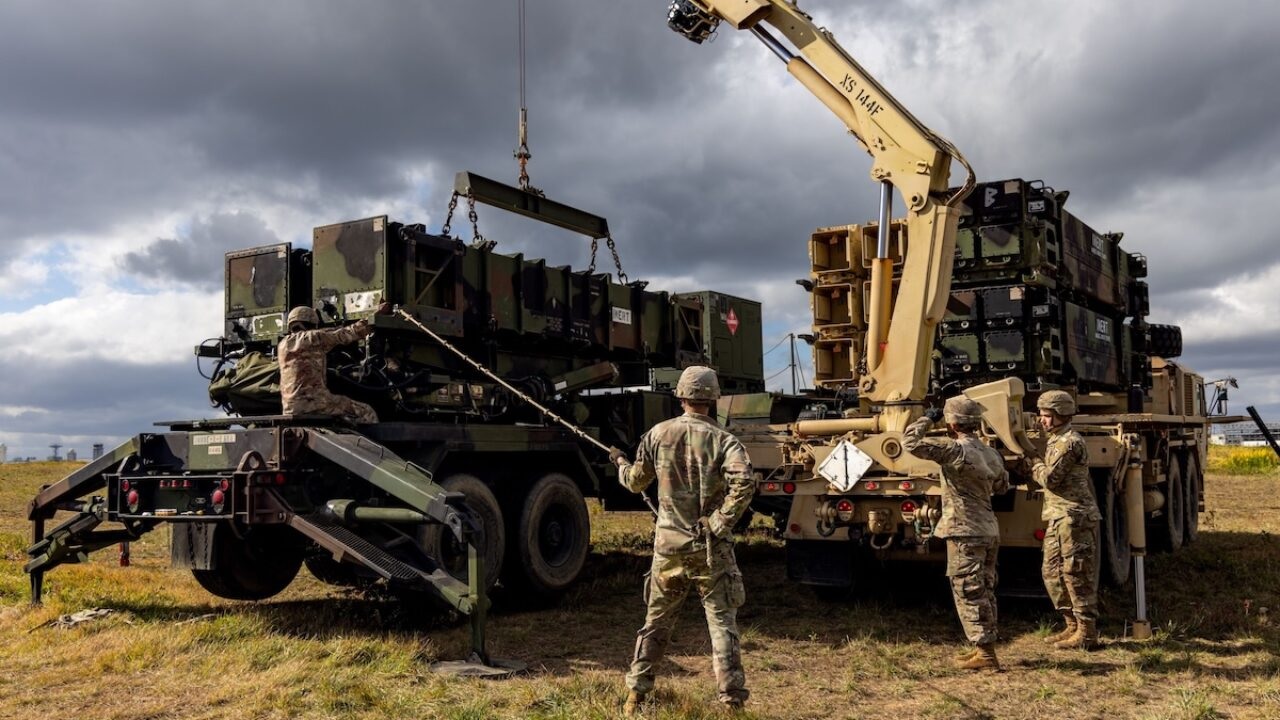
World
WASHINGTON, D.C. — The United States continued training Ukrainian operators of Patriot and HAWK surface-to-air missile systems during the first quarter of 2026, while Washington approved a $108.1 million sustainment package for HAWK equipment and Ukraine moved to secure more Patriot interceptor missiles through European Union funding and allied stockpiles. Details of the training were included in the latest Operation Atlantic Resolve report submitted to the U.S. Congress, covering January through March 2026. Military analyst Jeff21461 highlighted the report's findings on X. 🇺🇦🇺🇸 The USA provided training for Ukrainian Patriot and HAWK operators during Q1 of 2026.Patriot training focused on intermediate and depot-level maintenance training. At the same time, Patriot systems have also been retrograded out of Ukraine for depot-level maintenance.… pic.twitter.com/GQtr4ur9ge — Jeff2146🇧🇪 (@Jeff21461) July 2, 2026 For Ukrainian crews operating the MIM-104 Patriot, the training focused on intermediate- and depot-level maintenance. The report says some Patriot systems deployed by Ukraine were temporarily taken out of the country to undergo scheduled higher-level maintenance before returning to service. It does not disclose how many Ukrainian personnel completed the courses. The Patriot maintenance program is intended to help Ukrainian forces perform more complex repairs and sustain the systems in service after they were transferred by partner nations. Training for the MIM-23 HAWK covered system operation, combat employment, missile handling and routine maintenance. Two platform training courses were conducted through the Joint Multinational Training Group-Ukraine. The report also does not specify the number of Ukrainian personnel trained. HAWK batteries first entered Ukrainian service in late 2022 after deliveries from the United States and other partner countries. Spain supplied launchers, while the United States provided refurbished missiles. Some of those systems are part of the FrankenSAM program, which combines legacy launchers with updated Western components. The U.S. Department of State approved a potential Foreign Military Sale worth $108.1 million for Ukraine in May 2026 to support those HAWK batteries. The package includes erectable mast trailers, spare parts, consumable materials, engineering support, major system modifications, technical assistance, logistics support and repair services provided by the U.S. government and American defense contractors. The sale responds to Ukraine's request for infrastructure and sustainment support for its HAWK air defense systems. Ukraine is also working to increase its stock of Patriot interceptor missiles. The Ministry of Defence announced this week that it is using funds from a European Union loan to purchase about 100 Patriot interceptors. Patriot remains the only air defense system in Ukraine's current inventory capable of intercepting certain types of ballistic missile threats, making interceptor availability a priority as global production remains limited and manufacturing lead times continue to be long. To cover the shortfall, Defence Minister Mykhailo Fedorov has sent letters to nearly 40 partner nations, requesting the immediate transfer of Patriot interceptor missiles from existing national stockpiles during July. Under the proposal, partner countries would provide missiles now, while Ukraine would replace those stocks later with interceptors from its own future contracted deliveries once production becomes available. The Operation Atlantic Resolve report does not identify the total number of Patriot or HAWK systems supported during the reporting period, nor does it provide figures for the number of Ukrainian personnel who completed the maintenance and operational training.
Read More → Posted on 2026-07-03 10:10:08
World
WASHINGTON, — The U.S. Air Force has started a new program to build a cheaper, ground-launched supersonic missile aimed at improving air defense while keeping costs low. On July 1, the Air Force Life Cycle Management Center (AFLCMC) released a request under the Counter Air Missile Program (CAMP). The project, called the Ground Launched Counter Air Enterprise Test Vehicle (GLCA ETV), is asking companies to design a new missile that can be launched from the ground to defend military bases and deployed forces. Unlike traditional air-to-air missiles that rely on fighter jets, this missile will be launched from the ground. This means the Air Force can place it wherever needed without depending on aircraft availability, giving more flexibility to protect forward bases and key infrastructure. A big focus of the program is keeping costs low. While the Air Force has not shared exact performance details like range or speed, it previously said it wants each missile to cost around $500,000. This is much cheaper than many current interceptor missiles, which can cost several million dollars each. The move comes after recent conflicts, such as in Ukraine and the Middle East, where expensive missiles were used up quickly and production struggled to keep up. By lowering costs, the Air Force hopes to build larger stockpiles and sustain longer operations. The missile will use a modular design, meaning different parts like sensors and guidance systems can be swapped or upgraded easily. The Air Force also wants companies to use commercial components where possible to save time and money. This approach is expected to speed up development and make future upgrades easier. To move quickly, the Air Force is using a flexible contracting method known as an Other Transaction (OT) agreement. The timeline is tight: companies must submit proposals by August 3, 2026, and selected firms will present their ideas in person the following week. There are also strict security rules. Most technical data is classified as Controlled Unclassified Information (CUI). Companies must be registered under the Joint Certification Program and submit the required authorization forms to access sensitive information. Foreign companies, or U.S. firms under foreign control, are not allowed to participate. If successful, the project could move into full production under a larger program called FAMM-GLCA, part of the Family of Affordable Mass Missiles (FAMM) initiative. This program aims to quickly build large numbers of lower-cost precision weapons. The Air Force plans to spend more than $12.6 billion over the next five years to acquire nearly 28,000 FAMM weapons. For fiscal year 2027, about $355 million is set aside to buy around 1,000 missiles. The FAMM program includes different types of missiles, including ones that can be dropped from cargo planes or carried by fighter jets and bombers. Air Force Chief of Staff Kenneth Wilsbach has said that the first of these weapons could enter production later this year. Several companies are already involved in the broader FAMM effort, including Anduril Industries, CoAspire, Zone 5 Technologies, and Leidos. Engine maker PBS Aerospace is also working on turbine technology to support large-scale missile production. By connecting this new ground-launched missile effort with the larger FAMM program, the Air Force is trying to move quickly from testing to mass production if the system performs as expected.
Read More → Posted on 2026-07-02 14:16:21Search
Top Trending in 24 Hours
-
 Boeing Wins $20 Billion U.S. Navy Contract for F/A-XX Sixth-Generation Fighter
-
 U.S. Navy Awards Production Agreements for 30 Medium Unmanned Surface Vessels, Including 10 Saronic Marauders
-
 NASA Adds Blue Origin’s Upgraded New Glenn 9×4 to Launch Services Contract
-
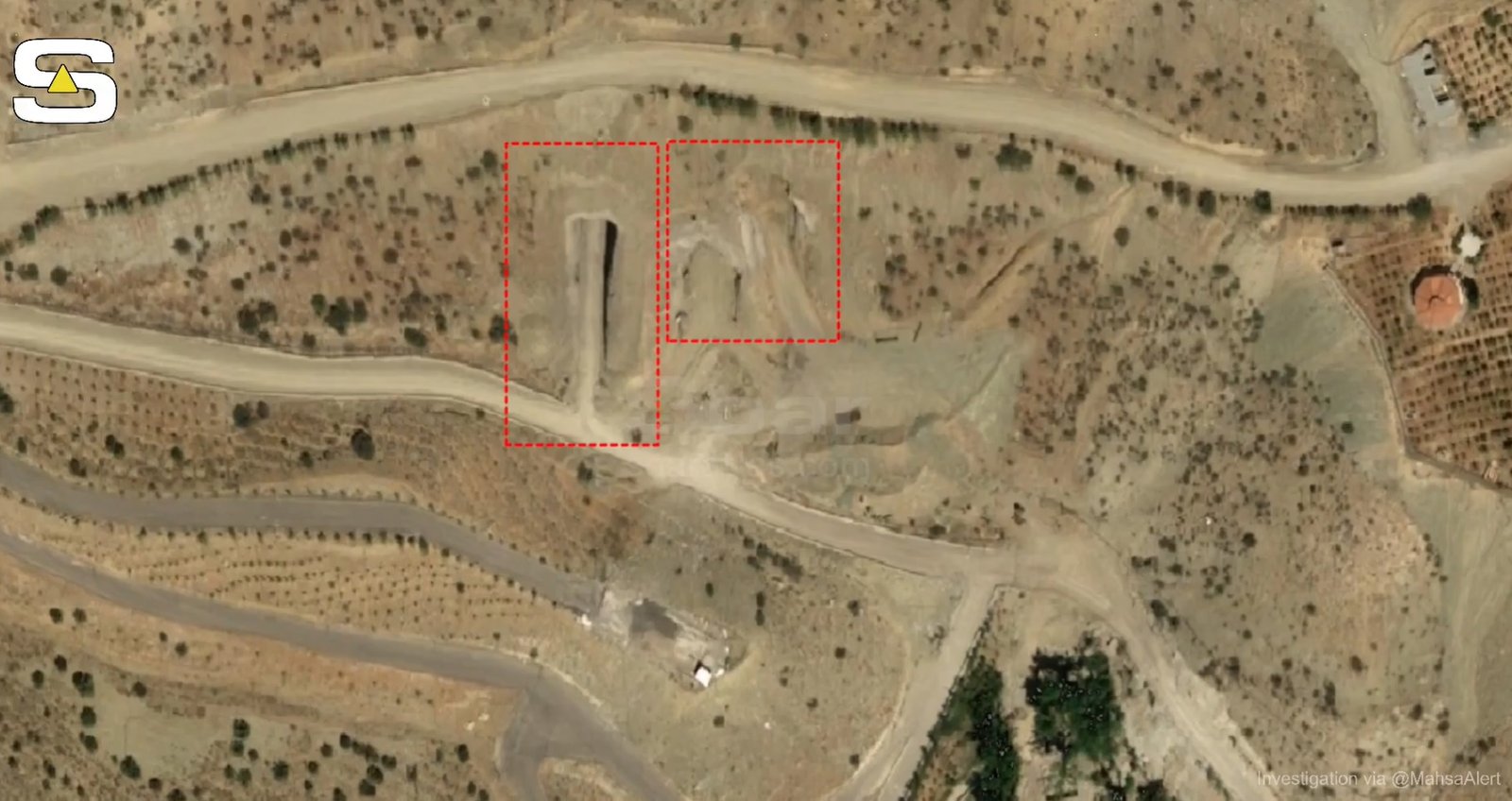 Satellite Imagery Shows Construction Changes at Hillside Site Linked to Iran’s Supreme National Security Council
-
 Flydubai Flight to Israel Diverted to Saudi Arabia After Possible Attempted Terror Attack in Cockpit
-
 U.S. Army Selects Five Companies to Develop 1,000-Km Precision Strike Missile Prototypes
-
 U.S. Air Force Awards Boeing $2.38 Billion Contract for 22 F-15EX Fighter Jets
-
 Northrop Grumman Delivers First 21 Satellites for Pentagon’s Next-Generation Military Network
Top Trending in 4 Days
-
 UK Offers Nuclear Deterrence for Its Northern European Defence Partners
-
 Russia Says Su-75 Checkmate Could Cost Just $25–30 Million, Flight-Hour Costs 6 Times Lower Than F-35
-
 China Reports First High-Orbit Refueling of BeiDou Satellite, but Tracking Data Raise Questions
-
 Eight U.S. Marines Injured in Iranian Missile Strike on U.S Vessel in Strait of Hormuz
-
 Rheinmetall Develops Automated Reloader for Austrian Skyranger Air Defense System
-
 Ukraine Receives New NASAMS Air Defense System and Interceptor Missiles From U.S. and Norway
-
 HII Expands Massachusetts Unmanned Systems Facility by 25 Percent to Support U.S. Navy Lionfish Production
-
 Israel’s Largest Submarine, INS Drakon, Arrives in Haifa After 23-Day Voyage From Germany
