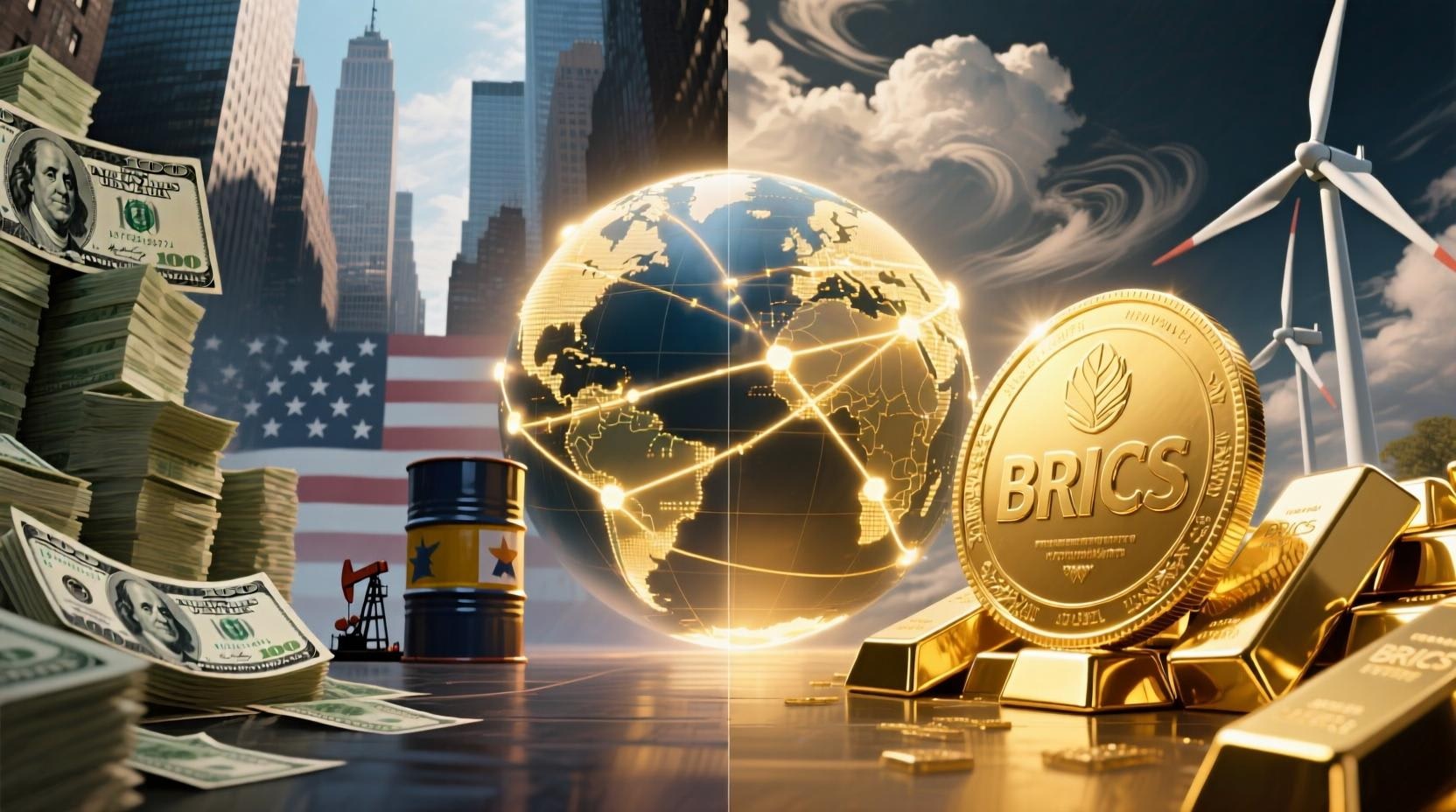
The BRICS bloc has taken another decisive step toward reshaping the global financial system. In September, Chinese companies sold an astonishing $51.8 billion worth of U.S. dollars, marking one of the largest monthly sell-offs since late 2020. The move, far from being an isolated event, is part of a broader de-dollarization drive that the BRICS nations—Brazil, Russia, India, China, and South Africa, now joined by several new members—are pushing with renewed urgency.
Economists and analysts are calling it the beginning of a global reset, one that challenges the dollar’s decades-long dominance in world trade, finance, and reserves.
Why BRICS Is Selling U.S. Dollars
The motivation behind this wave of dollar selling is rooted in both geopolitical necessity and economic strategy.
For China, the world’s largest holder of U.S. Treasuries after Japan, the shift represents a bid to reduce vulnerability to U.S. financial pressure. In the wake of sanctions on Russia and other states, many BRICS members realized the strategic risks of keeping their reserves in an asset class that could be politically frozen overnight.
Chinese exporters, flush with dollar revenues from global trade, are now converting more of their earnings into yuan, rather than holding them in foreign currency accounts. This trend was confirmed by China’s State Administration of Foreign Exchange, which reported a net foreign exchange settlement surplus of nearly $52 billion in a single month.
At the same time, Russia has almost completely stopped using the U.S. dollar in energy transactions. Instead, it now settles more than 80 percent of its oil trade in yuan, rubles, or dirhams. Brazil has also reduced its dollar exposure by around $10 billion this year, while India is gradually expanding bilateral trade settlements in rupees with partners like Russia and the UAE. Collectively, these moves signal a coordinated intention: to create a world where no single currency dominates global trade.
What BRICS Nations Are Buying Instead
As the BRICS nations dump dollars, they are channeling their wealth into a mix of alternative assets and currencies designed to diversify their economic exposure and strengthen domestic systems.
1. Chinese Yuan (RMB): $52 Billion
Much of China’s dollar selling has gone directly into purchasing yuan, strengthening its domestic currency reserves. This is seen as part of Beijing’s broader goal to make the yuan a global settlement currency—a currency already used in more than 25 percent of China’s global trade in 2025, up from 15 percent just two years ago.
2. Gold: $34 Billion Across BRICS Central Banks
Gold remains the universal hedge against monetary uncertainty. In 2025 alone, BRICS central banks have collectively added over 600 tons of gold, worth approximately $34 billion, to their reserves. China and Russia lead this accumulation, each adding more than 200 tons, while India, Brazil, and South Africa together account for another 200 tons.
3. Local Currencies: $18 Billion in Bilateral Reserves
The BRICS nations have also increased holdings of each other’s currencies. For example, Russia and India have built up mutual rupee-ruble reserves worth around $9 billion, and Brazil has begun maintaining more yuan-denominated reserves, worth roughly $3 billion as of mid-2025. The aim is to facilitate trade within the BRICS network without using the dollar as a middleman.
4. Strategic Commodities and Assets: $21 Billion
Beyond currencies, several BRICS members have begun investing in tangible commodities. China has increased its strategic oil and rare earth stockpiles, while Russia and Brazil have been diversifying into agricultural reserves and energy infrastructure. Combined, these strategic purchases total around $21 billion in 2025, serving as both inflation protection and leverage against Western trade restrictions.
How This Shapes the “Global Reset”
The phrase “global reset” has been circulating among economists and policymakers for years, but the current BRICS strategy marks its most visible phase yet. The financial world built around the dollar after World War II—where nearly 80 percent of all trade and 60 percent of reserves were dollar-based—is slowly evolving into a multi-currency system.
Today, the dollar’s share of global reserves has slipped to around 54 percent, the lowest in history. Meanwhile, the Chinese yuan’s share has doubled to about 7 percent, and gold holdings have reached their highest share since the 1970s. As BRICS countries continue to swap dollar reserves for local currencies and gold, the symbolic center of global finance is gradually shifting eastward.
This transition is also supported by new institutions like the BRICS Pay platform and the New Development Bank (NDB), which now conducts about 35 percent of its lending in non-dollar currencies. There’s even talk of a BRICS trade settlement unit—a gold or commodity-backed currency that could eventually rival the dollar in energy and resource trade.
Implications for the United States
For the United States, this trend represents more than just financial diversification—it’s a strategic threat to its economic dominance. The dollar’s global status has long allowed the U.S. to finance its massive deficits at low cost, effectively exporting inflation to the rest of the world.
If a significant portion of trade and reserves shifts out of the dollar, the U.S. borrowing advantage could erode, pushing up interest rates and weakening Washington’s financial leverage over sanctions and global policy.
While the dollar’s dominance is unlikely to disappear overnight, the BRICS strategy of gradual disengagement—first through trade, then through reserves—marks a turning point that could reshape global finance within a decade.
India’s Balancing Act
India stands at a crossroads in this transformation. As a BRICS member, it supports de-dollarization in principle, but unlike Russia or China, it maintains strong ties with Western financial systems.
The Reserve Bank of India has begun expanding rupee-based trade corridors, especially with Russia and Iran, and has modestly increased its gold reserves by nearly 20 tons in 2025, worth about $1.2 billion. However, India remains cautious about any single-currency dominance, whether it’s the dollar or the yuan, preferring a balanced multipolar system.
The global financial order appears to be at the start of a measured but irreversible rebalancing. BRICS nations, collectively representing over 45 percent of global population and 33 percent of global GDP, are methodically diversifying away from the U.S. dollar. The process may take years, but the $51.8 billion dollar sell-off by Chinese firms signals how far the movement has come from rhetoric to reality.
If this pace continues, the 2030s may no longer be defined by the supremacy of a single reserve currency—but by the rise of a plural financial world, where gold, yuan, rupee, and regional currencies coexist, reshaping how nations trade, invest, and wield economic power.
——— End of Article ———