BRISBANE, Australia — June 19, 2026 : Australian aerospace company Hypersonix Launch Systems has reported a major milestone in its hypersonic technology program following the successful maiden flight of its DART AE (Additive Engineering) technology demonstrator, which exceeded Mach 5 and reached speeds of up to Mach 8 (approximately 9,800 km/h) during a flight conducted earlier this year.
The flight took place on February 27, 2026, and successfully demonstrated sustained and maneuverable hypersonic flight, providing valuable operational data on propulsion, materials, guidance, and control systems under real-world conditions.
According to Hypersonix co-founder and Chief Technology Officer Dr. Michael Smart, the vehicle completed its planned flight profile before splashing down in the Atlantic Ocean after traveling approximately 1,000 kilometers.
Cassowary Vex Mission
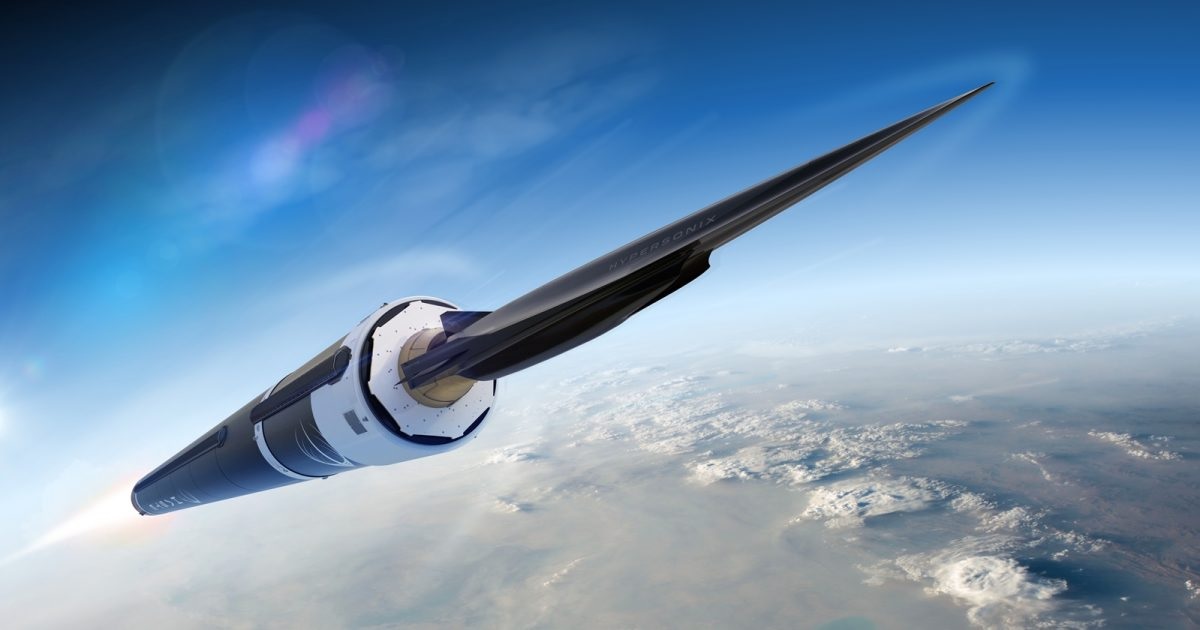
The mission was conducted from the Virginia Spaceport Authority’s Mid-Atlantic Regional Spaceport on Wallops Island, Virginia, in the United States. The 3.5-meter-long, 300-kilogram DART AE vehicle was launched aboard Rocket Lab’s Hypersonic Accelerator Suborbital Test Electron (HASTE) vehicle.
Known as “Cassowary Vex” by the U.S. Defense Innovation Unit (DIU) and “That’s Not A Knife” by Rocket Lab, the mission marked the first deployment of a commercially built hypersonic test platform under the Pentagon’s Hypersonic High-Cadence Advanced Testing (HyCAT) program.
After separation from the HASTE launch vehicle at an altitude of approximately 32 kilometers, the DART AE ignited its onboard propulsion system and continued autonomous hypersonic flight through its planned mission profile.
“The mission allowed us to test propulsion, materials, and control systems in real hypersonic conditions,” Dr. Smart said. “At these speeds and temperatures, there is no substitute for flight data. What we learn from this mission will directly inform the next generation of reusable hypersonic aircraft.”
Hydrogen-Powered SPARTAN Scramjet
At the center of the DART AE platform is Hypersonix’s proprietary SPARTAN scramjet engine, a hydrogen-fueled air-breathing propulsion system designed for high-speed flight.
Unlike many conventional scramjet designs that use hydrocarbon fuels such as kerosene, the SPARTAN engine operates on gaseous green hydrogen, producing zero carbon dioxide emissions during flight and generating only water vapor as a byproduct.
The engine features a fixed-geometry design with no moving parts, reducing mechanical complexity while supporting high-speed operation in extreme thermal environments.
3D-Printed Aerospace Manufacturing
A key aspect of the DART AE program is its use of additive manufacturing, with both the airframe and propulsion components produced using advanced 3D-printing techniques and high-temperature nickel-based superalloys.
The manufacturing approach is intended to reduce production costs and development timelines while addressing one of the major challenges in hypersonic flight—creating hardware capable of surviving the intense heat and pressure generated at speeds above Mach 5.
Early analysis of flight data has also indicated performance improvements from scaling up the SPARTAN engine beyond earlier ground-test configurations.
Dr. Smart explained that larger engine dimensions improved hydrogen combustion efficiency, allowing the operational flight engine to deliver stronger performance than smaller prototype systems.
“It takes a certain amount of time to burn hydrogen. If you make the engine bigger, it burns hydrogen more quickly in terms of the scale of the engine,” he said.
Data Analysis and Future Development
Engineers are expected to continue analyzing flight data throughout 2026 to better understand vehicle performance and refine future hypersonic systems.
The DART AE platform serves as a technology testbed for validating advanced propulsion systems, thermal protection technologies, sensors, materials, and autonomous guidance systems intended for future operational aircraft.
The data collected during the flight will support development of VISR (Velos Intelligence, Surveillance, and Reconnaissance), Hypersonix’s planned reusable hypersonic aircraft designed for intelligence, surveillance, reconnaissance, and other multi-mission applications.
The company is also advancing work on the Delta Velos concept, which explores the use of hypersonic technologies for satellite launch missions.
Company Growth and Strategic Significance
Founded in 2019 and headquartered in Brisbane, Hypersonix has grown to employ more than 50 personnel and has become one of Australia’s leading companies focused on hypersonic flight technologies.
The successful DART AE mission follows the company’s recent $46 million Series A funding round, supported by the Australian Government’s National Reconstruction Fund Corporation, the Queensland Investment Corporation, and international defense investors.
Hypersonix Chief Executive Officer Matt Hill said the successful operation of the vehicle in a genuine hypersonic environment demonstrates Australia's ability to design, manufacture, and test advanced aerospace systems capable of operating in some of the most demanding flight conditions.
The DART AE flight represents an important step in the development of affordable and repeatable hypersonic testing capabilities while strengthening collaboration between Australian and U.S. defense and aerospace organizations. The mission also highlights continuing advances in additive manufacturing and hydrogen-powered scramjet propulsion technologies that could support future commercial and defense aerospace programs.
——— End of Article ———