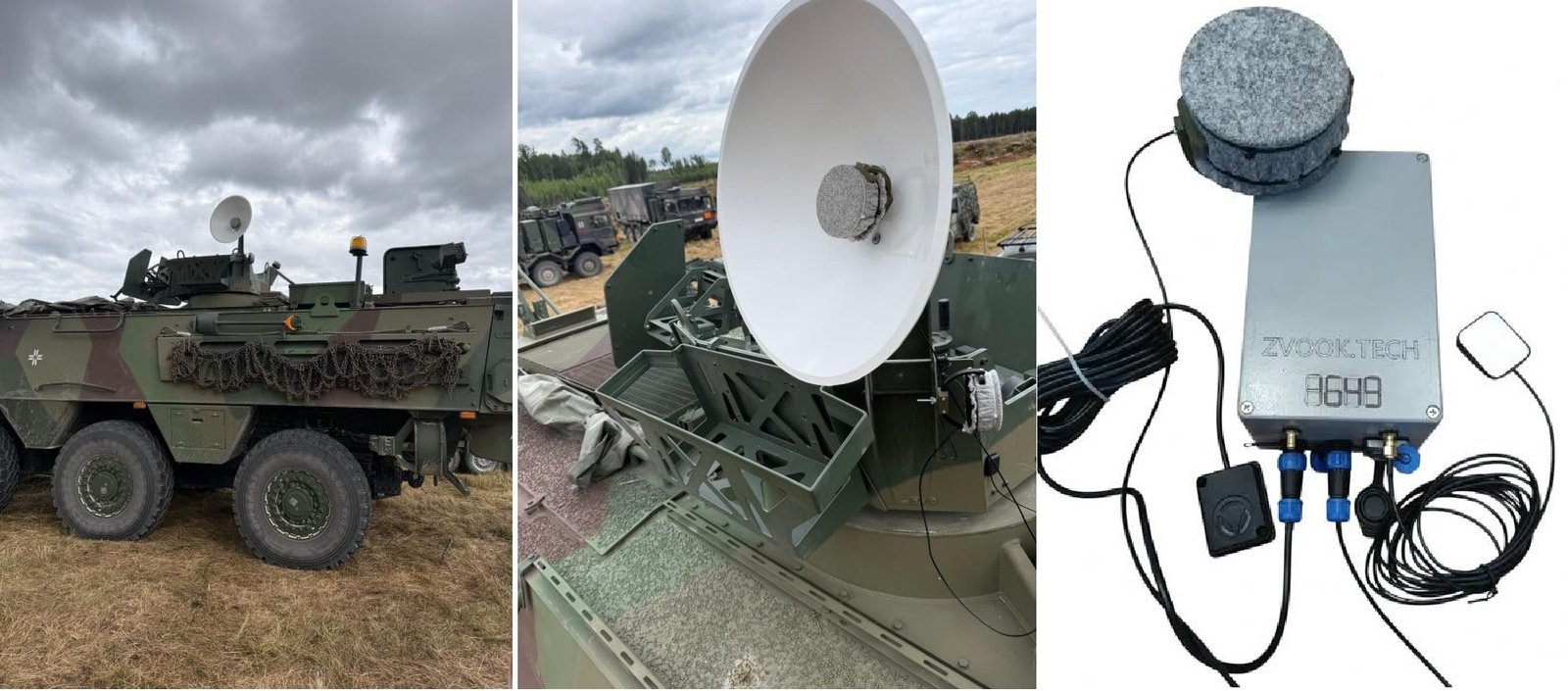
RIGA, LATVIA, — Ukrainian defence and space manufacturing company Zvook has tested its passive acoustic early-warning system on a moving vehicle for the first time during NATO’s Baltic Trust 26 (BATT26) exercise in Latvia.
The Lviv-based company conducted the trial with the Latvian National Armed Forces, demonstrating that technology originally designed for fixed installations such as telecom towers could also operate from a moving vehicle.
BATT26 was held from August 3 to 14 at the Sēlija training area and was organised by the Latvian National Armed Forces and the NATO Communications and Information Agency. Around 650 participants from NATO countries and partners, including Ukraine, Australia and Japan, took part. The exercise focused on integrating unmanned and counter-unmanned aircraft systems, testing interoperability and practising responses to reconnaissance and attack drones. It formed part of NATO Allied Command Transformation’s Layered Counter-Unmanned Aircraft Systems Initiative.
Mobile Acoustic Detection
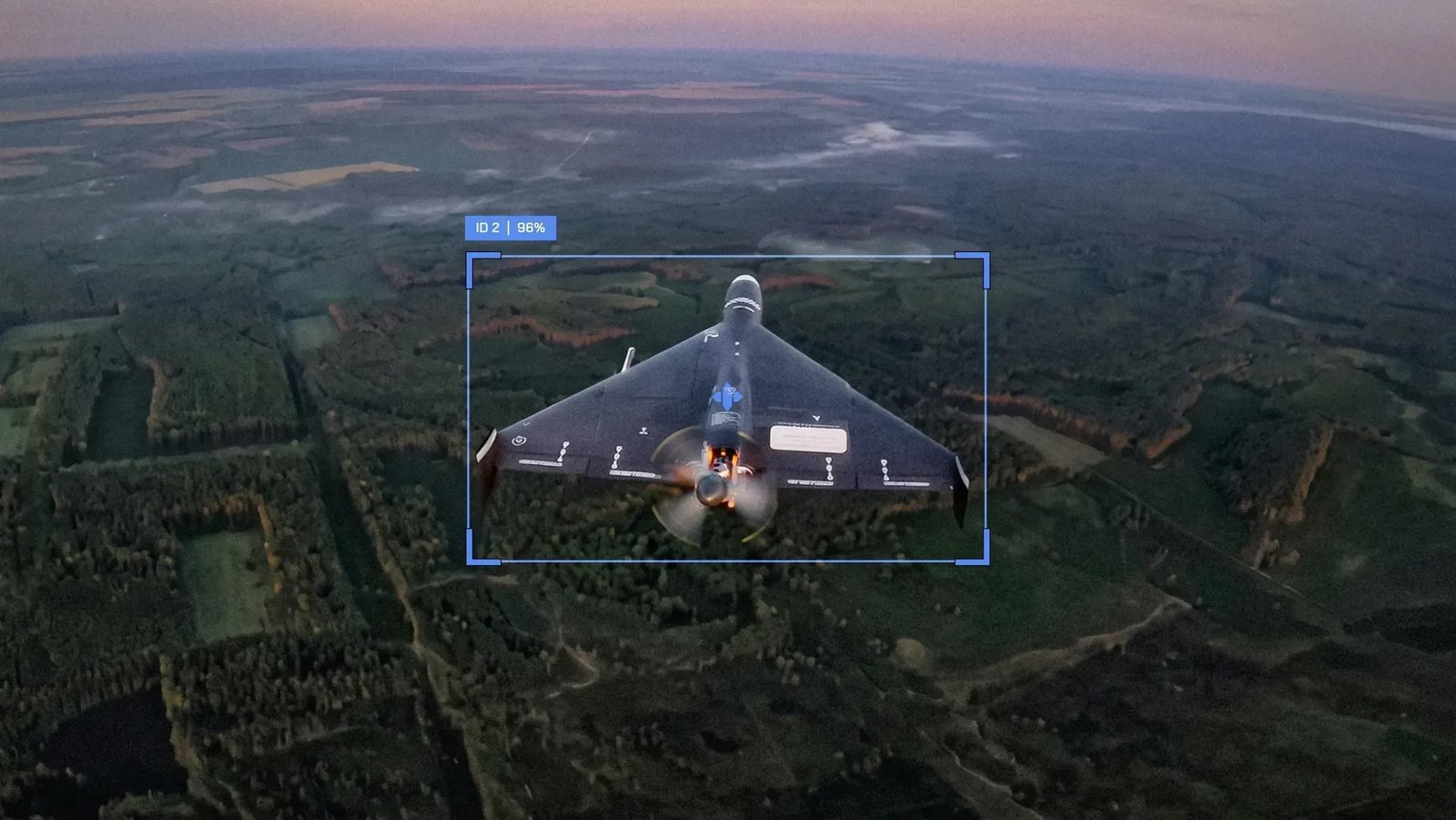
Zvook's system uses passive acoustic sensors that detect the sound signatures of drone motors, propellers, cruise missiles and low-flying aircraft. Unlike active radar, the sensors do not transmit signals, reducing the risk of revealing the location of the detection system.
In Ukraine, Zvook has operated networks of fixed sensors since 2022. These are typically installed on radio towers and similar structures around 10 to 12 metres above the ground. The network sends detections to Ukraine’s Delta situational-awareness system, with the company reporting warning times of about 12 seconds for incoming threats.
The Ukrainian network is designed to detect Shahed-type drones, cruise missiles and low-flying aircraft. Reported detection ranges are around 5 km for drones and 7 km for cruise missiles. Zvook says machine-learning updates have reduced false-positive rates to about 1.6 percent, while individual sensors cost roughly $500.
The company has also developed a compact tactical sensor for smaller threats, including fibre-optic FPV drones, which are difficult to detect using conventional radio-frequency methods. Its acoustic detection approach does not depend on the drone maintaining a radio link.
During BATT26, Zvook mounted the sensors on a vehicle, moving beyond its standard fixed-site deployment. The company said the experiment was not completely trouble-free, but engineers, military personnel and partners identified problems and improvements while testing the system under operational conditions.
A mobile configuration could allow acoustic detection to accompany moving convoys, mobile command posts and units that frequently change position. The company is therefore examining how a capability previously used from fixed infrastructure can be adapted for mobile tactical use.
Integration With Other Sensors
Zvook's technology is designed to operate as part of a layered air-defence architecture rather than replace other sensors. The system can work alongside radar, electro-optical/infrared and radio-frequency systems.
At BATT26, Zvook said its system exchanged information within the NATO SAPIENT and KYBER architecture in a multi-sensor environment. The company has also developed acoustic tracking capabilities that can estimate a target's location, direction, speed, altitude and classification for Shahed-type and larger threats.
Zvook previously demonstrated its technology at the Dronetex event at Odense Airport in Denmark, working with European and Ukrainian companies including DefSecIntel Solutions, Weibel Scientific, TYTAN Technologies and Marduk Technologies.
The BATT26 trial provided Zvook with another opportunity to test its technology with NATO forces and examine whether passive acoustic detection can be used from mobile platforms as part of a wider counter-drone network.
——— End of Article ———