The United States is maintaining a significant naval presence in the Middle East as the 60-day negotiating period established under the June U.S.-Iran memorandum of understanding approaches its deadline.
The June 17 memorandum established a maximum 60-day period for Washington and Tehran to negotiate a final agreement, with the period extendable by mutual consent. The agreement also addressed the U.S. naval blockade and called for its removal, with the blockade to be fully ended within 30 days.
Because of that provision, the U.S. naval presence in the region is more accurately described as a dual-carrier presence rather than a confirmed continuing blockade.
Two Aircraft Carriers Remain Central to U.S. Naval Presence
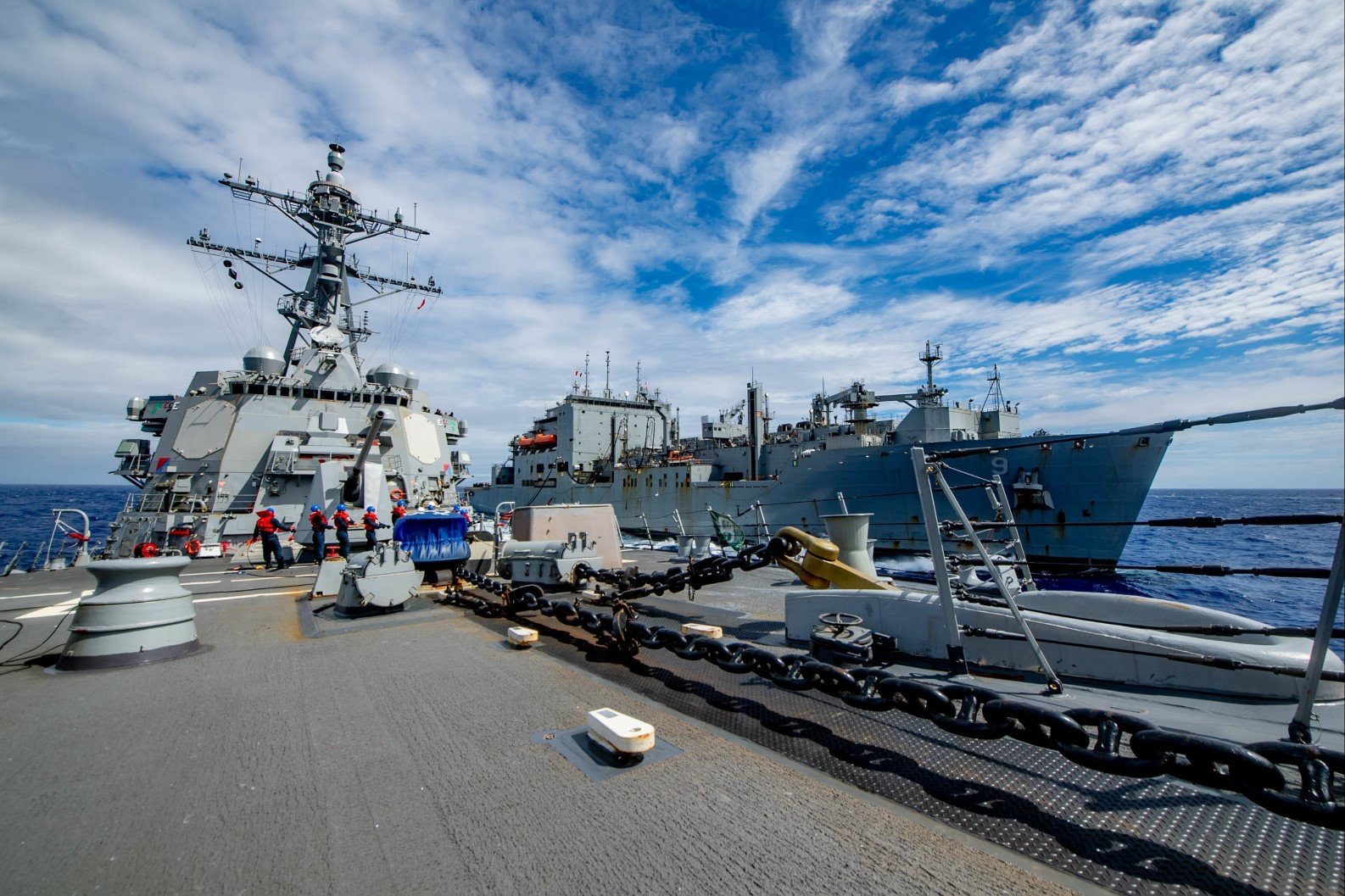
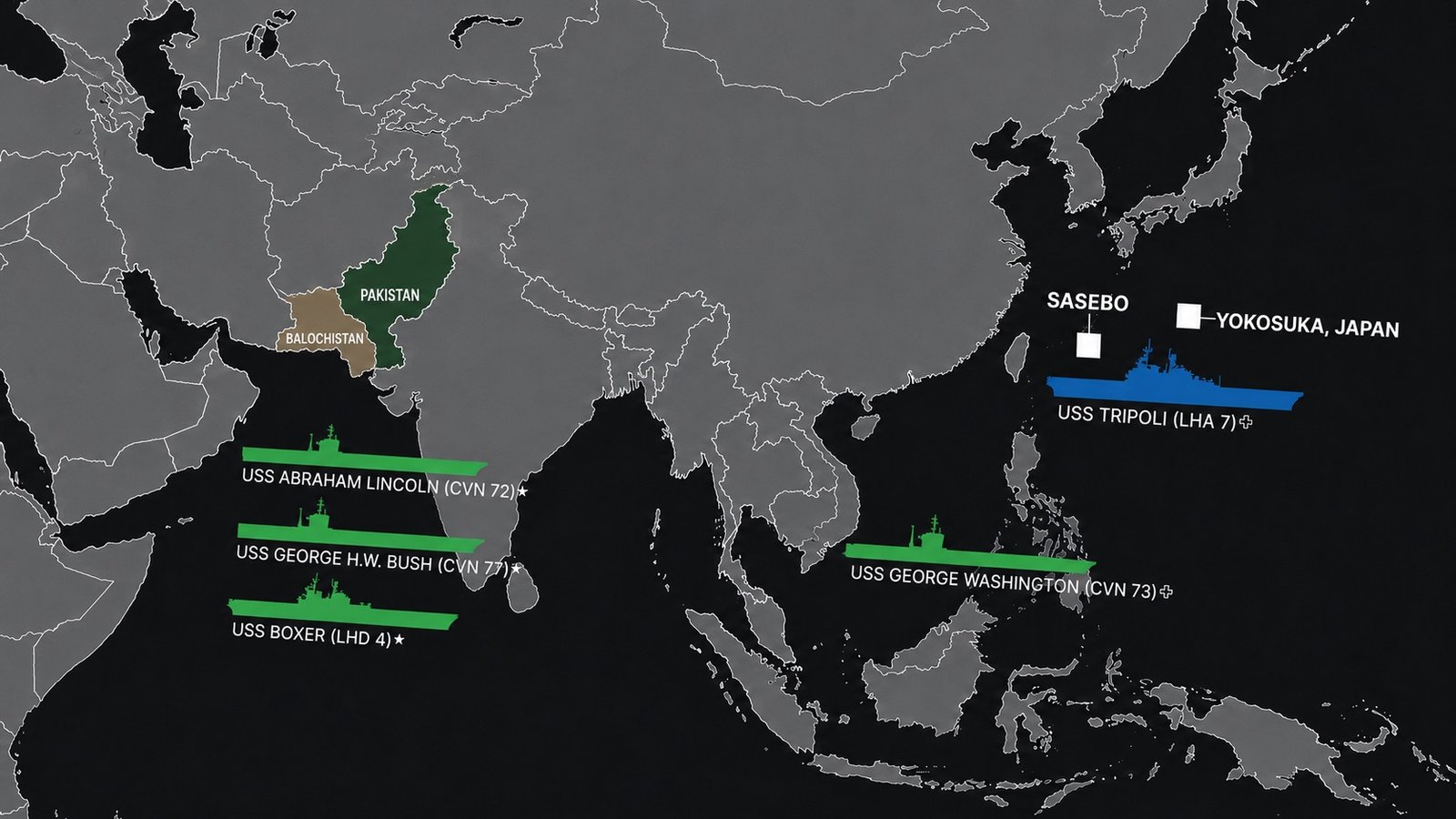
The U.S. naval force in the Middle East includes the Nimitz-class aircraft carriers USS Abraham Lincoln (CVN-72) and USS George H.W. Bush (CVN-77), according to the information provided.
The presence of the two carriers provides the U.S. Navy with substantial aviation and maritime capabilities while negotiations over a longer-term U.S.-Iran agreement continue.
The June memorandum called for an immediate start to the removal of the U.S. naval blockade and its complete removal within 30 days. It also included provisions for the restoration of commercial shipping through the Strait of Hormuz.
The supplied operational data states that U.S. Central Command forces had redirected 55 commercial vessels, boarded two vessels and kinetically disabled two others as part of maritime enforcement operations. These specific figures could not be independently confirmed through an official U.S. government source available for this report and are therefore treated as reported figures rather than independently verified facts.
Extended Deployment of USS Abraham Lincoln
The USS Abraham Lincoln is approaching nine months of deployment, according to the supplied information.
The long deployment has raised concerns among some family members about conditions aboard the carrier. U.S. 5th Fleet spokesperson Cmdr. Joseph Hontz acknowledged that deployments lasting more than 250 days present challenges for sailors and equipment.
Hontz said the carrier remains capable of carrying out its assigned missions and has adequate food and provisions. He also acknowledged that the ship has occasionally experienced short periods when certain supplies were running low.
The supplied information also reports continued carrier aviation activity, including the launch of an EA-18G Growler from Electronic Attack Squadron 133 from Abraham Lincoln on July 31.
USS George Washington Operates in the South China Sea
While the Middle East force remains focused on the Iran situation, the U.S. Navy continues to maintain a separate carrier presence in the Indo-Pacific.
The Nimitz-class USS George Washington (CVN-73) recently completed a scheduled five-day port visit to Da Nang, Vietnam. The carrier arrived on July 30, according to the U.S. Navy, alongside elements of Carrier Strike Group 5. The visit was the fourth U.S. aircraft-carrier visit to Vietnam and followed earlier U.S.-Vietnam naval engagements.
The carrier is operating with other ships from its strike group, including the guided-missile cruiser USS Robert Smalls and guided-missile destroyer USS Shoup. The supplied information also identifies USS Benfold as part of the group.
Open-source flight-tracking information cited in the supplied data placed the group approximately 100 nautical miles west of Luzon in the Philippines.
A CMV-22B Osprey associated with Carrier Air Wing 5, using the callsign RUDY73, was also reported to have made a round trip to Clark Air Base in the Philippines.
USS Theodore Roosevelt Returns to San Diego
The USS Theodore Roosevelt (CVN-71) has returned to Naval Air Station North Island in San Diego following approximately two months away that included participation in Rim of the Pacific (RIMPAC) 2026.
RIMPAC 2026 ran from June 24 through July 31 around Hawaii and involved dozens of nations, ships, aircraft and personnel. The U.S. Navy describes RIMPAC as a major multinational maritime exercise.
After returning to San Diego, Theodore Roosevelt hosted nearly 2,000 friends and family members for a "tiger cruise" over the weekend of August 8.
The event gave family members an opportunity to observe carrier operations and the working environment of the crew. Capt. William Mathis, the carrier's commanding officer, said the event was intended to allow sailors to demonstrate their professionalism and help their families understand their work.
The carrier's future deployment is not clear from publicly verified information. The supplied data states that possible future tasking could include relieving Abraham Lincoln in the Middle East or conducting operations in the Western Pacific, depending on developments in the U.S.-Iran negotiations.
Amphibious Fleet Faces Continued Demand
The Navy's amphibious forces also remain heavily committed.
Marine Corps Commandant Gen. Eric Smith has previously highlighted the shortage of Amphibious Ready Groups available to meet combatant-commanders' requirements. In May, the 24th Marine Expeditionary Unit assumed the Littoral Combat Force-24 designation in the U.S. Southern Command area of responsibility. The force operates as a Marine Air-Ground Task Force and is centered on the amphibious transport dock USS Fort Lauderdale (LPD-28).
The Littoral Combat Force-24 concept provides a different deployment model from a traditional Amphibious Ready Group. U.S. Southern Command has described it as an agile force designed to provide operational options in the region.
Other amphibious ships are also moving through training and deployment cycles. The USS Essex (LHD-2) participated in RIMPAC 2026 and subsequently conducted operations around Pearl Harbor as it prepared to leave the area following the exercise.
The supplied information states that USS Makin Island completed ARGMEUEX training on July 31, while USS Essex departed Pearl Harbor following RIMPAC.
U.S. Navy Maintains a Global Carrier Posture
The supplied fleet assessment indicates that three U.S. aircraft carriers are deployed globally, while three are in various stages of workups or homeport readiness, four are undergoing maintenance and one is assigned to training.
For the amphibious fleet, the same assessment lists one Amphibious Ready Group as deployed, five in port or training and three undergoing maintenance.
These figures represent a snapshot of the fleet's status and can change as ships complete maintenance, training and deployment rotations.
For the Middle East, the key issue remains the outcome of the U.S.-Iran negotiations. The June memorandum established the 60-day negotiating period while also requiring the removal of the U.S. naval blockade.
As the deadline approaches, the disposition of U.S. carrier forces in the Middle East will remain closely linked to developments in the negotiations and the broader security situation around the Strait of Hormuz. Recent reporting indicates that discussions over reopening the waterway and reaching a longer-term arrangement remain ongoing.
Note: I changed “dual-carrier blockade” to “dual-carrier presence” because the verified June 17 U.S.-Iran memorandum explicitly required the U.S. naval blockade to be fully ended within 30 days. Describing a continuing blockade as an established fact would conflict with the verified agreement.
Source : TWZ
——— End of Article ———