WASHINGTON — The U.S. military has completed its eighth consecutive night of strikes against Iranian military targets, following the deadly Iranian missile attack on Muwaffaq Salti Air Base in Jordan that killed two American service members on July 17.
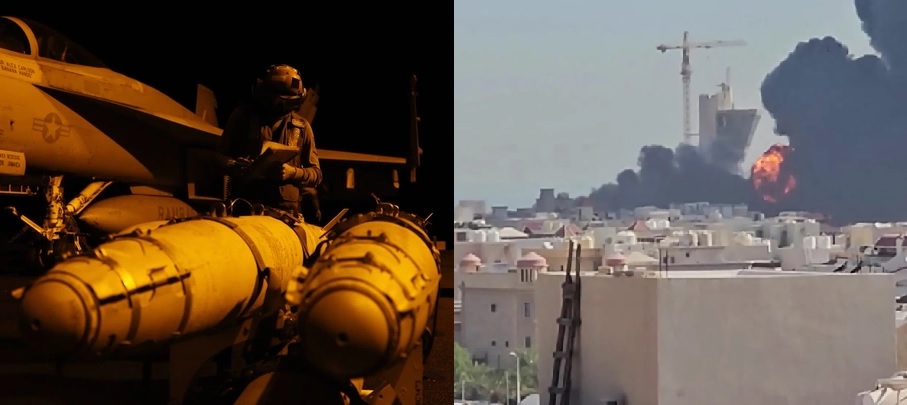
According to the U.S. Central Command (CENTCOM), the latest round of operations concluded at approximately 11:30 p.m. ET on July 18. The strikes targeted Iranian military coastal surveillance networks, air defense facilities, maritime assets, and missile and drone storage sites. CENTCOM also said the operation targeted Islamic Revolutionary Guard Corps (IRGC) personnel accused of carrying out the July 17 attacks on U.S. forces in Jordan.
The command said the strikes were intended to further reduce Iran's ability to threaten U.S. and partner forces operating in the region.
In its operational update, CENTCOM also highlighted the scale of the American military presence in the Middle East, stating that more than 50,000 U.S. military personnel are currently deployed across the region.
"More than 50,000 U.S. men and women in uniform are operating across the Middle East. They remain highly vigilant, focused, lethal, and ready," CENTCOM said.
Two U.S. Troops Killed in Jordan
The latest U.S. operation came after an Iranian ballistic missile and drone attack on Muwaffaq Salti Air Base (MSAB), also known as Al-Azraq Air Base, in Jordan on July 17.
CENTCOM confirmed that two U.S. service members were killed in action, while one additional service member remains missing.
Four other American personnel were medically evacuated to hospitals in Jordan, where they received treatment before being discharged. Several additional service members who sustained minor injuries have since returned to duty.
The identities of the deceased and the missing service member have not been released, as CENTCOM said it is withholding their names for at least 24 hours until next of kin have been notified.
The deaths increase the total number of U.S. military personnel killed since the current conflict escalated on February 28 to 16.
Muwaffaq Salti Air Base serves as one of the U.S. military's key operational and logistics hubs in the Middle East and hosts a significant number of American tactical aircraft.
Satellite-based fire detection data from NASA's Fire Information for Resource Management System (FIRMS) detected a fire near the runway area following the attack. Videos circulating on social media also appeared to show impacts at the base. However, CENTCOM has not confirmed any damage to military equipment or infrastructure.
Iranian Attacks Across the Region
The exchange of strikes has expanded beyond Jordan, with Iran targeting multiple countries that host U.S. military facilities.
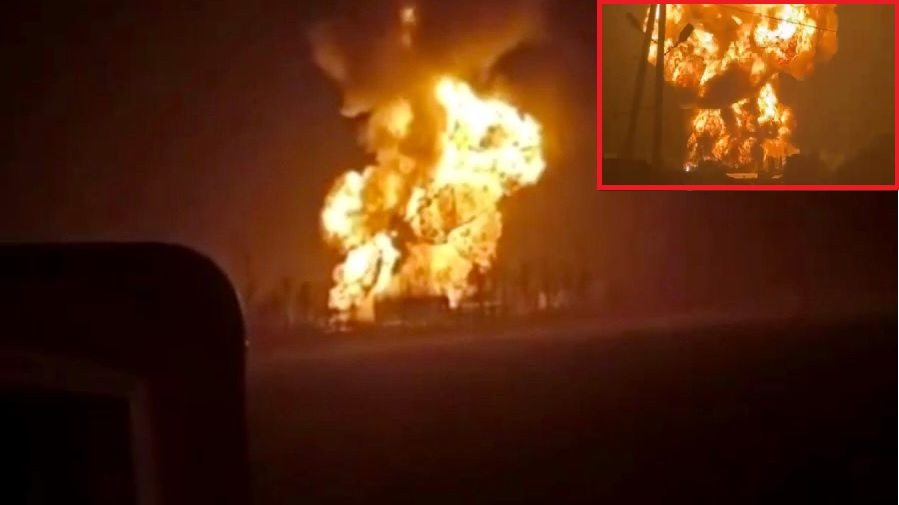
In Kuwait, officials said Iranian ballistic missiles and drones struck a power generation and water desalination facility, causing a large fire and damaging electricity generation units. Authorities said the fire was brought under control and repair work is ongoing. The incident marked the second attack on the facility in two days. The Gulf Cooperation Council (GCC) condemned the strike on Kuwait's civilian infrastructure, describing it as a violation of international law.
Iran also targeted Prince Sultan Air Base in Saudi Arabia, according to reports.
In Bahrain, the Bahrain Defence Force reported intercepting incoming Iranian drones and missiles before they reached their targets.
The Jordanian Armed Forces also said they intercepted at least 10 Iranian missiles that entered Jordanian airspace during the attacks.
Ceasefire No Longer in Effect
The latest military exchanges effectively end the temporary ceasefire established in June under the Islamabad Memorandum of Understanding (MoU).
Iranian Deputy Foreign Minister Kazem Qaribabadi announced that Tehran has suspended its commitments under the agreement, citing ongoing U.S. military operations.
Iran's Supreme Leader Mojtaba Khamenei also accused the United States of violating the understanding and said the previous diplomatic framework no longer held credibility.
Meanwhile, senior Iranian military adviser Major General Mohsen Rezaei warned through Iranian state media that Tehran could move beyond proportional retaliation and launch broader offensive military operations if U.S. strikes continue.
Ongoing U.S. Operations
CENTCOM said recent operations have focused on degrading Iran's military capabilities by targeting coastal surveillance systems, command networks, air defense sites, missile and drone infrastructure, maritime assets, and other military facilities.
The command said U.S. forces remain prepared to conduct further operations as directed while continuing to protect American personnel, partner forces, and regional security interests across the Middle East.
——— End of Article ———