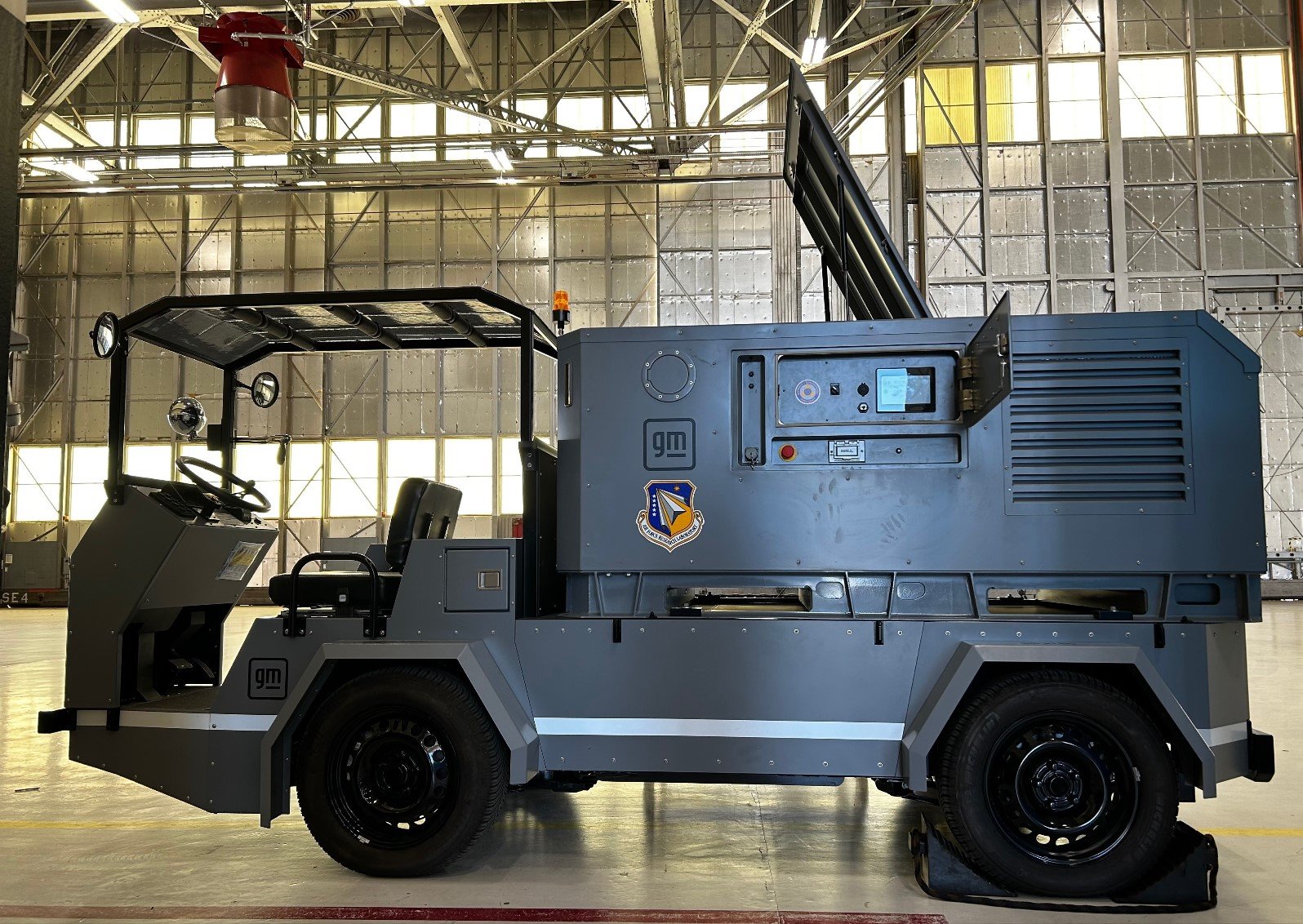
FORT IRWIN, Calif. — The U.S. Army has successfully tested silent hybrid power systems capable of operating command posts for several hours using battery power alone during Project Convergence Capstone 6 (PC-C6), reducing the need for continuously running diesel generators while supporting mission-critical command and control operations.
The demonstration took place during Project Convergence Capstone 6, held at Fort Irwin, California, from July 20 to July 29, 2026. The large-scale Army experimentation event brought together approximately 10,000 participants from the U.S. joint force and multinational allies to evaluate more than 90 future warfare technologies under realistic operational conditions.
According to GM Defense, two command posts from the 4th Infantry Division operated for periods ranging from three to eight hours using only battery power through the company's EPIQ hybrid power system. During these periods, the diesel generator remained off and activated only when needed to recharge the system's batteries.
The command nodes supported mission-critical electrical loads ranging from 9 to 30 kilowatts, providing power for division and brigade command and control functions, as well as intelligence, fires, network, and sustainment systems.
Traditionally, Army command posts rely on diesel generators operating continuously to power computers, communications equipment, radios, and other essential systems. Constant generator use creates both noise and heat that can be detected by enemy forces using acoustic sensors or thermal imaging systems.
By allowing command posts to operate for hours without the generator running, the hybrid power system reduces both the acoustic signature and the thermal signature of deployed headquarters. The approach also lowers fuel consumption and reduces generator operating hours, helping extend generator service life.
Supporting the Army's Next Generation Command and Control
Project Convergence Capstone 6 also served as the Army's largest field evaluation to date for its Next Generation Command and Control (NGC2) initiative.
The Army formally established NGC2 as a program of record in April 2025. The program is intended to modernize how Army maneuver forces conduct command and control by integrating transport, data, applications, and communications into a unified operational framework.
During the exercise, Maj. Gen. Patrick Ellis, commanding general of the 4th Infantry Division, described NGC2 as a full-stack approach to command and control rather than a single technology. He said the 10-day exercise allowed the division to test the complete system under Fort Irwin's terrain and climate while collecting data that will help inform future Army modernization efforts.
The 4th Infantry Division, based at Fort Carson, Colorado, has served as the Army's lead unit for NGC2 experimentation over the past year.
In July 2025, the Army awarded Team Anduril a $99.6 million Other Transaction Authority agreement to deliver a prototype NGC2 architecture for the division. The effort has continued to advance, with the Army announcing in late June 2026 that Anduril had been selected to lead the common data layer baseline for the program as it moves toward continuous delivery.
Brig. Gen. Shane Taylor of the Army's Program Executive Office for Command, Control, Communications and Networks said timely and integrated data will be critical for supporting commanders' decision-making in future operations, adding that NGC2 is designed as a long-term effort involving continuous contracting and investment rather than a single contract.
Reliable Power Becomes a Key Requirement
As the Army introduces more advanced battlefield technologies, dependable power has become an increasingly important requirement for field operations.
Systems such as artificial intelligence tools, autonomous platforms, and expeditionary sensors require reliable electrical power to remain operational during deployments, making power sustainment a key component of the Army's modernization efforts.
GM Defense was not the only company demonstrating hybrid power technology during Project Convergence Capstone 6.
INTRACOM DEFENSE (IDE) also deployed its Tactical Hybrid Generator and GENAIRCON vehicle power system with 4th Infantry Division platforms during the exercise. The company said its systems provided assured power sustainment and silent operation for NGC2 command nodes.
Following the demonstration, GM Defense said the exercise showed that its EPIQ hybrid power system can keep command and control systems operating while reducing acoustic and thermal signatures, lowering fuel consumption, and extending generator life.
The company stated that these capabilities are particularly relevant for operations in contested environments, where reducing the detectable noise and heat produced by traditional generators can help command posts remain operational while limiting their exposure to enemy detection.
——— End of Article ———