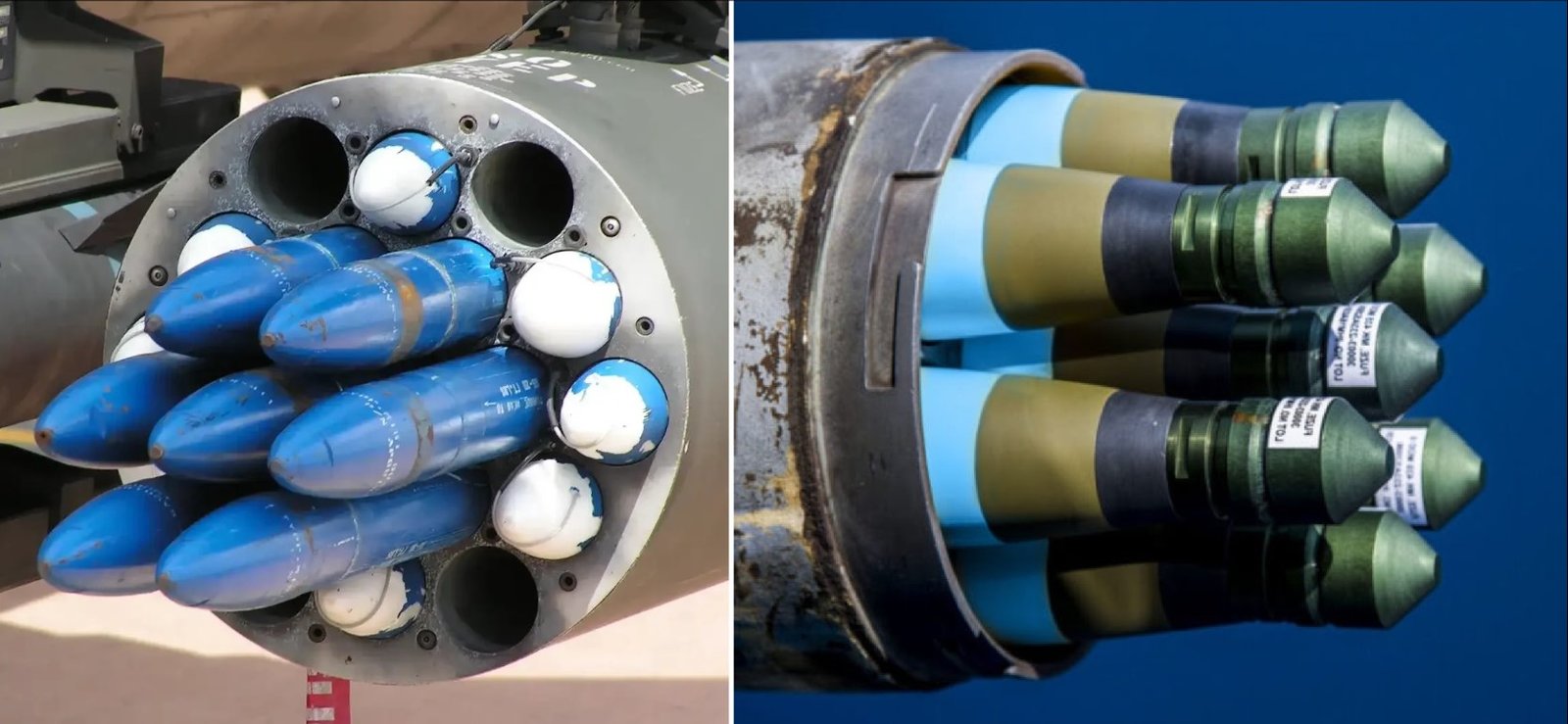
WASHINGTON — The U.S. Army has selected four defense companies to help expand production of the Hydra-70 rocket as part of an effort to strengthen the defense industrial base, reduce dependence on a single supplier, and improve manufacturing capacity for one of the military's most widely used rocket systems.
The Army awarded Other Transaction Authority (OTA) agreements to Firehawk Aerospace, iRocket, Nammo Perry, and Albers through the Aviation Rocket and Small Guided Munitions (ARSGM) Product Office using the One Nation Innovation (ONI) marketplace.
According to the Army, the initiative is intended to establish multiple qualified production sources, encourage competitive pricing on future annual orders, and build additional manufacturing capacity to meet operational requirements.
Four Companies to Deliver Prototype Rockets
Under the agreements, each company will manufacture 24 prototype Hydra-70 M151 High Explosive rockets within the next 18 months.
In addition to producing the prototypes, all four companies will work together to update the government's Technical Data Package (TDP) for the Hydra-70. The government-owned TDP contains the engineering and manufacturing information required to build the rocket. The Army said modernizing the package will improve manufacturability and make it easier for additional qualified suppliers to enter production.
If the prototype phase is completed successfully, the Army expects to issue follow-on agreements covering additional variants of the Hydra-70 rocket family.
Expanding the Industrial Base
The Army typically procures 100,000 to 200,000 Hydra-70 rockets each year, making the weapon one of its highest-volume munitions.
Officials said expanding the number of qualified manufacturers will strengthen the supply chain and improve the Army's ability to increase production when required.
The OTA contracting approach also enables the Army to fund prototype projects more quickly than under traditional acquisition methods while allowing participation from companies beyond the established prime contractor base.
Long History of the Hydra-70 Program
The Hydra-70 is a 70-millimeter unguided rocket powered by the MK66 rocket motor and can be fitted with different warheads depending on mission requirements.
The rocket is launched from multiple platforms, including AH-64 Apache and AH-1 Cobra attack helicopters, as well as fixed-wing aircraft such as the F-16. It is used across all branches of the U.S. military and by many allied nations.
The system traces its origins to U.S. Navy rocket designs developed in the late 1940s, while the current Hydra-70 has served as a standard munition since the Vietnam War era.
When equipped with the Advanced Precision Kill Weapon System (APKWS) guidance kit, the Hydra-70 becomes a laser-guided precision weapon. The guided version has increasingly been used for counter-drone missions because it provides a lower-cost option than employing Hellfire missiles, which typically cost between $150,000 and $200,000 per missile.
Reducing Reliance on a Single Supplier
For decades, General Dynamics Ordnance and Tactical Systems has served as the primary systems integrator for the Hydra-70 program.
Since 1996, the company has produced more than 5 million Hydra-70 rockets and has received Army contracts that include awards valued at up to $3.42 billion.
Army briefing materials shared with industry indicated that the program's maximum production capacity is about 330,000 rockets annually, although actual production has often been below that level.
The Army also noted that it fires more than 100,000 Hydra-70 rockets each year for training, in addition to operational and combat use. Over the past decade, approximately 1.7 million Hydra-70 rockets have been used in training, combat, and testing.
By bringing additional qualified manufacturers into the program, the Army aims to reduce dependence on a single primary supplier while improving its ability to increase production when required.
Firehawk Aerospace Expanding Production
Texas-based Firehawk Aerospace said its OTA agreement supports efforts to diversify the Hydra-70 supply chain and strengthen the U.S. defense industrial base.
Founded in 2019 by CEO Will Edwards, the company develops rocket motors and propellant using modern manufacturing methods, including 3D printing.
Earlier this year, Firehawk opened a rocket integration facility in Crawford, Mississippi, with an initial production capacity of approximately 40,000 rockets per year. The company plans to increase production capacity by 2028.
Firehawk is also developing a propellant production facility in Oklahoma and holds propulsion-related contracts supporting programs that include the Javelin, Stinger, and Guided Multiple Launch Rocket System (GMLRS).
The company recently raised $60 million in a Series C funding round led by 1789 Capital and also received a strategic investment from Hanwha Defense USA.
iRocket Supporting Guided Rocket Production
New York-based iRocket also secured a related contract valued between $30 million and $150 million to manufacture components for laser-guided Hydra-70 rockets.
The company plans to use its automated Factory ONE production model, which is designed to manufacture up to 97,000 units annually while producing a propellant unit approximately every five minutes.
Future Production Plans
Following successful completion of the prototype program, the Army plans to expand production opportunities across additional Hydra-70 variants.
Army officials said the initiative is intended to create a more resilient manufacturing base, improve competition among suppliers, and ensure long-term production capacity for one of the U.S. military's most widely used rocket systems.
——— End of Article ———