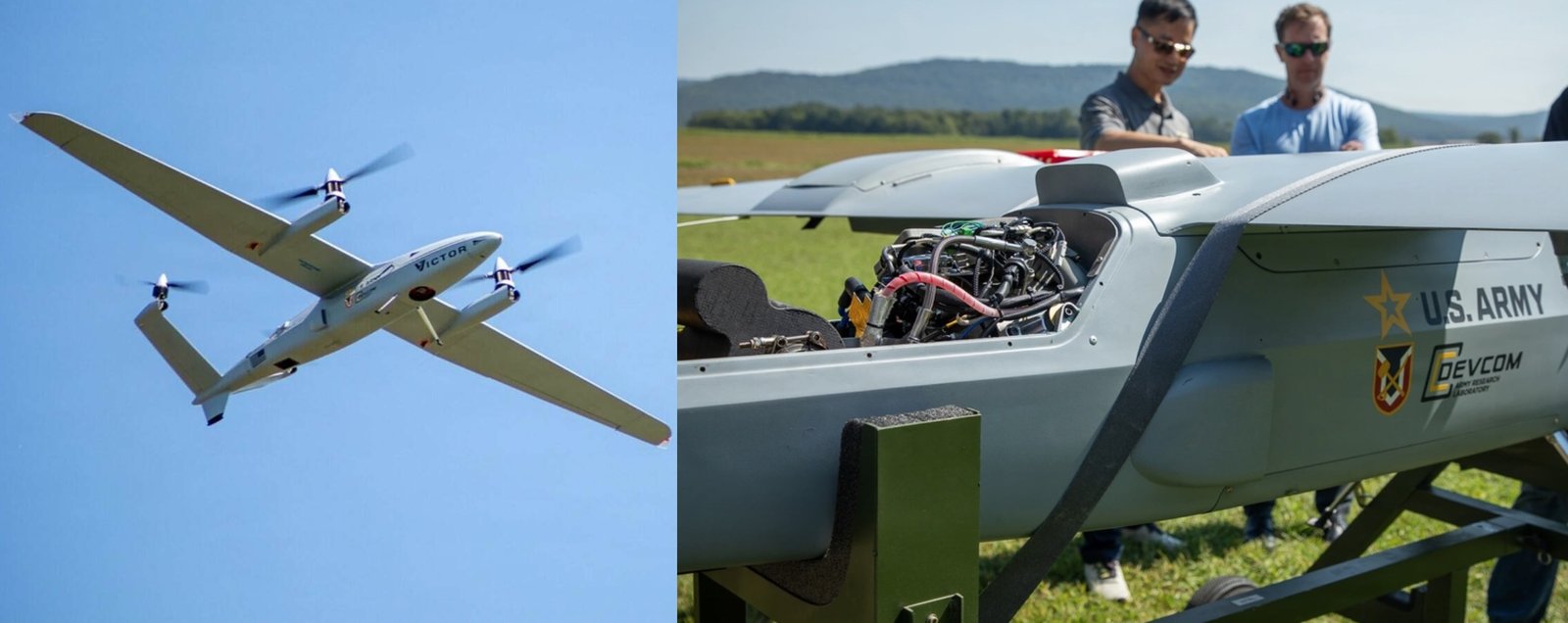
HUNTSVILLE, Alabama — The U.S. Army has successfully flight-tested a 3D-printed heavy-fuel hybrid propulsion system on the VICTOR unmanned aircraft system (UAS). The demonstration, announced on 2 November 2026, took place near Huntsville, Alabama.
Developed by the DEVCOM Army Research Laboratory (ARL) with industry partners, including Griffon Aerospace, the system combines an air-cooled rotary engine with a 400-volt electric motor-generator. It is designed to reduce fuel logistics requirements while improving tactical drone performance.
Heavy-Fuel Hybrid Propulsion
The engine runs on kerosene-based heavy fuel already used by Army vehicles and helicopters. This could eliminate the need to transport separate gasoline supplies for tactical drones.
In the series-hybrid configuration, the engine drives a generator that supplies electricity to the aircraft’s electric motors. The electric system supports vertical takeoff and landing (VTOL), while the engine provides power for sustained flight.
The technology could help drones fly longer, operate faster, carry heavier payloads and perform in extreme environments. However, specific flight duration, range, payload and fuel-consumption figures have not been released.
3D Printing Reduces Engine Size and Weight
Heavy fuel is difficult to burn efficiently in compact rotary engines because it does not vaporise as readily as gasoline.
ARL researchers used computational fluid dynamics (CFD) simulations and a clean-sheet design to address the challenge. The approach improved fuel atomisation and vaporisation while reducing compressed-air and fuel-vapour leakage.
Metal 3D printing allowed engineers to rapidly redesign and manufacture components based on test results. It also enabled an air-cooled architecture, removing the need for a liquid-cooling circuit, pumps, radiators and coolant.
The resulting design reduces the propulsion system’s size and weight, potentially freeing capacity for additional fuel and payload.
VICTOR Drone and Military Applications
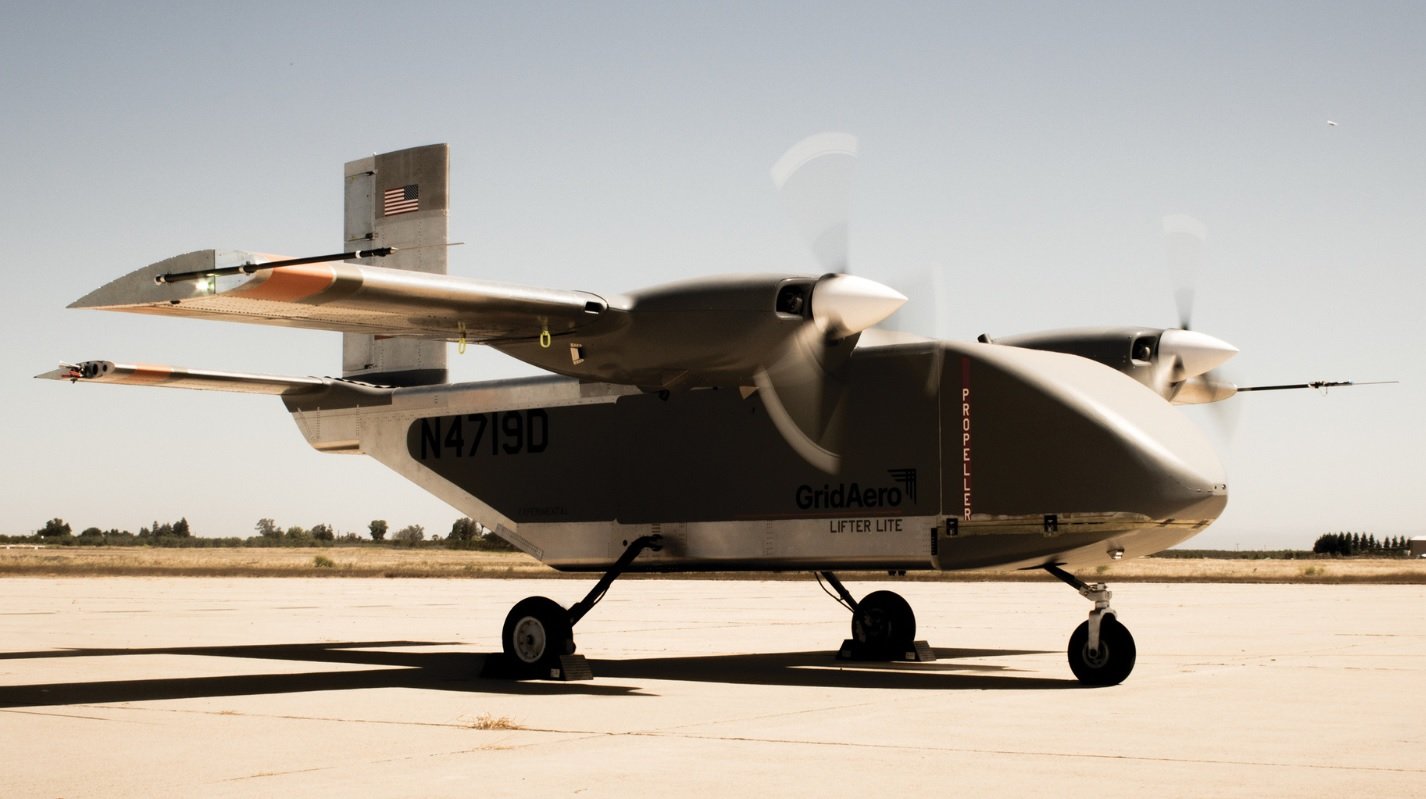
The VICTOR (Versatile Intelligence Controlled Tactical Operational Reconnaissance and Attack) is a U.S.-made Group 3 medium-class drone developed by Griffon Aerospace.
Group 3 systems weigh up to approximately 600 kg and can operate at altitudes of up to 5.5 km. VICTOR is designed for reconnaissance and strike missions, including operations in contested environments.
The new propulsion system could support operations beyond line of sight, extending the reach of ground commanders while reducing risks to soldiers.
PULSAR and Future Development
The project falls under ARL’s Versatile Tactical Power and Propulsion research programme, which involved more than 30 universities, 13 federal laboratories and 20 industry partners.
The programme produced research in combustion chemistry, sensing and controls, material design, batteries and hybrid-electric technology. It also generated patents, patent applications, technical data packages, design methods and reliability data.
The findings will support further development of VICTOR and the PULSAR (Persistent Unmanned Aircraft System for Logistics, Strike, Autonomy, and Reconnaissance) concept.
PULSAR envisions using swarms of VICTOR drones for multi-mission military operations. The aircraft and concept will be made available to military partners for further experimentation and development.
The Army described the engine as the first 3D-printed heavy-fuel engine of its kind. The technology supports the military’s single-fuel logistics approach by allowing tactical drones to use heavy fuels already available across the force.
——— End of Article ———