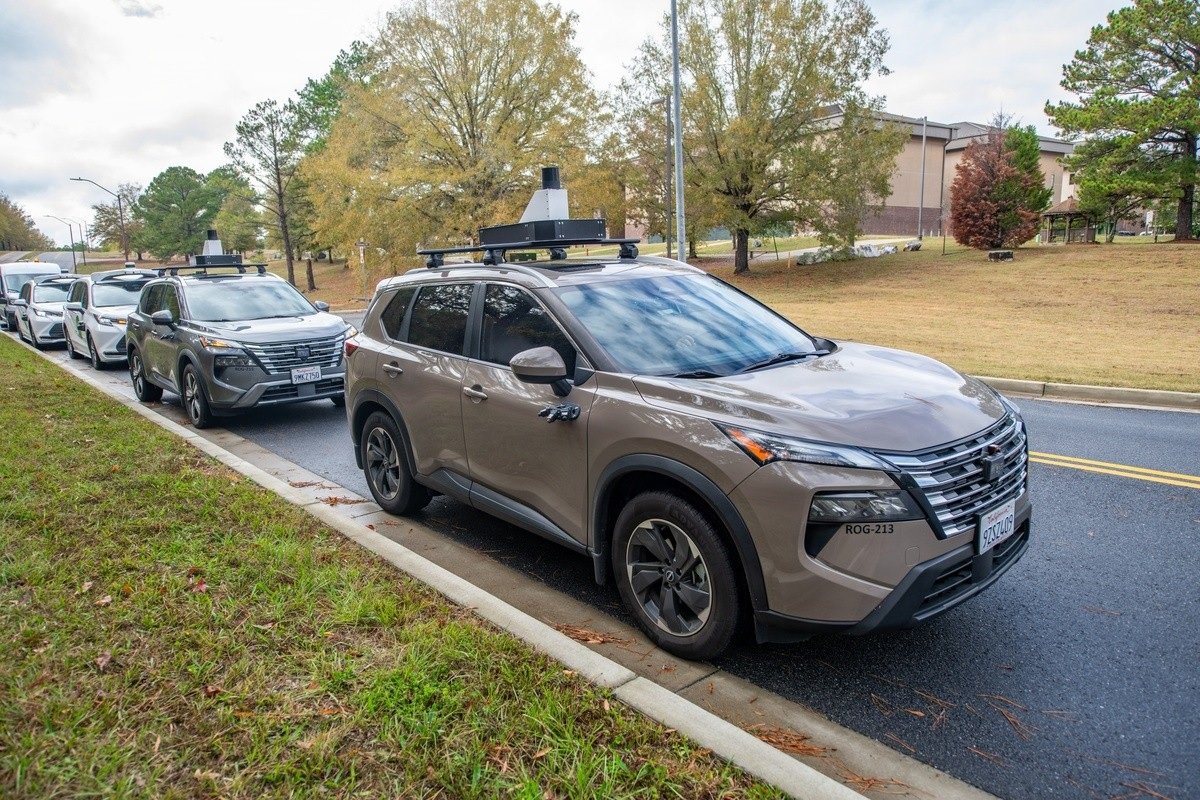
FORT BENNING, Georgia, — The U.S. Army has started testing commercial autonomous passenger shuttles at Fort Benning, Georgia, after five vehicles arrived on November 4. The trial is part of the Robotic Operations for Autonomous Delivery and Sustainment (ROADS) challenge, managed jointly by the Army and the Defense Innovation Unit (DIU).
Fort Benning is one of two installations selected for the trial. The planned fleet will consist of six vehicles, including four electric and two hybrid vans, supplied by three American companies: Applied Intuition, Perrone Robotics, and Forterra in partnership with May Mobility. The exact vehicle models and trial cost have not been disclosed.
Reducing Soldiers' Routine Duties
The Army aims to reduce the number of soldiers assigned to driving duties across large military installations. Thousands of trainees, instructors and other personnel regularly travel between training areas and support facilities at Fort Benning.
Charles Auer, the installation's pilot lead, said continuous vehicle dispatching requires dedicated drivers, taking soldiers away from their primary training and tactical responsibilities.
The Fort Benning trial focuses only on passenger transportation, although the wider ROADS challenge also covers cargo delivery. The goal is to give instructors more teaching time and free soldiers for other duties.
Testing and Safety Measures
During the first two to three weeks, human drivers will operate the shuttles manually while teams collect LiDAR, video and GPS data to map approved routes and build the system architecture.
The vehicles will operate only on paved roads. Sensitive locations, including Lawson Army Airfield, ammunition supply points and tactical compounds, are excluded.
After mapping, vendors will conduct phased demonstrations and test runs through the end of 2026. Each vehicle will undergo further testing with a safety driver onboard before the Army considers fully driverless operations.
Auer said safety remains the priority and that the transition to autonomous operations will follow a phased approach.
ROADS Challenge and U.S. Technology Restrictions
Launched in May 2026, the ROADS challenge is a $30 million initiative designed to introduce commercial autonomous technology into the Department of Defense's fleet of more than 150,000 non-tactical vehicles. Its objectives include reducing driver requirements, improving vehicle utilisation and freeing military personnel for higher-priority duties.
In October 2026, five teams advanced to Phase III for military installation evaluations: Forterra/May Mobility, Applied Intuition, Perrone Robotics, Overland AI/Gatik and Bot Auto.
The use of American companies also aligns with U.S. restrictions on certain foreign connected-vehicle technologies. In January 2025, the Commerce Department finalised rules restricting covered connected-vehicle software linked to China or Russia from model year 2027, followed by hardware restrictions in 2030. The U.S. Air Force's 18th Wing at Kadena Air Base in Japan also restricted China's BYD vehicles last month over security concerns.
The Fort Benning trial will help the Army determine whether autonomous shuttles can safely handle routine personnel transportation and reduce soldiers' driving duties before the technology is considered for wider military use.
——— End of Article ———