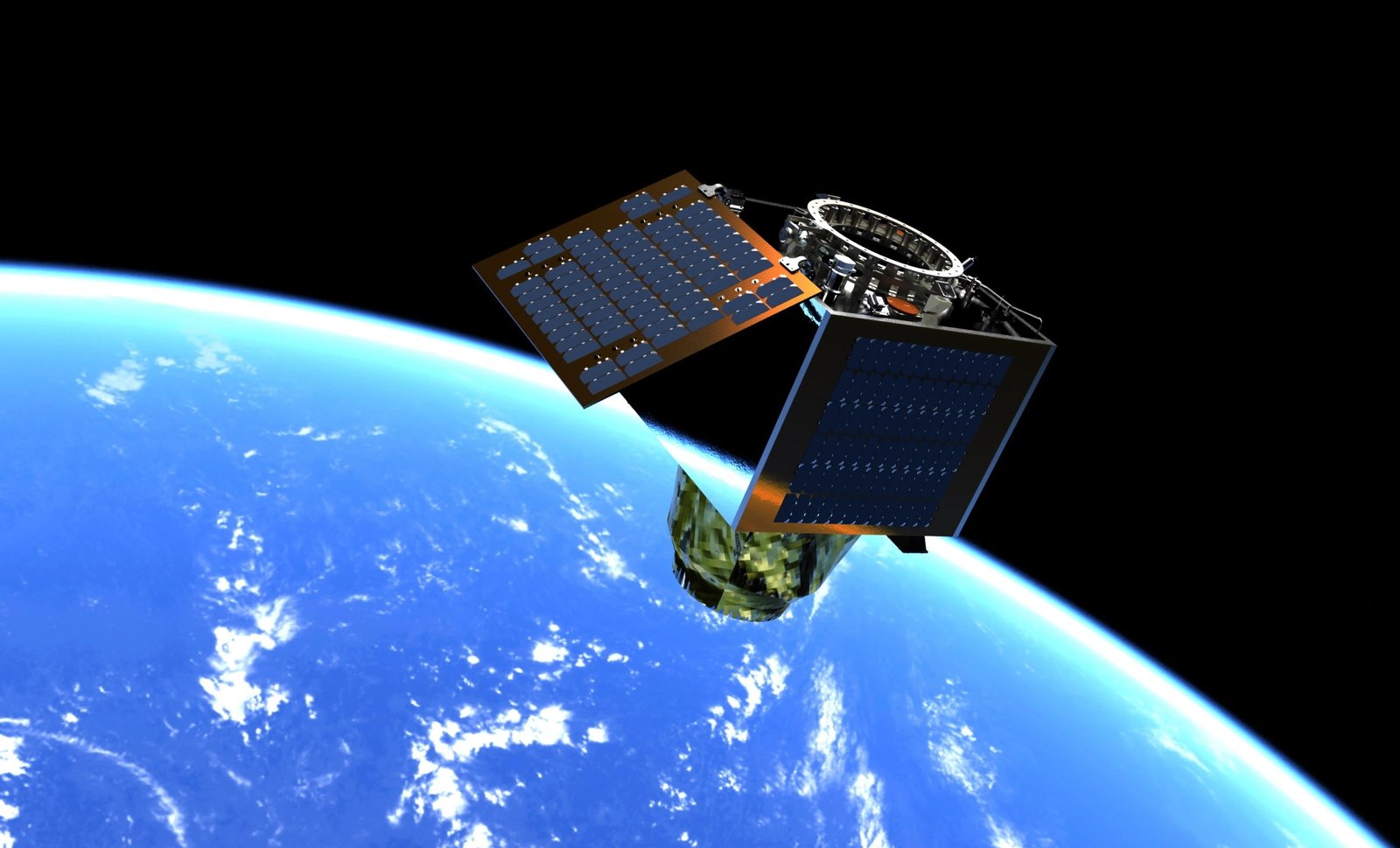
LONDON, — British space technology company SatVu has successfully launched its HotSat-3 satellite to expand its ability to monitor heat signatures on Earth's surface from orbit. The satellite lifted off on October 1 aboard SpaceX's Transporter-18 rideshare mission from Vandenberg Space Force Base in California.
HotSat-3 will undergo in-orbit commissioning before starting commercial operations. Once operational, it will work alongside HotSat-2, giving SatVu two working satellites and the ability to image any location on Earth in thermal infrared once every 24 hours, during both day and night.
"With two operational satellites, we will have double the capacity: customers can collect twice as much imagery, monitor twice as many sites, or return to the same site more often," said Anthony Baker, SatVu's CEO and co-founder.
High-Resolution Thermal Imaging Technology
Built by Surrey Satellite Technology Ltd (SSTL), HotSat-3 carries a mid-wave infrared (MWIR) camera that detects heat emitted by objects rather than reflected sunlight. This allows it to operate at night and identify heat signatures from running engines, generators, gas flares, ship wakes and warm cooling water discharged by power plants.
SatVu states that its imagery can resolve details down to 3.5 metres (11.5 feet) at nadir, offering finer spatial detail than the approximately 100-metre thermal resolution of older systems such as Landsat. The company also provides thermal video clips lasting up to 60 seconds, allowing analysts to observe movement and changes in activity rather than relying only on still images.
Defence and Commercial Applications
Defence and intelligence agencies can use the imagery to assess whether vehicles, ships, factories and other equipment appear to be operating. Repeated observations can help track changes in activity at strategic sites and critical infrastructure, particularly at night or in areas with limited ground reporting.
SatVu also serves commodity traders and energy analysts, who monitor heat signatures at oil refineries and liquefied natural gas (LNG) plants to identify potential shutdowns, restarts and changes in facility activity.
In February 2026, SatVu raised £30 million (approximately $40 million) in a funding round that included the NATO Innovation Fund and other investors, bringing its total equity funding to £60 million. The company has also received a Defence Innovation Loan from the UK Ministry of Defence. Minister of State Luke Pollard said the government loan helped attract subsequent private investment.
Previous Satellite Failure and Expansion Plans
HotSat-3 is SatVu's third satellite but only its second operational spacecraft. HotSat-2 launched in March 2026 aboard SpaceX's Transporter-16 mission and began delivering commercial imagery in June.
The company's first satellite, HotSat-1, launched in June 2023 and returned its first images in October, including views of wildfires in Canada and urban heat in Las Vegas. An anomaly halted operations in December 2023. Baker later linked the failure to a likely power circuit problem in the camera. SatVu received a £10 million insurance payout and ordered HotSat-2 and HotSat-3 from SSTL in 2024.
The company has already booked launches for HotSat-4 and HotSat-5 and signed contracts covering long-lead components for HotSat-6. SatVu ultimately plans to deploy approximately 10 satellites, aiming to revisit priority locations up to 20 times a day. The full constellation is targeted for polar and mid-inclination orbits by the end of 2029.
HotSat-3's successful launch marks another step toward SatVu's goal of providing more frequent thermal imagery for defence, intelligence, energy and other commercial customers.
——— End of Article ———