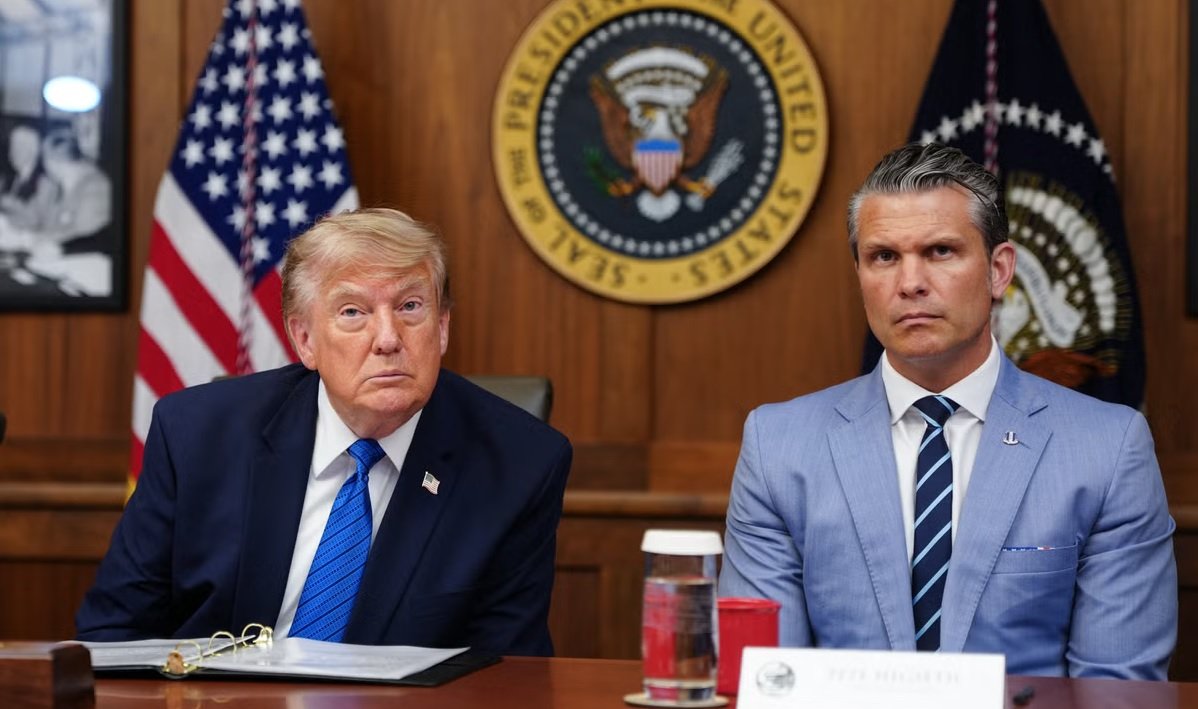
WASHINGTON, D.C. — The White House and the Pentagon have strongly denied a report claiming U.S. President Donald Trump confronted Defense Secretary Pete Hegseth over ammunition shortages during a Cabinet meeting at Camp David, even as concerns over U.S. weapons stockpiles continue amid the ongoing conflict with Iran.
A report published by The Washington Post, citing two sources familiar with the matter, said Trump questioned Hegseth during last Friday's Cabinet meeting at the Camp David presidential retreat in Maryland after learning that shortages of key long-range guided missiles and air-defense interceptors remained unresolved.
According to the report, Trump expressed frustration because he believed the ammunition issue had already been addressed and felt he had not been fully informed about the actual condition of U.S. military stockpiles. The reported shortages have limited available military options during the conflict with Iran.
Report Claims Trump Sought Explanation
The Washington Post reported that Trump pressed Hegseth for an explanation regarding the continued shortages.
According to the newspaper, Hegseth denied responsibility and instead pointed to Deputy Defense Secretary Stephen Feinberg, saying his deputy was responsible for ensuring the president received accurate updates on the military's inventory.
The report said the exchange reflected growing tensions between Trump and Hegseth, who had been among the strongest supporters of military action against Iran and had previously assured the president that operations would be short and decisive.
Reports Highlight Pressure on U.S. Munitions
The reported discussion comes as U.S. military operations have placed heavy demand on precision-guided weapons and air-defense systems.
According to The Washington Post, during the first month of the conflict U.S. forces used:
- More than 850 Tomahawk cruise missiles
- More than 1,000 Patriot and Terminal High Altitude Area Defense (THAAD) interceptors
- More than 1,300 Army Tactical Missile Systems (ATACMS)
The newspaper, citing a source familiar with the matter, reported that the ATACMS inventory has been reduced to the point that essentially none remain.
Earlier reporting by CNN stated that the United States had used roughly 80% of its prewar THAAD interceptor stockpile and about half of its Patriot interceptor inventory during the conflict. CNN also reported that reserves of ATACMS and Precision Strike Missiles (PrSM) had been significantly reduced, with the shortages contributing to Trump's decision to pause plans for additional large-scale strikes.
Defense officials have previously acknowledged that replenishing certain advanced munitions takes considerable time. Production of some key air-defense interceptors, including Patriot missiles, can take up to two years despite expanded manufacturing agreements.
White House Rejects the Report
The White House categorically denied that any confrontation took place.
White House Press Secretary Karoline Leavitt dismissed the report, stating:
"This is 100% fake news. It literally never happened. President Trump has the utmost confidence in Secretary Hegseth."
Leavitt later wrote on X that she attended the Camp David meeting and said the reported exchange never occurred. She also said the story had been shared with several media organizations in an effort to discredit Hegseth, adding that Trump "loves the Secretary and thinks he's doing a tremendous job."
Pentagon Also Denies Allegations
The Pentagon issued a similar response.
Chief Pentagon spokesperson Sean Parnell rejected claims that Hegseth misled the president about U.S. munitions inventories or shifted responsibility to Deputy Defense Secretary Stephen Feinberg.
Parnell described the allegations regarding depleted stockpiles, internal disagreements and Hegseth's position on Iran as "fabricated" and "fake news from beginning to end."
Senate Hearings Raised Similar Questions
Questions regarding U.S. weapons inventories had already surfaced during Senate hearings in July.
Democratic lawmakers asked Hegseth whether he had accurately informed President Trump about the risks that a prolonged military campaign could pose to U.S. stockpiles.
During those hearings, Hegseth repeatedly attributed any inventory shortfalls to policies of the previous administration.
Meanwhile, the administration has taken steps to expand production by invoking the Defense Production Act and requesting additional funding from Congress to replenish military inventories.
Trump Responds on Truth Social
President Trump also responded publicly following the reports.
In a post on Truth Social, he denied that the United States was facing a weapons shortage, saying the country has "massive amounts" of munitions and that additional weapons are being manufactured and supplied as needed.
Trump also said his administration was pursuing individuals responsible for leaking what he described as "treasonous statements" to the media and that long prison sentences would be sought.
Conflicting Accounts Remain
The reported Camp David exchange has become the latest point of disagreement between media reports and official statements from the administration.
While The Washington Post and CNN have reported significant pressure on U.S. missile inventories during the conflict with Iran, both the White House and the Pentagon continue to reject claims of internal disagreements over the issue, maintaining that President Trump and Defense Secretary Pete Hegseth remain fully aligned on U.S. national security policy.
——— End of Article ———