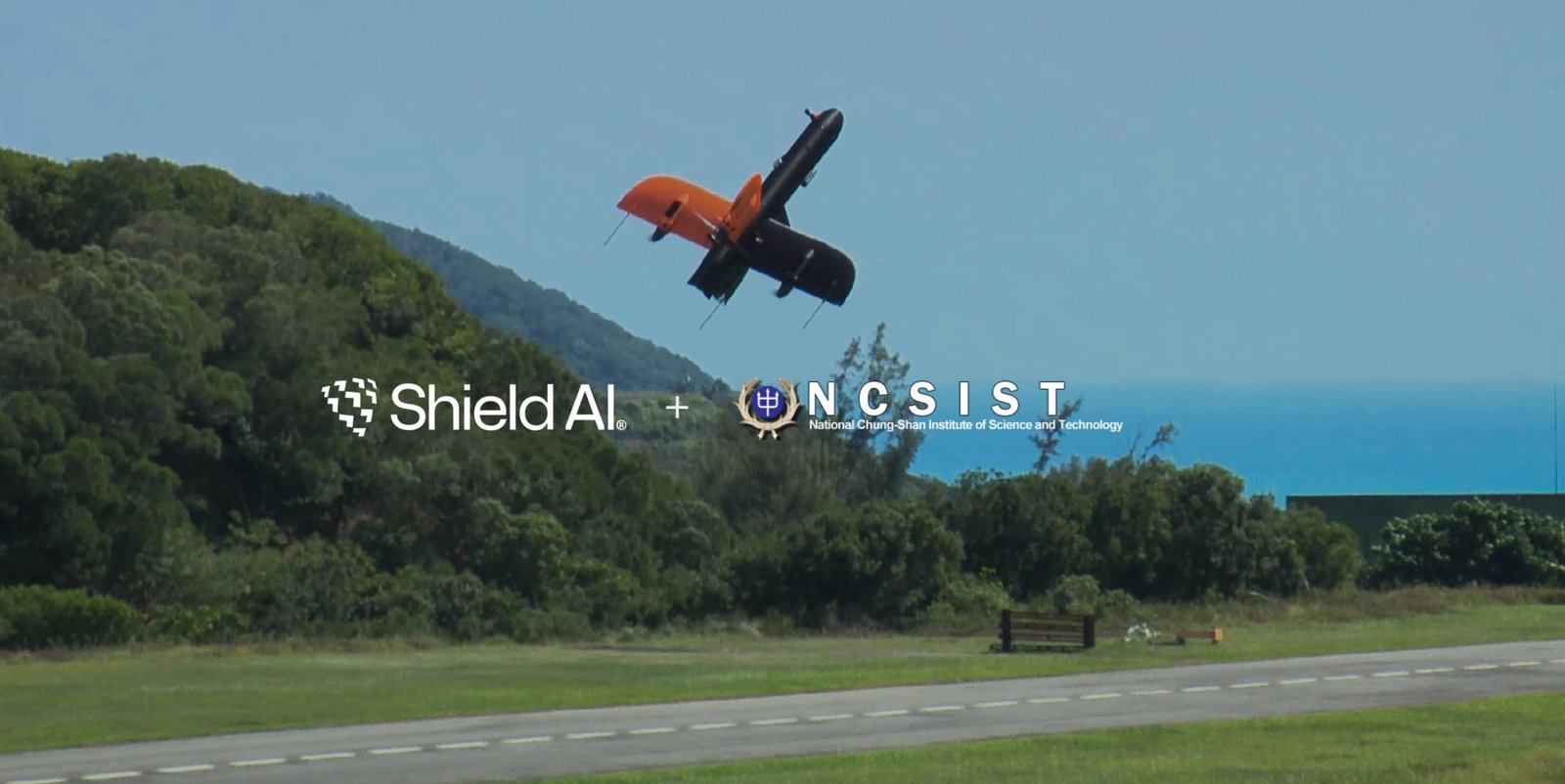
TAIPEI — Shield AI and Taiwan's National Chung-Shan Institute of Science and Technology (NCSIST) have successfully completed a coordinated autonomous drone swarm exercise using three Mighty Hornet III unmanned aerial vehicles (UAVs), demonstrating AI-enabled autonomous teaming and expanding their partnership to integrate the technology across more of Taiwan's unmanned defense systems.
The field demonstration marked the completion of the organizations' initial contract, which was signed less than three months ago, and resulted in a significant expansion of the agreement. Under the renewed partnership, NCSIST will continue integrating Shield AI's Hivemind autonomy software into a broader range of its unmanned platforms to support multi-system operations from a single ground control station.
Autonomous Swarm Demonstration
During the exercise, Shield AI's Hivemind autonomy software controlled three NCSIST Mighty Hornet III drones throughout a coordinated search mission.
The AI system autonomously launched all three aircraft, divided a wide-area search mission into separate sectors, assigned each UAV its own search area, and coordinated their movements in real time. Throughout the operation, the drones maintained communication with one another while carrying out their assigned tasks.
The swarm also identified and navigated around a designated partial no-fly zone while continuing the mission. After completing the search operation, Hivemind executed synchronized autonomous landings for all three aircraft without direct human piloting.
Integration Completed in Less Than Three Months
The demonstration was completed less than three months after Shield AI and NCSIST formalized their initial agreement to integrate Hivemind into Taiwan's intelligent unmanned systems.
As part of the project, embedded Shield AI engineers worked alongside Taiwanese developers, providing hands-on technical training and operational support. The collaboration enabled NCSIST engineers to independently integrate, operate, and employ the Hivemind-enabled capabilities.
NCSIST President Li Shih-chiang said the institute achieved a high level of operational proficiency within a short period.
"With Shield AI's support, NCSIST achieved a high level of operational proficiency with Hivemind in less than three months," Li said. "What impressed us most was not only the high performance of the AI pilot, but Shield AI's commitment to ensuring we could independently operate and employ the technology in such a short period of time. Their hands-on training and technical expertise and mentorship gave Taiwanese engineers the confidence to integrate and use Hivemind on our own."
Hivemind AI Pilot
Hivemind is Shield AI's autonomy software designed to function as an AI pilot that enables military platforms to sense, decide, and act independently without continuous human intervention.
Unlike conventional autopilot systems that primarily follow pre-planned routes, Hivemind can adjust flight paths, avoid obstacles, and continue operating in environments where communications and GPS signals are degraded or jammed.
According to Shield AI, Hivemind has been used to pilot more than 30 different platforms, including F-16 fighter aircraft, helicopters, jet-powered UAVs, drone boats, and ground vehicles.
Mighty Hornet III UAV
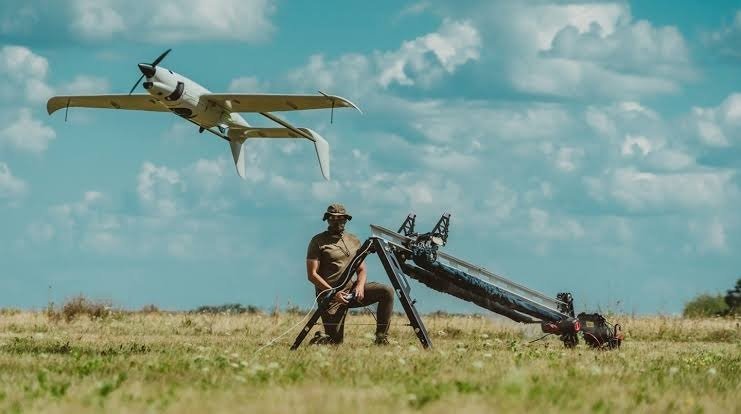
The autonomous mission was carried out using NCSIST's Mighty Hornet III, a Group 2 X-wing unmanned aircraft jointly developed by NCSIST and private industry partners.
The UAV features a modular, 3D-printed airframe designed for relatively fast and low-cost production without relying on heavy factory machinery.
It combines vertical takeoff and landing (VTOL) capability with the high-speed cruise performance of a fixed-wing aircraft, allowing it to operate without specialized ground launch or recovery equipment.
The Mighty Hornet III is also equipped with domestically produced high-density batteries and an electro-optical/infrared (EO/IR) sensor for target identification.
Partnership Expansion
Following the successful demonstration, Shield AI and NCSIST agreed to expand their cooperation beyond the initial project.
The next phase will focus on integrating Hivemind into additional NCSIST unmanned systems, enabling multiple autonomous platforms to operate together under the control of a single ground control station.
Shield AI President and Co-founder Brandon Tseng said autonomy is becoming an essential capability for operating large numbers of unmanned systems.
"You can build ten million drones, but you can't train ten million drone pilots. Autonomy is the critical enabling technology to effectively leverage drones on the battlefield," Tseng said. "Hivemind's ability to enable autonomous teaming is why autonomy is becoming one of the most important force multipliers in modern defense. Enabling sovereign development of AI pilots in Taiwan greatly enhances the defense capabilities of the country and we look forward to continuing to build with partners like NCSIST to deliver the mission autonomy Taiwan needs to deter conflict."
Supporting Taiwan's Autonomous Defense Capabilities
The successful field demonstration concludes the first phase of cooperation between Shield AI and NCSIST while laying the foundation for broader deployment of AI-enabled autonomy across Taiwan's unmanned systems. The expanded partnership will support future multi-platform autonomous operations by integrating Hivemind into additional NCSIST platforms under the new agreement.
——— End of Article ———