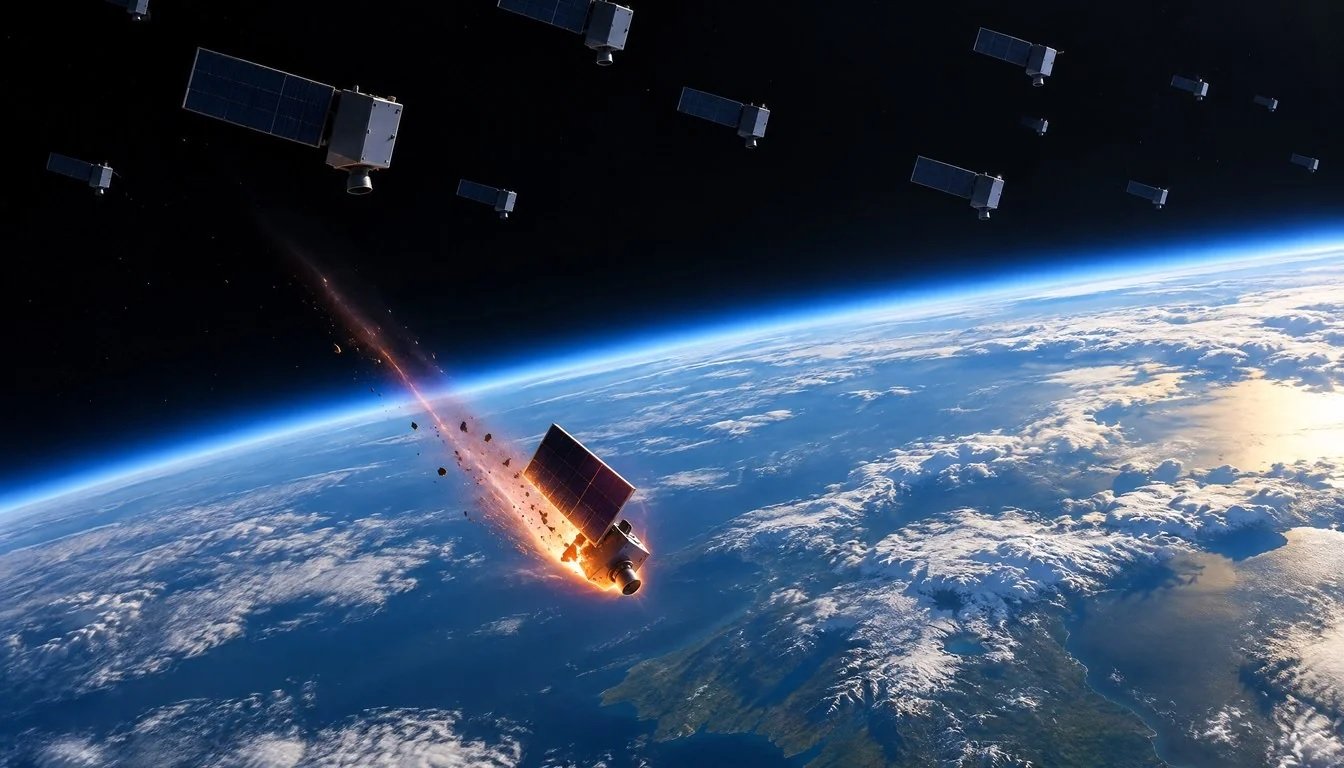
MOSCOW, — Russia has lost a second satellite from its developing Rassvet broadband constellation after the spacecraft reentered Earth's atmosphere and burned up on October 30, according to satellite tracking data.
The satellite, Rassvet-3 No. 17, was launched on July 19, 2026, from the Plesetsk Cosmodrome aboard a Soyuz-2.1b rocket. It was part of a batch of 16 satellites developed by Russian aerospace company Bureau 1440.
Tracking data showed that the satellite failed to activate its onboard propulsion system to raise its orbit after deployment. Atmospheric drag gradually reduced its altitude, leading to its reentry after approximately three months and 11 days in orbit.
Second Satellite Lost After Orbit-Raising Failure
The latest incident follows the loss of Rassvet-3 No. 4, which was launched on March 23, 2026, as part of the constellation's first batch of 16 satellites. It reentered Earth's atmosphere on June 6 after failing to perform its planned orbit-raising manoeuvres.
Rassvet satellites are initially deployed into an orbit of approximately 300 kilometers and are designed to use onboard thrusters to reach an operational altitude of around 500 kilometers.
Following the latest loss, approximately 30 Rassvet-3 satellites remain in orbit. Most have reached or are approaching an altitude of about 500 kilometers.
Another satellite from the second batch, Rassvet-3 No. 23, had dropped to approximately 220 kilometers before resuming orbit-raising manoeuvres in late October. Tracking data showed it climbing past 290 kilometers by the end of the month.
Russia Developing Its Own Starlink Alternative
Bureau 1440 is developing the Rassvet low-Earth orbit satellite constellation to provide broadband connectivity across remote regions of Russia and reduce dependence on foreign communications infrastructure, including SpaceX's Starlink network.
The system is also intended to support military communications needs, with Ukraine raising concerns about its potential military applications.
Bureau 1440 recently revealed its production-ready 1440.ULTRA user terminal, which the company says is weather-resistant and capable of delivering data speeds of up to 700 Mbps.
Commercial Service Planned for 2027
Russia has launched two batches of 16 production satellites in 2026. The country plans to expand the constellation to 250 satellites by 2027 to begin commercial operations, with a long-term target of approximately 900 satellites by 2035.
The repeated loss of satellites due to orbit-raising failures highlights the technical challenges facing Bureau 1440 as Russia develops its domestic broadband network.
The Rassvet project remains in its early deployment phase as Russia seeks to establish a satellite communications system capable of providing connectivity across the country.
——— End of Article ———