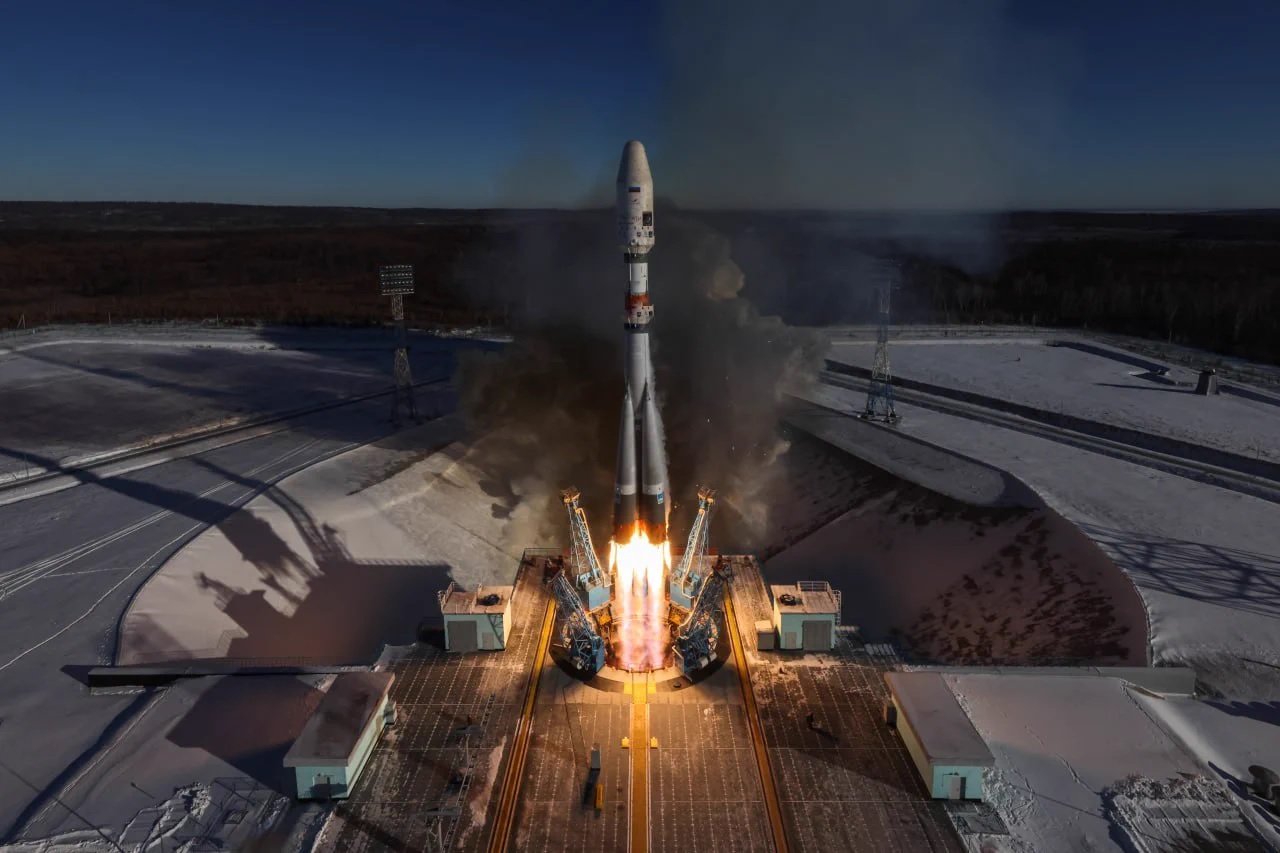
Vostochny Cosmodrome, Russia — Russia successfully launched two privately developed Earth-observation satellites, KOEN and KinoSputnik, aboard a Soyuz-2.1b rocket on November 14, 2026. The rocket lifted off at 04:16 Moscow time from the Vostochny Cosmodrome in Russia's Far East. Both satellites reached orbit and established communication with ground control.
The mission marks the first time in Russian spaceflight history that privately developed satellites served as the primary payload of a launch. It is also the first private satellite launch supported under the national Cosmos project. Roscosmos partially funded the launch, with the satellites expected to provide high-resolution imagery for government applications.
Two Satellites With Different Imaging Capabilities
KOEN, developed by private company MT-LAB, is designed to capture optical images at a resolution of 50 centimetres per pixel. It will operate in an orbit near 500 kilometres, with a planned service life of at least five years. Its imaging swath is approximately 12 kilometres, with an expected annual coverage of around 15 million square kilometres.
KinoSputnik, developed by Sputnik Group (Sputnix), is built on the company's new Pallada satellite platform. Weighing approximately 200 kg, it is designed for an orbit near 600 kilometres. Its multispectral camera provides 80-centimetre resolution in both multispectral and panchromatic modes.
Fregat Upper Stage Deploys Satellites
The Soyuz-2.1b rocket was manufactured by the Progress Rocket and Space Centre. Following the rocket's third-stage operation, the Fregat upper stage, developed by NPO Lavochkin, carried out the orbital deployment.
Both satellite operators confirmed successful communication with their spacecraft. MT-LAB reported normal telemetry from KOEN, while Sputnix confirmed that its mission control centre in Skolkovo had received signals from KinoSputnik and that its systems were operating normally.
The mission also carried additional small satellites and payload containers. Aerospace Capital supplied the separation system used for KinoSputnik and several microsatellite containers, which performed as planned.
Earth Observation for Government and Commercial Applications
The two satellites will provide imagery for monitoring critical infrastructure, agricultural land, construction projects, natural resources and forest areas. Their data will also support land-use monitoring, detection of unauthorised buildings and landfills, assessment of emergency areas and environmental monitoring.
The launch is part of Russia's national Cosmos project, which aims to expand the country's satellite capabilities with greater participation from private space companies. The mission represents an expansion of commercial involvement in Russia's Earth-observation sector, while government funding helps support the deployment of privately developed spacecraft.
——— End of Article ———