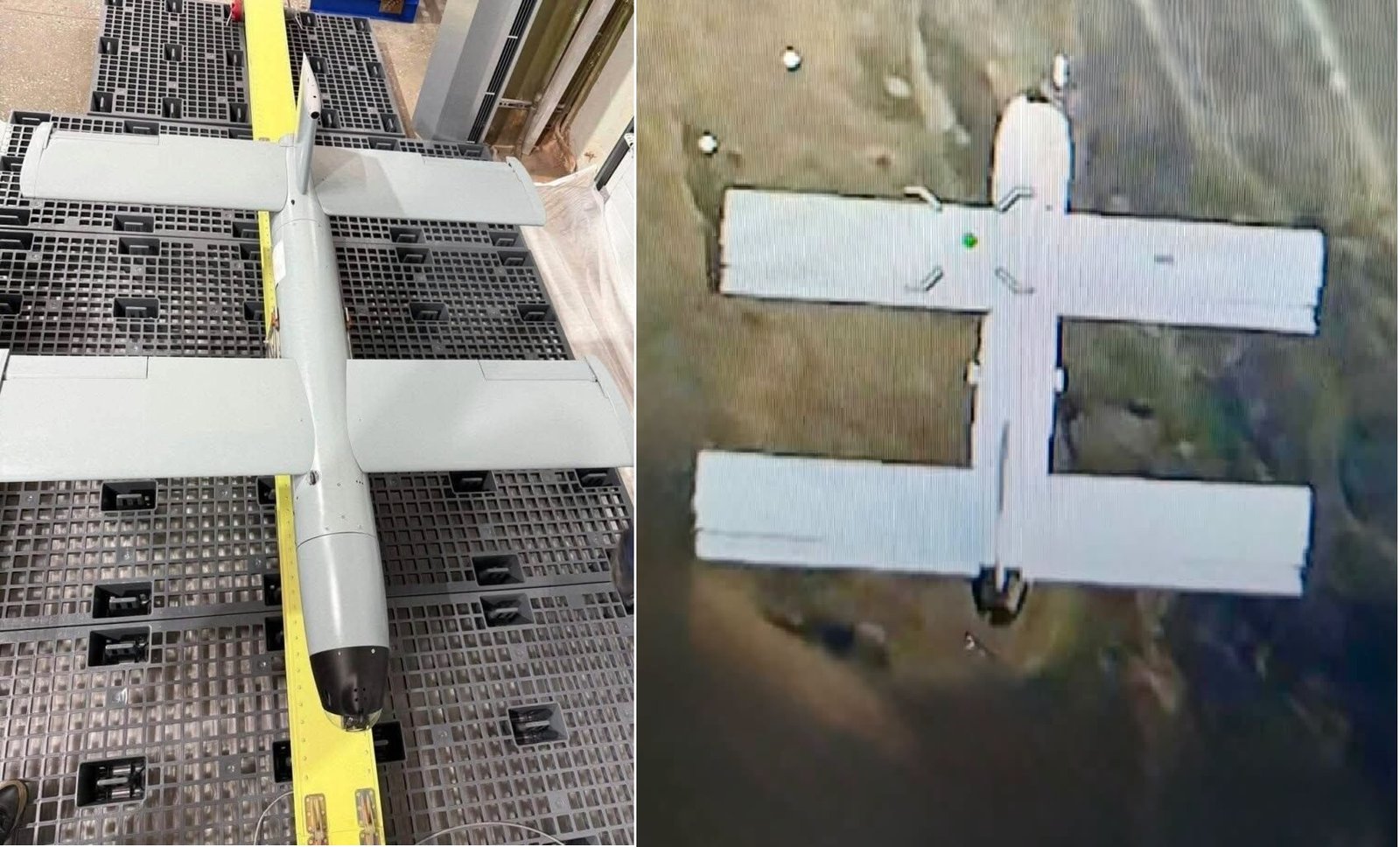
KYIV — A new Russian jet-powered unmanned aerial vehicle (UAV), preliminarily identified as Izdeliye K5, has been spotted on the front line in Ukraine. Ukrainian radio technology specialist and presidential defence adviser Serhii “Flash” Beskrestnov reported the sighting in late November 2026, publishing a photograph of the aircraft on social media.
Beskrestnov did not disclose the exact date or location of the sighting. Footage recorded by a Ukrainian drone and a separate ground photograph of the same model have also circulated on Russian military Telegram channels.
Izdeliye K5 Features Tandem-Wing Design
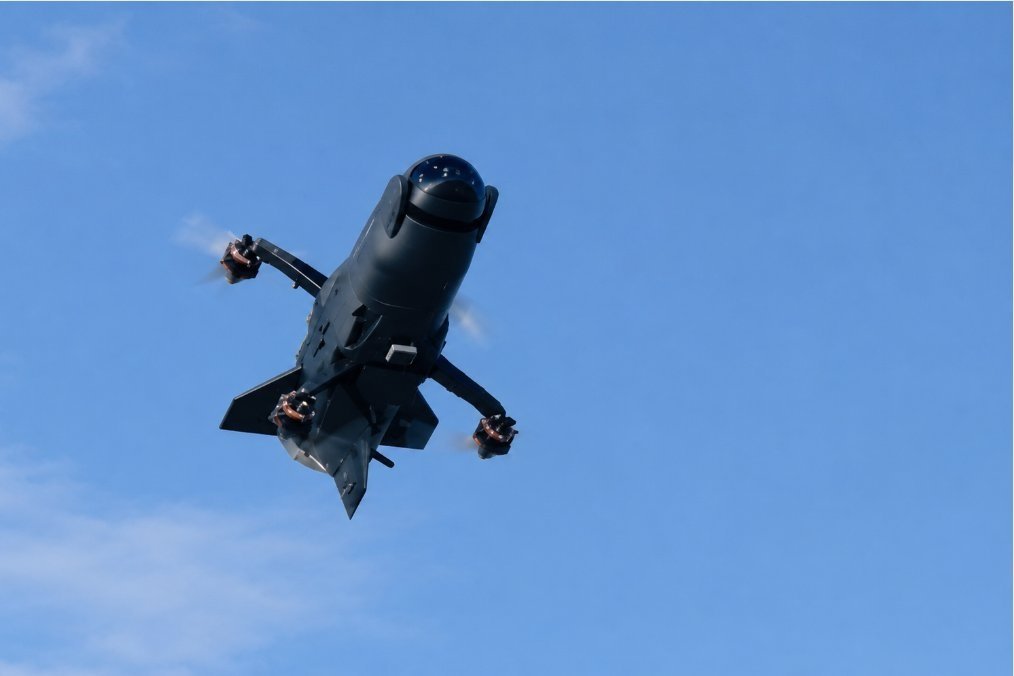
The photographs show an elongated, white cylindrical fuselage with a tandem-wing configuration, featuring two pairs of straight wings of almost equal span. The aircraft has a rear-mounted jet engine, a vertical tail fin with a rudder and movable control surfaces on both pairs of wings.
Its black nose cone contains a transparent optical dome, indicating a possible electro-optical guidance or navigation system.
The aircraft's design resembles the Kub-2 loitering munition developed by Kalashnikov. However, the Kub-2 uses propeller propulsion and carries a 10-kilogram warhead. Ukrainian forces first downed the Kub-2 in January 2025.
Russian project Military Chronicle has estimated the Izdeliye K5's range at 55–60 kilometres (34–37 miles) and described it as a medium-range loitering munition. This estimate has not been independently verified.
The designation Izdeliye means "item" or "product" in Russian and is commonly used as a factory code before a weapon receives an official name. The ZALA Lancet family, for example, includes the designations Izdeliye 51 and Izdeliye 52.
Russia Expands Jet-Powered Drone Development
The appearance of the Izdeliye K5 comes amid Russia's wider effort to introduce jet propulsion into strike drones. Higher flight speeds can reduce the reaction time available to air defence crews and make interception by Ukrainian interceptor drones more difficult.
Separately, Ukraine's Defence Intelligence Directorate (HUR) and Beskrestnov reported on another Russian jet-powered platform, the Geran-5 K5-K, in autumn 2026. That aircraft is approximately four metres long, carries a reported 90-kilogram warhead and has an estimated range of up to 1,000 kilometres. It also uses optical navigation.
However, no connection between the Geran-5 programme and the smaller Izdeliye K5 has been confirmed.
As of November 27, 2026, Russian officials have not publicly confirmed the Izdeliye K5's specifications, production numbers, warhead or operational role. Its reported range and actual performance also remain unverified.
——— End of Article ———