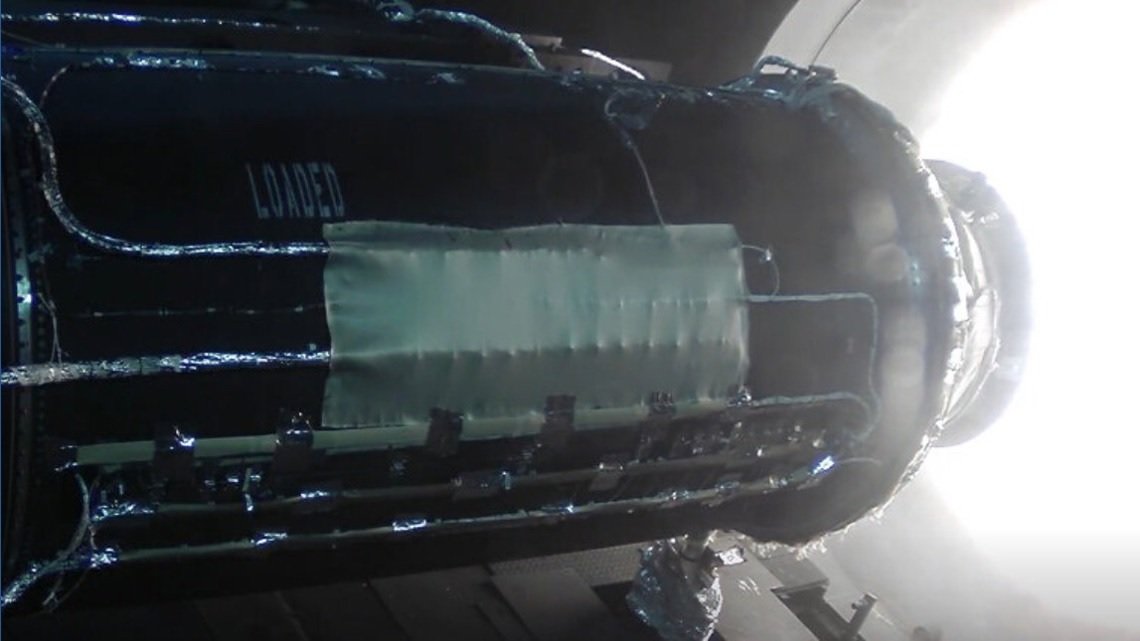
HUNTSVILLE, Ala. — Lockheed Martin and L3Harris Technologies have completed a successful static-fire test of the Stage 2 solid rocket motor for the U.S. Missile Defense Agency’s (MDA) Next Generation Interceptor (NGI) program.
The full-duration test was conducted inside a high-vacuum chamber using the L3Harris-built advanced large solid rocket motor. The test was designed to evaluate the motor under conditions representative of those expected during the interceptor’s mission.
According to Lockheed Martin, the test confirmed key motor performance parameters, including thrust generation, chamber pressure and combustion stability. Data collected during the firing will support continued NGI design work, system integration and preparations for future flight testing.
“This successful static fire test is a significant milestone on the path to the Critical Design Review and confirms our confidence that the NGI motor will meet the demanding performance envelope required for fielding by 2030,” said Christopher Jewell, Lockheed Martin’s vice president of the NGI program. He said the test data will be used to inform the final interceptor design and support integration with the Ground-Based Midcourse Defense (GMD) architecture.
NGI development moves toward Critical Design Review
The NGI is being developed to strengthen the United States’ homeland ballistic missile defense capability. The interceptor is intended to operate as part of the existing GMD architecture.
The MDA selected Lockheed Martin in April 2024 to continue NGI development through Critical Design Review, qualification, integration with GMD and flight testing.
Lockheed Martin is the prime contractor for the NGI program, while L3Harris provides major propulsion and control-system elements. L3Harris is responsible for the Stage 1 and Stage 2 advanced large solid rocket motors, along with the Attitude Control System (ACS) and Divert and Attitude Control System (DACS).
The ACS and DACS provide the control needed for the interceptor to maneuver during an engagement.
The Stage 2 motor test follows a successful burst test of the NGI second-stage motor case completed earlier in August. During that test, the composite motor case was pressurized beyond expected launch loads and withstood the required stresses before failing as planned.
Manufacturing capacity expanded in Alabama
Lockheed Martin is also expanding its manufacturing infrastructure for the NGI program. In June 2026, the company opened an 88,000-square-foot Missile Assembly Building 5 (MAB-5) in Courtland, Alabama. The facility is designed to produce and integrate NGI interceptors and uses digital manufacturing tools and processes.
The company has also been investing in additional production lines, tooling and plant layouts in Alabama to support future NGI manufacturing requirements.
L3Harris manufactures the large solid rocket motors for the program at facilities in Alabama and Arkansas, while components for the ACS and DACS are produced in California and Virginia.
The NGI program uses digital engineering and modeling during development. Lockheed Martin says the approach is intended to reduce the time required for design, fabrication and validation and to support the transition from development to production.
“This successful hot-fire test demonstrates L3Harris’ commitment to delivering dependable, high-performance propulsion systems, and we will continue to execute to support NGI’s first flight test,” said Scott Alexander, president of Propulsion Systems and Missile Solutions at L3Harris.
With the Stage 2 motor test completed, the program is moving toward its planned Critical Design Review and subsequent flight-testing activities. Lockheed Martin has stated that the motor-test data will be incorporated into remaining design finalization and system-integration work.
Note: The U.S. Missile Defense Agency's April 2024 announcement described an initial operational capability objective of no later than the fourth quarter of fiscal year 2028, while the August 2026 Lockheed Martin statement provided in the supplied material refers to fielding by 2030.
——— End of Article ———